It’s a Sunday. A lockdown Sunday. But this one feels different, because this morning we watched as the Premier announced that lockdown was lifting. Vaccination rates are high, and hospitalisations are lower than expected, so the Health Orders are changing in a few days.
I cried. But then, I cried this time last year for the same reason, and then we had no vaccines. So even though we’ve been here before, it does feel different.
And it does feel a bit different being out in the world today. We ride our bikes along the Darebin bike trail up to Bundoora Park, spy on some roos and emus (what even are they doing there?), and double back to ride through Nangak Tamboree – past the Wildlife Sanctuary, over the moat a couple of times, through the empty campus grounds, and around all the lakes. The water is still high, the creek running fast, puddles everywhere, and all the tracks muddy.
The moat – Sanctuary end
The bike path is like Bourke Street before the pandemic with people strolling and sprinting, little kids on training wheels, an elderly man on an electric scooter, and dozens of dog-walkers; every park is filled with people having picnics on soggy ground, playgrounds are crowded with kids – everyone is out in the world.
Soon we’ll be able to go anywhere we like instead of sticking close to home. I wonder how it will affect the way people use these spaces. Will people still go down the the creek bank for a picnic close to home, at these spots they’ve recently discovered, when instead they can drive across town to the beach or the hills? Or will we keep using our public spaces close to home in ways we never did before the pandemic? Time will tell.
In the meantime, I am limbering up for two citizen science events: The Backyard Bird Count, which starts tomorrow, and the Great Southern BioBlitz (22-25 October). I won’t bore you with my daily counts, don’t worry, but here are the results of today’s practice run.
Kangaroos: 9.
Emus: 2.
Greyhound of our acquaintance: 1.
Ducklings: 0.
Turtles: 0.
Snakes: 0.
Young men in loud drumming rehearsal in the bush near Sports Field Lake: 3.
I might need to sharpen up my observation technique.
So much rain last night. Just so much. The Darebin Creek is gushing and swirling, way up above its normal sluggish level, and judging by the swept reeds and grasses along the banks it was even higher overnight. I’m worried about ducklings getting swept away, and then as I approach the campus I see a pair of ducks leading a flock of ten or so fluffy dots across a roundabout. I stop to make sure no cars come along but then – drama! A magpie swoops out of nowhere, presumably defending its own nest, and attacks them. Then another.
How dare they? The adult ducks fight back bravely. I shout, though that probably isn’t very helpful since it freaks everyone out. Then the magpies get distracted by a pair of Noisy Miners who are swooping the swoopers and are of course much more threatening to everyone’s baby chicks. So they all go at it and honestly it is like the last flight of the Red Baron. Bird drama galore. While everyone else is busy brawling, the teeny weeny ducklings waddle happily on their way towards the moat. Phew.
It’s very soggy underfoot. I traipse across mown lawn to check out the Small Lake which is, naturally, small and is the link between the moat, Main Lake and the Sports Field Lake. I have walked past it so many times and never bothered to walk around it, because I’m usually striding along from home to office. The view from the footpath next to the road is of a brownish sort of channel, so it hardly invites exploration. But I have long admired the lines of this road bridge.
Honestly, the aesthetics of basic civil engineering (especially in the 60s and 70s) take some beating, don’t they?
Even though the grass is mown, the Small Lake feels a little bit neglected. It’s not glamorous like Main Lake, which is overlooked by important university offices, boasts sweeping lawns and picnic tables and even has its own island (which I feel must raise the status of any body of water), and it’s not half-wild like Sports Field Lake. There are a few blackberries growing along the banks, a bit of rubbish swept in on the storm water, and not a single duck. There’s a gate under the bridge, twisted open long ago, which leads into a pocket of woodland with grass so vividly green after all the rain it’s almost neon. The traffic thundering overhead along Kingsbury Drive means it’s never going to be a picnic spot of choice.
Small Lake is Nangak Tamboree’s middle child.
But it’s actually quite lovely and I vow to visit it more often.
And as we have established, it has the most excellent bridge.
I’m also a gardener so I’m not bad on plants. Birds, I often have to look up, in spite of a long ago feverish junior membership of the Gould League and a family of bird watchers. But I don’t mind that because I am also curious and I like solving mysteries. And I’m fond of history and not too shabby at research. So when I’m writing from the field, that’s what I’m doing: walking, watching and writing, taking lots of photos, and then looking up stuff I need to know. I’m not an expert. I’m just doing it for fun. Or something.
And yes, I know I promised to walk in Nangak Tamboree every day but I left it too late after working all day and now it’s dark and pouring. You wouldn’t want me to be miserable, would you?
So here, have some sound from one of the campus car parks. I told you they were rowdy. Rainbow lorikeets, mostly, a few corellas, and one bossy cocky.
I’ll be back there tomorrow, even if it rains. Promise.
I’m walking with a stick today. It’s one of those fancy hiking sticks, and I bought it years ago for walking along Hadrian’s Wall (but that’s another story). A colleague shared with me a photo of a tiger snake he saw near the Sports Field Lake last summer, and a very impressive creature it was too, so I am prepared. Most snakes I’ve ever met while walking are only too happy to slink away and I’m only too happy to watch them go. Like most Australian kids I was raised to stand perfectly still at any snake sightings, and I have managed to do that. I even do it in New Zealand whenever there’s a scurrying in the undergrowth and there are no snakes there at all.
But one time, high in the lakes of central Tasmania, fly-fishing without the protection of waders, I was chased by a tiger snake – no kidding, you think I’m exaggerating, don’t you? – its head up, rearing and racing towards me. No standing still that time. I have never run so fast in my life and it came after me, like a scene from an old cartoon, with my legs spinning around like the Road Runner.
So forgive me, reptile enthusiasts, but I’m emotionally scarred. I feel safer carrying my stick, although it’s more for poking around before stepping than any possible violence. Many snakebites result from people trying to hurt snakes or pick them up and I have no desire to do either.
Anyway, today I am bravely striding with my stick through the Gresswell Habitat Link, a bush corridor between Nangak Tamboree Wildlife Sanctuary and the Gresswell Forest to the north that is designed to allow wildlife to move from from end of Nangak Tamboree to the other, and beyond into the forest reserve. This area begins beside the alleged lakes (aka ponds) I visited the other day and runs alongside a golf course and edged by a relatively recent housing estate built on the former Mont Park hospital site.
This is grassy woodland, verging on scrubland on the higher ground, and dotted with some truly magnificent old trees – River Red Gums and Manna Gums, mostly. Narrow creeks and channels run through here, under built-up walkways, and alongside wide gravel tracks. There’s even a park bench to sit on and write which is pretty posh, and lots of new planting. I note, with my late spring snake awareness, that there’s no mowing of the grasslands here, but it all looks well-cared for. In the wetland area near the front gate, the frogs are having a lovely time.
There are plenty of people strolling or jogging around here, but the birds seem pretty used to them. I spot galahs, Eastern Rosellas, butcher birds, and hear a kookaburra laughing in a distant tree. But the entire place seems to be populated by Noisy Miners, the annoying neighbour nobody wants to move into the nest next door. I also spot wombat and wallaby or roo poo but there’s no sign of either this evening.
There are a couple of little kids in bike helmets digging a hole with a garden spade. I hope they aren’t burying a body. I suppose since it’s a nature reserve, some responsible adult should stop them, but since I am not a responsible adult, and since I did much the same thing in my neighbouring park as a kid (it was archaeology, I swear!) I walk on by.
I love these pockets of bush tucked away inside suburbs. I used to walk through one to and from primary school and now I think about it that must have been tonic for our little souls, hiking through tall trees every morning and afternoon. On rainy days like today we got to splash through puddles all the way home. Everyone called it “the bush” and when they taught us about the “Bush Poets” we expected to come across Banjo Paterson on our way home from school. Because that was the bush. Right there, past the footy oval. I suppose now people from elsewhere go to walk through it and marvel at the pink heath and the stands of red box. I should do the same one day.
But for now, I’ll keep walking through those kids’ adventure playground.
Update: A few weeks after I wrote this, I spoke to Glenn, one of the Wurundjeri Narrap Rangers, who by the way told me how hilarious it is when people tell tall stories about being chased by snakes. Snakes, he said, if disturbed, are only ever trying to find shelter. They are very territorial and have established bolt-holes in which to hide. So if you ever think a snake is attacking you, it is just trying to get past you to safety. I will try to remember this. (It doesn’t make it any less scary for me, but Glenn is a former snake handler so he has years of experience and great knowledge, and clearly much more empathy.)
I walk most mornings and have for many years now. I didn’t always. I come from a family of walkers – I mean, serious, best-in-the-country race walkers, who think nothing of a ten kilometre stroll before breakfast. I was brought up by the side of an athletics track as my dad was in Olympic and Commonwealth Games and my grandfather was an Australian champion and lifelong walking official. So going for a walk in my family holds a slightly different meaning to most. My mum also used to walk every morning: not race walking, but more the kind of stepping out for health we’ve all been doing in our allotted exercise times during lockdown.
But I, being the family rebel, didn’t walk until relatively recently. I quite like proper hiking, and can walk all day when travelling and looking at really interesting stuff, but going for an evening stroll on a beach seemed absurd, and walking for exercise far too dull. I’d be on holiday, and friends would suggest going for a walk and I’d inevitably ask why. Pointless walking, without it being a race, or to discover some particularly excellent thing, seemed like a ridiculous thing to do when you could be lying about reading. Still, I guess it’s been ten years that I’ve walked most days, except for a long stretch last year in deep lockdown when I basically refused to leave the house.
I walk for exercise, yes, and sometimes even jog. But mostly I walk to clear my head. Actually, that’s a lie. I don’t clear my head; in fact, I’m thinking all the time. I clear it of nonsense, and it fills with better or at least more interesting things. I tried listening to podcasts but I just want everyone to shut up and stop talking at me. If I’m deep in a writing project, even – perhaps especially – on a writing retreat or residency, walking is a time to unravel knotty plots or have conversations with imaginary people. Then, I’ll carry a tiny notebook and stop and scribble as I go.
The connection between writing and walking is long and celebrated – the Romantics made it a thing and it’s a thing again now, with nature writers wandering all over the shop. Writers like Rebecca Solnit have made it a focus of some of the most beautiful prose in recent years. I confess I’m a bit more random and not nearly as intentional – normally – as one apparently should be. Even now, with the daily walks designed as writing process, I never know what will happen and usually don’t plan where I’ll go.
A few years ago, I was in a group led by writer and local legend Sophie Cunningham which walked one night following in the footsteps of Melbourne’s first elephant (Port Melbourne to the zoo) and another day the first leg of Burke and Wills’ expedition (Royal Park to Moonee Ponds, although we didn’t take a piano with us like they did). Sophie researched carefully beforehand and wrote about those walks later in her excellent essay collection, City of Trees. Intentional, writerly walking, but we never really knew what would happen, and a group of writers walking generates its own story.
In 1927, Virginia Woolf went for a stroll to buy a new pencil, and, being Virginia Woolf, wrote the most gorgeous essay about it – ‘Street Haunting’ – about walking, about London, and about how your mind slips and listens and glides as you walk:
How beautiful a street is in winter! It is at once revealed and obscured. Here vaguely one can trace symmetrical straight avenues of doors and windows; here under the lamps are floating islands of pale light through which pass quickly bright men and women, who, for all their poverty and shabbiness, wear a certain look of unreality, an air of triumph, as if they had given life the slip, so that life, deceived of her prey, blunders on without them. But, after all, we are only gliding smoothly on the surface. The eye is not a miner, not a diver, not a seeker after buried treasure. It floats us smoothly down a stream; resting, pausing, the brain sleeps perhaps as it looks.
Sadly, I am not Woolf, I’m just me, plodding along a muddy track beside a creek. I take the long way to Nangak Tamboree today, which takes me about half an hour each way, and longer if you stop to try to take photos of uncooperative birds with an even more uncooperative camera. There’s a stand of wattles and kangaroos apples along the Darebin Creek inhabited by a family of fairy wrens, and a flittery population of robins, honeyeaters, and little hoppy brown things (that’s the technical term) which never sit still for a moment. (On the way home, I’ll meet a group of park rangers in this spot, all pointing and gasping, thrilled at the shenanigans.)
White-browed scrubwren finally sitting still
When I reach Nangak Tamboree, I sit on a boulder between the creek and the fenced-off revegetation area, and scribble this down, thinking about writing and walking.
There are now books galore about the creative benefits of walking, and research that indicates that Wordsworth was right – walking does enable writing. A Stanford University study claims that ‘A person’s creative output increased by an average of 60 percent when walking’ but it’s creativity of the random kind, not necessarily the problem-solving sort. That chimes with my experience.
And as Michael LePointe warns:
The more conscious writers become of its creative benefits, the more walking takes on the quality of goal-driven labor, the very thing we are meant to be marching against.
It runs in a semi-circle around the campus and I’ve walked over the bridges and alongside stretches of it for years, but never all the way along.
I start off with a visit to a waterhole I’d forgotten existed. It’s a big campus, and we tend to arrive – walking, riding, driving, parking – on one side or the other and go about our business oriented to the point of arrival. Classes might be anywhere, cafes, shops and library are in the centre in the Agora, and we find familiar ways of walking from office to preferred barista or noodle maestro and back again. So I don’t usually walk around this side of campus at all – except when the Sunday market is on. But of course none of that has been happening for so long, I’m going to act as if it’s all a surprise.
Which this waterhole totally is. It’s ringed by trees, but with the busy bus terminal on one side, and car parks on the other. You’d hardly know it was here. But there are frogs bleating and ducks wafting about, and it looks like a billabong you might find on a country property (except for the buses passing by). I bet there are yabbies. Weird thing, the buses keep on coming even though nobody gets on or off. Of course, they service the surrounding areas, and many go all the way into the CBD, but this is their last stop, on this locked-down campus. They glide in like ghost buses, wait for nobody, and then glide off again.
Will we ever get used to this world, I wonder? When the pandemic is over, will we remember these little details of suspended life?
It’s the final week of semester, and I said goodbye to my students earlier. We’ve never met in person. And they are mostly second-years, which means they’ve spent most of their university lives on Zoom. They didn’t choose to learn online but we all had to adapt fast in 2020. They are amazing, but I feel for them, missing out on all the other aspects of university life. I miss it too.
So here I am walking through a largely empty campus. I head to what I think is the start of the moat – I’ve never bothered looking for it before. It begins in a rather unprepossessing fashion with a storm water drain below the main campus ring road, near a major intersection.
When I think of the word moat, my brain goes in two distinct directions – either the excellent Moat restaurant under the State Library, where I’ve had more meetings than I can count, or, more often, the many ancient castle defence systems I’ve walked through in England, Ireland and France, where once armies clashed and swords clanged and everything was as grim as the Battle for Helm’s Deep.
This is not that kind of moat. Although I understand there were some pretty fierce boat races back in the day. Its first stretch is clogged with an aquatic plant I don’t recognise – could be a weed, could be some Bio-Ag doctoral project. I haven’t walked here before. I wander along the bank – there’s pigface in flower and willow trees – on well-groomed grass. Even in lockdown, the lawn-mowing must continue.
The view downstream from my own personal footbridge
The first footbridge is one I walked across every time I visited when I was doing my PhD, years ago. I was living on the other side of town then, so drove in here, hopefully found a park under a gum tree for shade, and then returned to my car at the end of the day to find it covered with shredded eucalyptus blossoms and lorikeet shit. It goes with the territory. Everyone has a favourite car park and this one was mine, mostly because I got to walk over the bridge, admire any ducklings, poke my nose into the community garden to see how everything was coming along, and pick up a coffee on my way to the office. Well, after 21 months of the pandemic so far, the community garden needs a bit of a weeding working bee, but everything else is looking pretty fine. I continue past sections that have been revegetated over the last few years with plants local to the area – grasses, especially, which provide nesting and cover for waterbirds, lizards, and, yes, the odd snake (but not today).
This stretch of water splits around a little island, houses an area for some mystical (to me) plantlife or water experiments, is crossed by another footbridge beyond which cars line up for drive-in COVID-19 tests, and ends in a glorious stand of casuarina, one of my favourite trees. Here the water trickles over one of many small dam walls, vanishes under the driveway, and reappears on the other side in the middle of what is usually the busiest open space on campus. But off to the left is another waterhole, and this one is hard to forget because in heavy rains a few years ago it flooded the nearby John Scott Meeting House, which had only just been renovated, and colleagues had to face sodden office carpet and wrecked furniture. (I’ve just discovered it’s called Upper Lake.)
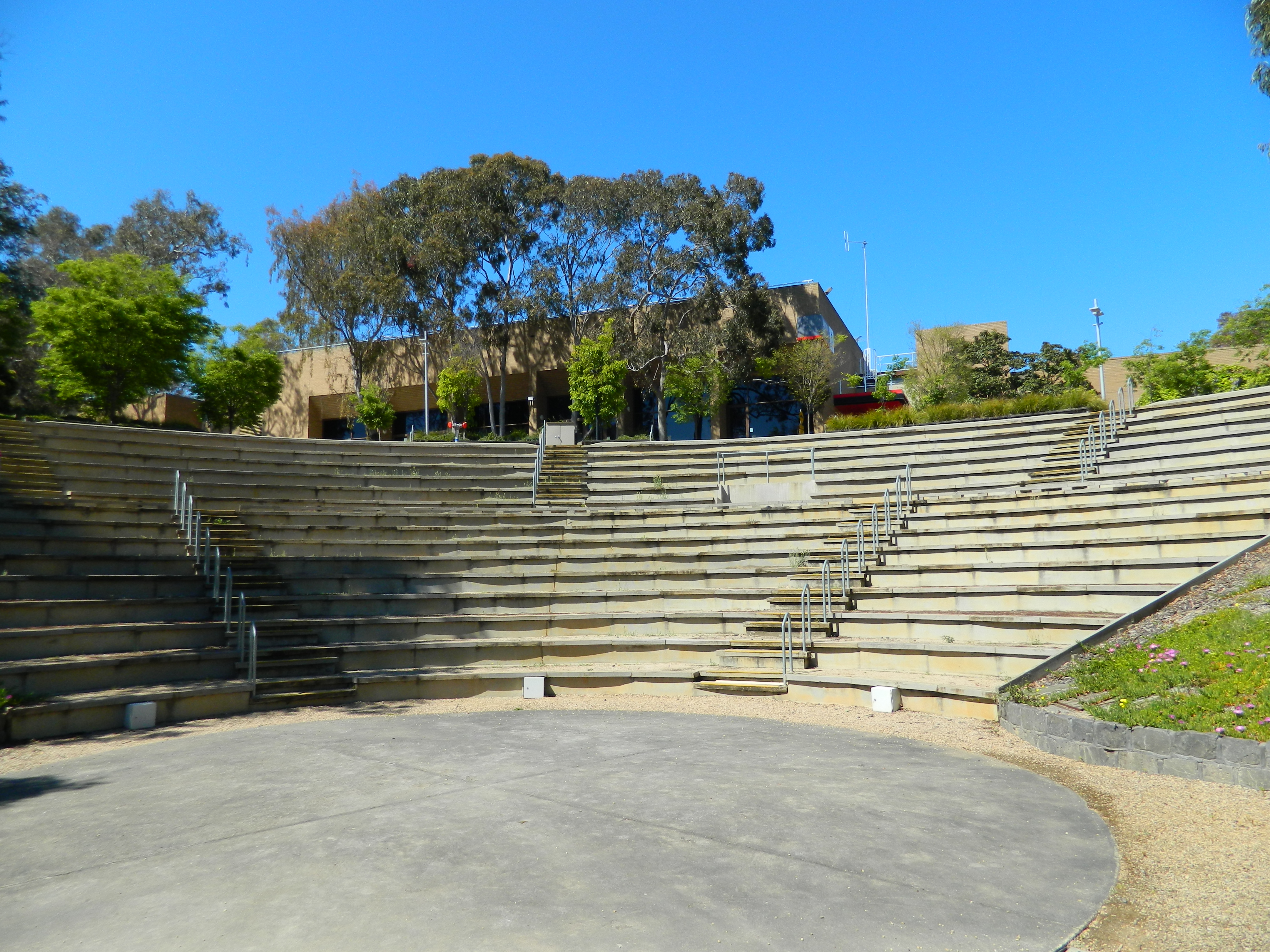
Past here, we’re onto more well-trodden paths: it’s the running track, laid with granitic sand, that stretches alongside the moat and wends its way around campus. This is the walking track I followed a few days ago, but there are no turtles on show today. I wave sadly up at my own office, sitting locked up in a locked up building, and even more sadly pause for a moment in the Moat Theatre. This is where generations of students and staff have performed, laughed, announced, sung, danced, probably rioted, and celebrated. But given the Federal Government’s utter disdain for universities and for the arts, its refusal to allow public universities to access JobKeeper support, and the funding reductions inflicted on top of the impact of the pandemic, this university and many others have decided to discontinue Theatre as a discipline. It’s a tragedy. Seriously. And it’s wrong. We need the arts and we need performance more than ever before.
I’ve stood in ancient amphitheatres in Greece, Turkey, Italy and France, and this one may not be marble, and it may not be two thousand years old, but it feels inexpressibly sad to stand here today and know that it won’t host more Theatre program performances.
But my reverie is slightly disrupted by a young guy who decides to try riding his BMX down the stairs, so at least we know that rowdiness lives on. (He doesn’t crash, you’ll be pleased to know, which is really quite impressive.)
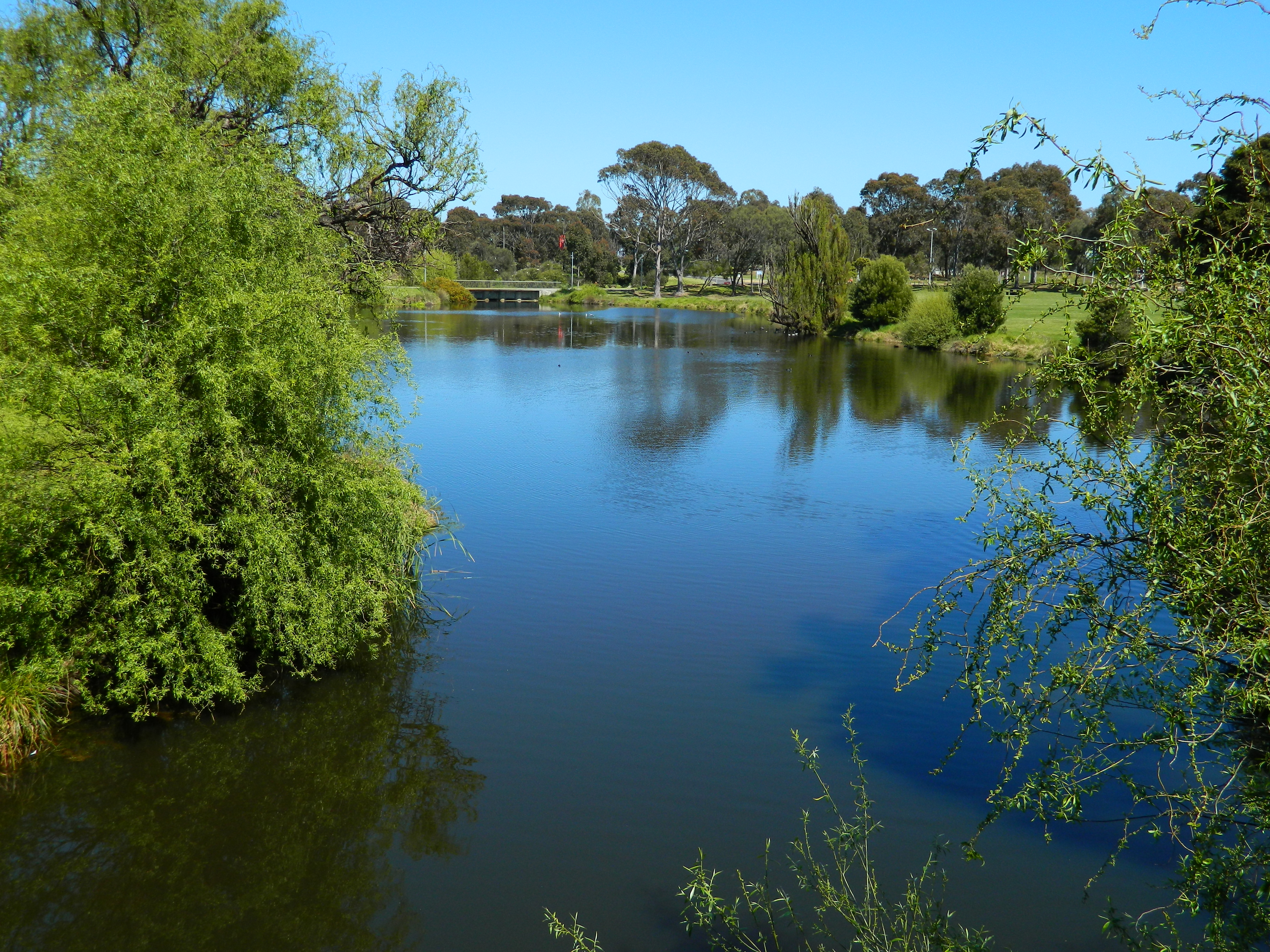
The moat path here is down below building level, cool and shaded, so you pass under footbridges and tall River Red Gums until you pop out the other end where the moat runs out into what is apparently and imaginatively called Main Lake. It runs under the bridge and into the equally exotic-sounding Small Lake, which then flows into the – and you know what I think about this name – Sports Field Lake.
Main Lake looks much more formal and European, with sweeping lawns and willow trees. It’s like the fancy front yard, with flagpoles and green grass, and Inge King sculptures instead of garden gnomes. But there is a lovely row of young acacia growing along one bank, and great gusts of Sulphur-Crested Cockatoos swirl around it. It’s La Trobe. There’s always a bit of the unruly.
Melbourne gardens are full of what’s known in the landscaping trade as honeycomb rock – especially gardens of a certain vintage. You might see a row of rocks carefully cemented into the edge of a garden border or – the classic approach – dotted about a rock garden populated by succulents and the odd cactus.
I always hated the look of them, myself. I don’t know why. Perhaps because they are so ubiquitous. Every front yard had them, or so it seemed, bordering the geraniums or lining up along the driveway, all over the city. We had a retaining wall (concreted, of course) at my childhood home and carefully constructed by my dad. Everyone had honeycomb rocks in the 1970s and 80s, especially, when the fashion for indigenous plants took off and every household had a copy of Ellis Stones’ (yes, really his name) book Australian Garden Design (Macmillan, 1971) on their mid-century Danish timber shelves. (I’m not being cynical – I have two of his books and treasure them.) Stones and other garden designers like Edna Walling and later Gordon Ford popularised the use of rock in the informal garden and Stones’ idea of stone outcrops was spread through magazines like House and Garden and into suburbia. Stones was a local here – he lived in Ivanhoe, there’s a great deal of his work around the area, he was a great advocate for the river and creeks, and he designed the Elliston estate, named after him, in Rosanna.
Anyway, I blame Ellis for all those honeycomb rocks. But it’s not his fault. The rocks in gardens around my family’s house were trucked in especially, and they looked out of place because they were. It wasn’t the siltstone and sandstone we found naturally in that area. I think maybe when I was little I thought someone had made them, like Violet Crumbles. They didn’t look natural, or like chips off a meteor.
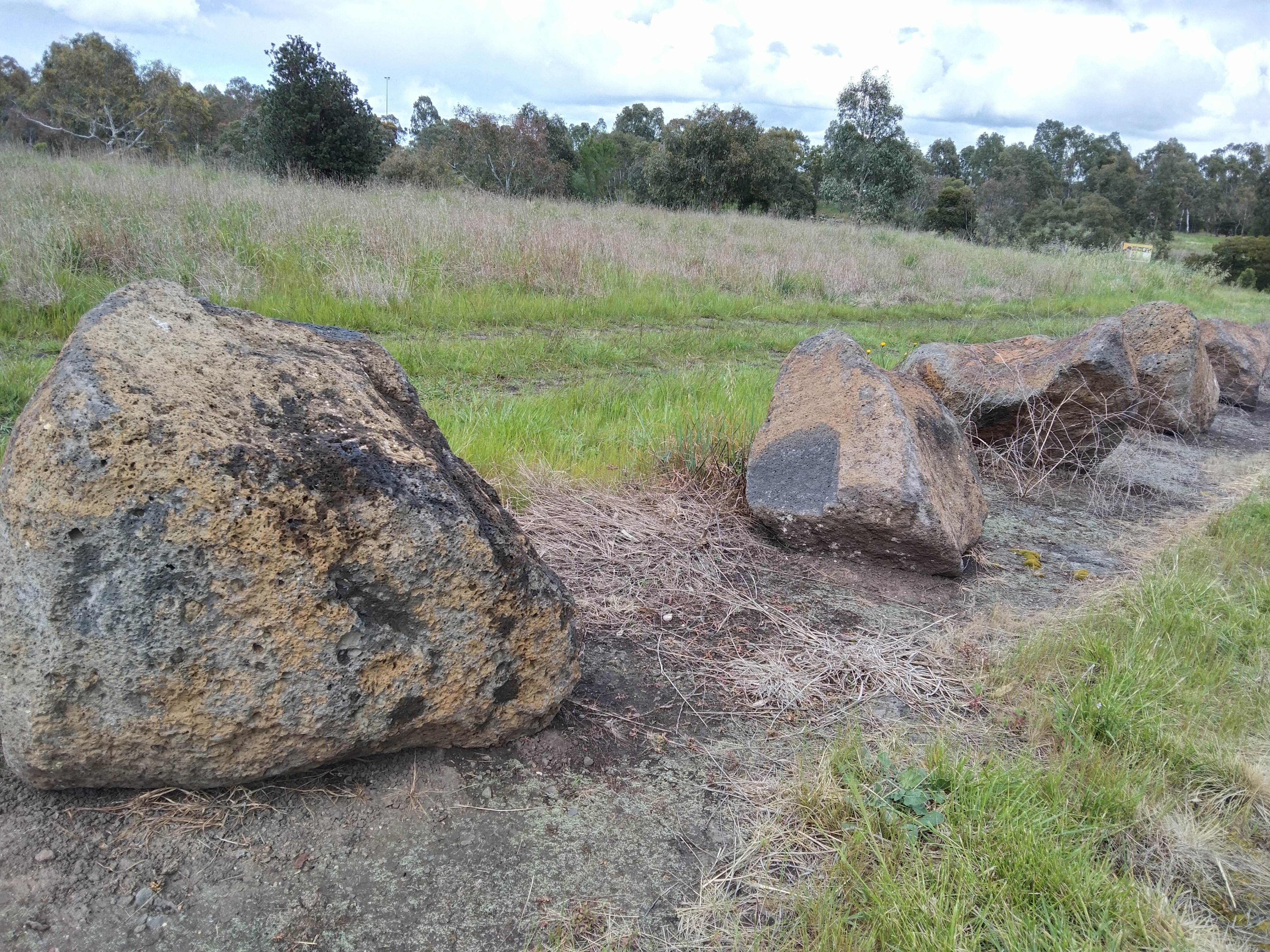
But here, in and around Nangak Tamboree, they belong. The ultimate honeycomb rock border is the one I’m resting my notebook on today: massive boulders marking the border between Nangak Tamboree and the adjacent Banyule North Grasslands (and presumably preventing anyone but Mad Max from driving through here). Each one is about as big as a freezer.
It doesn’t even seem right to call them honeycomb rocks here. The banks of Darebin Creek are edged by a low escarpment of boulders, still here after flowing as lava nearly a million years ago. White farmers cleared them away and used them as dry-stone fences and for building – there are places along the creek where you can see both the original escarpment and a whole lot of smaller rocks presumably chucked over the edge decades ago.
They lie under my feet, poking through the thin topsoil. They influence what grows here, and how it grows. My map of local plant communities tells me this area here – this flattish plain above the creek – is classified as volcanic Plains Grassy Woodland, dotted with River Red Gums, and bordered by the escarpment scrubland dominated by Tree Violets (Melicytus dentatus), Manna gums and Silver Wattle.
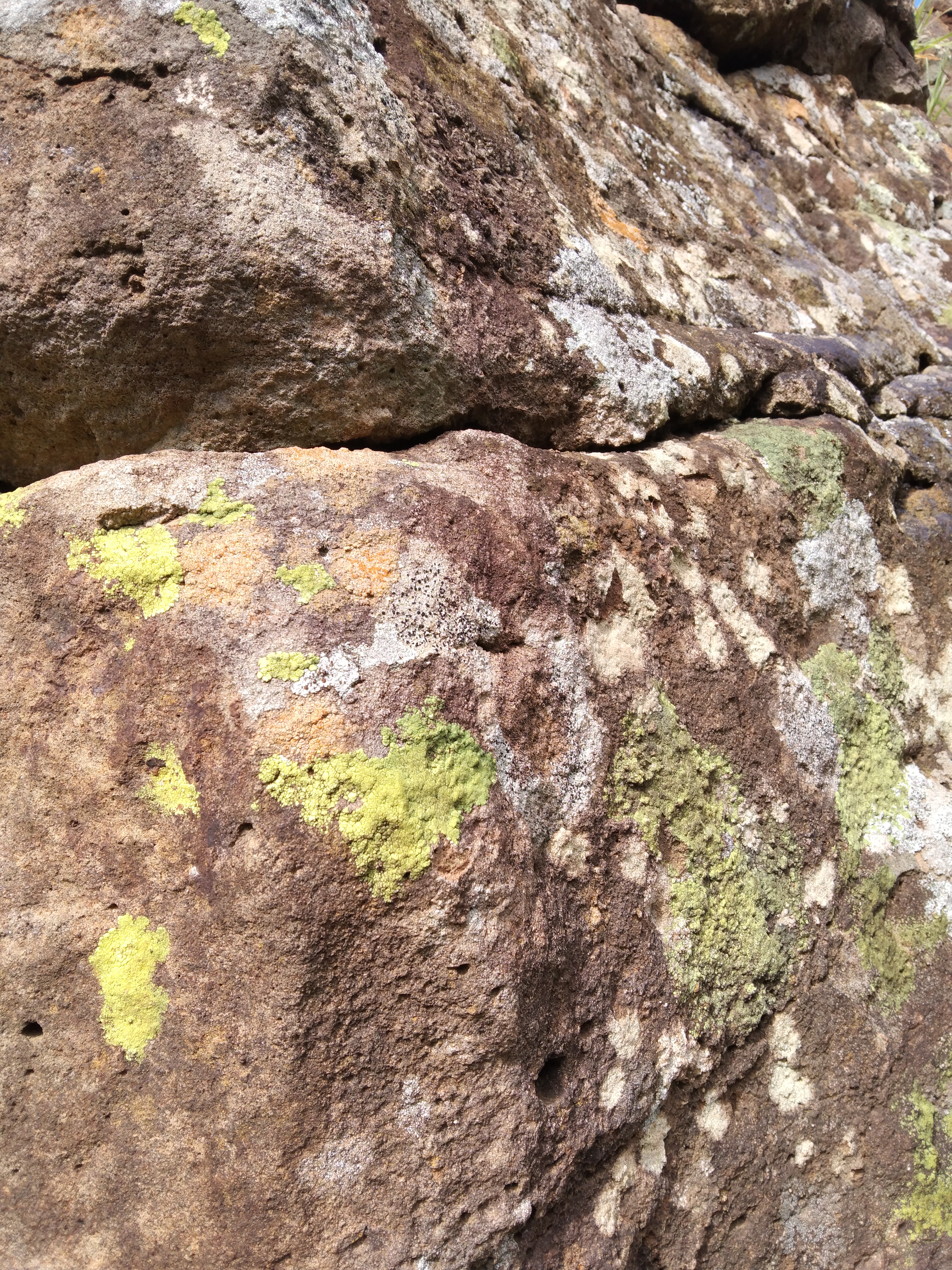
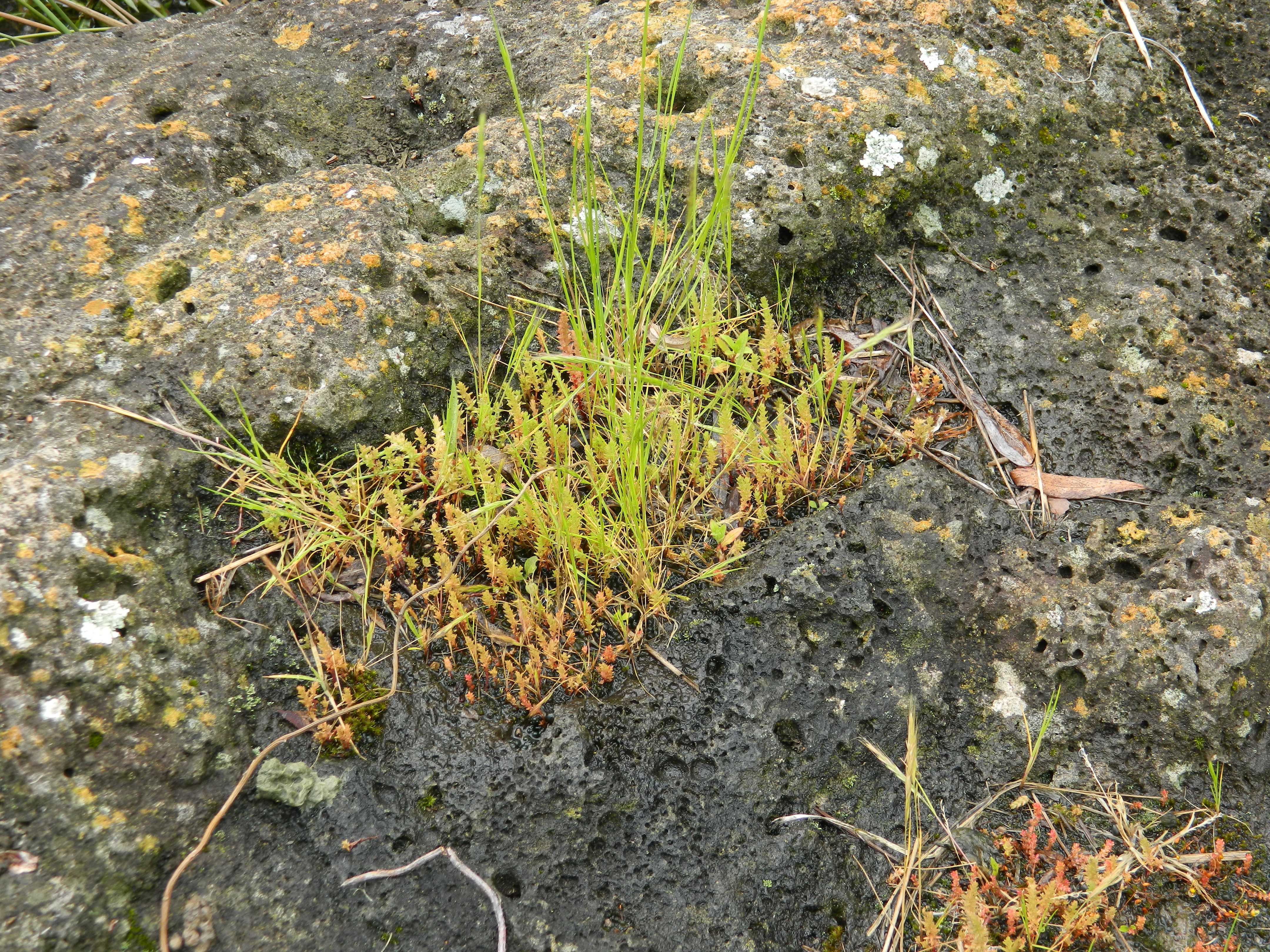
The rocks are still used in gardens in the streets around here, and on campus. They even house tiny gardens of their own sometimes – lichen, mosses, miniature stands of wild grass and the smallest weeds you ever saw.
Creatures love them. Lizards and turtle sunbake on them, snakes burrow in between them, insects of all shapes and sizes crawl and nest and feed on them – these whoppers must feel like an entire planet to an ant. And even I have come to appreciate them lately. Ellis Stones would be proud.
An evening visit today, after a long walk with a friend and a greyhound nearby at Bundoora Park (we saw ducklings!).
The waterhole near the front of the Nangak Tamboree Wildlife Sanctuary is called Fozzie’s Wetland (apparently after the first Ranger who worked in the sanctuary). It doesn’t even show up as blue on my Google map of daily writing spots, which I guess is OK as it’s more on the green side. Verging on dark brown.
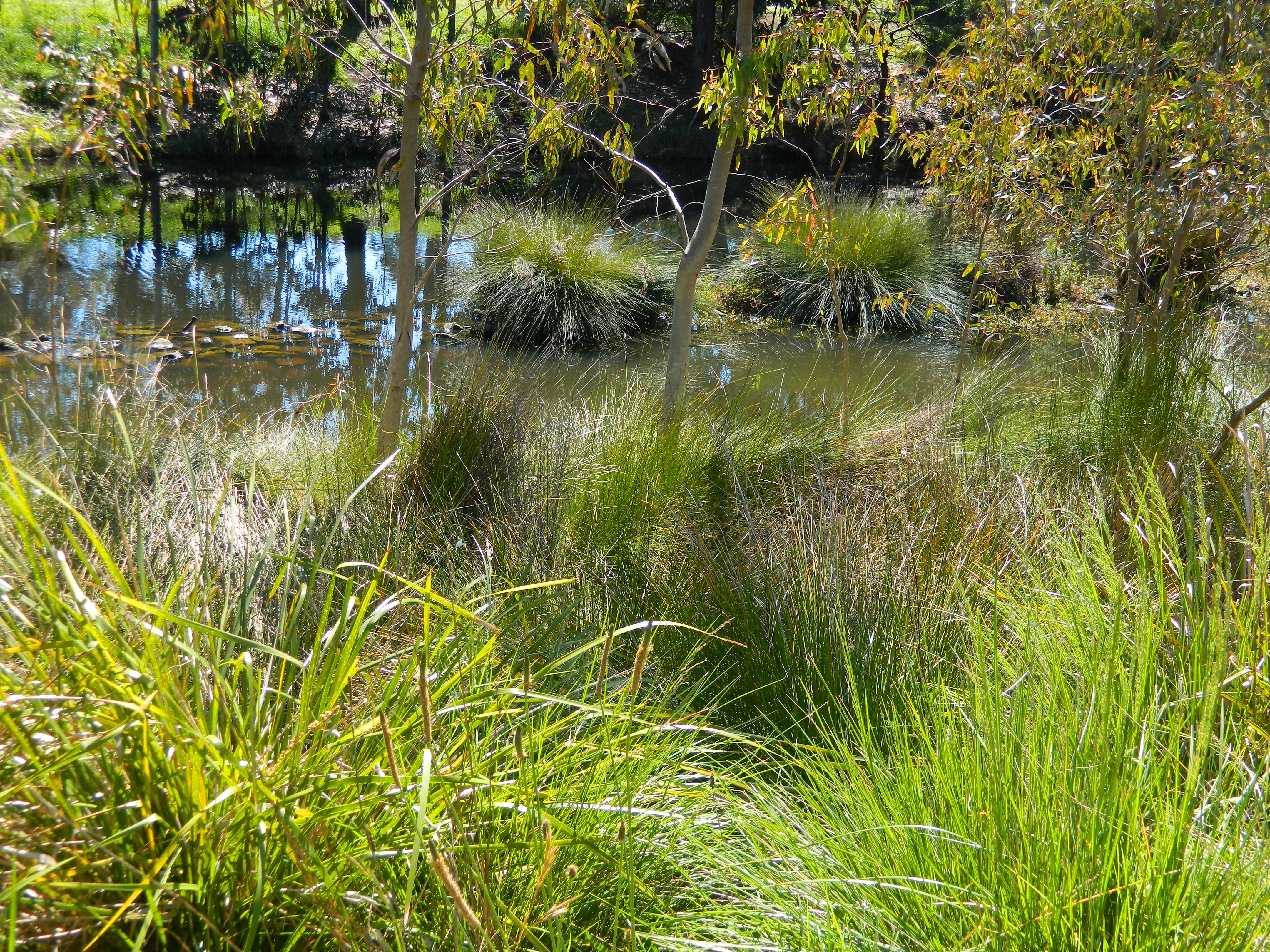
It’s not huge, and half of it is behind the predator fence that guards the sanctuary. There are roads on two sides, a roundabout, and a normally busy campus carpark over the way. But it’s important for a few reasons: it supports a population of endangered freshwater Dwarf Galaxias fish; it’s home to turtles and my favourite frog, the Pobblebonk (or banjo frog); and to be honest it’s a bit of a showcase (to my eyes at least) for the revegetation process that’s going on.
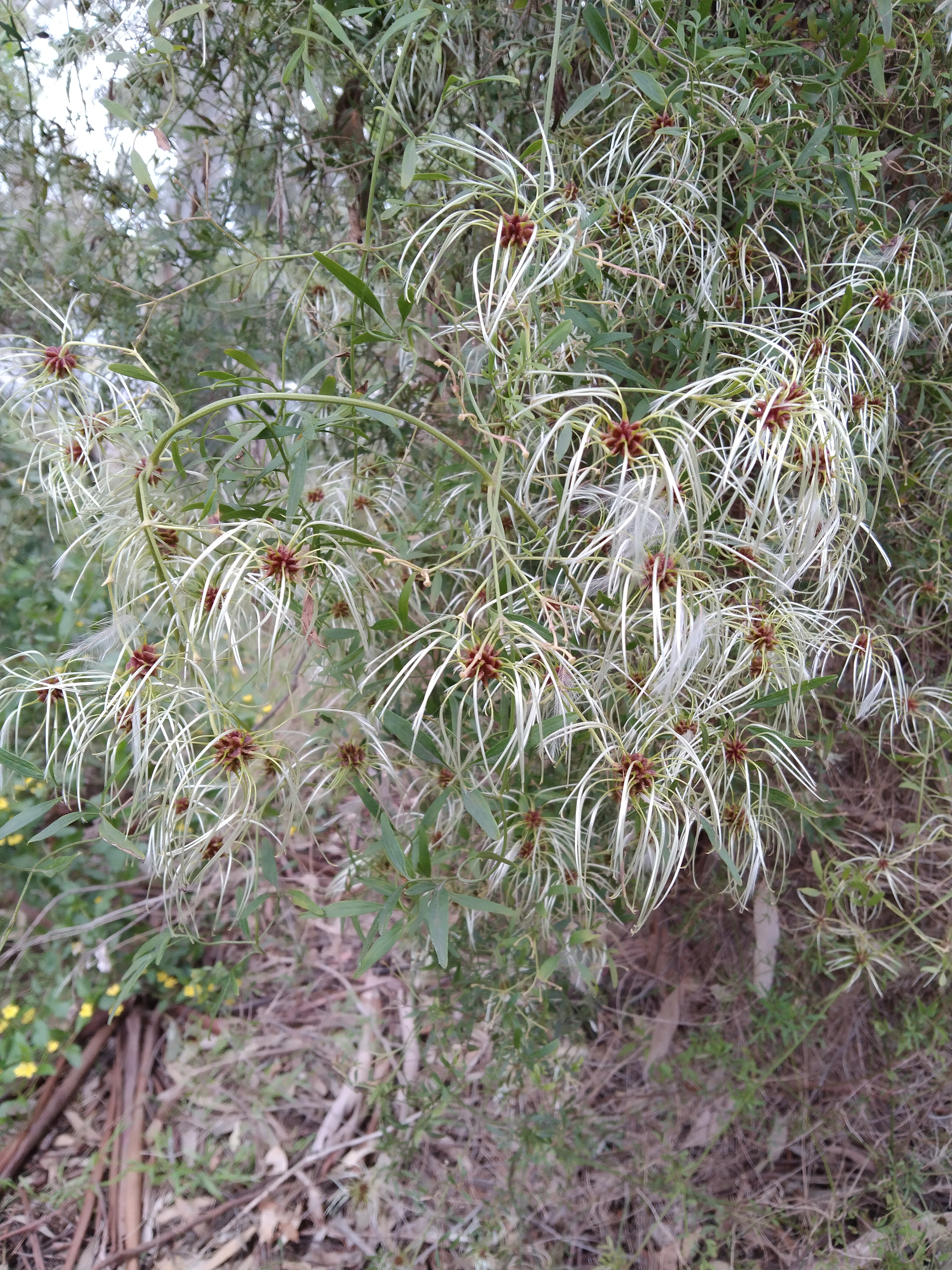
Careful mulching and planting around the edges of the water is having an effect – the Running Postman (Kennedia prostrata) look happy enough, creeping across the wood chips and ready to take off, and the paths are lined with wreaths of the local Clematis (I think it’s C. microphylla) blooming and self-seeding all over.
There are pockets of Poa and other grasses swaying in the breeze, Hop Goodenia in bloom, and the waterhole is ringed by established trees in which a host of different birds are having a wild old time. I tried to record the frogs for you, but they got drowned out by ravens and other ratbags.
You might only hear one bonk in among the croaks.
I’ll try again in a few days. I came by the other morning, and found a poor turtle squashed by the roadside. The pobblebonks were going off that day, but for some reason I managed to record nothing but wind blowing. Mysterious. Maybe they’re like vampires who don’t appear in mirrors. Nothing would surprise me.
Today, I’m walking. And walking. Didn’t have much of a plan, but it’s evolved into following every path I find, around the top of the Sports Field Lake. It’s a Saturday, so there are lots more people around, and since we still aren’t allowed to have friends over or go to cafes, everyone is meeting up outside. Picnics are permitted, under certain circumstances. So every park I visit, every open space, is dotted with people having picnics. Even people who hate picnics are having picnics.
Not so much here, because I’m not sure these places register with people as a destination, but there are many small groups scattered around campus, and I come across them in odd spots along the creek. Here, it’s more about movement – there are people strolling along with kids in pushers, cycling, or walking dogs, or bird-spotting. There’s even a bloody trail bike roaring along (no helmet).
By the edge of the lake, where there’s a kind of beach (dirt, not sand), someone’s left two outdoor chairs, and there’s a woman sitting there, reading an important-looking document, talking on the phone, and sipping on a takeaway coffee. She looks like she’s parachuted in from a Brunswick Street café. I can’t imagine where she came from – or the coffee.
I walk discreetly around her and vow to come back to write in this spot later. But for now I keep going, following a track that meanders through casuarinas and Prickly Moses, following the curve of the lake.
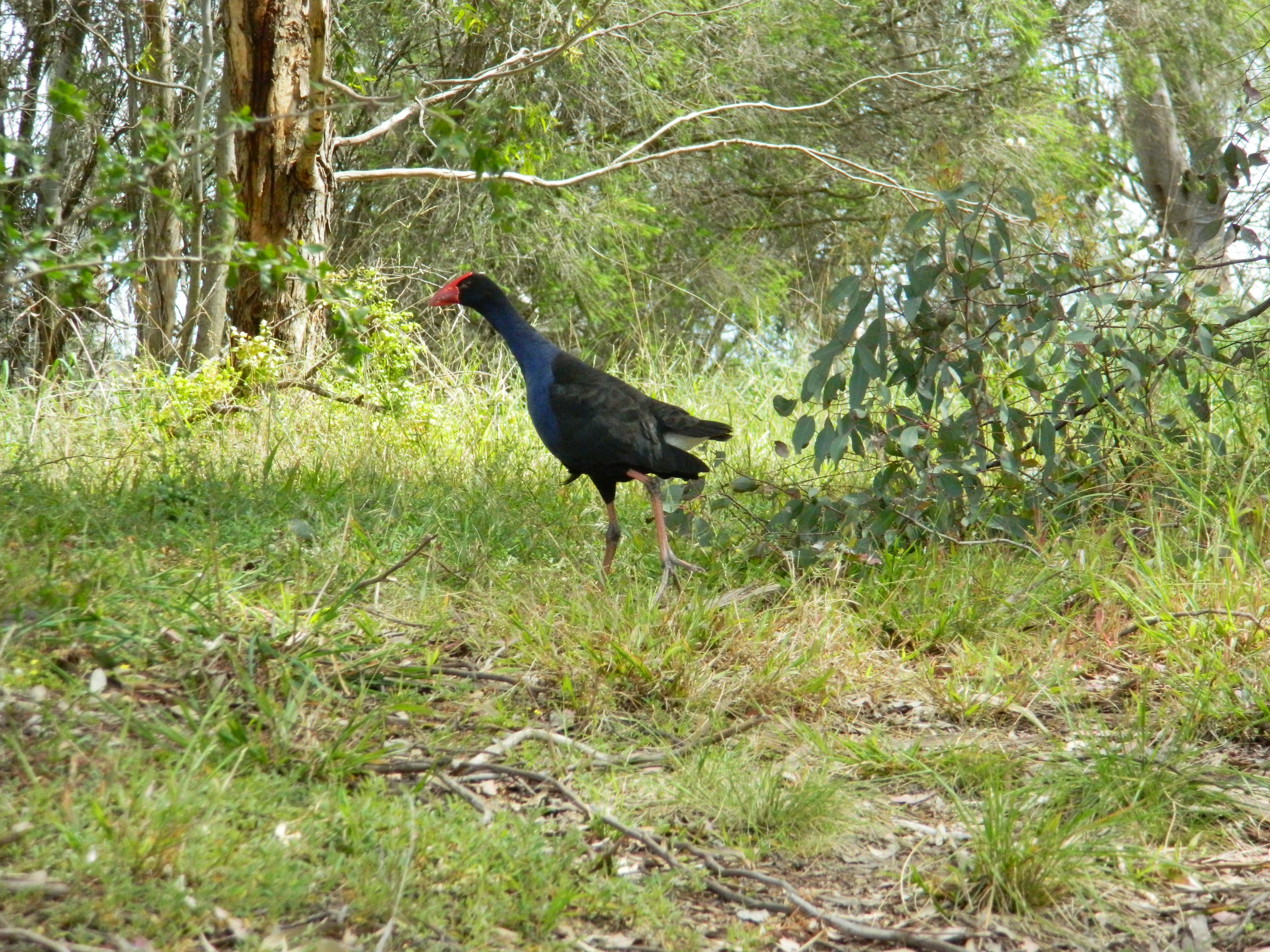
People, and presumably creatures, have made tracks all through here. I follow them all, around where the lake narrows at a little wooden footbridge, disappears under the road, and then pops out the other side to join the campus lake system. But I don’t follow it north (is it north? it feels north). There’s another track winding up what looks like a headland. Pukekos squawk hilariously but they don’t seem too perturbed by my presence.
Someone asked me the other day why I call them pukekos. Australians know them as Purple Swamp Hens. But in normal times I spend a great deal of time in NZ, where they are called pukeko, and they are iconic. You can buy pukeko fridge magnets and t-shirts at the airport. We have a sequinned pukeko Christmas tree decoration. New Zealanders think of them as uniquely theirs and my Kiwi friends and family visiting here in the past have been shocked that they dare to exist across the Tasman. As if I’ve stolen them. Like the pavlova. They are dear, funny birds, and there are many around these waterways, and if I was one I’d rather be known as a pukeko than a Swamp Hen.
So today the pukeko and I go about our business, not bothering each other. I scout around the headland. Three little kids rush past in their Speedos, parents trundling behind with pool noodles and beach towels, and even though it’s pretty obvious I ask the kids if they’re going for a swim.
‘Yes!’ they shout. ‘They made us stop and have a picnic and now we’re going back in.’
‘Is the water cold?’
‘Freezing!’
Not sure I’d swim here – at least, maybe not in October.
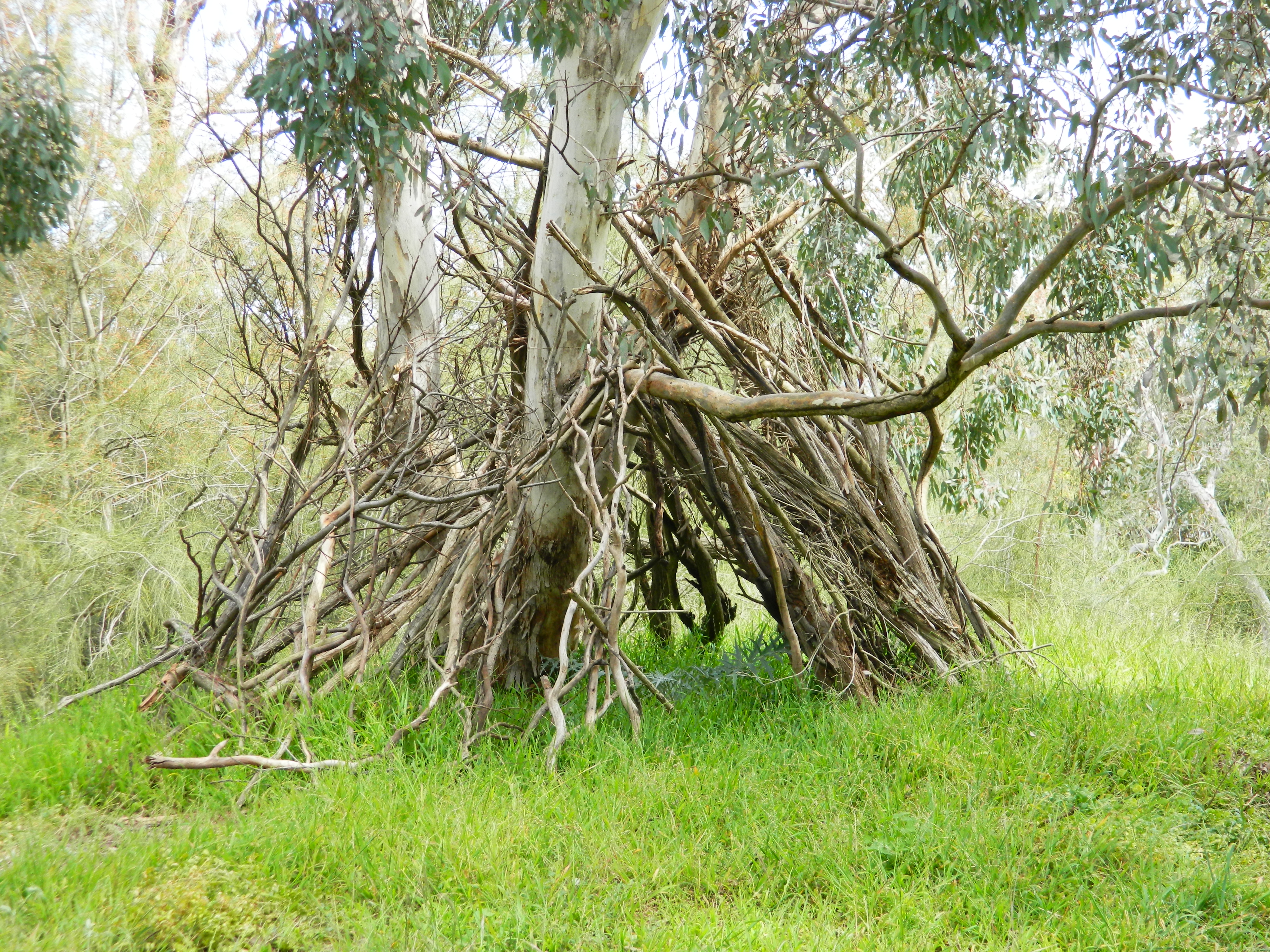
I wonder if these are the kids who made this excellent cubby house on the high ground.
If you grow up near places like this, making cubby houses in the bush is a full-time occupation. I’ve made plenty in my time.
I keep on, following the track. It’s a hot day, and I’ve come out without a hat or sunblock, like the genius I am, but here there’s dappled shade and a breeze off the water. Wish I had a picnic lunch. Down near the shore, I peer through the undergrowth to spy on a darter drying its wings on its own personal island. At least, I think it’s a darter. It’s about the size of a B-52. It doesn’t dart, or swim about pretending to be a snake, as they do, but it’s having a grand old time.
The track leads around to the sports grounds, which I decide to explore some other time. I circle back to the footbridge, prop myself on the now deserted chairs for a scribble, and then keep randomly following any narrow trail that presents itself, until I’m back on the bike path.
I like how people make use of places: the grass flattened by dozens of picnic blankets and socially distanced bottoms; the cubby house of sticks; the chairs picked up from the side of some road and brought here; the fallen log that every kid clambers along; the little spot someone’s made by the lake where you step through the reeds and balance on an old timber pallet and watch the water; and the paths trodden by thousands of feet, enticing me to keep walking.
Today I’m in a spot I really didn’t know existed before we were locked down and unable to travel more than five kilometres from home for exercise.
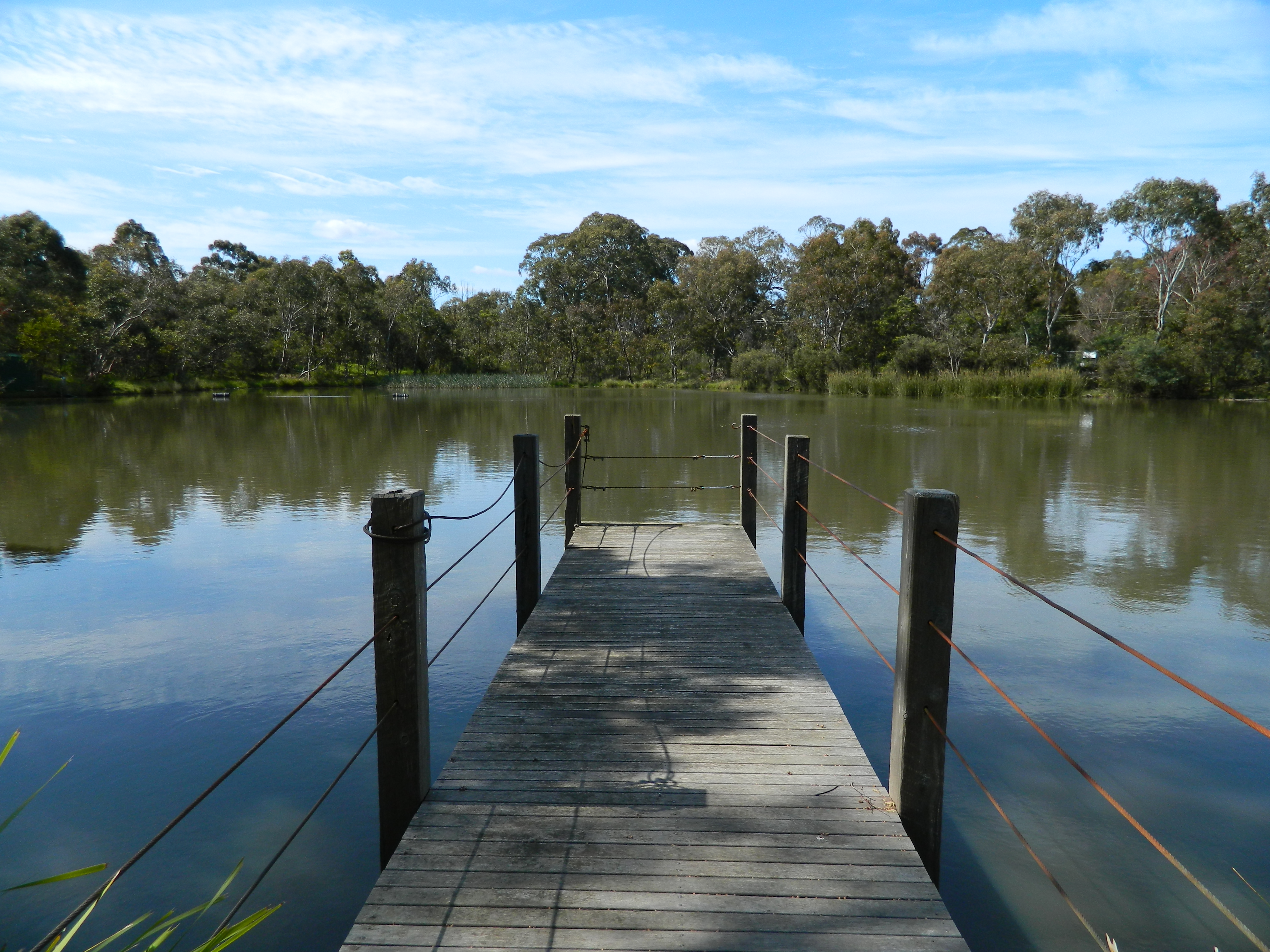
I haven’t set foot here before. These are a couple of large ponds, or maybe small lakes, forming part of the Gresswell wildlife corridor at the northern end of the Nangak Tamboree waterways. They are carefully landscaped and nestled into what is now suburbia.
But it wasn’t always.
The original inhabitants were the Kurnaj-berring people of the Wurundjeri clan, and before the British invasion there were Brolgas (yes, Brolgas!) and platypus, freshwater mussels, eels and plenty of other creatures. But once the colony expanded, the land was cleared for farming, with only a few pockets of remnant bush left intact.
This specific area was once the Mont Park complex, which opened in 1912, at which time it was called the Mont Park Hospital for the Insane. It was an isolated spot then, surrounded by farmland. My great-grandfather worked there. His Army enlistment file records his occupation as ‘Warder, Lunatic Asylum.’ I hate to think what life was like in the hospital then but it was about to get a great deal worse. War broke out in 1914 and from then on the hospital had to deal with huge numbers of returned soldiers suffering from what became known as shell-shock, and other war-related traumas. My great-grandfather, after years as a stretcher-bearer in Palestine and on the Western Front, returned to work here.
After the war, in the hope of helping the patients feel that the world was not a complete horror, they built cricket grounds and tennis courts, in what is now the Nangak Tamboree Wildlife Sanctuary. The land stretching to the south, where the university campus now sits, was the Mont Park farm, growing food and grazing dairy cattle to help provision the hospital. It doesn’t sound like a great spot for a picnic:
…desolate, run-down farm in a swampy valley, devoid almost of trees or of views less depressing than the encircling panorama of mental hospitals, a cemetery, school yards, gasworks, and industrial backsides.’
Roy Simpson, Master Planner, quoted in Breen, W., Salmond, JA (1989). Building La Trobe University : Reflections on the first 25 years 1964-1989. La Trobe University Press. (p. 39)
Raven going full Gothic
There are still buildings from Mont Park and its sister institution Larundel dotted about all over here – many were derelict for years and some have now been turned into apartments or townhouses, and a few house university departments or accommodation. They are very stylish – Arts and Crafts or later 1930s brick and stucco. I wonder what stories those walls hold. I remember visiting a friend in a ward in Larundel when I was about twenty and it was pretty stark. But eventually people grew to understand mental health and illness better (and the language around it evolved too), and these hospital-based institutions were closed in favour of (in theory, if not properly supported with funding) community-based health services and supported housing.*
And this huge swathe of land was set for re-use. The Bundoora Mental Hospital became the magnificent Bundoora Homestead art centre & gallery, surrounded by spectacular parklands. The university opened in 1967, and the moat and southern waterways dug over the next decade or so. The housing estates around here are much more recent. Beyond the ponds (look, I can’t call them lakes, seriously) stretches a golf course and the Gresswell wildlife corridor and nature reserve, which I have yet to explore properly.
This doesn’t feel so much like an edgeland anymore, unlike the other end of Nangak Tamboree. There’s a pavilion for people to sit and watch the waterbirds (today, only a pair of ducks, and single pukeko, grebe, and coot eyeing each other off) and the vegetation carefully tended by the Sanctuary staff and local volunteers (I think). I walk around the pond/lake/dam/billabong and up onto the golf course, where people are playing again after months of no sport. To be honest, I preferred it when golf was not allowed in deep lockdown, and everyone could wander all over Melbourne’s fifty gazillion courses and explore them without being shooed away or hit by a ball. I bet the local wildlife liked it too.
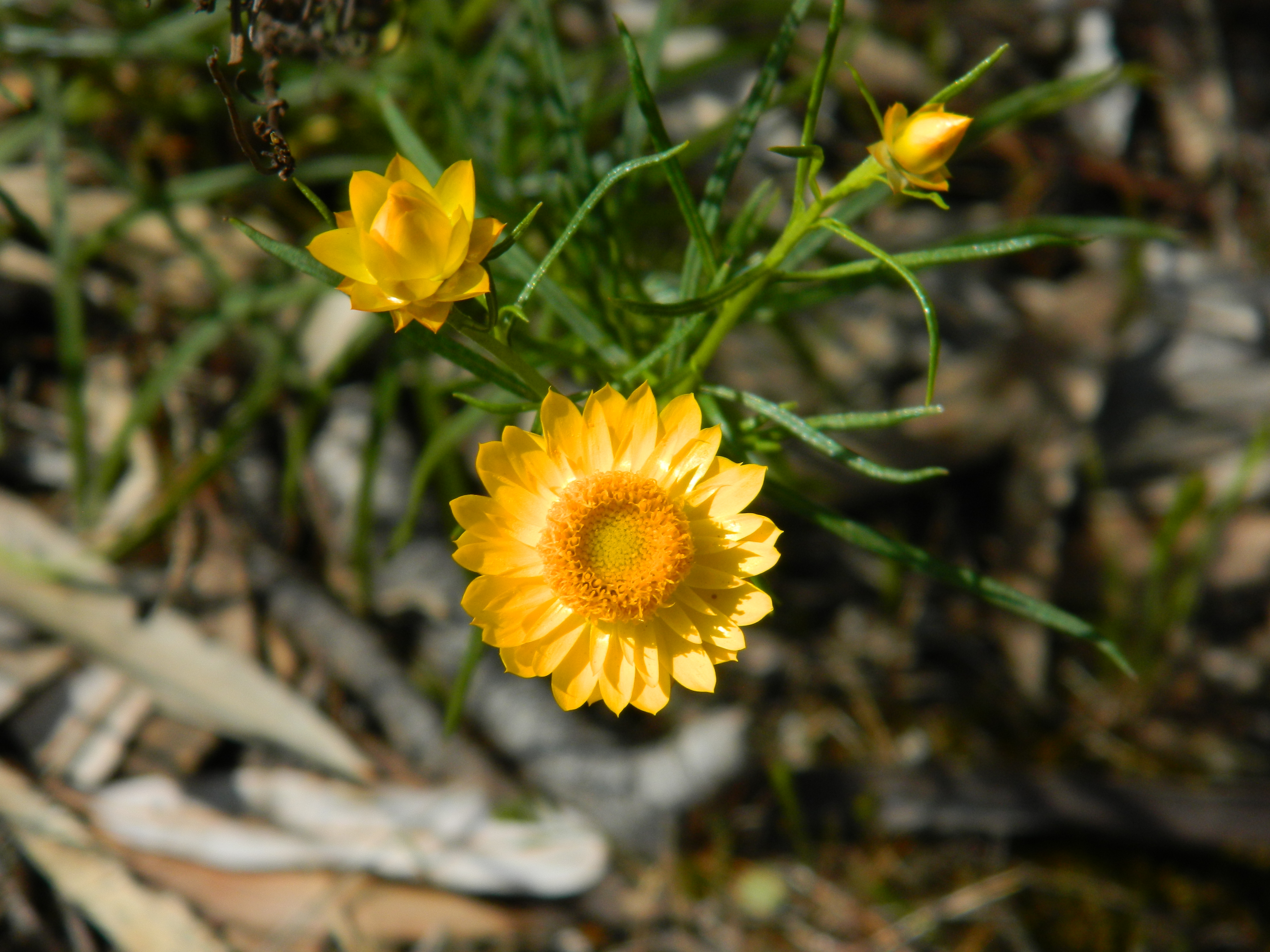
This is a suburban open space, edged by houses and roads, with buses trundling by and kids on bikes passing, and clearly enjoyed by people out strolling, masked up, getting their allotted hours of exercise.Everlasting daisy
We have never needed these places more than in these last two years, have we? We’ve never so intimately explored our neighbourhoods, noticed the seasonal changes in gardens and parks and our own backyards, chatted over front fences (at a safe distance), counted the birds, pounded the pavements and followed the bike trails.
I wonder if we’ll keep doing it, when the pandemic is over. Or will our horizons shift outwards again?
* Note: There are still hospitals and clinics, of course – just not here, and not enough.The pandemic has laid bare the great need for responsive and accesible mental health services of all kinds.












 Kelly Gardiner