On structure (and memory)

As I write this, I’m sitting in a bookshop, being a live window display as part of National Bookshop Day. I’m at Eltham Bookshop, one of our many terrific neighbourhood bookstores that do so much to support local writers and readers.

I’m at a little desk set up in the window. Different authors are taking shifts as writer in residence (I took the baton from historian David Day), while people drop in and out, kids try to talk parents into buying the latest book in their favourite series (there is a major Enid Blyton negotiation going on at the counter as I write), and I’m A Believer plays in the background.

I am surrounded by books. Within reach are Penguin Classics from Dickens to Wharton, and the new Text Australian Classics, which include a childhood favourite by Ivan Southall. Bliss. But I have to restrain myself. After four years of PhD focus, my To Be Read fiction pile is currently taller than me.

At present I’m reading Emma Donoghue’s Frog Music. I’m a huge admirer of her nonfiction work in literary history and her previous novel Room, in which the voice of young Jack, who has grown up in one room with his Ma, is a tour de force. Frog Music is a different thing altogether, a return to her previous genre of historical fiction, in this case set in 19th century San Francisco.


Book Cover - Frog Music


It begins with the death of one of the main characters, cross-dressing frog catcher Jenny Bonnet (that’s not a spoiler – it happens on page two). The book then skips from past to present and back again, as Jenny’s friend Blanche tries to understand why Jenny was killed, and by whom, and we experience Blanche’s memories from the moment of their first accidental meeting.

Shifting through time and tense, through characters’ memories, is not an easy juggling act for author or reader as I know only too well. I tried to do something similar in Goddess, in one sense.

Since a few people have asked about the structure of Goddess, and how much I plan in advance when I write, let’s focus on that for a moment.

Goddess has a much more formal structure than any of my previous books, with other organising principles overlaid. It is structured in five acts and a prologue, just like the tragédies en musique in which La Maupin appeared. The scenes in each act alternate between first person monologues (the recitative) and third person ensemble chapters in present tense which give us different characters’ views of Julie and her world.

That’s not quite how the scenes in a tragédie en musique are arranged within the acts, I admit. The acts and scenes at the Paris Opera were shared between the main characters and the ensemble, and passages where the ballet corps took the stage for a divertissement. The recitative was sung using a very refined technique by the lead singers, who also sang airs (arias in the Italian opera tradition), and together in duets or as an ensemble. It was actually Julie’s friend Thévenard who was the master of the recitative, evolving it into a more dramatic form.

But there are some ways in which I tried to replicate the feel of a tragédie – the big show-stopping divertissement is always at the end of the second act, for example. In Goddess, that’s Julie’s debut at the opera. The other less visible structural aspects are the catalogue of sins on which the recitative confession focuses, and the episodic form of the picaresque.

Of course, the overall trajectory is someone’s real story. I tried to track as closely as I could to the reported events in Julie’s life, so I had to know where she was, who was with her (such as the cast that performed in specific shows), seasons of the year, other things going on in France at the time, what people were reading, singing, wearing.

Did I plan it? You bet. You should see my spreadsheet. It’s a monster. It had to be.

A couple of people have asked about the idea of the book starting as a death bed confession – just as in Frog Music, you know the “end” of the story from page one.

I haven’t done that before, and it was one of the first creative decisions I made when writing Goddess. It’s a big call, I know (setting aside the fact that a quick squiz online or in an encyclopaedia will reveal Julie’s life – and death – story). Is it the end, though? Is it the point of the story? Or is that in the telling? Or both?

Then there’s the memory – Julie’s memories, and other people’s. Many of the third person scenes have a shifting point of view, an internal structure that (I hope) plays with perception and explores the idea of the spectator. How did all those people see Julie? What did they make of this remarkable creature in their midst, striding around in her breeches and cloak? How do different people perceive and remember the same incident? How does she remember? Why was she such a celebrity and what did celebrity do to her – and her legacy? How do the memory and the monologue connect?

I hesitate to use the term “flashback”. It has become such a cliché. But I’ve just been binge-watching the Netflix series Orange Is The New Black, in which creator Jenji Kohan uses flashbacks in such an interesting way. We meet its huge cast of characters as women in prison, get to know them a little, and then one by one across different episodes their past lives are revealed, in some cases dramatically different to the persona we’ve got used to. Makes sense. They are different people in prison. The flashbacks may explain their crime, but may not – they reveal something about the choices each woman has made, the people they were, the turning points that somehow got them where they are now. What’s even more fascinating is that the actors involved have to create these characters from the beginning without knowing that back-story – in most cases they don’t even know why their character is in prison. They may never know.
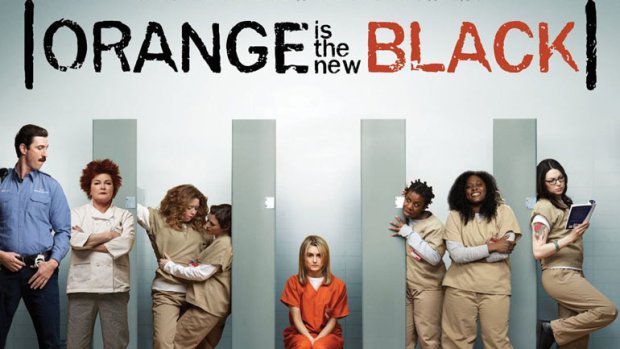
orange_is_the_new_black


In Frog Music, on the other hand, we start off knowing the crime but not the people. We as readers will make our way together, with Blanche, through the aftermath and her memories of the time leading up to the murder. I know that a crime has been committed, but I have no idea what will happen next.

There’s a great moment in Orange Is the New Black when the main character Piper returns to the main prison camp and has to retrieve all her belongings – the other inmates assumed she was long gone. She grabs her copy of Ian McEwan’s Atonement out of someone’s hands, shouting “Everyone dies!”
Book cover - Atonement

The ultimate spoiler, for one of the most excruciating shifting memory structures in recent fiction. I remember reading the final passages of Atonement for the first time and shouting in fury, while at the same time I couldn’t help but admire it.

Now THAT’S a flashback.


Coming up: Melbourne Writers Festival

I love Melbourne Writers Festival time of year. I used to love it in the olden days when it was at the Malthouse, and you’d have to jostle for coffee or in the bookshop with the international guests. I once held my breath for about five minutes because I found myself standing next to Marina Warner.


Writers festival poster


Nowadays it’s at Federation Square, which warms up in the middle of winter with huge groups of school kids lining up to meet Andy Griffiths or Morris Gleitzman, a wide range of topics and writing styles, and authors from all over the world.  It’s not quite so intimate, but it’s bigger and brighter and there’s stuff going on all the time – dozens and dozens of sessions, workshops for kids, an enormous schools program, walks around the city, keynote speakers, soirees and food and music and drop-in caravans and Twitter meet-ups. It’s a terrific program again this year.

I’ll be there too, talking about Goddess, Julie d’Aubigny, and the process of writing and researching her life.

My session is on August 29 at 10am. More details and bookings here.

It’d be lovely to see you there.

Celebrate the launch of Goddess

Here are a couple of Melbourne events to celebrate the release of my new novel, Goddess.

26 June is the official launch of the book by the lovely Alison Croggon. It’s at Readings Bookshop, Lygon Street Carlton, at 6.30pm.

The very next evening, I’ll be reading from the book as part of a sensational line-up at Hares & Hyenas, Melbourne’s queer bookshop,  in Fitzroy. Maxine Beneba Clarke and Michelle Dicinoski will read from their work too, and then we’ll all have a discussion with MC Kath Duncan about writing and reading and whatever comes up. Should be fabulous. That’s on 27 June and you can book for that here.

Image of book cover - Goddess, a book about Julie d'Aubigny


Hope to see you soon!

The goddess ascends

Today is the official release date for Goddess.

It should be in good bookshops and  all the ebook platforms now.

I do hope you like it.

Image of book cover - Goddess, a book about Julie d'Aubigny

If you’re in Melbourne, the official launch is on 26 June at Readings Books in Lygon Street, Carlton.

I’ll be reading from the book the following night, June 27, at Hares & Hyenas in Fitzroy, along with some other sensational local writers reading from their work. More details on that event soon.

You can read more about the novel, and about its very real and remarkable subject, Julie d’Aubigny, here.

Lately I’ve been…

… too busy to blog. Sorry.

A crazy month or so. It started with the Melbourne Writers’ Festival in late August which was great but pretty intense. Or maybe it started the week before that – Book Week! That was when I went back to my childhood public library in Nunawading, and talked to a lovely group of women of all ages about reading and writing. And then after the Festival, I spent a couple of exhilarating days as Writer in Residence at Kilvington Grammar School.

Since then I’ve been making final revisions to the manuscript of  Tragédie, the novel I’ve been working on as part of my PhD. It’s to be published by Fourth Estate in the middle of next year under the new title Goddess. It’s in the kind hands of my editors now.

I’ve also been teaching Writing Fiction this semester at La Trobe University which is stacks of fun – but a lot of work.

And as you may have noticed, The Sultan’s Eyes has come out recently too.

So I can’t report on all the fabulous books I’ve read lately because I haven’t had a moment spare for reading.

But it’s a great deal better than being bored.


Coming up

Winter in Melbourne. We should be huddled inside out of the cold, our hands cupped around mugs of hot chocolate.

But no. It’s festival time. (Although, let’s face it, it’s always festival time in Melbourne.) So instead we are shrugging on heavy coats, wrapping scarves theatrically around our necks, and heading out into the city.

Coming up in August is the Melbourne Writers Festival, our annual book fest.

The full program isn’t released for a while yet, but the teasers so far have been more than enough to entice me: New York storytelling troupe The Moth, London Review of Books, a local version of the Edinburgh World Writers Conference, and a whisper or two about a keynote by Marina Warner. I am so there.

But I’m also appearing in the Schools Program this year, and what a program it is. Deborah Ellis, Margo Lanagan, Cath Crowley, Shaun Tan, Scott Westerfeld – the list of local and international fabulousness just goes on and on. Teachers and school librarians – if you haven’t booked your school groups in yet, best get onto it soon.

It’ll all be terribly exciting, and in the middle of it I’ll be:

  • Talking about books that matter with Alison Croggan and Morris Gleitzman on 26 August (my plan is to let them say deep and wonderful things and just nod wisely)
  • Debating powerful female characters with the powerful Justine Larbelestier on 28 August
  • Getting geeky about research with Kate Forsyth on 29 August.

Again this year, the Festival is running Write Across Victoria, a terrific competition for young writers. Just choose one of our story starters, and make it your own. There are stacks of prizes to be won, and Cath Crowley and I will be at the Write Across Victoria awards event on 29 August, talking about how we got started as writers. Story competition entries close on 5 July, so get writing!

The Writer’s Toolkit

I’ve posted quite a lot about different tools that writers can use to make the most of the web and their own time.

And now there’s a course: The Writer’s Toolkit, at Writers Victoria from 5 June.

In it we’ll cover:

  • Productivity tools to help you manage time
  • Finding and managing information and resources
  • Note taking and research
  • Drafting and plotting tools
  • Networking and promotions online.

The course runs for four weeks, one night a week. More details and bookings here, but be quick! Booking deadline looms.

Coming up

I’m reading work in progress at Bespoken this week: Thursday 25 October at 7.30 at Hares and Hyenas bookshop in Johnston St, Fitzroy.

I’ll read a couple of chapters from Tragédie. Tom Cho and Daniel G Taylor are also reading from their work. Should be a great night.

More info and bookings  here.

After that I’m laying low for a few weeks so I can move house and recover from all this month’s major deadlines and get ready for next month’s deadlines.

I’ve finished writing the sequel to Act of Faith – it’s called The Sultan’s Eyes and it’s with the publisher. I’ve even seen a few rough designs for covers, so things are rocketing along.

Rather quickly.

Coming up

Next week, I’m celebrating Adult Literacy Week with the good folk at Park Orchards Learning Centre.

The topic?  The Journey of the Book – From Inspiration To Publication. A writer (that’d be me), editor and publisher discuss the stages of creating a book.

It’s at 7pm on Thursday, August 30. Cost: $25. Bookings: 9876 4381. More information in this article in the local paper (with a marvellous typo in the final line).


On 15 September, I’m at Fitzroy Library introducing people to Twitter. We’ll talk about how it works, what on earth it’s for, and how to use it for good not evil.

That’s on Saturday 15 September from 1 – 3.30pm at Fitzroy Library. Bookings are essential, apparently (certainly the last workshops I did there booked out quickly). Call 1300 695 427 or email yarralibraries@yarracity.vic.gov.au. More information on the library website.


Coming up in July

After two residencies and many weeks away, I’m back in Melbourne and settling in for winter. I’m working on the redraft of Tragédie and waking up at 6am remembering things I still need to fix in The Sultan’s Eyes.

A couple of appearances:

On Saturday July 7, I’m part of a panel called ‘What’s fit to print? Issues in youth literature’. It’s part of the Bayside Literary Festival: Art of Words, and it’s a revival of a panel discussion with Hazel Edwards, Adele Walsh and Maria Pallotta-Chiarolli at the Midsumma Festival. We had so much fun we’re doing it all over again, this time with the addition of George Ivanoff. Moderated by Crusader Hillis.

2 pm in Brighton: details here.

Then on Wednesday 18 July I’m at Boroondara Library. The session is designed especially for boys 10 and over – I reckon we might be talking a bit about pirates. (The lovely Rebecca Lim presented a session especially for girls this week. Lucky things.)

7pm, Hawthorn Library: details here.