How publishing happens

People – especially emerging writers – often ask me what happens when you publish a book? How long does it take? Can you say you don’t want to change anything? Do you get any input on how it looks? Don’t you resent being edited? (Short answer: no, I love it.)

Well, here’s what usually happens in traditional publishing (and is happening right now, for Miss Caroline Bingley, Private Detective):

First, you write your book. I know that sounds silly, but plenty of aspiring writers worry way too much about getting published before they’ve actually finished the thing. I get that. It’s scary and also exhilarating to think you might one day publish a book, but you won’t publish anything at all if you don’t write it first, and make it as good as it can be.

Second, you pitch your book. That’s a whole topic of its own so I won’t bang on about it, and anyway I leave that to the experts nowadays – my fabulous agents at Jacinta Di Mase. They know what they’re doing, and they do all the hard work.

Then, once you have secured a publishing contract, your publisher’s processes kick in.

Editing rounds

So, you get early feedback on the manuscript from the publisher. These might be queries about plot points that miss the mark somehow, or about character development or voice: the big questions that an expert eye picks up, from someone who really cares about the book. Your publisher also knows what else they’ve got coming out (maybe similar titles, or in the same genre), in general what other houses have out, what the market’s doing, and what readers expect.

You have a think about any issues they’ve raised, respond accordingly with any amendments, and submit your final manuscript. Your book is given a slot in the publishing timeline which gives everyone enough time to work on it, but also aligns it with overall strategy (eg, not clashing with another similar title, lining it up for Mother’s Day or Christmas sales, hitting shops at the right time for its anticipated readers). At this point, your agent or publisher will start pitching it elsewhere – for translation rights, or adaptation.

Then there’s a structural edit. This may be done by an in-house editor or outsourced – either way, it will be done by someone who knows their stuff. They focus on big structural issues like character and plot, and their fresh eyes can pick up continuity errors or variations in voice, for example. They might recommend structure or plot changes, or point out the need for more clarity. Often they ask questions rather than edit – they leave the resolution up to the author. I’ve never had a serious argument about anything significant with an editor or publisher, and find that questions are usually insightful and all about making the book better.

Ideally this feedback also includes any outstanding issues from the publisher. In the case of Miss Bingley, our publisher, HarperCollins, brought together any feedback from all three publishers who are releasing the book (Australia/NZ, UK and US), plus the editor’s notes. And as the book is co-written with Sharmini Kumar, the two of us had to go away and figure out what we thought about anything significant, and we both went over the manuscript again to make any changes.

By this time, generally, you’re pretty sick of reading your novel, but again, you read through it all, correct any errors and give thanks they were discovered early on (!), and again amend the manuscript to make sure it works for you and the publisher.

But there’s no rest for the wicked, since after that comes the copy edit. Again, this is done by a professional editor, in-house or outsourced, who goes over the manuscript word by word, line by line, noting any errors (simple things like missing words or typos) and making suggestions about anything they find – might be word choice, sentence structure, the rhythm of a scene, overall pacing, dialogue, plot – anything. And when it’s historical fiction, they also ask questions like, “are you sure that type of hat was worn that year?”, to send you scurrying for your research notes (they are usually right to ask). And again you go through it, word by word, line by line, accepting their suggested changes, coming up with your own solutions, or flagging things for further discussion.

Pages of a book rolled over
Photo by Rahul Pandit on Pexels.com

The look of the thing

By now you probably have some cover concepts presented to you. It happens sometimes that authors hate their book covers, but I think it’s pretty rare, since publishers want you to love it. After all, you have to sell it too. Sometimes you get a few options to choose from, and sometimes they design different covers for different publishing territories. Whatever happens, I always go into the process knowing (from years working with designers in print media) that it’s someone else’s creative process, and I respect that. By the time it gets to you, a lot of people have worked on it, and they know what they’re doing, but you usually get a chance to make suggestions as well. (A confession: I asked for more arm muscles on the Julie figure on Goddess! Got knocked back on that. But that was such a gobsmackingly gorgeous image, and cover, I was very happy. And anyway, it wasn’t her sword arm.)
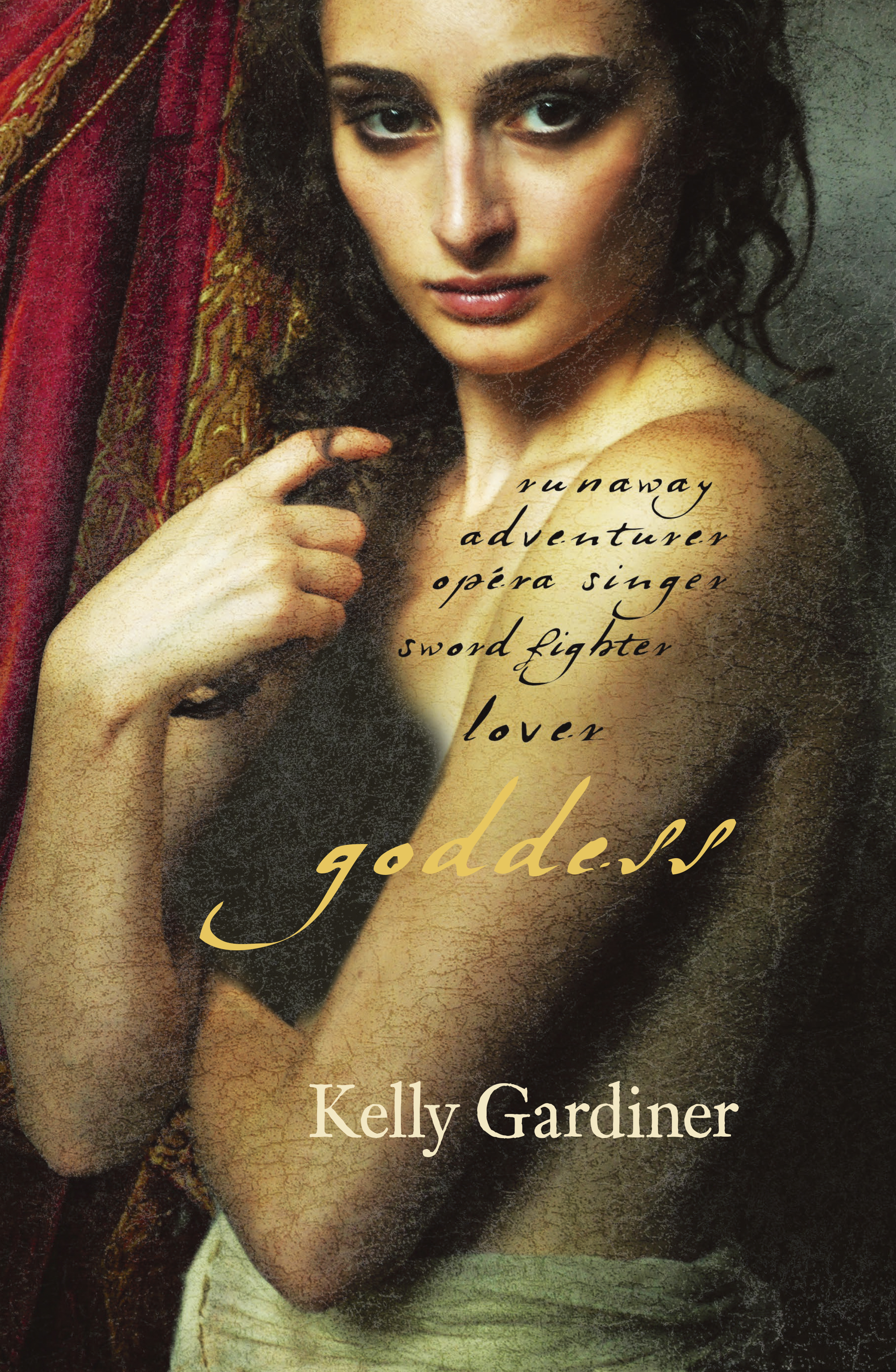
Image of front cover of Goddess

After the copy edit, your changes are incorporated, there may be a bit of back and forth about little things, and then the book is typeset. Yes, we still call it that. Every book has an internal design, even if you don’t really notice it, with creative decisions on typeface, chapter headings, drop caps, etc. This is the critical stage, because after this, it’s hard to change anything major.

Once it’s typeset, everyone proofreads it, over and over, even though by now you never want to see the bloody thing again. For some books, there’ll be a slightly different edition for different territories – the main issue is US spelling for that edition.

For each of these stages, you’re on a deadline and so are all the people behind the scenes at the publishing house. So be kind to anybody who says they’re proofreading or working through copy edits. They may have letters dancing before their weary eyes.

While this is happening, advance reading copies (called ARCs – without your final corrections) go out to booksellers, reviewers and journalists. So this is the first time your book is out in the world, even though it’s semi-secret and may contain errors. These early copies are for people who need to know in advance what the story is, who it’s for, and what they can do with it – order a million copies, set up interviews, book you for festivals, or get ready to review when it hits the shops.

And from then on, it’s in the hands of the publisher’s sales, marketing and publicity teams for pre-order, then promotions and sales to booksellers. And eventually in the loving hands of your readers.

All of that, in the case of Miss Caroline Bingley, Private Detective, will have taken about a year and a half, from contract to publication in April 2025.

We can’t wait to get her into your hands.

Lately I’ve been…

Things are getting pretty exciting on the publishing front. We (my co-author Sharmini Kumar and I) submitted the final manuscript of Miss Caroline Bingley: Private Detective a couple of months ago and we expect copy edits back from HarperCollins any day now.

Even more thrillingly, we’ve seen cover designs for the US and Australia/NZ/UK editions and they are gorgeous. We could show you, but we’d have to shoot you, so you’ll have to stay tuned.

It’s not out until April but things are heating up behind the scenes.

While that’s happening, I’ve been working on a new historical crime novel, currently titled Afterwards, which is set at an archaeological dig on Hadrian’s Wall just after the Second World War. I’ve got a first draft and am revising that now.

Teaching time

Last year, I gave up teaching full-time, after around a decade at La Trobe University. I do miss it, especially my colleagues and students, but it was the right time. I want to focus more on writing and various other projects.

But somehow I couldn’t quite seem to stop. I love teaching writing, working with writers, talking and thinking about writing.

So I’ve figured out a way to have the best of both worlds: teaching what I want to teach, the way I want to teach it, a few times a year. A couple of months ago I set up New Pages Writing Retreats & Masterclasses, and I’m looking forward to teaching in different ways over the coming year. I’ve been reviewing my favourite writing books, exploring new methods of teaching and articulating thoughts about writing, and preparing in every way I can.

First up, there’s a one-day masterclass on How to Build a Heroine, for any fiction writers with a heroine in mind, but especially for genre and YA writers. That’s on 21 September, in person, in Melbourne.

In November, I’m focused on one of my favourite genres, with another one-day, face-to-face masterclass, Do Crime: Writing Unforgettable Crime Fiction. That’s on 16 November, also in Melbourne.

Then early next year, I’m hosting my first weekend writing retreat at the gorgeous Continental House in Hepburn Springs. It’ll be a fiction intensive, with masterclasses and writing exercises, and lots of lovely food. That’s in March 2025 and bookings came in almost as soon as I opened them!

Really looking forward to all of these, and more.

And because I’m me, I’ve also set up a private online writing community for people who come to the classes, where we can stay connected, share tips and opportunities, and I can offer a few extra goodies.

So all in all, even though I haven’t been teaching full-time, I’ve been pretty busy.

Image of Kelly with list of classes - same as text in blog post

Huge news

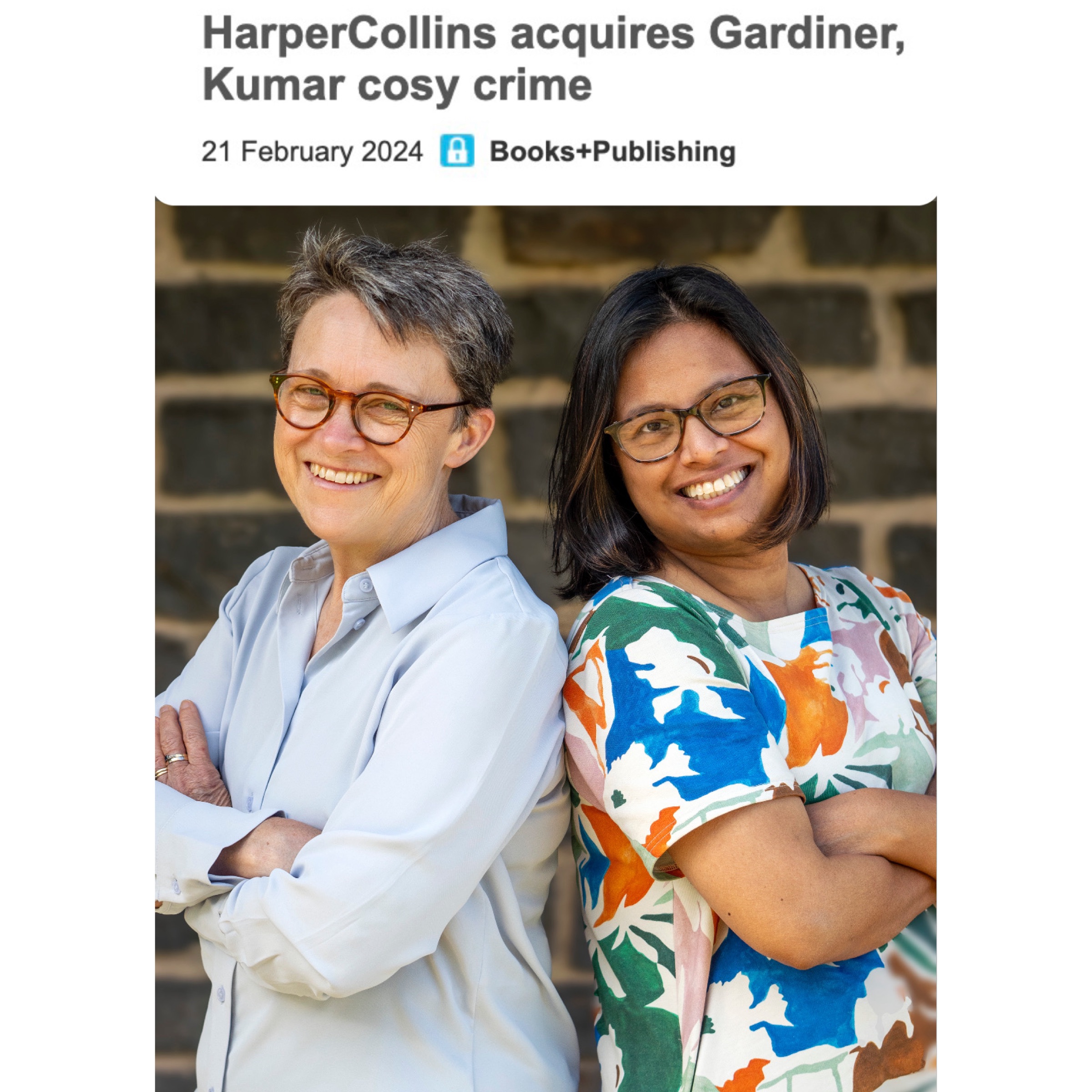
I’m absolutely delighted to announce that HarperCollins Publishers Australia has acquired World rights to publish Miss Caroline Bingley, Private Detective, the crime novel I co-wrote with Austen expert and all-round good egg, Sharmini Kumar, founder of AustenCon.

That means the novel will be published simultaneously in Australia, New Zealand, the UK and North America in April next year.

From the HarperCollins press release:

Roberta Ivers, Publisher at HarperCollins Australia, said: ‘I’m so excited to be publishing this brilliant, affectionate tribute to outspoken, independent women of the Regency era alongside my colleagues in the US and the UK, Rakesh Satyal and Cat Camacho. Not only is this story a delicious romp about women who won’t take no for an answer, it treads a skilful line between humour and pathos, with serious themes around colonial privilege that give us the other side of Austen’s story. I know everyone will fall in love with Caroline Bingley’s superior talents, as we all have around the world.’

Rakesh Satyal, Executive Editor, HarperVia said: ‘This ingenious homage to Austen is both respectful to the source material and daring in its scope, revealing to us new layers of this oft-visited and beloved world. I’m thrilled that this book will be available to readers around the globe. It’s fresh, wise, and endlessly diverting.’

Cat Camacho, Commissioning Editor, HQ, said: ‘I devoured Miss Caroline Bingley, Private Detective in one sitting. At the first page the authors pick you up from wherever you are and transport you utterly into the Regency world. It’s a brand-new, completely fresh take on the classic we all love, giving fan favourite characters their own stories and voices for the first time. I can’t wait to see it unleashed on the world.’

Literary agent Jacinta di Mase said; ‘From the moment I first pitched the concept to Roberta Ivers during an informal catch-up between sessions at Sydney Writers Festival in 2022, I knew she was the right publisher for the inimitable Caroline Bingley.’ While fellow agent Danielle Binks adds; ‘The reaction from the entire Harper family has been wonderful! It felt like we jumped from admiration to love, from love to acquisition in a moment, and we’re delighted at this home for Caroline, Kelly, and Sharmini.’

We’re pretty delighted too! Huge thanks to our agents, Danielle Binks and Jacinta Di Mase, and to everyone at HarperCollins.

Photo of Kelly and Sharmini, back to back and smiling.
Photo by Liliana Braumberger in this screenshot of the news in the trade magazine, Books & Publishing.

Lately I’ve been…

Walking

Last month I was in the UK, walking Hadrian’s Wall – that is, following the line of the ancient Roman wall from coast to coast, right across England. I walked for eight days – sometimes plodding, I have to admit – with a day off in the middle to rest my weary feet and visit the spectacular Roman fort at Vindolanda. There are days when there aren’t too many traces of wall, especially at either end, but then you climb a hill and see hundreds of metres of it stretched out before you, or the remains of a fort or milecastle high on a crag, and are amazed all over again.

View of cliffs, a milecastle ruin and Hadrian's Wall, near Once Brewed

That walk was partly research for a project I’ve had in mind for many years, Sublime – essays on walking, pilgrimage and the idea of the Sublime. And I also wanted to write something (she says vaguely) about digging up the past and the women archaeologists of the 1940s. And it was very vague. I didn’t have a specific idea but felt like it would come on the walk. And it did. So I wrote in my head while I walked and scribbled in the evenings when I couldn’t take another step unless it took me to dinner. I’ve written a bit about women archaeologists in the Firewatcher Chronicles, but this is for adults and a bit more like a crime/thriller. It’ll be set in Northumberland, somewhere fictional but on the Wall. Early days yet, but I’m having fun with a new cast of characters.

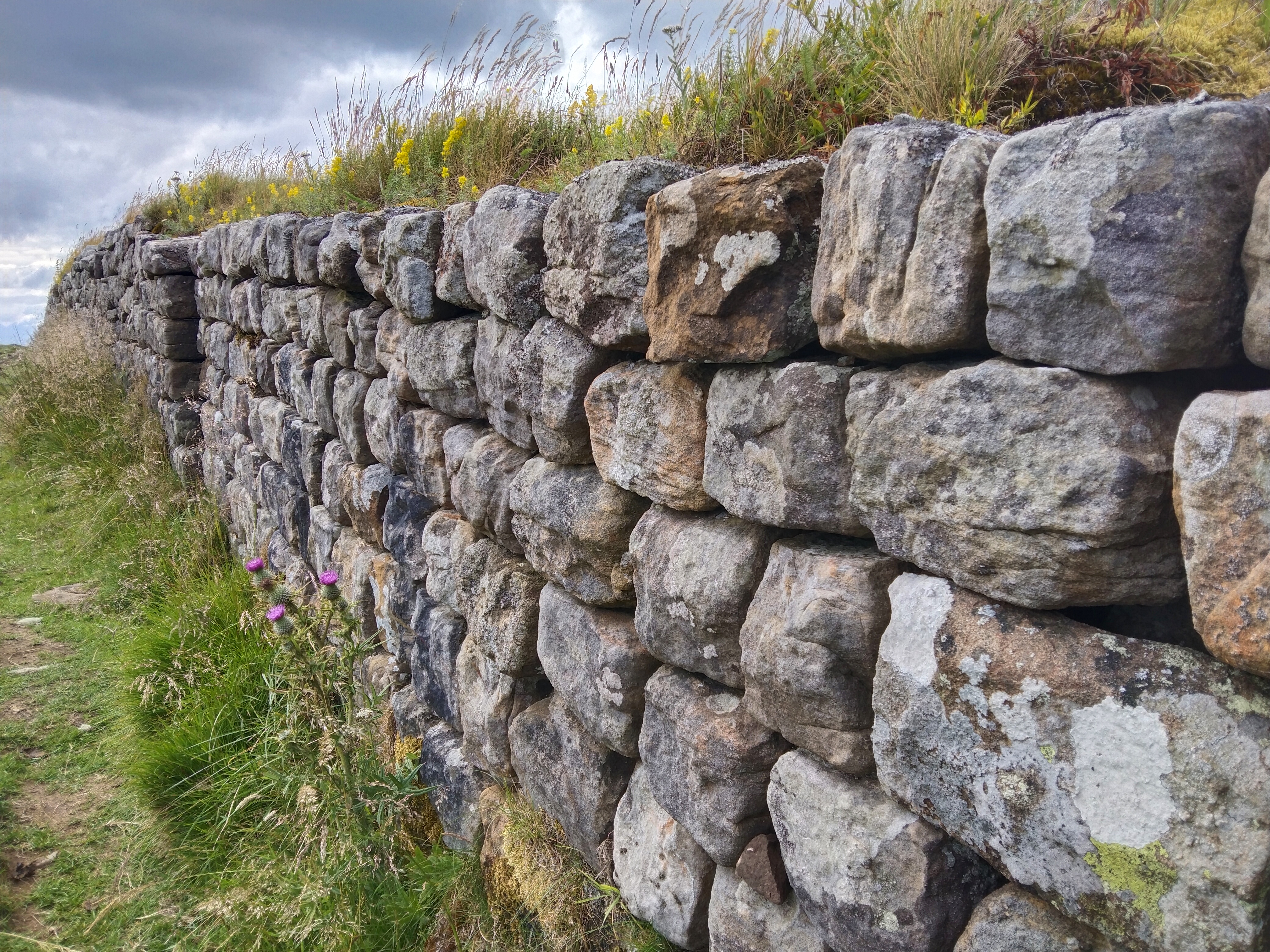
Close-up view of Hadrian's Wall stones with wildflowers growing on top

It’s the first time I’ve done such a long-distance walk and there were times I swore it would be my last, but I’m already planning the next.

After the Wall walk I spent a week on the stunning Northumberland coast, exploring ruined and not-so-ruined castles like the spectacular Dunstanburgh (below), walking along beaches and headlands, immersing myself in the history of the regions, and eating fish and chips.

Gatehouse and towers, Dunstanburgh Castle.

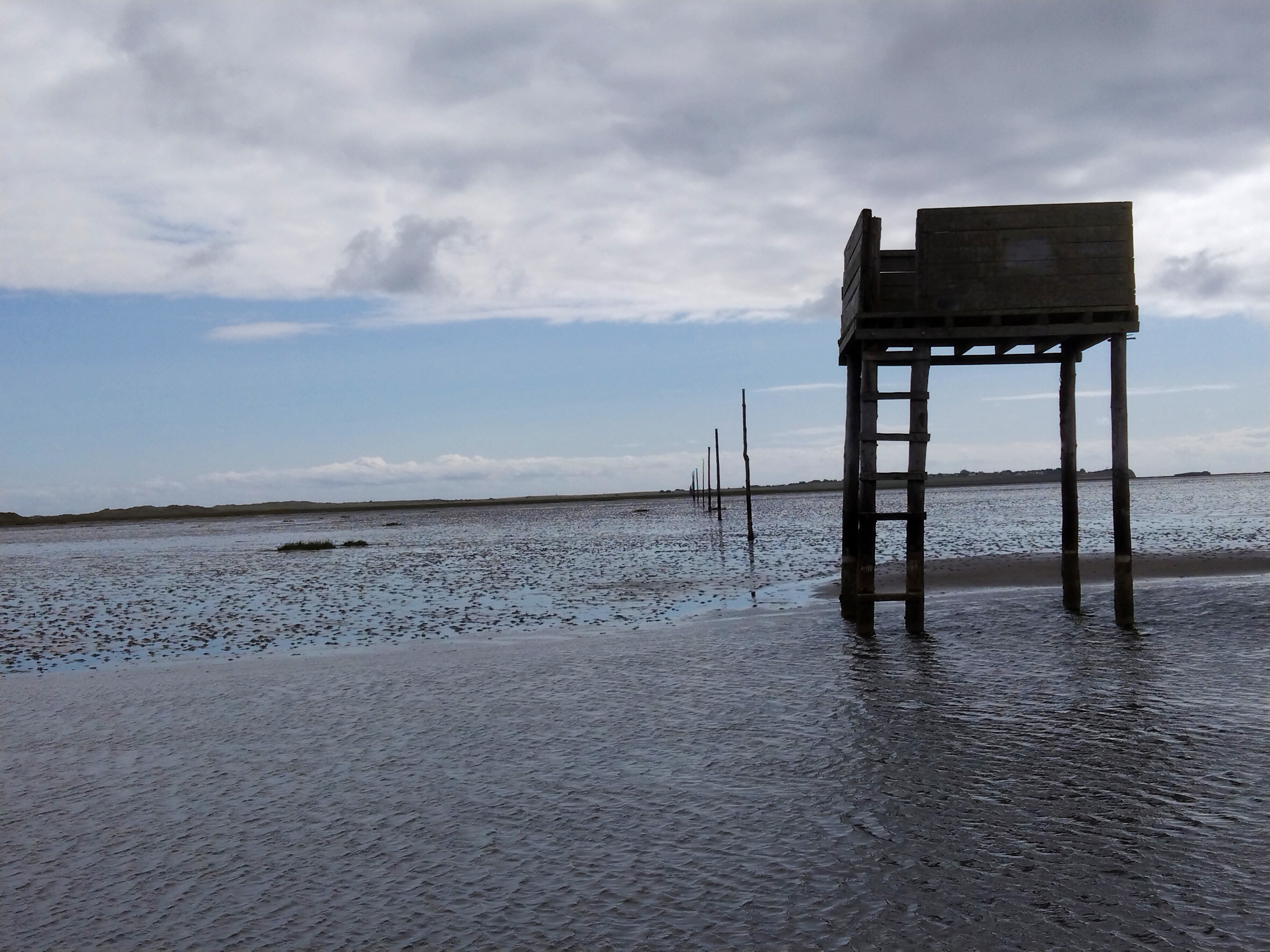
One of the very best days was my visit to Lindisfarne, the Holy Island. I walked, barefoot, as people have for centuries, across the Pilgrim’s Way to the island, tracing the route that the monks and their most revered bishop, St Cuthbert, walked. The spirit of St Cuthbert is everywhere on the island – in the ruins of the priory, on the tiny outcrop where he spent some time as a hermit, and most particularly on the sands. You can only cross at low tide, following a line of sticks – there’s the risk of quicksand and it can be dangerous if you don’t time it properly and there are refuge huts like tree houses for people who get stranded.

View across the sands with a line of sticks that mark the way and a refuge tower

I’m not at all religious, but this walk felt like a very precious thing. Walking in ancient footsteps (well, medieval) and barefoot through sand and sea water. Two other women joined me and we walked together – at the other side, one said she would never forget that experience.

Nor will I.

Writing

Over the past few months, I’ve finished and sent off several manuscripts – my poor agents have quite a lot of reading to do.

They include Roar, a YA novel set in the 1980s in Apartheid South Africa; Wildfall, a YA historical fantasy; and Fine Eyes, the first Miss Bingley mystery, which I’ve written in collaboration with Sharmini Kumar.

Now I’m working on Modern Girls, set in the south of France just as the Second World War begins – it’s about a group of Modernist painters and writers, including exiles from Germany and elsewhere, who are forced to decide how to respond to the threat of war and invasion. It’s not easy writing either, as I’m trying (perhaps failing) to recreate the rhythms of different kinds of Modernist texts. We shall see.

And also chipping away at two nonfiction projects: Sisterhood, about the First World war pacifists; and a biography of La Maupin.

So many projects. As usual.

But to that end I’ve recently decided to stop working full-time and focus on my writing. It’s a huge change and I’m not quite used to it yet. I’ve also had a writing room built in the backyard so I’ve got absolutely no excuses.

Just write.

Reading

My reading brain fell out of my head during lockdown but it’s slowly coming back to me. Recently I’ve enjoyed Cuddy, by Benjamin Myers (a novel sort of about St Cuthbert), and I reread my childhood favourite Rosemary Sutcliff’s Eagle of the Ninth series while I was walking the Wall. I loved Alison Goodman’s The Benevolent Society of Ill-Mannered Ladies, Amie Kaufman’s Isle of the Gods, and Jock Serong’s The Settlement (a tough read, but excellent).

Coming up!

This week I’m heading up the Calder to one of my favourite events, Bendigo Writers’ Festival. It’s always an excellent program and a fun bookish vibe around town.

I’ll be talking with school students as part of Word Spot on Thursday 4 May about the Blitz, mudlarking, Vikings and Romans in The Firewatcher Chronicles.

And then on Friday 5 May I’m hosting what should be a fascinating discussion on writing fiction about the colonial past (and present … and futures), with Claire G. Coleman, Jock Serong and Paul Daley.

On June 2, I’m part of the Wheeler Centre’s Telling Tales series, in which three YA authors and three teen writers each read out a new short story – in this case on the theme of Reality Bites. Alice Pung and Will Kostakis are on the bill, so it is going to be the excellent fun, I just know it. If you’re around Melbourne, I’d love to see you there.

You’re dead to me!

I was delighted to be approached to help out with some research on La Maupin for this BBC4 episode of You’re Dead to Me, a terrific series hosted by Greg Jenner, which takes a different person from the past each episode, digs into their story, and combines that with bona fide comedy.

You can listen here or subscribe on your usual podcast app. It’s great fun.

Greg is joined by Dr Sara Barker and returning special guest comedian Catherine Bohart to travel back to 17th-century France and meet the notorious Julie d’Aubigny.

Having spent so many years researching her for Goddess, I love hearing people respond to her story, and I also love hearing historians engage with the materials – both dubious and as-legit-as-we-can-get when it comes to La Maupin.

Here’s the image they discuss (I think):

A contemporary portrait of la Maupin - a woman in a heavily embroidered costume with extravagant headdress.
It’s a contemporary engraving made of La Maupin, in costume and as if on stage (published by J Mariette, rue St. Jacques aux Colonnes d’Hercule, Paris and colourised later).

PS: There’s also an episode on Grace O’Malley, about whom I’ve also written (but not yet published).

Lately I’ve been…

Haven’t posted for ages, sorry. I think the pandemic ate my brain.

Don’t know about you, but all through our many lockdowns I found it hard to read, hard to write, and hard to focus. My teaching work has been demanding, with the sudden shift to online and everything else going on (remind me not to volunteer to write any more academic articles this year!).

But I have been chipping away at a few writing projects and right now I’m on my Creative Fellowship at Varuna, the national writer’s house, so I’m ploughing through stuff.

Front view of Varuna writer's house
Gorgeous, wintry Varuna

Here’s what I’ve been working on lately:

Fine Eyes: Miss Caroline Bingley, Private Investigator

I’ve told you this before, but I’ve been collaborating (for the first time) on an Austen-inspired crime novel, with playwright and Austen expert Sharmini Kumar. We’ve had great fun testing out our Regency research and plotting mysteries, and we’re nearly done. I know a few people who write collaboratively, and it’s been such an interesting way to work – especially during lockdown.

Wildfall

Wildfall is a YA historical fantasy novel – I mean, it’s fantasy, set in an imagined world, but influenced by the history of eighteenth century Europe. Sort of. Except with giant eagles. I’m in the late stages of drafting.

Roar

What I’m working on here at Varuna is Roar, a YA novel set in the 1980s in London and then in Africa, and especially Apartheid-era South Africa. I wrote a solid draft a while ago, on a May Gibbs Trust Fellowship in Canberra, and then undertook another round of research in South Africa, but then had to put it aside when the pandemic struck – like just about everything else. But I’m enjoying revisiting it now, and hope to have a final draft by the end of my time here.

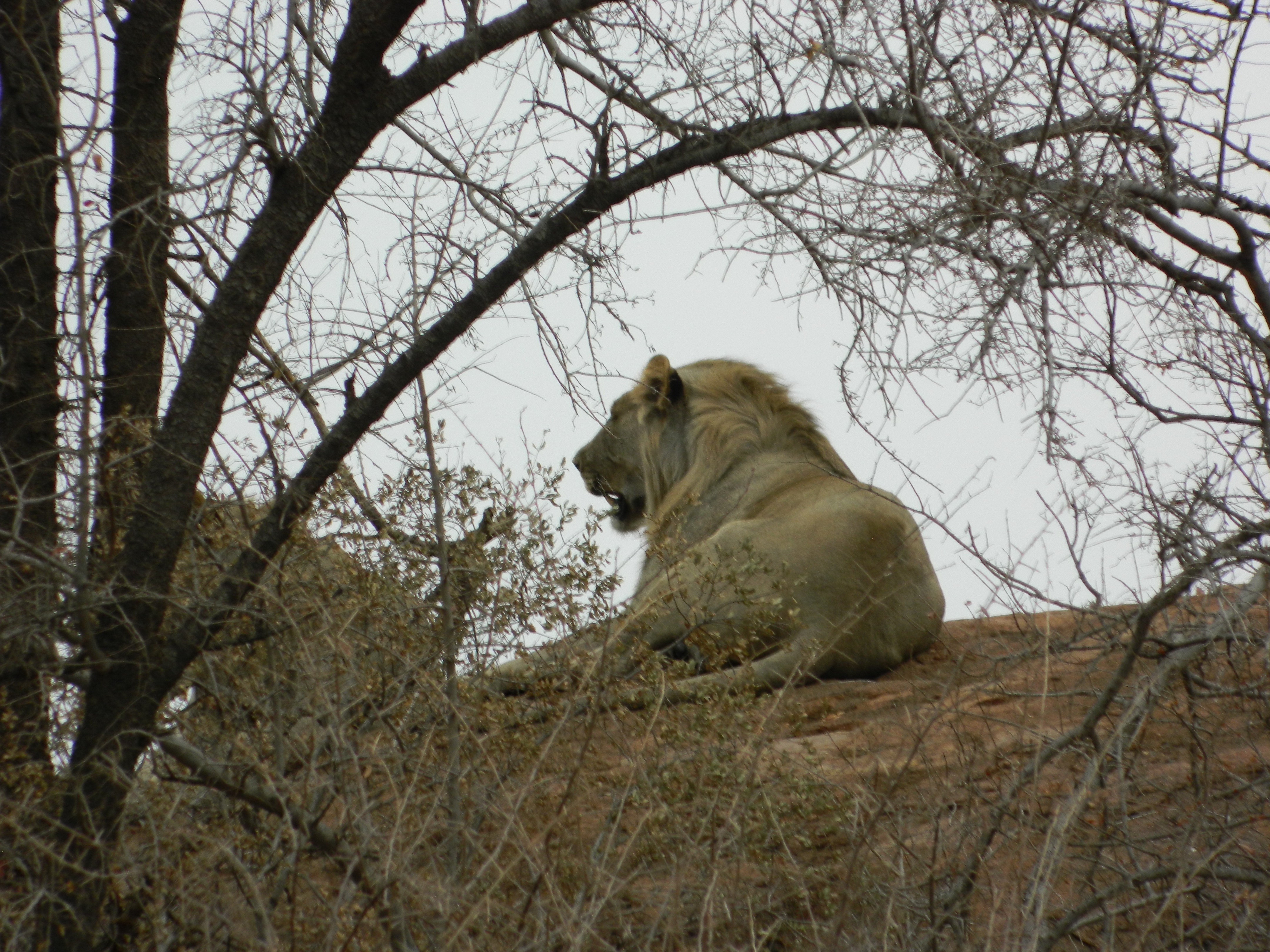
Lion on a high hill
Lion – Pilanesberg National Park, 2019

They’ll be a while yet, but I can’t wait to share these novels with you.

Goddess on screen

I am absolutely delighted to announce that Deux Dames Entertainment and Black Magic have optioned my novel Goddess for the screen.

Deux Dames is a production company founded by actor/producers Vera Bulder and Clara McGregor to create women’s stories, and Greg Lauritano and his company Black Magic make independent films including the recent Big Gold Brick (with Andy Garcia, Megan Fox, Lucy Hale and Oscar Isaac). They imagine Goddess as a limited series.

So everyone who’s been hanging out for a biopic about Julie d’Aubigny – it’s one or hopefully several steps closer.

Here’s the story in The Hollywood Reporter.

I’m pretty excited. I love that book, and I don’t feel like its story has ended yet.

So stay tuned!

Image of front cover of Goddess

Vigil is out now!

Vigil, the final book in The Firewatcher Chronicles, is officially published today in Australia and New Zealand.

In this, the third of the Chronicles, Christopher faces life in London after D-Day, when Hitler’s dreaded secret weapons – V1 and V2 rockets – blasted the city. But he has his own private challenges too, racing across time to discover the secret of the Roman ring he found in the Thames, and to help his friends uncover an ancient temple. It seems simple enough to slip through time back to Roman London, rally his own ragtag troops through the centuries, and beat his arch-enemy Brother Blowbladder. But mastering the power of the ring is never easy.

You can read more about Vigil here.

Look out for it in your favourite bookshop (they’ll order it for you if they don’t have it) or online store.

Published by Scholastic.

The Firewatcher Chronicles are headed to Russia

I’m delighted to announce that Eksmo, one of Europe’s leading publishers, has bought the rights to translate and publish The Firewatcher Chronicles in Russian.

Eksmo publishes more than 8000 authors  and 80,000,000 copies of books in Russia each year, and I’m so pleased that my stories of Christopher and his friends will soon be in the hands of young Russian-language readers.

Three new book covers