Learning to fly

About to start redrafting on 1917.

It’s partly about a young Australian lad who learns to be a pilot and flies on the Western Front during that terrible year in the First World War.

You might remember I spent a few weeks at Bundanon writing the first draft. Since then, I’ve edited that version, fixed up a few things here and there, and done another round of research on specific details.

But sometimes you need to let things sit for a while and marinate. Or fester. Or something.

Anyway, I’m ready to get back into it again.


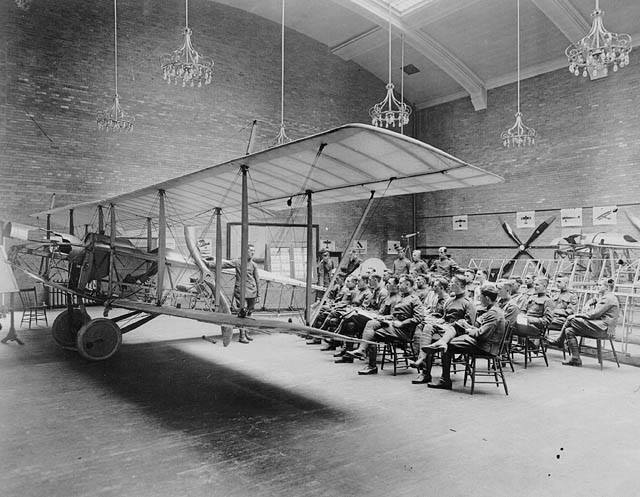
Royal Flying Corps Aviator School

Royal Flying Corps Aviator School

Misty mornings

It’s the last morning of my writing residency at Bundanon. I’m sitting with my coffee, looking down towards the billabong. Mist settles softly in the gully.

It’s a magic place, and it’s been a very productive time for me here.

I admit I was a bit frenzied, scribbling away for long hours. But it’s rare to get that opportunity – for me, anyway. I’m one of the many writers (the majority) who also have jobs and write in any cracks in time we can create.

I’ve written the first draft of 1917 – let’s call it draft zero, because it’s pretty ratty in places and needs many more drafts before it’s approaching readable. But it’s down on paper – well, in Scrivener – and out of my head and I know what happens to everyone in the end and now I can’t even look at it. I’ll print it out in a week or two, read it in full, and then start work on it again.

Then I did some work on a short story about a bushranger, for an anthology of adventure tales.  And at some point I sat on the river bank and wrote a little piece about fishing for another anthology.

Image of river

Shoalhaven River below Bundanon Homestead

Yesterday I even had a day off, checking out the Bundanon homestead with its miraculous collection of generations of Boyd family artworks, and then spent hours with dear friends and dogs at Culburra beach.

Image of homestead and trees

Bundanon Homestead – built 1866 and later home of Arthur and Yvonne Boyd

So next, it’s back to Canberra overnight, a few hours’ research at the National Library (and hopefully a glimpse of the Rothschild manuscript) and the long drive back to Melbourne and reality.

I’m sorry to leave, sorry to stop writing all day and night, sorry to have to wear clothes that aren’t topped by a dressing-gown, and most of all sorry to leave this place.

I’ll be back.

Image of trees and palms

Cedar walk, Bundanon

What I’m doing and how I’m doing it

Right now, I’m in the middle of a drafting blitz, on a residency at beautiful Bundanon.

Writing residencies like this are intense,  with long hours at the desk every day. But for someone like me, with jobs and other commitments, it’s rare to find time when I can just concentrate on one thing. All day, every day.

Except there are some distractions.

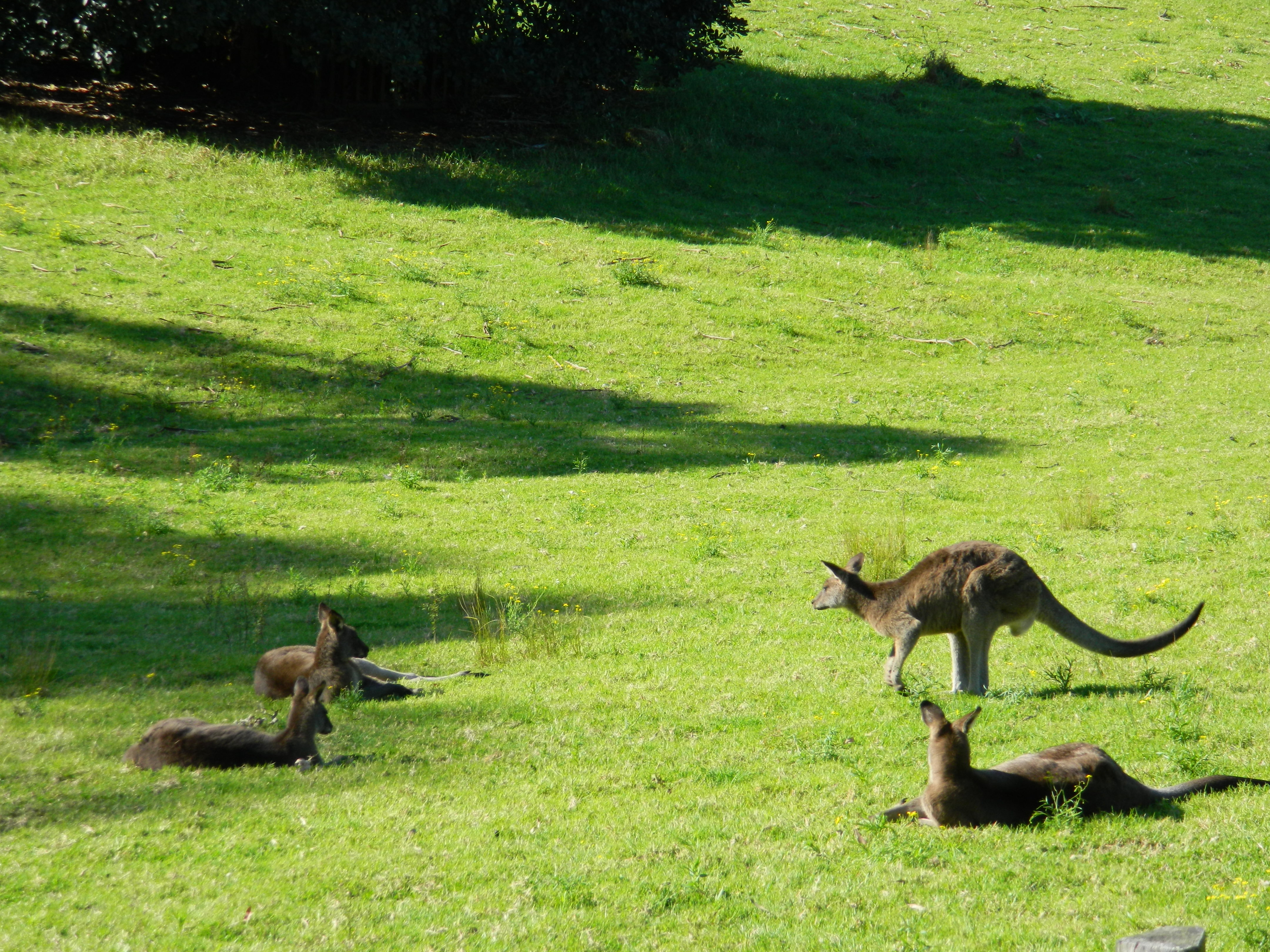
Image of paddock and kangaroos

The view from my desk at Bundanon

I’m working on the first draft of 1917, a novel for readers ten years and over, and part of the Australia’s Great War series for Scholastic. One comes out each year – Sophie Masson’s 1914 and Sally Murphy’s 1915 are out already and have had terrific reviews (no pressure). Each book in the series focuses on a different aspect of the First World War from a different point of view. 1914 sees the start of the war through the eyes of a young man who becomes a war correspondent, while in 1915 a teacher from Western Australia experiences Gallipoli.

I’m trying to do two things in writing about 1917, often called ‘the hardest year’:  canvass the issues on the Home Front, with the General Strike and the second conscription referendum; and try to convey the horror of the war in the air over the Western Front and Passchandaele … for ten year-olds.  Luckily I get to see how Sophie and Sally have already dealt with issues like death and grief as I come up against them in my book – and I like grappling with these ethical and tonal issues for that age group, as I had to do with the Swashbuckler series. It’s hard, but compelling, inquiry: does your hero/heroine actually kill anyone, and if so, what do they feel about it later? How much grief, how much shell-shock can and should you convey?  How do you support a young reader through it, and write about war without glorifying it and without preachifying?

I was talking about this the other evening with local legend Ralph, who works on bush regeneration here at Bundanon.  “How do you give them hope?” he asked. And that is, indeed, the question. (I’d written myself into a hopeless hole that day, and that was just what I needed to hear.) There are no right answers. I have to work my way to the words that are right for the characters and the real people who lived through it and the readers.

Anyway, this is what I do. I hit the desk by about 8am and I don’t leave it until I go to bed. I take breaks, of course (but probably not enough) and sometimes force myself outside for a walk. A fair bit of chocolate is consumed. It’s a privilege to be here and a luxury to have uninterrupted writing time, so I don’t want to waste a minute.

I just draft, trying not to edit as I go, to make the most of the momentum – this is just the first step in the process. Half of it might be crap, half of it may end up in the bin – that’s OK, we’ll sort that out later. On the way, I’m working out what happens and who feels what when and where everyone is on their path through the story.

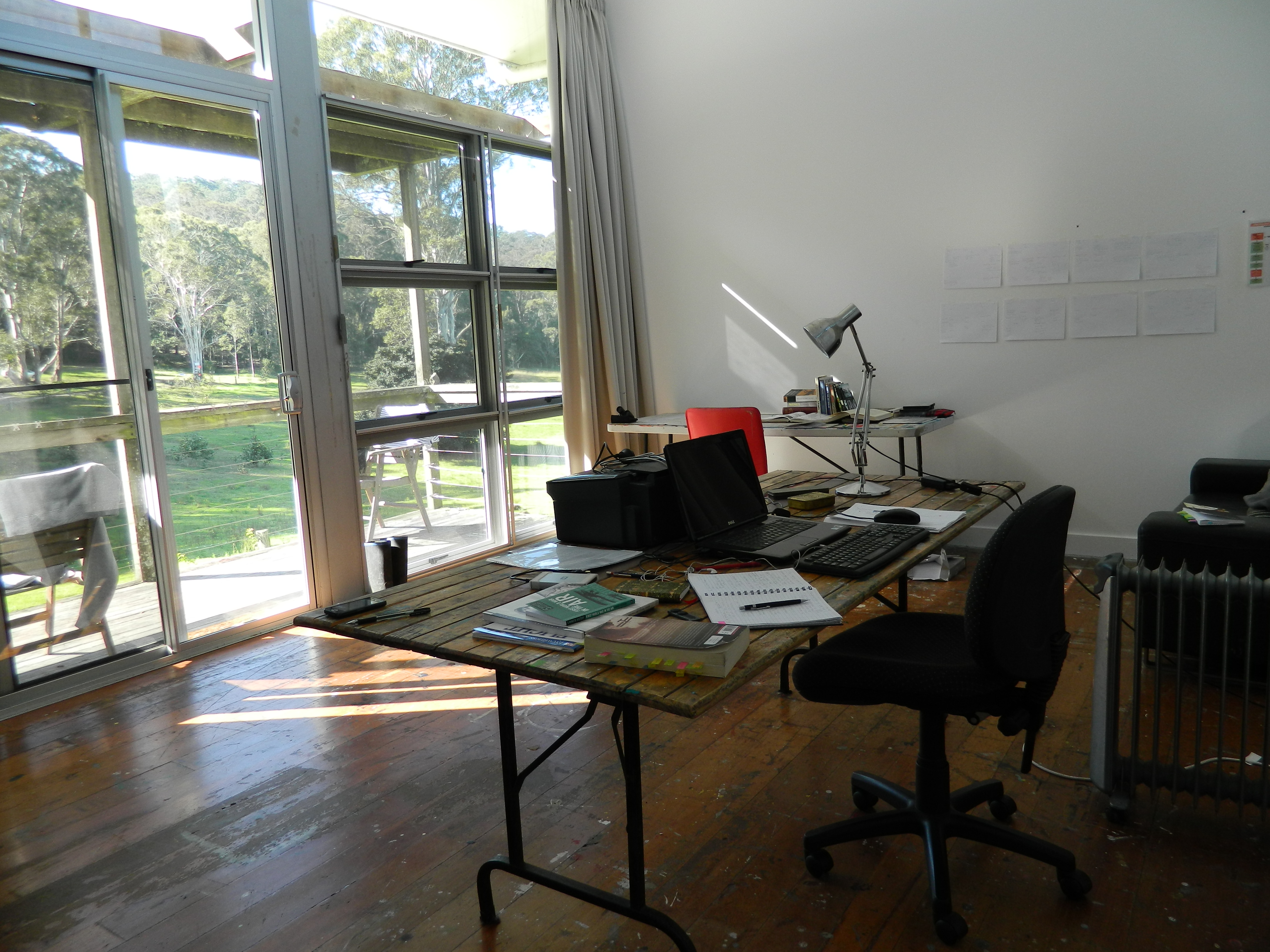
Image of studio at Bundanon

Freedman studio at Bundanon

I have a huge studio here, so there’s a writing desk and a research desk, which makes life much easier. Maps of Flanders are spread out, with the airfields marked on them, so I can see where everyone was. I drove here, so I could bring stacks of books, as well as a couple of things to remind me of the people who were there.

Princess Mary Christmas tin, 1914

Princess Mary Christmas tin, issued to all Empire troops in 1914

I did all my general research before I got here, including visits to airfields and museums in England and Flanders last year, and came through Canberra to spend some time (not enough!) at the War Memorial. Now, I just have to look up certain things from time to time, and know where to find them. Usually, I spend the first hour or two of each day looking stuff up, or reading first-hand accounts of events or experiences, before I start writing.

I didn’t (stupidly) bring my books about the conscription debate – in which my great-grandmother was deeply involved – so I have to sketch those sections out and fill them in later. I do look things up in digitised newspapers via Trove from time to time, but don’t want to tarry too long – just need to write it down, get it out of the brain.

Image of desk with books and maps

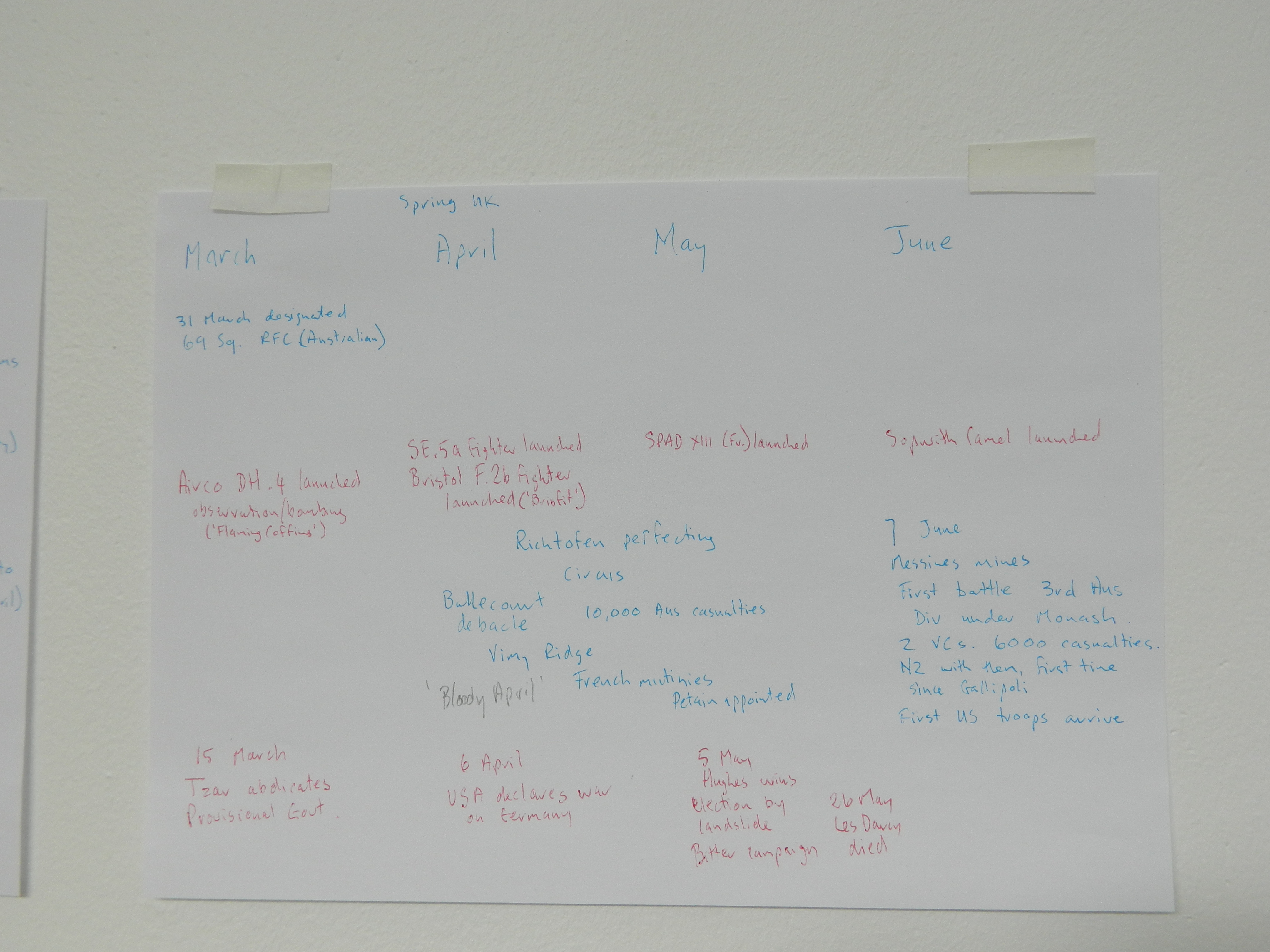
On the wall are twelve bits of paper with scribbles on them, each one a timeline – the same months, but from different points of view: battles, squadron movements, new model plane releases, political events in Australia and Russia, major turning points in the war. Then timelines for the two main characters (brother and sister) and the people around them, lined up against the events or battles in which they take part. I scribble these as I go along. Usually, this would be in a spreadsheet, but there’s just so much white wall!

Part of the 1917 timeline

Part of the 1917 timeline

There’s also a hero’s journey map for each of them, which take shape as the writing progresses. One journey is into the quagmire of Flanders, one into the hope and excitement of the thriving women’s movement of the war years.

At least, that’s how it looks today.

image of kangaroo

Coming up: La Trobe University

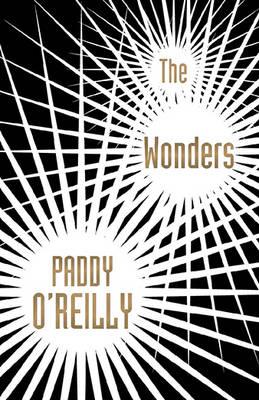
Paddy O’Reilly and I will be in conversation about our new books (in her case, The Wonders), writing, and reading this coming Thursday 23 October at 12.30pm at the Coop Bookshop at La Trobe University (from which we have both just graduated with our doctorates, and where we shared an office and many months of writing together).

It’s market day on campus, the bookshop is laying out a bit of wine and a few nibbles, and there’s a strong possibility that Paddy and I will have an attack of hysterical giggling which is always fun to watch. Apparently.

But we will also read a bit form our latest books and talk about the processes and thoughts that led us to The Wonders and Goddess.

Do get along if you’re in the area.

Book cover - The Wonders

Image of book cover - Goddess, a book about Julie d'Aubigny

All over the joint

Here are a few things from me you’ll find elsewhere on the web right now:

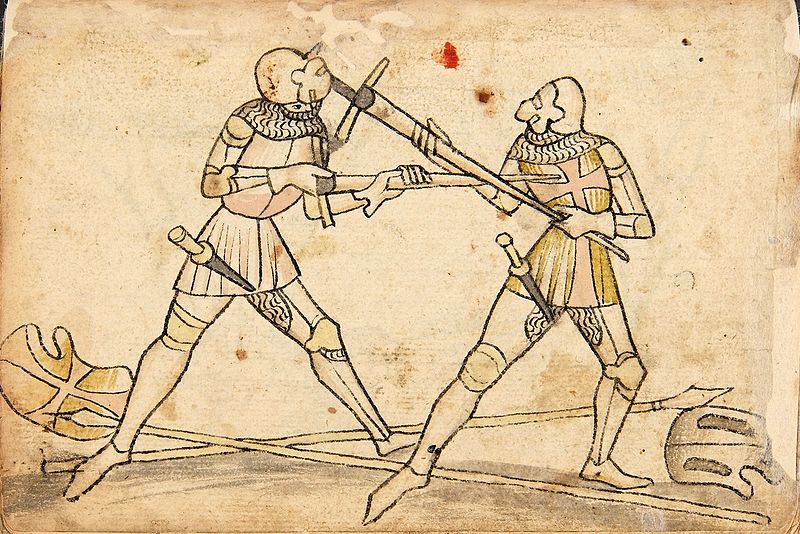
It’s just a flesh wound: what were sword fights really like?

Image of medieval sword bout

Some historical background for fantasy fans, on the Harper Voyager blog, with gratuitous Arya Stark references. Because. Arya.

Warrior women in history

I could have mentioned Arya in this, too. if I’d thought of it. But instead it’s a post on Kate Forsyth’s blog about just a few of the real life warrior women who preceded Julie d’Aubigny in history.

Interview  – me and Kate Forsyth

Again, on Kate’s blog, she quizzes me on fencing, on Goddess, on reading – and on life.

On structure (and memory)

As I write this, I’m sitting in a bookshop, being a live window display as part of National Bookshop Day. I’m at Eltham Bookshop, one of our many terrific neighbourhood bookstores that do so much to support local writers and readers.

I’m at a little desk set up in the window. Different authors are taking shifts as writer in residence (I took the baton from historian David Day), while people drop in and out, kids try to talk parents into buying the latest book in their favourite series (there is a major Enid Blyton negotiation going on at the counter as I write), and I’m A Believer plays in the background.

I am surrounded by books. Within reach are Penguin Classics from Dickens to Wharton, and the new Text Australian Classics, which include a childhood favourite by Ivan Southall. Bliss. But I have to restrain myself. After four years of PhD focus, my To Be Read fiction pile is currently taller than me.

At present I’m reading Emma Donoghue’s Frog Music. I’m a huge admirer of her nonfiction work in literary history and her previous novel Room, in which the voice of young Jack, who has grown up in one room with his Ma, is a tour de force. Frog Music is a different thing altogether, a return to her previous genre of historical fiction, in this case set in 19th century San Francisco.


Book Cover - Frog Music


It begins with the death of one of the main characters, cross-dressing frog catcher Jenny Bonnet (that’s not a spoiler – it happens on page two). The book then skips from past to present and back again, as Jenny’s friend Blanche tries to understand why Jenny was killed, and by whom, and we experience Blanche’s memories from the moment of their first accidental meeting.

Shifting through time and tense, through characters’ memories, is not an easy juggling act for author or reader as I know only too well. I tried to do something similar in Goddess, in one sense.

Since a few people have asked about the structure of Goddess, and how much I plan in advance when I write, let’s focus on that for a moment.

Goddess has a much more formal structure than any of my previous books, with other organising principles overlaid. It is structured in five acts and a prologue, just like the tragédies en musique in which La Maupin appeared. The scenes in each act alternate between first person monologues (the recitative) and third person ensemble chapters in present tense which give us different characters’ views of Julie and her world.

That’s not quite how the scenes in a tragédie en musique are arranged within the acts, I admit. The acts and scenes at the Paris Opera were shared between the main characters and the ensemble, and passages where the ballet corps took the stage for a divertissement. The recitative was sung using a very refined technique by the lead singers, who also sang airs (arias in the Italian opera tradition), and together in duets or as an ensemble. It was actually Julie’s friend Thévenard who was the master of the recitative, evolving it into a more dramatic form.

But there are some ways in which I tried to replicate the feel of a tragédie – the big show-stopping divertissement is always at the end of the second act, for example. In Goddess, that’s Julie’s debut at the opera. The other less visible structural aspects are the catalogue of sins on which the recitative confession focuses, and the episodic form of the picaresque.

Of course, the overall trajectory is someone’s real story. I tried to track as closely as I could to the reported events in Julie’s life, so I had to know where she was, who was with her (such as the cast that performed in specific shows), seasons of the year, other things going on in France at the time, what people were reading, singing, wearing.

Did I plan it? You bet. You should see my spreadsheet. It’s a monster. It had to be.

A couple of people have asked about the idea of the book starting as a death bed confession – just as in Frog Music, you know the “end” of the story from page one.

I haven’t done that before, and it was one of the first creative decisions I made when writing Goddess. It’s a big call, I know (setting aside the fact that a quick squiz online or in an encyclopaedia will reveal Julie’s life – and death – story). Is it the end, though? Is it the point of the story? Or is that in the telling? Or both?

Then there’s the memory – Julie’s memories, and other people’s. Many of the third person scenes have a shifting point of view, an internal structure that (I hope) plays with perception and explores the idea of the spectator. How did all those people see Julie? What did they make of this remarkable creature in their midst, striding around in her breeches and cloak? How do different people perceive and remember the same incident? How does she remember? Why was she such a celebrity and what did celebrity do to her – and her legacy? How do the memory and the monologue connect?

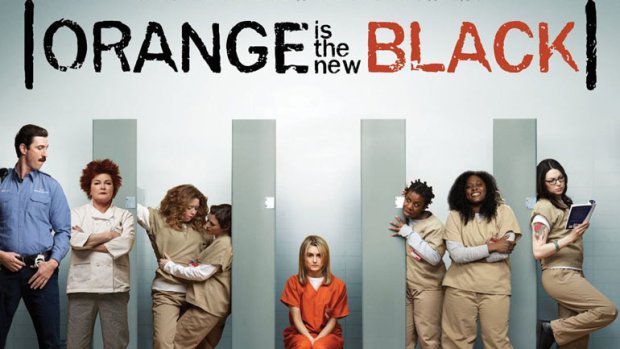
I hesitate to use the term “flashback”. It has become such a cliché. But I’ve just been binge-watching the Netflix series Orange Is The New Black, in which creator Jenji Kohan uses flashbacks in such an interesting way. We meet its huge cast of characters as women in prison, get to know them a little, and then one by one across different episodes their past lives are revealed, in some cases dramatically different to the persona we’ve got used to. Makes sense. They are different people in prison. The flashbacks may explain their crime, but may not – they reveal something about the choices each woman has made, the people they were, the turning points that somehow got them where they are now. What’s even more fascinating is that the actors involved have to create these characters from the beginning without knowing that back-story – in most cases they don’t even know why their character is in prison. They may never know.
orange_is_the_new_black


In Frog Music, on the other hand, we start off knowing the crime but not the people. We as readers will make our way together, with Blanche, through the aftermath and her memories of the time leading up to the murder. I know that a crime has been committed, but I have no idea what will happen next.

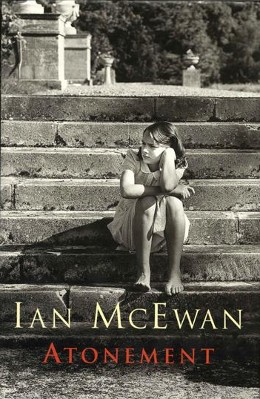
There’s a great moment in Orange Is the New Black when the main character Piper returns to the main prison camp and has to retrieve all her belongings – the other inmates assumed she was long gone. She grabs her copy of Ian McEwan’s Atonement out of someone’s hands, shouting “Everyone dies!”

Book cover - Atonement

The ultimate spoiler, for one of the most excruciating shifting memory structures in recent fiction. I remember reading the final passages of Atonement for the first time and shouting in fury, while at the same time I couldn’t help but admire it.

Now THAT’S a flashback.


First reviews: Goddess

Authors don’t talk about this much, but it’s an excruciating thing to have a book come out. You know it’s too late to fix anything, all of a sudden other people are reading it when before it was something that existed only inside your head, and you have no idea what anybody will think of it. So you metaphorically hold your breath and cross your fingers and wish on stars or sacrifice goats or whatever it takes.

Then the first reviews come in.

“I wholeheartedly recommend this book as the most exquisitely rendered historical novel I have read in years.”

Historical Novel Society

“An engaging and skilfully told tale of a singular character.”

– Kerryn Goldsworthy in Sydney Morning Herald/The Age

In the case of historical fiction, and especially Goddess as a portrayal of La Maupin, there’s the issue of being true to what people know of her and feel about her – she’s someone with whom many people feel a strong connection. So this means a great deal to me: Jim Burrows, who knows more about Julie d’Aubigny than just about anyone,  has posted his incredibly gracious review of Goddess on Amazon:

Her version of La Maupin isn’t mine, either in terms of character or story, but it is totally valid to what is known of our dear Julie. And how boring it would be if they were the same! As it is Kelly and La Maupin surprised me and entertained me, even though I knew all the details before I picked up the book. I know them because Kelly researched heavily and remained steadfastly true to everything that is known. I was surprised, because La Maupin’s character, voice and motivations were both authentic and a different twist than I would give the tale. I was entertained because the imagination and the skill with which Kelly tells the tale is wonderful.

Thank you Jim, and I look forward to reading your take on Julie one day soon.


Coming up: Melbourne Writers Festival

I love Melbourne Writers Festival time of year. I used to love it in the olden days when it was at the Malthouse, and you’d have to jostle for coffee or in the bookshop with the international guests. I once held my breath for about five minutes because I found myself standing next to Marina Warner.


Writers festival poster


Nowadays it’s at Federation Square, which warms up in the middle of winter with huge groups of school kids lining up to meet Andy Griffiths or Morris Gleitzman, a wide range of topics and writing styles, and authors from all over the world.  It’s not quite so intimate, but it’s bigger and brighter and there’s stuff going on all the time – dozens and dozens of sessions, workshops for kids, an enormous schools program, walks around the city, keynote speakers, soirees and food and music and drop-in caravans and Twitter meet-ups. It’s a terrific program again this year.

I’ll be there too, talking about Goddess, Julie d’Aubigny, and the process of writing and researching her life.

My session is on August 29 at 10am. More details and bookings here.

It’d be lovely to see you there.

And all who sail in her…

The lovely Alison Croggon launched Goddess last week at Readings in Carlton (thanks, team!). She talked about La Maupin’s life, said some lovely things about the book, and I was honoured to have her do so.

I had a few words to say too, and here they are (more or less):

This is actually a sad occasion for me. I’ve spent the last five years with Julie’s voice clamouring in my head, drowning out everything else. It’s possible she has driven me just a little mad.

I feel in some ways like the character of the priest who takes her final confession, unable to get a word in edgewise and scribbling down every word.

If only it were that simple.

This has also been the most challenging writing project I’ve ever undertaken – I’ve spent years figuring out complex French aristocratic family trees and the architecture of long lost opera theatres, researching everything from sword hilts to undergarments. I am pretty sure I have compiled the most complete history of La Maupin’s performances and have unravelled some complex relationships taken for granted by contemporary diarists and ignored ever since. I spent hours in the Opera branch of the BnF in Paris, possibly holding my breath the entire time, as I leafed through a small volume of d’Albert’s letters to his beloved Julie-Emilie. I have watched women on horseback brandishing swords drill in the same stables at Versailles in which, I think, she grew up and I have gazed up at the ceilings in the chateau that she would have seen, painted with goddesses also brandishing swords.

And I have watched as every week – every day – someone somewhere in the world discovers her story and posts on Twitter or tumblr: “Why is there not a book about this woman?” Again I held my breath and hoped that Goddess would be the first – or rather the next.

Because Julie d’Aubigny has been in and out of favour across the centuries, incredibly famous in her lifetime and again in the 19th century – and, I hope, now. There have been books, movies, plays, ballets, a TV series, even a skateboard design. Her life has been embroidered and dismissed and she has been vilified and deified and everything in between. But I don’t think there is another portrayal like this one.

It has been all-consuming but it’s over now. Today Susannah and I rearranged my writing room. That might sound odd, but the writers here will know what a big thing that is. I am clearing the decks. Today felt like the right day to do that.

I had to find room on other bookshelves in other rooms for the numerous volumes on Baroque opera and the court of the Sun King. The 17th century has to make way on the shelves and in my head for the Great War, and for new voices whispering in my ear.

So I hand Julie over to you. I hope I’ve done her justice, and I hope you like reading about her.

Thanks to the many people who supported me, in particular Susannah Walker to whom the book is dedicated with love. This was the creative component of a PhD project and I’d particularly like to acknowledge the community of writers I discovered at La Trobe University, and the support of my supervisors Catherine Padmore, Paul Salzman and Lucy Sussex, and the writing friends I found there – Paddy O’Reilly and Fran Cusworth.

Thanks to HarperCollins for making Goddess a beautiful artifact – very important for someone who’s written two books on the history of printing – and especially to publisher Catherine Milne for knowing exactly what I was getting at.

I think it’s only right that Julie gets the last word.

Are you writing this down? All of it? Very good. It’s about time somebody did. Here, nobody listens to a word I say. Perhaps they think I’m making it up. But I couldn’t. Nobody could – not this life. It is known throughout Europe, if I say so myself. The duels, the stardom, the Opera triumphs, all the escapades. The escapes. You can read about me in the pamphlets, any day, on the streets of Paris.
Or at least you could – then.
I was a star once. Did they tell you that? I was a goddess.
Or am I just another sinner to you?
I was a monster, once. That was my real sin. That was my downfall.
Well, shut up and I’ll tell you.


Goddess is out now, on all ebook platforms and in good bookshops.