Huzzah for Hazza

In children’s literature circles it’s not all that cool to admit a genuine fascination for young Harry Potter.
One is supposed to point out that there are many hundreds – thousands – millions – of fantastic books for young readers that are equal to or better than Harry.
I suppose, one might grudgingly admit, that they have encouraged one or two boys to read.
One is supposed to sniff slightly at JK Rowling’s bringing together of several different genres and time-honoured themes into one package. Some fellow authors can get downright snitty about the whole thing, like Sonya Hartnett speaking to Rosemary Neill in The Weekend Australian:

“The celebration of the mediocre we have in this country is dispiriting,” she says. She objects to “this sort of rabid support of Harry Potter to the exclusion of so many other good books for children. It was fine for a couple of years until it crossed the line and became really sickening and stupid.”

A couple of months ago I was reading in a children’s bookshop and asked the audience who was looking forward to the release of Book Seven – and what they thought would happen. “This is not a Harry Potter bookshop,” the proprietor gently chided.
Told off good and proper.
But really – does Harry exclude other good books? There still seem to be bookshops filled with titles of all sorts including fantasy series of significant impact like Deltora; movies of The Bridge to Terabithia and His Dark Materials are block-busters; publishers are churning out more and more books every year and kids are lapping them up.
Don’t start me on the mediocrity of Eragon – book and movie – but Harry? It’s hardly flawless but the series is funny, and scary and complex and compelling, and it combines the best of so many possible and impossible worlds it’s a delight.
And millions of children around the world are truly and madly delighted. They are having so much fun – reading, debating, dressing up, fantasising, theorising, imagining, enjoying.
Would you really rather they weren’t?

Anyway I don’t care about the debate.
I am beside myself with suspense wondering what’s going to happen to Harry and Hermione. (My favourite plot spoiler is from Maureen Johnson.)
I’m booked to see The Order of the Phoenix at the weekend with two kids who seem slightly less enthusiastic than me.
I am desperate to know whether Snape is truly evil or part of a master plan, and whether my own personal theory about the mysterious initials RB will prove to be true.
If only I could remember what it was.

See you on the 21st, Hal.

Picture this

I’m sitting here with the dining table covered in luscious colour illustrations for my new picture book.
I didn’t do the illustrations, I hasten to add – they are by Jobi Murphy, perhaps most famous for bringing Deborah Abela’s Max Remy to life.
Max the superspy and my character, a crusty old stockman called Billabong Bill, couldn’t be more different, but the drawings are sensational.
You’ll have to wait until November to see for yourselves.

Distant shores

Just got home from a trip back to Auckland for some schools and bookshop visits and the Storylines family day. Storylines is a riot of thousands of small excited people, some dressed as pirates and mermaids (there was even one rather sleepy unicorn), mixing it with their favourite authors and illustrators and story characters in one extremely frantic day.
While my more intelligent colleagues relaxed in the authors’ room between gigs, I was on pirate queen duty with a whole team of volunteers helping said unicorns and pirates and over-excited passers-by make pirate ships, parrots, eye patches, flags and even ships’ rats from cardboard and string and textas and imagination.
I had fun. Don’t know about the kids.
You don’t get a chance to make your own rat at the Sydney Writers’ Festival.

The right to write

Last week I listened to Irish author John Boyne speak – a couple of times – at the Reading Matters conference in Melbourne. I liked that he was so thoughtful and acknowledged criticism of his most recent book, the best-selling The Boy in the Striped Pyjamas.
He has researched, wondered and worried a great deal about appropriate ways in which to present the horrific experiences of survivors of the Holocaust and other atrocities, and also how to convey those to young readers.
He said several times that he felt that he had no right to give voice to that experience: he has no survivors in his family and is not Jewish.
“I am glad I made the decision not to pretend …” he said.
“Pretend.” Not “imagine”, but “pretend”, as if it would somehow be a more artificial process than his normal creative practice.
It reflects Kate Grenville’s statements about the decisions she made about portraying Aboriginal characters in The Secret River:

I’d always known I wasn’t going to try to enter the consciousness of the Aboriginal characters. I didn’t know or understand enough – and I felt I never would… Their inside story – their responses, their thoughts, their feelings – that was all for someone else to tell, someone who had the right to enter that world and the knowledge to do it properly. (Searching for the Secret River)

But as Inga Clendinnan has pointed out, Grenville does believe she has the right to enter the consciousness of a whole range of other characters whose world – two hundred years ago on the other side of the planet – is arguably as alien to her modern urban life as any other.
I also remember a session at the Melbourne Writers’ Festival about a million years ago, in which somebody – a woman – argued that male writers ought not attempt female characters because they are incapable of correctly perceiving and portraying the female experience. Another panellist – it might have been Garth Nix – extravagantly suggested the use of imagination.
One might also have added the crazy concept of extensive research.
John Boyne, of course, is selling himself short. He has imagined and created a vision of the concentration camps, albeit from a naive bystander’s point of view.
But Kate Grenville’s decision not to portray Aboriginal characters has an unfortunate effect quite opposite, I feel sure, to her intent. It leaves a gap in the consciousness of the reader – a hole where the indigenous experience should lie. Indeed, it means that there are no real defined Aboriginal characters in The Secret River at all. So does that force the Aboriginal people – the dispossessed of the Hawkesbury River – to once again become inexplicable fringe dwellers on the edge of the action, until, of course, they become the sudden centre of attention as they are massacred?
After all, how does a writer get into anyone’s skin? How does Grenville imagine her character Thornhill, his hard hands on the oars as he sculls against the Thames tide? How does John Boyne imagine the boy Bruno sitting by the wire?
What gives them the right to imagine those experiences and not others? Does someone somewhere grant these rights? Or do we each have our own internal boundaries that we feel we can’t cross? And how do we know?
I’d much rather have writers like Boyne worry about transgressing those boundaries than blindly push on regardless of cultural or other sensitivities. It’d be only too easy to assume that you could dream up anything and get it terribly horribly wrong. Especially, as Boyne suggests, with the benefit of many layers of privilege.
But surely writers have the right to imagine.
Anything.
There are no rules.
Sometimes you might decide you can’t possibly imagine this or that – a horrific experience, an inner life, a cultural background, a sound, a voice, an entire character.
You might do it badly or wrongly.
But that’s a failure of imagination – it’s a totally different thing to not being allowed.
Nobody has to seek permission to imagine.
Do they?
When? Why? And from whom?

Laid bare

Writing is not like painting where you add. It is not what you put on the canvas that the reader sees. Writing is more like a sculpture where you remove, you eliminate in order to make the work visible. Even those pages you remove somehow remain.

~ Elie Wiesel

New books

Never mind Pirates of the Caribbean 3.
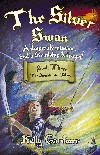
Swashbuckler 3 is out.
No sign of Keira but she could always play Mama. Though I’d prefer … I dunno … maybe Frances O’Connor.
Anyway, it looks like this:

In the meantime, I’m working on a picture book (details soon) to be ready in time for Christmas.
800 words. How hard can it be?
Those are 800 hard-won words, I tell you.
Actually I think I might have crept up to 850 this week with the utterly necessary insertion of an Enid Blyton-style feast.
“Pink lemonade.” Two of the most evocative words in the world.
The feast was largely written in the august Redmond Barry Reading Room over a couple of lunch breaks. Everyone else in there is solving quantum physics questions, or drafting their next Miles Franklin finalist. I’m sitting staring at the walls and agonising over whether to include chocolate crackles or pink lamingtons.
But it’s a fascinating business watching your words transform into pictures and seeing characters you’ve dreamed up take shape – and giving up those images to allow that shape to form in someone else’s mind and emerge through their drawing.
Great fun.