Which classic book are you?

This is cute – an online quiz which, instead of revealing your innermost movie star or dog, tells you what you would be should you turn, overnight, into a classic work of literature. My nephew Conor will be thrilled to learn that I am, in essence, Lord of the Rings.
The official results:
“You are entertaining and imaginative, creating whole new worlds around yourself. Well loved, you have a whole league of imitators, none of which is quite as profound as you are.
Stories and songs give a spark of joy in the middle of your eternal battle with the forces of evil.”
Sounds just like me. In dreams.

Take the quiz at Quizilla, please, and share with the group.

Let the Games begin


In two weeks’ time the Commonwealth Games kick off in my home town, Melbourne. 13 days to go, but who’s counting?
This is a big deal for us Gardiners.
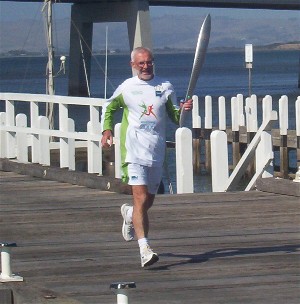
My father is an athlete. Actually he’s a legend. He won a silver medal at the Commonwealth Games in Edinburgh, went to the Tokyo and Mexico Olympics – and turns 70 in the middle of the Games in March. Still competes, too.
Yesterday he carried the Queen’s Baton (the Commonwealth version of the Olympic torch – which he also carried in 2000).
I wasn’t there yesterday, sadly, to cheer him on. When I was little I’d stand by the side of the track and shout, “Come on Daddy!”. I still do that if I watch him race, except now he laughs – which isn’t easy to do while race walking at full-pelt – and all his old mates murmur, “The kid must be here”.
But I will be there for the track and field once the Games begin, to cheer on the new generation.

Photo by Kathy Gardiner.

Reading between the lines

Parents beware.
Brian Danilo channels conservative US radio talk show host Sean Hannity (or perhaps it was Bishop Brian Tamaki) on McSweeneys to present the Five Most Dangerous Children’s Books Ever Written.

Just so you know, The Most Dangerous Children’s Book Ever Written is Clifford the Big Red Dog by Norman Birdwell – too big to get under the bed, perhaps, but still a damned pinko.
“Stories include Clifford Goes to School and Clifford Goes to Work, Where He Organizes a Workers’ Revolution.
But Clifford’s got nothing on Madeleine L’Engle who apart from writing A Wrinkle in Time and undermining the very fabric of our society “also invaded Poland in 1939.”

Irish diaspora

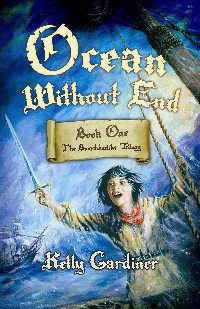
Yesterday I was writing about the hardships of emigration in the great days of sail, for my new website (why I have decided to write the Encyclopedia of Piracy For Ten Year Olds, I do not know, but as Kipling would say, that’s another story).
Then I started reading Colm Toibin’s book of travel writing, The Sign of the Cross: Travels in Catholic Europe.
Now I’ve come over all Irish.
It’s been nagging at me for weeks – it’s Jan Morris’s fault, actually – she started it with her description of the Easter uprising in Farewell the Trumpets.
I’m reminded of Seamus Heaney’s Digging

The cold smell of potato mould, the squelch and slap
Of soggy peat, the curt cuts of an edge
Through living roots awaken in my head.
But I’ve no spade to follow men like them.


Or maybe it was there before, on mornings when I walk to the office past the fishing boats and hear the gulls (there’s one calling now – they sound like Irish gulls to me) and walk under the hook. It’s a new sculpture at the end of Lighter Wharf, a monolithic granite representation of wharfie’s hook that reminds me of my grandfather every time I see it.
He grew up under the hook. So did my mum. I was born there. Port Melbourne. Under the hook, that’s what you called it. Port. That’s its name to us. A working port. A wharf, a few pubs, a footy team, SP bookies in the back lane (my uncles) and as few police as possible. Micks to the left, Proddies to the right.
No container ships. Cranes, if you were on a modern pier, hooks and winches and blocks and tackles. Nets and ropes. That’s how it was.
Now it’s all apartments and advertising types at lunch.
They don’t know they’re under the hook.

Missed the boat

I’m ancient. I’m at least 44 – and perhaps as a sure sign of aging I can’t remember exactly how ancient. I lost count in my late 30s and have had trouble figuring it out ever since.
So I’m one of those people about whom it is announced in earnest tones, “first book published at 44”.
Well, I would have done it earlier – I certainly meant to, but then I forgot.
I’m too wrinkled to pretend I’m any younger without actually perpetrating a hoax, but, hell, it might be worth it.
The younger you are, the more likely a huge advance, apparently.
“Literary prizes promise large chunks of cash to the best work of fiction by somebody under 35 (the Somerset Maugham Award) as though being young and creating good fiction is to be lauded above being middle-aged and doing the same,” writes Alexandra Jackson over at Spiked. Not only that, but:
“Luke Brown, assistant editor of Birmingham-based publishers Tindal Street Press, agrees that it is a ‘more attractive proposition’ to a publisher if a book is written by a young slip of a thing as it gives ‘an extra edge’ when trying to publicise the product.”
Funnily enough, while Jackson bemoans the cultural implications of this Author Idol fetish, her main concern is for the poor wee things rushed into print before they’re fully cooked.
“We run the risk of turning them into one-hit wonders – like Donna Tartt who disappeared for 10 years after her debut novel The Secret History’s astounding success, only to return with a critical failure, The Little Friend. And Alex Garland, whose follow-up to The Beach was a fraction as successful. Or we turn them into dashing Israelites, bringing forth unleavened bread. Anna Stothard’s Isabel and Rocco, for example – published when she was 19 in a gap year between school and university – is reviewed on Amazon by reader Laura Bennett, who compares the novel to ‘a flower which had been forced to bloom too early’.”
Granted, no book should be published before it’s ready – that’s the editor’s job. Perhaps it wasn’t ever going to get any better, or perhaps once you’ve written one, like anyone else, and learned the discipline and sharpened the skill, the second one may be better? Perhaps people get invested in your original voice, and don’t like it if you choose not to write the same book over and over?
But what’s the alternative? Tell Donna to wait a few years before submitting Secret History? Would that have made it any better? How would it have helped her write her next novel (unless you believe that great art only arises from poverty)?
The problem may not be so much at that end of the career, as the other – or indeed even the middle.
“Brown confirms that mid-range authors are now dropped by publishers rather than being allowed the steady development and natural progression that they once were.”
That gives late-bloomers like me something to look forward to…

So long as we don’t have to wear silly hats

The Observer reports that Daisy Goodwin, the UK TV presenter dubbed the “Nigella Lawson of poetry” (why oh why hasn’t she made it onto our TV screens yet?), warns that poetry is dying and will soon be as quaint as morris dancing: “really interesting to people who do it, and incomprehensible and slightly annoying to people who don’t.”
“Twenty years ago everyone could name a Larkin or a Betjeman poem and had read them. I think you’d be very hard pressed to find anybody who could name a poem by any of the top 10 poets today. It’s an endangered species.”
Really. Why could that be?
If Larkin and Betjeman were still writing today would anyone buy their poems? Of course. People still do. Betjeman might have dated, but let’s say Frost or Auden. Still selling.
Frankly I’d be hard pressed to name the current top ten poets, let alone any of their work. Name the top ten Victorian poets. Or at least five. Easy. Name a few Romantics. Even easier. (Spandau Ballet doesn’t count.) War poets? Forties and fifties? How about Shakespeare and co? You studied them in school. Harlem poets. Beat poets. Feminist poets.
This generation?
Well, that’s another matter. When’s the last time a new poem made your jaw drop – with insight, technique, humour, emotion – anything?
Christopher Logue’s War Music.
Thom Gunn’s Collected.
Perhaps Dorothy Porter’s Crete.
At the risk of sounding like dear departed Auberon Waugh (to whom blank verse was a greater evil than nuclear weaponry) … I don’t know what the backlist/frontlist ratio is, but I imagine that most poetry that people do read was not written in the past twenty years, with a few very specific exceptions (Seamus Heaney, perhaps – even the much-awarded and commercially successful Carol Ann Duffy doesn’t sell as many as you’d imagine: either of them can do the jaw-drop thing).
Apparently sales of poetry in Britain last year sank to 890,220 books, the worst performance in years. I’d bet that 800,000 of those at least were older collections and anthologies. The 90,000 were probably by Pam Ayres. I’m guessing the other 220 were by contemporary poets.
Few publishers consider books of poetry any more, unless they are classics or reshuffled anthologies suitable for the education sector. (Although there are still some popular and terrific books of poetry being written for children or young readers.)
So why be a poet? That way lies madness, starvation and infamy. Just ask Shelley.
The charming and erudite actor and writer Stephen Fry has (no, really) been called the Delia Smith of poetry. (I hate to think who’s going to be the Jamie Oliver.) Fry recently described, in his book The Ode Less Travelled, modern poetry as ‘arse-dribble’. It may be a little sweeping, but he’s got a point.
I can’t imagine Stephen Fry morris dancing, though, so perhaps there’s hope for us after all. I’d like to see him and the real Nigella reading the Brownings on TV. With a live studio audience.
Still, there’s progress of a sort. Says Duffy, who might have been Laureate:
“In the 1970s … older male poets, the Larkin generation, were both incredibly patronising and incredibly randy. If they weren’t patting you on the head, they were patting you on the bum”.
Just to rub salt into the wound, Roy Hattersley in The Guardian reminds us what a remarkable poet was Elizabeth Barrett Browning, and provides this fine insight:
… It is one of [Robert Browning’] “difficult” poems that provides the best, if an unintended, tribute to his wife. It is not one of the love poems from Men and Women but the much earlier Andrea del Sarto, subtitled The Faultless Painter. Andrea – said, in his time, to be a better draughtsman than Raphael – lacked the genius that produced “ardour and admiration”. Elizabeth was exactly the opposite. There are rough passages in her poetry but the quality is beyond serious dispute. The disturbingly named Sir Walter Raleigh, Oxford’s first professor of English literature, compared her to Christina Rossetti. Elizabeth, he said, often lost her footing, but – unlike Christina – never feared to leap. That is the poet whose work we ought to remember this year.
Andrea del Sarto could equally operate as a spur to would-be poets to remember vitality, drama, image and craft.
Reading it was one of those moments for me that Poet Laureate Andrew Motion would like all schoolchildren to experience.
I can still hear Mr Lewis’s voice, echoing in the stuffy portable classroom on a hot Melbourne afternoon, and still get goose-pimples when I read it now:

I do what many dream of, all their lives,
-Dream? strive to do, and agonize to do,
And fail in doing. I could count twenty such
On twice your fingers, and not leave this town,
Who strive – you don’t know how the others strive
To paint a little thing like that you smeared
Carelessly passing with your robes afloat –
Yet do much less, so much less, Someone says,
(I know his name, no matter) – so much less!
Well, less is more, Lucrezia: I am judged.
There burns a truer light of God in them,
In their vexed beating stuffed and stopped-up brain,
Heart, or whate’er else, than goes on to prompt
This low-pulsed forthright craftsman’s hand of mine.
Their works drop groundward, but themselves, I know,
Reach many a time a heaven that’s shut to me,
Enter and take their place there sure enough,
Though they come back and cannot tell the world…
My works are nearer heaven, but I sit here.
Ah, but a man’s reach should exceed his grasp,
Or what’s a heaven for?

Discipline

“Vigorous writing is concise. A sentence should contain no unnecessary words, a paragraph no unnecessary sentences, for the same reason that a drawing should have no unnecessary lines and a machine no unnecessary parts. This requires not that the writer make all sentences short or avoid all detail and treat subjects only in outline but that every word should tell.”
– William Strunk and E. B. White

Unplugged

You don’t just write a book nowadays. You have to go multimedia.
Well, I do, anyway. After years of working on the web, I’d be a hypocrite if I didn’t use it to promote the books. So I’ve spent hours and hours putting together a website for kids (no, you can’t look at it yet but soon it’ll be live: swashbuckler.co.nz) with lots of historical background on real pirates and ships, and stuff to read – which I’m still writing.
But it can’t just be any old website, you see. I’ve spent years being paid to nag people about style and usability, and indeed reworking old sites and intranets to make them better. So my website has to be a model of usability and readability. Except it’s designed for kids, so my usually inflexible rules are slightly bent.
But because I haven’t actually had to build a website for several years, just bossed around people who do, and because I do it in fits and starts in between real work, and because I can’t remember any coding, I’ve spent four times longer than necessary faffing around with Dreamweaver and forgetting how to do things or where I’ve put files or what colours go where and changing my mind – it’s damn fiddly.
OK, maybe it would have been better to read the software instructions first, but that goes against the grain.
Then there’s another blog, aimed at kids who have read the books, so they can leave comments there instead of writing or emailing. I’ve just been posting an edited version of the Malta trip notes and the thing about ships over there. That’s also in hiding at present, but it is live.
But now everything has to be done before the book is launched, and like all journalists I’m better with a deadline.
Still, it’s better than sorting out the GST return or preparing funding submissions, which is what writers actually do all day.

PS Isn’t that weird? “Blog” isn’t in the Blogger spellcheck dictionary.