Since I posted my travel notes (they’re silly things, really, not research findings), a few people have asked why I have set the Swashbuckler! novels in and around Malta. The reasons are many, but here are a few:
– Malta has a fascinating and unique history
– The Maltese fleet played a critical role in legal piracy for hundreds of years
– The Maltese people spontaneously rose up against the French invaders
– It’s one of the most inspiring and historically compelling places on earth
– The sea there is a beautiful blue.
Perhaps most importantly, Malta’s strategic position and maritime influence were critical in the Napoleonic era, and at many other times in history, including World War 2.
In 1801 Napoleon told the British Ambassador, “Peace or war depends on Malta. It is vain to speak of the Netherlands or Switzerland – they are but trifles. I would rather see you in possession of the heights of Montmartre than of Malta.”
His nemesis, Admiral Nelson, wrote to London: “I now declare that I consider Malta as a most important outwork to India, and that it will give us great influence in the Levant, and indeed all the parts of southern Italy. In this view, I hope that we shall never give it up.” 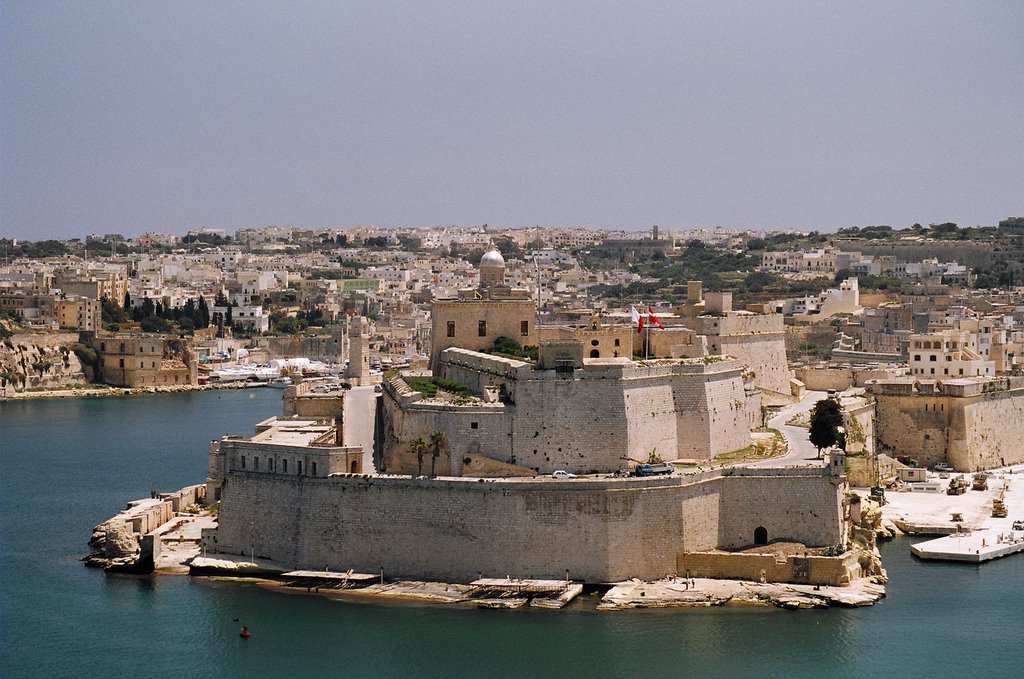
Two years later Admiral Lord Keith wrote, “Malta has the advantage over all other ports in the Mediterranean… the whole harbour is covered by its wonderful fortifications.”
This was a time when empires were being created – a complicated time of upheaval, expansion and change that would become the basis of the modern world. And in the middle of it all, as always, was Malta.
writing life
Opening the mail
Nobody writes letters anymore, so we have to make do with the morning blink of the Inbox screen.
I still love opening mail. The post arrives early here, usually bringing a few boring bills and a reminder from my accountant that I still haven’t done my tax return.
But you never know when the letterbox might instead be jammed full of surprises.
Yesterday was the monthly thrill of the arrival of the BBC History magazine (second only to the arrival of the Literary Review, both that much more welcome because they’ve had to travel halfway around the world).
And a parcel.
I love parcels.
I’m a compulsive buyer of cheap books in online auctions, and it has been suggested by someone who knows me far too well that I only do it so I get lots of parcels.
Parcels are especially good if wrapped in brown paper (sadly, no longer tied up in string … These are a few of my favourite things). I can hardly get them open some days, mostly because of that infernally effective brown packing tape, but sometimes because it’s just too exciting.
Yesterday’s parcel was only a plastic Post Shop envelope, which are even harder to open, but inside was an omnibus edition of Rosemary Sutcliff’s later King Arthur stories, which I’ve never read because I was grown up by the time they came out in 1979. This is the first sentence:
In the dark years after Rome was gone from Britain, Vortigern of the narrow eyes and the thin red beard came down from the mountains of Wales, and by treachery slew Constantine of the old royal house and seized the High Kingship of Britain in his place.
I’ve read that line over and over. I just don’t know how she gets away with it. Sure, it’s not her best opening line, but it’s thrilling and sage-like and somehow plummets the reader through time, until you’re sitting in the Great Hall at the feet of a bard, with the head of your Irish Wolfhound resting sleepily on your knee.
It conveys an entire world and a years-long phase of bloody British history in one crystal clear sentence. It gives you a sense of character, time, place and action.
You know you’re in the Dark Ages, you know Vortigern’s a spineless creep, “slew” tells you that there’s going to be lots more swords and daggers and drama, and you know the stakes are high. You know you’re reading a story about history and interesting people all at the same time.
She’s not an easy read for young people. I notice that more now than I did when I was a young reader, perhaps because prose has been simplified in the last couple of decades (some would say it’s been dumbed-down). She often breaks the supposedly cardinal rule of telling, rather than showing. She does sometimes bang on a bit about the bright light of Christianity shining through the Dark Ages – although she’s not as missionary as Lewis.
And yet she’s a master story-teller, a master of the craft of history and myth, and a spell-binder.
All that, in a Post Shop envelope. And I haven’t even got past the first page.
Historical fiction dilemma #1: Ethics
History, no matter what they tell you in school, is not objective. Writing about history, or conveying history indirectly as part of a narrative, is even less so. Writing historical fiction for younger readers brings with it a whole range of questions that need to be answered and sometimes can’t be:
– Conveying a complex international political situation in a few brush strokes
– Delving into age-old prejudices and divisions without taking a too-obvious position
– Dealing with critical issues (like slavery) without hectoring
– Balancing contemporary moral codes with those of history.
Why ask? I’ve written adventure books about a young girl who is kidnapped by pirates and then becomes one. Pirates, needless to say, are vile creatures. Does she become a vile creature? Does she kill anyone? Rob anyone? Do the people around her? Are they all horrible?
This isn’t about levels of violence (that’s a different dilemma) but about creating a consistent, credible, and appealing character.
Does she, who was once a slave, help take slaves?
What would a reader of nine or eleven make of a heroine who did or didn’t behave in these ways?
The broader picture: Piracy in the Mediterranean from the age of the Crusades to the end of the 18th century was largely divided along pseudo-religious lines. The navies of the Islamic states and the Ottoman Empire attacked so-called Christian ships, and vice versa, with the Knights of Malta the most dramatic example of legal Christian pirate/Crusaders. (Except that most normal pirates were hardly religious types, and everyone seems to have attacked the poor old Greeks, who were seen as being far too Levantine in their Orthodoxy, and somehow responsible for the loss of Constantinople.)
So the characters in a book set in this era must present this world view, regardless of the author’s position.
It’s a situation that holds some resonance in the 21st century and it’s impossible not to be conscious of that. I’m also conscious that any statements made by characters will be interpreted by young readers in the light of what they know about the world today.
It’s an old dilemma, obviously. Flaubert argued that, “An author in his book must be like God in the universe, present everywhere and visible nowhere”.
I don’t know, frankly, if I’ve managed it.
Rewriting history
Reading a book is like re-writing it for yourself… You bring to a novel, anything you read, all your experience of the world. You bring your history and you read it in your own terms.
– Angela Carter
At the moment I’ve got my head stuck in Pax Britannia, the second in Jan Morris’s imperial triptych.
I laughed out loud several times this morning on the ferry until the chap sitting next to me could stand it no longer and asked me what I was reading. I suppose he thought it was Billy Connolly or some such thing, because he looked at me as if I was an alien when I told him it was a history of the British Empire.
Jan Morris writes triptychs – other mere mortals write trilogies. (Have they made her a Dame yet? She’d probably decline, but it would be delicious. I shall suggest it next time I see the Queen.)
Of pirates and pasticci
Today I’m posting my travel notes from a trip to Malta in May. My pirate books for young readers (Swashbuckler!) are set in Malta and its oceans, so the visit was to confirm the research I’d done from the other side of the world.
If you’ve read these before, my apologies: use the links in the right hand column to find something more interesting.
Here’s my explanation about why I chose to set the books in Malta.
Day one
I really should not be left alone in a city of wooden boats, knights and really good door knockers.
I know I’m supposed to be doing very serious research but it’s gorgeous and you can’t help falling in love – the cities glow yellow, and sea and sky are ridiculously blue. The limestone is crumbling now, but it’s warm and honey coloured, and even the most impressive ramparts seem somehow welcoming (unless you’re a Turkish corsair, of course). Flew in a circle around the islands and it all seemed terribly familiar, except for the high rise apartments, which don’t feature in my unique 1798 picture of the archipelago. Then the first things I saw when I arrived was a restaurant called Il Pirata and a house called Lily [the name of the main character in Swashbuckler!]. Mind you I have since seen houses called Eileen, Doris and Elvis.
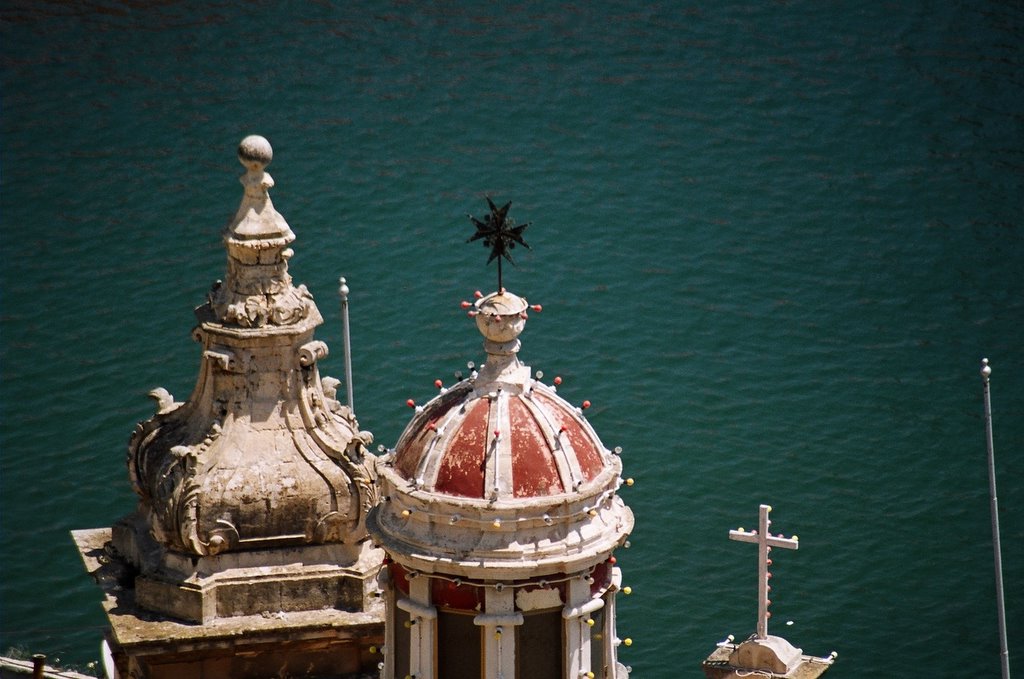
Then I opened the curtains in my hotel room and a schooner sailed past.
Day three
Am resting up after a day of scrambling around dusty old forts. Having invented a series of secret tunnels under Vittoriosa for Swashbuckler! book 3, today I found some real life ones, and there was some very undignified squeezing through rusty iron gates and crawling along drainage ditches (which I’d also invented).
Tomorrow I have a guide, driver and car, courtesy of the Tourism Authority, so I’m going to make them climb up cliffs and trudge around fictional swordfight sites. The day after, I’m going to find myself a boat.

Malta research trip: Day four
One of the charming things I’d forgotten about Maltese people is that they are not the tallest people in the world, generally speaking, so I am a giant among women for the first time since grade six. Funnily enough, half of them speak English with a stong Brunswick accent, having spent decades in Melbourne – making my pasticci, no doubt – or they sound shockingly like Cilla Black, which is a little disconcerting when you feel sure you’re in the middle of the Mediterranean.
Needless to say, the greatest collection of swords in the world is closed for renovation. But there are lots of boats, castles and cannons, baroque churches with illuminated manuscripts, medals, and ’50s buses. And there are a few swords. If you have no idea what I’m talking about, see Visit Malta.
Day six
In a bad way: suffering cathedral neck from craning to see frescoes (lucky I have my binoculars and torch); walker’s hip (lucky I have my father’s long-distance knees); ancient temple-induced sunburn (unluckily I have my mother’s pink nose); and most of all glutton’s bloat (all my own fault after calamari at Il Pirata). But I’ll cope, after days of fishing villages with more bright blue boats even than Turkey (luzzus, painted blue for the sea, yellow for the sun, green for hope and red for courage); chiselled stone temples more ancient than Stonehenge; palaces and cobbled streets and fortresses and bastions and vedettes and castles.
I have had a driver and guide for the last few days, who are very sweet, but I’m also suffering Travel Writer Grimace, from nodding politely. The guide’s getting the hang of things now, though, and can now advise on pirate landing places instead of wondering if I’d like to buy some lace. He even laughed when I sidled up to the famous cliffs of Dingli, a jagged precipice which plays a key part in the finale of the Swashbuckler! books, looked over expecting to see raging torrents and jagged rocks, and found instead olive groves and terraced fields – and that is why I had to come to Malta to check everything…

Malta research trip: Day eight
A potted history of Malta, so you know what I’m doing here:
Settled first by Sicilians, who built miraculous temples of huge monoliths a thousand years before Stonehenge and worshipped a short fat woman who sleeps a lot. My kind of people. From then on, it’s a Mediterranean hit parade of all the usual gang – Phoenicians, Ulysses (spent seven years in a cave on Gozo – no doubt eating crunchy bread and honey with Calypso the naughty nymph), Romans, Arabs, Normans. Then the Knights of St John, who’d been thrown out of Rhodes by the Ottomans, were handed the islands (they tried to hand them back – they’d have preferred a small European nation). They built the great fortress cities and set themselves up as pirate crusaders, that is, they took Muslim slaves and gold as a way of getting back at the Barbary states. In 1798 Bonaparte arrived, Nelson in his wake (and my imaginary pirates).
Most of what I knew about Malta, before I started researching the books, was about the World War 2 experience (I remember Mum telling me how everyone in Malta was so brave the king gave them each a medal – actually they got one to share, but they remain the only country ever awarded the George Cross). They got the hell bombed out of them, and nearly starved to death – and no wonder so many migrated to Australia after the war. The British influence is still evident in the classic ’50s orange Bedford buses with names like Lady Diana and Vera Lynn and, rather
surprisingly, “Toon-Gabbie NSW”.
I was shown around a palazzo which was built by one of the Knights and is still inhabited by Maltese nobility (my host was the Ninth Marquis, Nicholas de Piro). Oh the books. Oh the furniture. Oh the library. Oh the gilded sedan chair in which one would be carried by one’s slaves to the palace next door – and up the stairs to the drawing room as well. And under the palace and all its 17th century glories are the WW2 bomb shelters, and the ubiquitous unexploded Fascist bomb that fell through the house one morning.
I spent all day yesterday back in Mdina, the Old City, since my guide the other day only thought we need an hour there, whereas I spent eight. Lots of pirate research there, as my books’ narrator, Lily, and her crew have a few adventures there and I had to retrace all their steps I had made up. Luckily it all makes sense, and in fact it’s a perfect pirate town. The laneways twist and turn, a bend every ninety paces, as that’s the usual flight of an arrow, so you can fight a running battle in the streets.
This afternoon I’ve been out on the water, checking the fortifications from below (impossible, impenetrable – don’t know how those pirates are going to break through).

Malta research trip: Day ten
Nobody but my niece Tess knows this, but in the second Swashbuckler! book there is a long sequence where the pirate crew goes into the Inland Sea – and today I did. It’s a crack in the rock on the smaller island of Gozo, and you zoom through in a fishing boat (you don’t row, lucky I checked) and the cliffs a sheer on either side and the water is… actually there’s not a word for it… it’s not electric blue, and azure doesn’t even come close, it’s just Impossibly Blue, that’s all, and so clear you can see the coral forty feet down. I was in a little fishing boat with a grin from ear to ear (me, not the boat), although Max the fisherman told me I was crazy because you’re supposed to do the research before you write the books. Thanks Max. And can I go visit his Aunty Maria in Springvale next time I’m home. She probably lives next to my Aunty Maureen.
Someone should really pay tribute to the Maltese Mullet (hairdo, not fish), and it may as well be me. It begins at the front with the short spiky Robbie Williams-style sticking up hair so beloved of eight year old boys and lesbians the world over, then cascades down to the shoulders, which are slouching rather theatrically. So far seen only on young men, some even verging on Rod Stewart circa 1976, but last night I went to see Kingdom of Heaven with about 300 of them, and they cheered so loudly for Orlando Bloom I have high hopes that he may inspire a comeback of long flowing locks. The Maltese are after all Crusader stock.

Malta research trip: Day twelve
All right. So I’m just a little bit sunburned. The baseball cap doesn’t cut it here. But for some time now I have been coveting a new straw hat, of the style known in my family as Pop’s hat. This is due to the unexpected windfall of an entire shipment of straw hats which fell off the back of a truck sometime in the mid-70s and lasted my grandfather (and me, and several other people) for many years. Things were often falling off the back of trucks in Port Melbourne. Or off the back of ships into waiting warfie hands. Anyway, the hat is the cool bookie kind of hat, worn by such luminaries of the racing fraternity as my Uncle Teddy – in his case with a Hawaiian shirt (he was an early influence on me) or snappy suit. It’s the kind worn by Frank Sinatra on the cover of Songs For Swinging Lovers, if memory serves. You know the type.
Well, it turns out this is just the kind of hat for which Gozo is justifiably famous. So I’m at the market in the piazza and this is what happens…
Me: How much is this one?
Stallholder senior: No, no, signora, that is a man’s hat.
Me: That’s OK.
Stallholder’s son: Perhaps this one would suit you better?
Me: I really like this sort.
Senior (to assembled stallholders): She wants to buy a man’s hat!
Son: Perhaps this nice one with pretty flowers?
Me: Can I see this one in the mirror?
Senior (ditto): She’s putting on the man’s hat!
Me: Do I look like Frank Sinatra?
Senior mutters something in Malti like “Saints and angels preserve us”
Son: Well, it looks OK but it is still a man’s hat.
Me: It’s just like my Pop’s hat.
Son: This other hat has a lovely vinyl trim. See? Real vinyl.
Me: They are all very nice but I still like this one. How much is it?
Senior: It must be for her husband!
Son: Why didn’t you say it is for your husband?
Me: It didn’t occur to me, but now you mention it…
Senior (playing to the gallery): It’s her husband’s hat.
There is cheering.
I am at last allowed to buy the hat.

Malta research trip: Day thirteen
I’m sitting in the internet cafe, music blaring, as it does everywhere here – it’s some really bad Europop this evening but anything is a pleasant change from Engelbert Humperdink’s Greatest Hit And Twenty Other Songs that I’ve been listening to all day on the boat. What is it with the muzak thing in Europe? I have never heard so many Gloria Estafan songs in my life.
Today was the final research day, the bit I’ve been looking forward to – the circumnavigation of the islands. Did without the guide after yesterday (“What do you want to go down there for? Seen one catacomb you’ve seen them all”) but we did have a sublime rabbit stew in Mgarr.
So I just booked one of those normal cruise boat things, filled with sunburned English people who all sound like extras from Bad Girls (“Wot’s that then?” “Cliff, innit.”) all unsuspecting that they are involved in a great pirate enterprise. They thought they were going snorkelling in the Blue Lagoon (with buffet). Actually, it wasn’t blue today, just a crazy kind of aqua. Because today was the first cold day. Nobody told the Lobsters who were all in their swimming gear, all the better to get
sunburnt.
After lunch came the coastline I really need to see, because I’ve decided on all these pirate landing places and my guide had put the fear of God into me by saying they are all hopeless – and of course he showed me the cliffs that were about as death-defying as a council drain.
The cliffs! From the sea, they soar. For miles. And the pirate haven I had chosen on the basis of book-learning only looked absolutely perfect to me, and there are grottos (in French, it’s “La Grot”) deep into the limestone and on every headland a Knights of Malta watchtower still stands, beautiful squat stone things they are too. The wind rose, the sea was heaving and a wonderful dark blue. I was grinning from ear to ear again, and then heard a rather disconcerting noise.
On the top deck, holding on for dear life in the wind was me, some Maltese-born Canadian women with their whole families so excited they pointed out every rock (“Look Derek, LOOK!” “Yes, dear, I see it, it’s a cliff. It’s the same cliff you pointed out two minutes ago.”) and a few hardy Germans. We were all having a blast. Down below things turned out to be not quite so pretty, as the heaving seas had the Lobsters heaving up their buffets.
Worst thing that happened to me was that when I got back to the hotel I realised my hair had gone all Marj Simpson. Actually, it was more like the woman on the Bentley bonnet badge, streaming out behind me, very Art Nouveau. Well, it would have streamed, but since I don’t have much hair it was streaming in principle. And I seem to be swaying in my chair from the after-effects of the swell.
I’m coming to the end of my time here, and it’s been a bit mad, rushing around, and yet quite often I’ve found myself all alone in some of the best museums. In the Fine Arts Museum, for example, I was the only person there, which made me a sitting duck for Leonard The Bored Guard and Art Expert who physically dragged me from painting to painting and explained the Renaissance as the bit that came before real art (ie Baroque, in which Malta specialises). Bless him. He got so excited about one of
Preti’s St John’s that he gave me a hug. It’s a bit like that here.
There are lots of boats, excitable people, cool buses (and hats), perfect cities and wonderful fortresses. And pirates. Even if I have to invent them myself.
 Kelly Gardiner