Hanoi Jane

There’s a fascinating (and really quite unsettling) review by Rick Perlstein, in the latest LRB, of Jane Fonda’s War: A Political Biography of an Anti-war Icon by Mary Hershberger.
While critical of Hershberger’s sunny Oprah-style conclusions, he’s impressed by her research and that of other historians, delving into the corruption and cynicism of the Pentagon and the Nixon White House during the Vietnam War.
Perlstein outlines the ways in which Fonda’s reputation as some kind of anti-American harpy was consciously created by the White House in order to camouflage its own unraveling war planning, and to counteract the growing disillusion over the war.

Opposing the war, at this particular time, was not a radical thing to do, writes Perlstein. Vietnam was widely recognised across the political spectrum as a disaster… Most Americans opposed the war by the time Nixon started running for re-election; every candidate in 1972, including the dozen or so contenders for the wide-open Democratic nomination was promising to end it. Most citizens, even if they didn’t fully admit it to themselves, knew that America was losing.

This view was held by many GIs, including those POWs Fonda famously visited in prison in Hanoi. So Nixon struck back. It’s since been proven that some claims that POWs were tortured because of Fonda’s visit were blatant lies. Yet she faced death threats, abuse – veterans still spit at her – and it’s no wonder she turned to aerobics.
Fonda arrived in Hanoi, says Perlstein:

as US bombers appeared to be making preliminary strikes against North Vietnam’s system of dikes, which if breached would destroy farmland and starve the population. The Pentagon denied the raids. At a press conference in Paris Fonda presented film proving that they had taken place. That same day, the State Department cancelled its scheduled rebuttal.
One of the diplomats laid low by the humiliation was America’s UN envoy, George H.W. Bush. “I think that the best thing I can do on the subject is to shut up,” he told the press, after promising them evidence of American innocence.

You can read the full review at London Review of Books.

Book bliss

There is no mistaking a real book when one meets it. It is like falling in love, and like that colossal adventure it is an experience of great social import. Even as the tranced swain, the booklover yearns to tell others of his bliss. He writes letters about it, adds it to the postscript of all manner of communications, intrudes it into telephone messages, and insists on his friends writing down the title of the find. Like the simple-hearted betrothed, once certain of his conquest, “I want you to love her, too!”
It is a jealous passion also. He feels a little indignant if he finds that any one else has discovered the book, too.

– Christopher Morley (1890–1957)

Procrastination

When I was seventeen (thank you, Janis Ian) I went to college to study writing. It wasn’t a very normal thing to do in those days (1979), before teaching creative writing became an industry. Writing was something studied only by bearded long-haired draft dodgers and women who wore floaty scarves. People suggested that teaching might be a more sensible career option (they were probably right – if I’d taken their advice, I’d be on my long service leave by now, unless the government’s abolished it).
But at that time the now long-gone Prahran College offered one of the only professional writing courses, and I arrived to find myself one of very few people straight out of school. Almost everyone else was old (like 30, and some were even older!) and a surprising number had beards and long hair or wore floaty scarves.
I learned a lot there. I learned about reading, about Middle English for some reason I can’t now recall, about grammar and symbolism; and I learned about drinking. All the people with long hair and beards got drunk at least once a week. After a few months I joined them. There was a pub on the corner called the Duke of Windsor, and we used to sit in the dark and drink tequila and place bets on which of us would win the Nobel Prize first. We all planned to be the next Hemingway (the drinking was part of perfecting the role). I was going to write my first novel probably the week after next.
Then I forgot. I think all the others did too, because I’ve never seen any of their novels, and none of them has won the Nobel Prize. Yet.
I never got around to starting a novel because I couldn’t think of anything to write one about. I dropped out, did other stuff. Years passed. Decades. I kept writing other things, turned myself into a journalist, went back and finished the degree (except now I was the old one and everyone else was seventeen and scary). Stupidly decided to do my Masters as well. Still hadn’t written a novel. Had no idea where to start. Read so many bad first novels that I thought really I’d rather not risk it. Snorted coffee out my nose when everyone around me suddenly started writing first novels, even those who’d never shown any inclination to write more than a shopping list.
But any writing teacher or those writing manuals will tell you just to start anywhere – don’t worry if you don’t have the whole plot in your head. I never thought that rule applied to me (like acting my age or behaving in a lady-like manner). When I write poems or essays or articles, I need to have the whole thing complete in my head, or I can’t start.
But then one day, unemployed and traumatised, I sat down and wrote a scene about an ambulance driver in World War One. Then I kept going. Then somehow a few months later, I’d written a novel (it was pretty bad, but I’m rewriting it). Then I realised I could actually do it, and then there were pirates, and suddenly (three years later) there are three books, and more on the way, and there are more ideas than anybody could ever write.
So I’d better stop procrastinating and get on with it.

Steel springs

I’ve been having my own private (belated) Armistice Day film festival this weekend, with a stack of documentaries from the 90th anniversary Anzac Day earlier this year. Just returned from seeing the new Gallipoli documentary by Tolga Ornek. It’s beautifully made, and narrated by Jeremy Irons, who could make the phone book sound poignant. I’m not sure it has anything very new to say, and it’s necessarily brief, but it’s refreshing to see many images of the Turkish defenders, and to hear their words (often narrated by Sam Neill, in a nice twist).
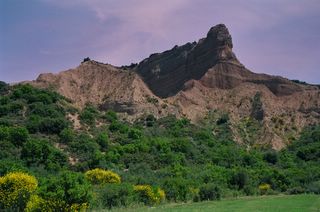
In June last year I stood on the beach at Anzac Cove and looked up at the cliffs and muttered, echoing everyone else (besides that ninny General Hamilton) who has ever stood there: “What on earth were they thinking?” I sailed down the Dardanelles a few days later and from that side the peninsula looks equally rugged. It’s no use telling me (as they do endlessly on these documentaries, as if it somehow explains or forgives the debacle) the landing boats drifted off course – the country inland of the original Anzac landing place is just as steep.
When you drive in along the peninsula from Istanbul, Suvla Bay stretches out, sandy and flat and convenient, to your right. You can’t help asking: why didn’t they just land there first?
I was humbled to be guided around the battlefields by the legendary Kenan Celik. We stood in the trench at The Nek, with all the Australians in the group whispering to themselves, “What are your legs? Steel springs”, and looked across at the graveyard that marks the Turkish lines. Kenan left us alone for a moment. (If you’re not Australian, or you haven’t seen the Peter Weir Gallipoli film, just translate it into something like Denzel Washington and Morgan Freeman marching up the beach towards Fort Wagner in Glory.)
It doesn’t matter how many times you’ve heard that the trenches at The Nek are only as far apart as the width of Swanston Street, or that Lone Pine is the size of a tennis court – you stand there amongst the graves under the pine tree and think: “12000 men died here, and it’s only the size of a tennis court”. It’s hot and dusty, there are red poppies on the hills and bits of barbed wire, and buried down on the beach is a cousin you never knew you had.
Then it doesn’t matter how many books you’ve read or how many documentaries you’ve seen, you cry.


The Sphinx: Anzac Cove 2004 Posted by Picasa

PS: If you have no idea what I’m talking about here’s an overview.

Aspiring novelists

I met, not long ago, a young man who aspired to become a novelist. Knowing that I was in the profession, he asked me to tell him how he should set to work to realise his ambition. I did my best to explain. “The first thing,” I said, “is to buy quite a lot of paper, a bottle of ink, and a pen. After that you merely have to write.”
– Aldous Huxley (1894-1963)

[Well, that sounds easy enough. It also explains my obsession with stationery.]

Feeling clucky

I live on an island.
There are grapevines on the hills behind the house, and next-door’s chickens in the backyard. They’re waiting for our figs to ripen. I can see them, standing below the trees, staring up sadly at the fruit. Once the figs are ready, of course, the chooks will realise they do have wings after all, and will soar fruitwards, making a huge fuss, as if they’d done something extraordinary.
There are two roosters. I’ve been cursing them all week because they seem to have suddenly decided to crow, in duet, from 3.30 am, and they don’t stop until dusk. But this morning there are very small, very fluffy, very black chicks scurrying through the grass like beetles. All rooster misbehaviour is forgiven.
I should have been working but instead I’ve been standing at the kitchen sink, binoculars at the ready, watching and clucking.

David Malouf on blinding light

David Malouf, speaking to Ramona Koval from Radio National (Australia), recalled:

When I was 12 I had just finished what used to be called the scholarship exam and we had to read an Australian book, which was this book called We of the Never Never, which was about Australia. I was a little boy growing up in the suburbs of Brisbane and it was set in the Northern Territory and it meant absolutely nothing to me, it told me nothing that I wanted to know about life or anything else.
And then we went away for the Christmas holidays, which in Australia is the summer, and we went down to the beach at Surfers Paradise, and sitting on the beach at Surfers Paradise I read three books that told me everything I wanted to know. I was 12. One was the
Hunchback of Notre Dame, one was Wuthering Heights and the other one was Jane Eyre. And I can remember, I mean, what’s the wonderful thing is that the mixture of that hot, hot sun burning you up and Jane Eyre going for her walk in the snow.
But that revealed to me absolutely everything about the power of imagination and books. But those books were also telling me things about how outrageous life was, about sex which nobody would tell me about, about whole sorts of other things that the whole adult world was conspiring to keep you from and which Mrs Aeneas Gunn did a fair job of keeping you from as well.
I mean, you can’t say what it is exactly that’s going to do it for a child or what it is in a book that a child reading is going to find. But those two things come together for me, the world of those books and that blazing sunlight on my head and my back.

You can read the rest of this wonderful discussion, at the Edinburgh International Book Festival, about lost classics and the books that entranced David Malouf and Michael Ondaatje on ABC Radio’s Books site.

What’s with the pirate thing?

Here’s the point: I’ve written three books (don’t ask me why they always come in threes) for readers 9 to 12 years of age, called Swashbuckler!
The first is Ocean Without End, out early next year. I’m sending off the final manuscript for the third book next week. It’s a bit like having triplets: they all need attention at once; but on the other hand, endless proofreading can get very tedious when you actually want to leave pirates behind and go off onto researching World War 2 or the Restoration or Hadrian’s Wall.
But Swashbuckler! it is, for the present time. The story is simple enough: Lily, aged 12, gets kidnapped by pirates and turns into one herself. Maybe.
It’s set in the Mediterranean in 1798, just as Napoleon Bonaparte’s great army was setting off in 400 ships to conquer Egypt, with Admiral Nelson crossing their wake, in the lead-up to the Battle of the Nile. Slaves were still the common currency; the navies of Christian and Islamic states were battling each other as if Saladin were still alive; the grand era of Empire was about to begin, but the fabric of Europe was beginning to unravel.
They have been described as pirate adventure books for girls, but I hope it’s not that simple. For a start, I know boys supposedly don’t read books with a girl as the main protagonist, but maybe there are enough swordfights and a bit of swearing to ensure there’s fun for all the family.
I wanted to pay tribute to the great adventure stories of my childhood, and to the classic elements of the pirate genre (swordfights, evil captains, wild storms, the quest for long-lost parents, treasure hunts, mysterious strangers, maps, sea battles). And a little maritime slapstick never goes astray. But I also had to decide what to do about the standard pirate job description: capturing slaves; murdering innocents; robbing the rich, and then just getting drunk; sailing about looking evil.
Does a 12 year-old girl suddenly turn into a swaggering, lyin’, cheatin’, murdering rascal? The real-life women pirates of history certainly did.
Or should I take the Rafael Sabatini/Errol Flynn approach?
Wait and see…

Performance anxiety

When you set up one of these blogs, unless you are pretending to be someone else, you’re supposed to provide a profile. This, I gather, is a little like forensic criminal profiling: gathering critical information so that assumptions can be made about the personality responsible.
Fair enough. But the questions include: What are your favourite books?
I ask you – what kind of demented torturer would pose such a question? It may seem innocuous enough, but it threw me into a spin. The title of almost every book I’ve ever loved instantly vanished from my mind. I don’t remember ever reading anything. And if I did, I’m not telling you, because the only thing that pops into my feverish mind is The Children of the New Forest, which I read when I was ten, and what conclusions will you reach on that basis? Since I filled out that form, I keep remembering new “favourites” but one has to stop somewhere.
I’m clear about my favourite book: War and Peace. I read it when I was in my early teens and I’ve read it at least once a year ever since. No contest.
But anything else?
What does “favourite” mean, anyway?
I remembered the moment when my Aunty Judy put into my hands a small blue volume with gilt-edged pages – Jane Eyre. I’d never had a book with gilt edging before – in fact I don’t think I’d ever even seen such a thing (maybe a Bible). I held it in my hands and smelled the fine, almost transparent, pages. That was the moment that I became a book collector. I was twelve, at the most. So when bushfires were roaring towards my house in the bush outside Sydney a few years ago, and I had to choose a few precious things to save, I said a soggy farewell to all my other thousands of books, and put Jane Eyre in my suitcase. (Luckily, they all survived.)
I remember all the long hours standing in the Nunawading Public Library, with my head tilted to the left, staring at the bottom shelf in children’s fiction, where the authors T to W were shelved. Trease, Treece, Sutcliffe, Welch. It’s their fault that I now write historical fiction for children (with lots of swordfights).
Mind you, I owe thanks to the librarians – it was good training for the muscles in my neck, in preparation for the endless hours spent since in bookshops, head tilted to left, looking for my next favourite book.

Writing about Patrick O’Brien in the New Criterion recently, Robert Messenger pondered the idea of “favourites”:

The Aubrey/Maturin chronicles are really a single large book, in twenty-one volumes, all about love and war and home and hearth and hunting. Thinking about it, I am reminded of something the great economic historian Alexander Gerschenkron wrote about reading: “I have read War and Peace at least fifteen times, and it is still as rereadable as ever. I do not think it contains a paragraph that appears unfamiliar to me as I come across it. Yet on every perusal I never fail to discover something new in this inexhaustible store of observations, insights, ideas, and images that the previous readings have failed to reveal-to say nothing of the infinite pleasure of drifting again along the stream of that language, so simple and so beautiful, so true to the Horatian ideal of simplex munditiis. A book like this is rereadable senz’altro, and at least twice I began rereading War and Peace at once, starting again after having read the last page.”