Secondhand rose

When I grow up, I want to have my own bookshop. I have it picked out already, although its poor unsuspecting proprietor is perfectly happy, and no doubt planning a lengthy career. Little does she know.
My mother is not so sure about the whole thing (OK, I am already grown up, but even when you’re 43 or 44 – I can never remember which – your mother still knows you better than almost anyone). She is quite sure I’ll be utterly hopeless, because I’ll refuse to sell any books. I’ll want to keep them all.
She could be right. There are grounds for this fear. It’s many years since I’ve been able to let any of my books out of my possession, and I still remember those people who have never returned books they borrowed years ago (don’t worry, I won’t name you here, but you know who you are: or, at least, I do; you’ve probably forgotten).
And I don’t really know how it happens, but books just seem to attach themselves to me. I leave the house for a few stamps or a bottle of milk, and come back with a tatty compendium of The Forsyte Saga or my third copy of Treasure Island (well, it had such a nice blue cover).
I am not alone, of course. Here’s Jeanette Winterson on the matter:

What am I to do? When I see a second-hand bookshop anywhere in the world, I will change my plans, behave brutally to others just to spend an hour inside it. My nostrils flare, my breath quickens, my heart pounds, my wallet opens. I cannot rest until I am alone in the farthermost edge, wedge, ledge of the shop, great or small, lying along the skirting board, legs propped, reading. It has to be second hand shops, (though alas they no longer sell corsets) because these are the only places where the books, and therefore the book lover, is free … Above all, there are seldom any people. I do not like to do what I do in public, I like to be alone with my books, and I like them a little worn, a little knowing. I don’t mind someone else’s signature of ownership, though I am always careful to make a note of my own. I enjoy the past, compressed between the pages.

I’m going to keep an eye out for Jeanette Winterson in my bookshop. She’ll be the one curled up in the corner with a dusty Ruskin. I’ll be the one draped over the broken cash register with R.L. Stevenson.
To read her full confession, go here.

On Harry Potter

I wish everyone would shut up about Harry Potter.
Don’t get me wrong – I’m as compulsive a reader of every new installment as any twelve year-old, and I delight in JK Rowling’s cheerful breaking of every rule listed in those manuals on How To Write Successful Children’s Books.
Like those twelve year-olds, there are many times I wish I was Harry Potter. Or maybe Hermoine. Or maybe JK Rowling.
But anyway why oh why does every person on the planet now assume that every writer for children is about to become a millionaire? Damn it – a billionaire.
This is how it goes –
Polite person at party: And what do you do?
Me (blushing): I’m a writer [thinking … Can I leave now? Nobody would notice]
PPP: How lovely. And what do you write?
Me (blushing even more): Adventure books for children
PPP: Ah! I see. Like Harry Potter!
Me: Well, not really. There’s no magic in my books
PPP: Why on earth not? There’s lots of money in that, isn’t there?
Me: Um…
PPP: You’ll make a fortune
Me: I don’t think anybody does it for the money
PPP: Well, I haven’t heard of you. What did you say your name was? Where can I buy these famous books?
Me: They don’t come out for a few months yet.
PPP: Mark my words – you’ve made a smart move there [winks like Eric Idle]
… And so on. There’s little point discussing the recent British survey which found that most children’s writers (including quite famous ones) live on meagre incomes. Any self-respecting PPP simply wouldn’t believe me.
Eventually I disentangle myself, which is only possible because the PPP thinks they need to keep in my good books, so I’ll remember them when I’m rich. Sometimes they are being sweet and encouraging – at other times, they are sarcastic and deeply envious about my supposedly imminent and fabulous wealth, as if I’d somehow beaten them to a brilliant get-rich-quick scheme.
Still, I guess it’s an improvement on the usual conversation which begins with the PPP (or taxi driver or shop assistant or anyone really) saying, “I’ve always fancied myself as a writer. I have this fantastic idea – perhaps I could dictate to you and you could scribble it down. It’s the story of my life. Fascinating stuff.”
And people wonder why writers become reclusive.

Islands of history

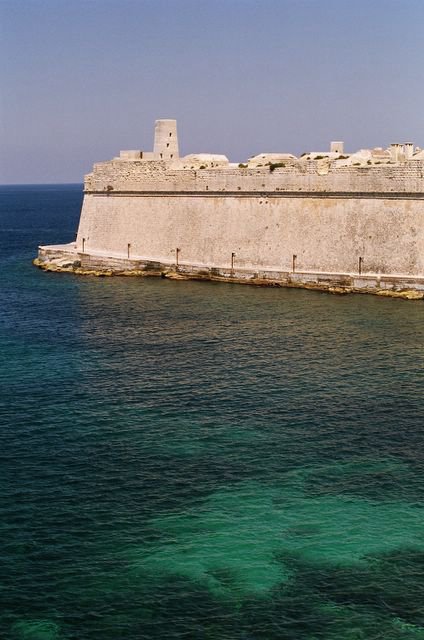
The Swashbuckler books are based in Malta, and in the Mediterranean, in 1798. It was a fascinating era, the final days of the so-called Golden Age of piracy, and a time of huge upheaval in Europe. The French Revolution had shattered the known world, and the armies and navies of Europe had been at war for years. In the middle of all this sat Malta, three tiny islands in the middle of the sea, which had been ruled for centuries by the Knights of St John.
In May, I travelled to Malta to see for myself all the many aspects of the islands that I’d been researching for years, at a distance.
I’d read dozens of books, crawled the web, stared at maps and photos for hours, and I had imagined for myself an island nation of great history, bright light and great food (not necessarily in that order). But nothing prepared me for the excitement of walking through these perfect Baroque cities, nor for discovering that everything was exactly as I’d imagined – and more. I’ll talk more about the research and the islands later.
In the meantime, check it out: Visit Malta.

Fortress overlooking the ocean, Malta Posted by Picasa