6.45am Alarm. It’s a writing day at home, not a polish-your-shoes, leave-for-the-station-at-7.45 day, so that’s a sleep-in. I lie in bed too stupid to move and conduct unfinished arguments in my head with annoying people. Up. Put my ugg boots on the wrong feet. Fall over. Stagger out. The river below the house is banked with fog. First wattle blossom appearing. Read a few pages of Little Dorrit over breakfast.
8.30am Feed the chooks. They’re grumpy. Laptop on. Heater on. Fingerless gloves on. At desk. Immediately need more coffee. Read quickly through latest draft of current manuscript to remind myself where I was this time last week.
9am Cat trying to bash the door down so he can come sit on my knee. I ignore him successfully for a while then give in. Check emails, wonder again why I have so many email accounts (home, web, work, uni). Try to find a quote in one of my own books and realise I must have dreamed it and have forgotten details of the book entirely – how can that have happened? Will have to read my own books. How embarrassing.
10am Two main tasks today and tomorrow. First, as every Thursday, I type up scribbles from my notebook written over the last few days in spare moments – over breakfast, on trains, in a cafe. Usually I follow-up with historical research, at home or on campus, and devote Fridays to drafting.
But this week I’ve decided to consolidate all the historical records of dialogue or writing by the subject of my book (Mademoiselle la Maupin, 17th century opera singer and duellist) into one document and that will form the kernel of my PhD exegesis.
I’ve found scraps of dialogue in books by fencing masters (1904), American journalists (1930s), opera and Baroque music specialists (several) and hacks all over the world from 18th century onwards. In French or English. (That’s quite apart from the genuine dramatisations on stage, page and screen.) There’s a poem she may or may not have written, there are gorgeous passages from contemporary diarists and letters, and there will be, though I haven’t found them yet, police statements and other primary documents.

The thing is, you see, there are many accounts of her life in which I can read her supposed voice, but they reflect the tone of the times in which they were written and the views of their translator or historical interpreter. So, for example, if the author has read too much Dumas, you hear La Maupin saying things like “En garde, you bounder!” If they think she’s a transgressive monster, or an Amazonian heroine, or a victim, or a flapper, or a feminist prototype, their own words fall from her historical lips – as will mine. Only I’m writing a fiction in my version of her voice, so I’m hyper-conscious of what I’m doing.
Anyway, that’s the plan.
11am Girlfriend delivers coffee. Sigh of relief. She’s writing at home today too, but we are in separate buildings and see one another only for reasons of food and beverage. Still, it’s nice to know she’s here.
Realise I have somehow been reformatting my blog instead of writing up my notes. Love the new Blogger templates and options and keep changing my mind. First morning of my writing day blocks are often a bit ratty. That’s OK. Have to allow some time for doing promotional stuff. At least I’m not gardening or reading something completely unrelated. Get back to work, you fool.
12.30pm Finished typing up notes. Good practice – gets my head back into 17th century France, where it belongs. Bit of faffing around on book blogs and industry websites. (In the middle of book contract negotiations and need an update on subsidiary rights.) Interesting time to be negotiating a new deal. Think e-book rights may change in the next year or so but have to work with what’s happening now. Keeping an eye on Future book and Booksquare. The Australian Society of Authors, of which I’m a member, has just released a new paper on the topic.
Checked the announcement of the PM’s lit award shortlist, out today. Brilliant selection. YA and children’s publishing in Australia is really quite extraordinary, as is New Zealand’s: both countries, as so often, punching way above weight.
3.30pm Back at the desk after food foraging and some much-needed exercise. Somehow managed to Velcro myself to my Crumpler in the process of getting out the door. Nasty. Chooks are up on the window sill staring at me and, for some inexplicable chook reason, moaning softly. Spending a few glorious hours hunting down La Maupin in one of my favourite places: the digitised collections of France, Gallica. I can leaf through the libretti and cast lists of the operas in which she starred. Last time I got so beside myself I forgot to eat and had to be prised off the laptop.
5pm It happened again. Went mad downloading libretti (as PDFs). Just can’t get over the sight of her name, and the names of all these other people – her ex-lover, Thévenard; her idol, Le Rochois; her rivals and friends; her adored Fanchon; her nemesis, Dumensil – whose lives I’m imagining. It all helps. I can see where she’d come on stage (for example, she’s the first thing people would see in Hesione, dressed as the Priestess of the Sun), read her lines, know who is on stage with her in every scene. Not to mention the Gazette!
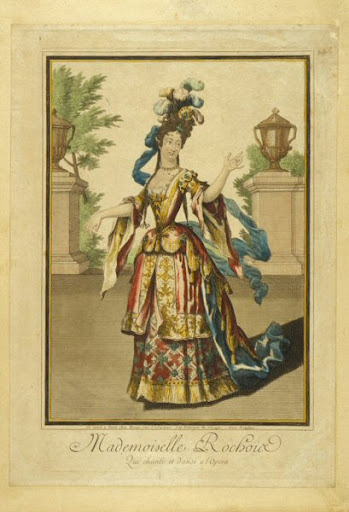
Priceless. I love digitising. Never mind your iPad. Digitising of heritage materials and archives is changing the world in such fundamental ways it will never be the same. It’s as revolutionary as the invention of the printing press. Which is the theme of my next book, as it happens. (And part of the reason for my day job – disclosure.)
6pm That’s enough. Back to Little Dorrit.


