I’m delighted to be part of this new podcast that gathers together many of our writing events on campus and at local literary festivals: Literary La Trobe, hosted by my dear colleague, historian Professor Clare Wright.
The first few episodes were recorded at last year’s Bendigo Writers’ Festival, and we’ll soon be adding more, including the Writers on Campus series that I organise and often host, and Clare’s series of book Launches @ the Library. Topics will range from crime fiction to writing history to the art of translation, so subscribe wherever you get your podcasts.
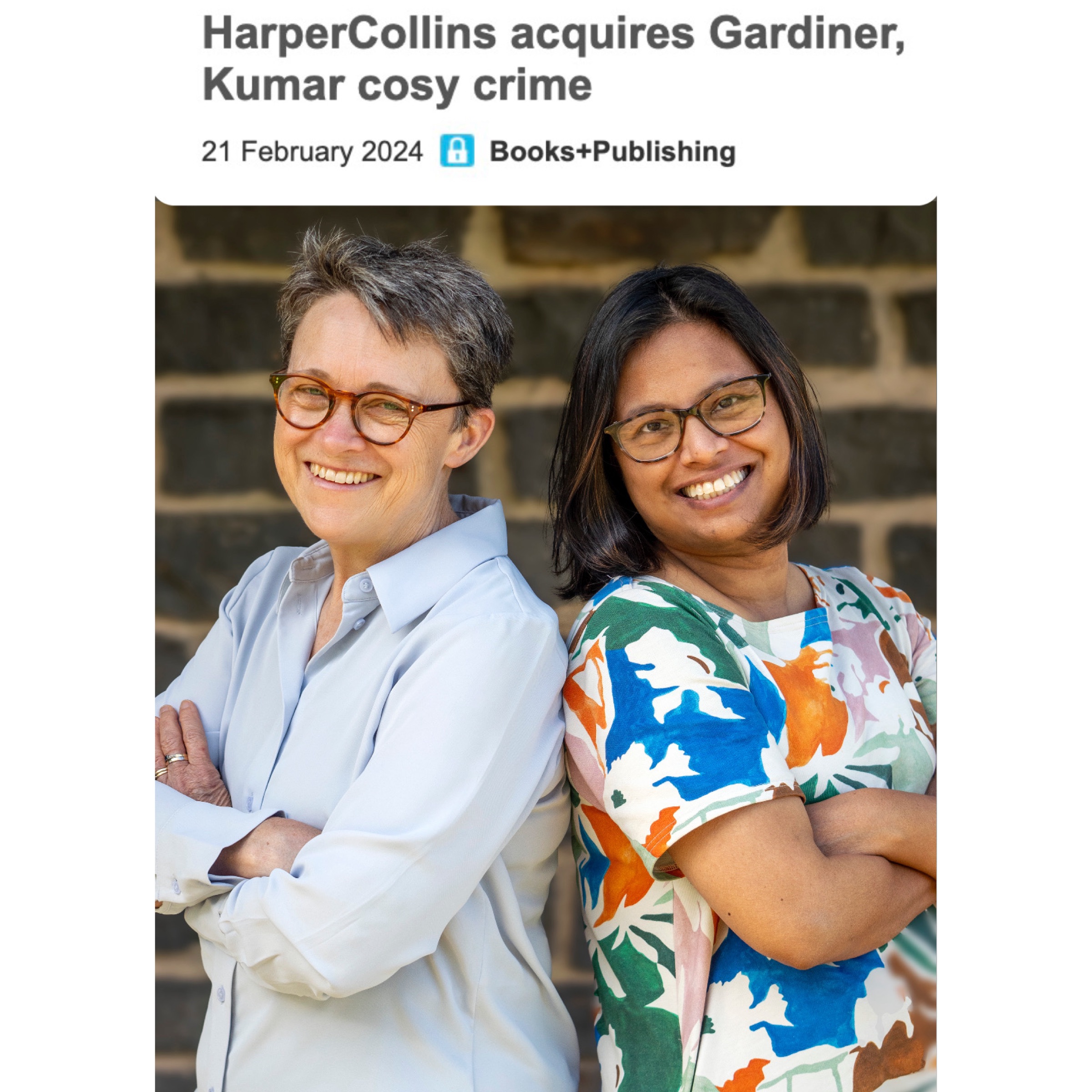
I’m absolutely delighted to announce that HarperCollins Publishers Australia has acquired World rights to publish Miss Caroline Bingley, Private Detective, the crime novel I co-wrote with Austen expert and all-round good egg, Sharmini Kumar, founder of AustenCon.
That means the novel will be published simultaneously in Australia, New Zealand, the UK and North America in April next year.
From the HarperCollins press release:
Roberta Ivers, Publisher at HarperCollins Australia, said: ‘I’m so excited to be publishing this brilliant, affectionate tribute to outspoken, independent women of the Regency era alongside my colleagues in the US and the UK, Rakesh Satyal and Cat Camacho. Not only is this story a delicious romp about women who won’t take no for an answer, it treads a skilful line between humour and pathos, with serious themes around colonial privilege that give us the other side of Austen’s story. I know everyone will fall in love with Caroline Bingley’s superior talents, as we all have around the world.’
Rakesh Satyal, Executive Editor, HarperVia said: ‘This ingenious homage to Austen is both respectful to the source material and daring in its scope, revealing to us new layers of this oft-visited and beloved world. I’m thrilled that this book will be available to readers around the globe. It’s fresh, wise, and endlessly diverting.’
Cat Camacho, Commissioning Editor, HQ, said: ‘I devoured Miss Caroline Bingley, Private Detective in one sitting. At the first page the authors pick you up from wherever you are and transport you utterly into the Regency world. It’s a brand-new, completely fresh take on the classic we all love, giving fan favourite characters their own stories and voices for the first time. I can’t wait to see it unleashed on the world.’
Literary agent Jacinta di Mase said; ‘From the moment I first pitched the concept to Roberta Ivers during an informal catch-up between sessions at Sydney Writers Festival in 2022, I knew she was the right publisher for the inimitable Caroline Bingley.’ While fellow agent Danielle Binks adds; ‘The reaction from the entire Harper family has been wonderful! It felt like we jumped from admiration to love, from love to acquisition in a moment, and we’re delighted at this home for Caroline, Kelly, and Sharmini.’
We’re pretty delighted too! Huge thanks to our agents, Danielle Binks and Jacinta Di Mase, and to everyone at HarperCollins.
Photo by Liliana Braumberger in this screenshot of the news in the trade magazine, Books & Publishing.
I’m so pleased to be hosting the next Sisters in Crime author panel on Friday, 13 October.
The Mysteries with History panel is a cracker, featuring novelists Alison Goodman, Nilima Rao, and Margaret Hickey. We’ll talk about writing historical crime, creating characters, and the ways the past so often bleeds (pardon the pun) into the present in crime fiction.
I’m even more pleased that Sisters events are back in the swing after all those months of lockdown video events (though they are still doing plenty of new video too).
Mysteries with History is on October 13, 2023, 6pm – 10pm at the Rising Sun Hotel, cnr Raglan Street and Eastern Road, South Melbourne. You can either come for dinner and the show (!), or there are limited places available for the panel section only. There’ll be the legendary Sisters in Crime raffle and then the annual general meeting happens straight after the Q&A with the panel.
I’m really looking forward to a couple of events on the horizon.
Writers Victoria
First up, on 10 September, I’m running a workshops for writers on speaking about writing. We’ll focus on preparing for interviews, facilitating and participating in author panels and events, and basically being in the spotlight. It’s something writers don’t talk about enough.
Coming up in October is the wonderful Historical Novel Society of Australasia conference, an event I always attend and always enjoy – and where I always learn a lot.
This year, it’s a hybrid format, with in-person and online events to ensure accessibility.
And I’m delighted to be kicking off the conference with an interview with conference Guest of Honour, Melissa Lucashenko – for my money, one of Australia’s finest writers. Her new novel, Edenglassie, is set in Brisbane in the 1850s and it’s out in October. I’m really looking forward to talking with Melissa about her work and her first foray into historical fiction.
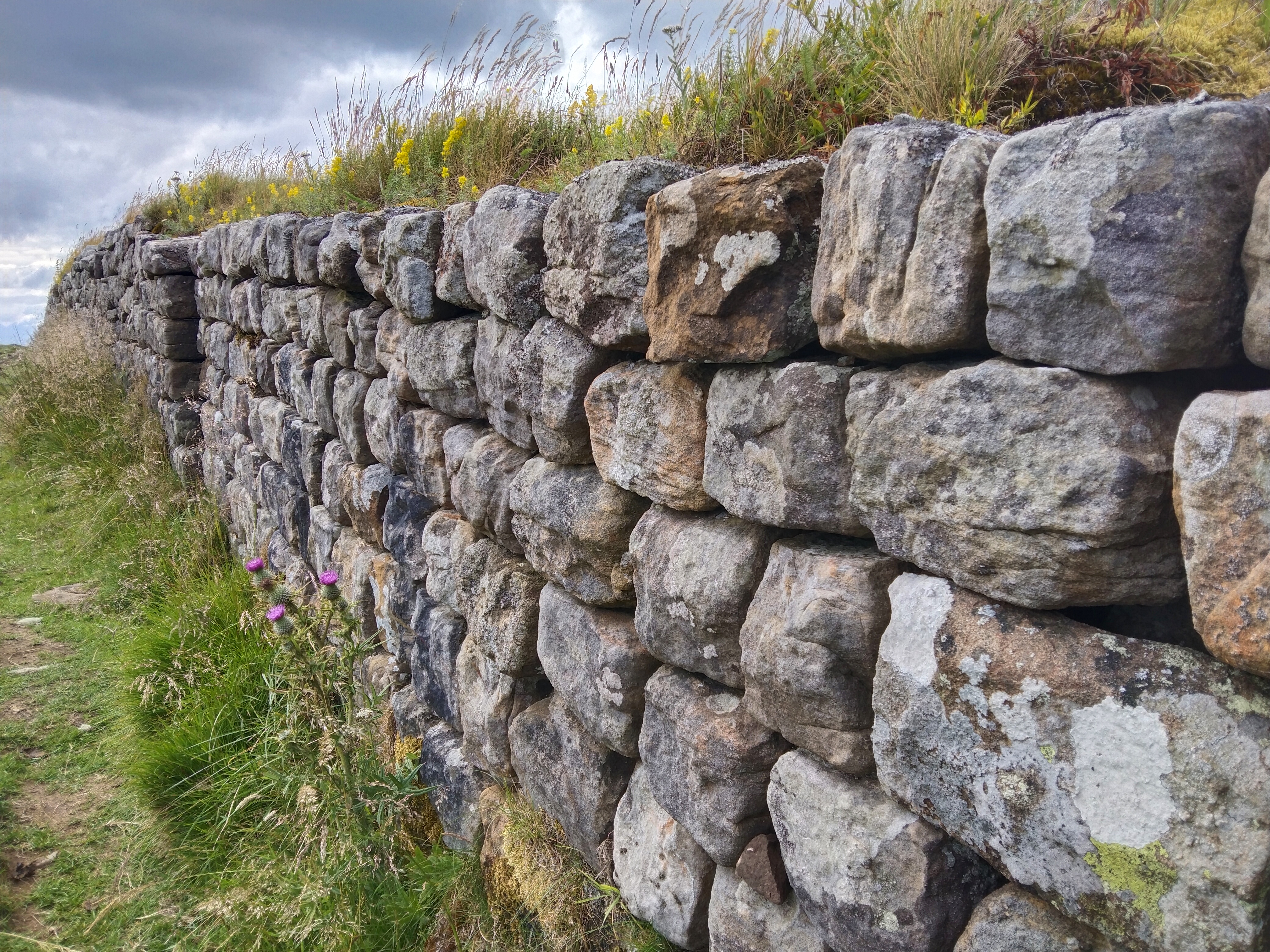
Last month I was in the UK, walking Hadrian’s Wall – that is, following the line of the ancient Roman wall from coast to coast, right across England. I walked for eight days – sometimes plodding, I have to admit – with a day off in the middle to rest my weary feet and visit the spectacular Roman fort at Vindolanda. There are days when there aren’t too many traces of wall, especially at either end, but then you climb a hill and see hundreds of metres of it stretched out before you, or the remains of a fort or milecastle high on a crag, and are amazed all over again.
That walk was partly research for a project I’ve had in mind for many years, Sublime – essays on walking, pilgrimage and the idea of the Sublime. And I also wanted to write something (she says vaguely) about digging up the past and the women archaeologists of the 1940s. And it was very vague. I didn’t have a specific idea but felt like it would come on the walk. And it did. So I wrote in my head while I walked and scribbled in the evenings when I couldn’t take another step unless it took me to dinner. I’ve written a bit about women archaeologists in the Firewatcher Chronicles, but this is for adults and a bit more like a crime/thriller. It’ll be set in Northumberland, somewhere fictional but on the Wall. Early days yet, but I’m having fun with a new cast of characters.
It’s the first time I’ve done such a long-distance walk and there were times I swore it would be my last, but I’m already planning the next.
After the Wall walk I spent a week on the stunning Northumberland coast, exploring ruined and not-so-ruined castles like the spectacular Dunstanburgh (below), walking along beaches and headlands, immersing myself in the history of the regions, and eating fish and chips.
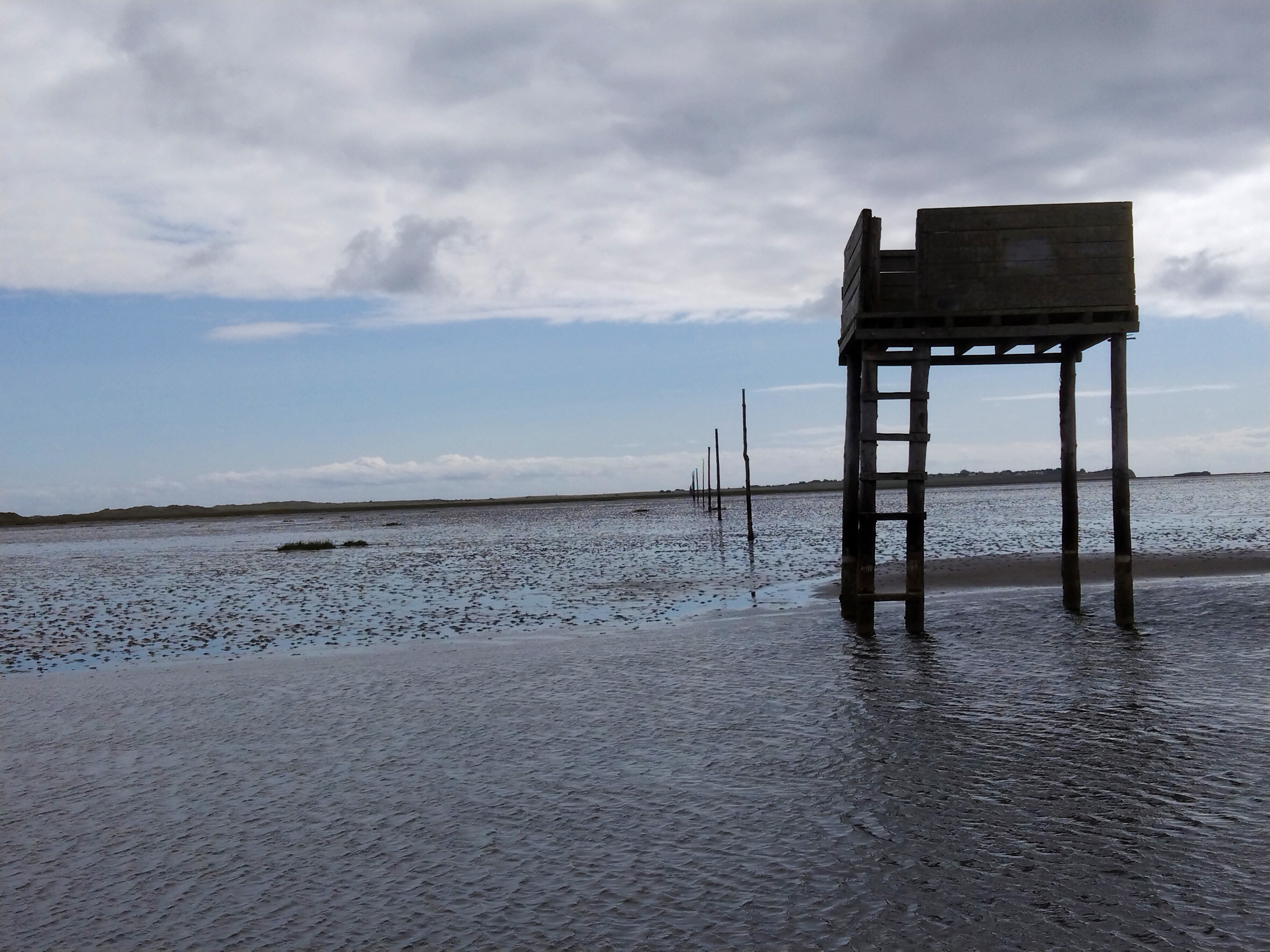
One of the very best days was my visit to Lindisfarne, the Holy Island. I walked, barefoot, as people have for centuries, across the Pilgrim’s Way to the island, tracing the route that the monks and their most revered bishop, St Cuthbert, walked. The spirit of St Cuthbert is everywhere on the island – in the ruins of the priory, on the tiny outcrop where he spent some time as a hermit, and most particularly on the sands. You can only cross at low tide, following a line of sticks – there’s the risk of quicksand and it can be dangerous if you don’t time it properly and there are refuge huts like tree houses for people who get stranded.
I’m not at all religious, but this walk felt like a very precious thing. Walking in ancient footsteps (well, medieval) and barefoot through sand and sea water. Two other women joined me and we walked together – at the other side, one said she would never forget that experience.
Nor will I.
Writing
Over the past few months, I’ve finished and sent off several manuscripts – my poor agents have quite a lot of reading to do.
They include Roar, a YA novel set in the 1980s in Apartheid South Africa; Wildfall, a YA historical fantasy; and Fine Eyes, the first Miss Bingley mystery, which I’ve written in collaboration with Sharmini Kumar.
Now I’m working on Modern Girls, set in the south of France just as the Second World War begins – it’s about a group of Modernist painters and writers, including exiles from Germany and elsewhere, who are forced to decide how to respond to the threat of war and invasion. It’s not easy writing either, as I’m trying (perhaps failing) to recreate the rhythms of different kinds of Modernist texts. We shall see.
And also chipping away at two nonfiction projects: Sisterhood, about the First World war pacifists; and a biography of La Maupin.
So many projects. As usual.
But to that end I’ve recently decided to stop working full-time and focus on my writing. It’s a huge change and I’m not quite used to it yet. I’ve also had a writing room built in the backyard so I’ve got absolutely no excuses.
Just write.
Reading
My reading brain fell out of my head during lockdown but it’s slowly coming back to me. Recently I’ve enjoyed Cuddy, by Benjamin Myers (a novel sort of about St Cuthbert), and I reread my childhood favourite Rosemary Sutcliff’s Eagle of the Ninth series while I was walking the Wall. I loved Alison Goodman’s The Benevolent Society of Ill-Mannered Ladies, Amie Kaufman’s Isle of the Gods, and Jock Serong’s The Settlement (a tough read, but excellent).
This week I’m heading up the Calder to one of my favourite events, Bendigo Writers’ Festival. It’s always an excellent program and a fun bookish vibe around town.
I’ll be talking with school students as part of Word Spot on Thursday 4 May about the Blitz, mudlarking, Vikings and Romans in The Firewatcher Chronicles.
And then on Friday 5 May I’m hosting what should be a fascinating discussion on writing fiction about the colonial past (and present … and futures), with Claire G. Coleman, Jock Serong and Paul Daley.
On June 2, I’m part of the Wheeler Centre’s Telling Tales series, in which three YA authors and three teen writers each read out a new short story – in this case on the theme of Reality Bites. Alice Pung and Will Kostakis are on the bill, so it is going to be the excellent fun, I just know it. If you’re around Melbourne, I’d love to see you there.
I was delighted to be approached to help out with some research on La Maupin for this BBC4 episode of You’re Dead to Me, a terrific series hosted by Greg Jenner, which takes a different person from the past each episode, digs into their story, and combines that with bona fide comedy.
You can listen here or subscribe on your usual podcast app. It’s great fun.
Greg is joined by Dr Sara Barker and returning special guest comedian Catherine Bohart to travel back to 17th-century France and meet the notorious Julie d’Aubigny.
Having spent so many years researching her for Goddess, I love hearing people respond to her story, and I also love hearing historians engage with the materials – both dubious and as-legit-as-we-can-get when it comes to La Maupin.
Here’s the image they discuss (I think):
It’s a contemporary engraving made of La Maupin, in costume and as if on stage (published by J Mariette, rue St. Jacques aux Colonnes d’Hercule, Paris and colourised later).
Haven’t posted for ages, sorry. I think the pandemic ate my brain.
Don’t know about you, but all through our many lockdowns I found it hard to read, hard to write, and hard to focus. My teaching work has been demanding, with the sudden shift to online and everything else going on (remind me not to volunteer to write any more academic articles this year!).
But I have been chipping away at a few writing projects and right now I’m on my Creative Fellowship at Varuna, the national writer’s house, so I’m ploughing through stuff.
Gorgeous, wintry Varuna
Here’s what I’ve been working on lately:
Fine Eyes: Miss Caroline Bingley, Private Investigator
I’ve told you this before, but I’ve been collaborating (for the first time) on an Austen-inspired crime novel, with playwright and Austen expert Sharmini Kumar. We’ve had great fun testing out our Regency research and plotting mysteries, and we’re nearly done. I know a few people who write collaboratively, and it’s been such an interesting way to work – especially during lockdown.
Wildfall
Wildfall is a YA historical fantasy novel – I mean, it’s fantasy, set in an imagined world, but influenced by the history of eighteenth century Europe. Sort of. Except with giant eagles. I’m in the late stages of drafting.
Roar
What I’m working on here at Varuna is Roar, a YA novel set in the 1980s in London and then in Africa, and especially Apartheid-era South Africa. I wrote a solid draft a while ago, on a May Gibbs Trust Fellowship in Canberra, and then undertook another round of research in South Africa, but then had to put it aside when the pandemic struck – like just about everything else. But I’m enjoying revisiting it now, and hope to have a final draft by the end of my time here.
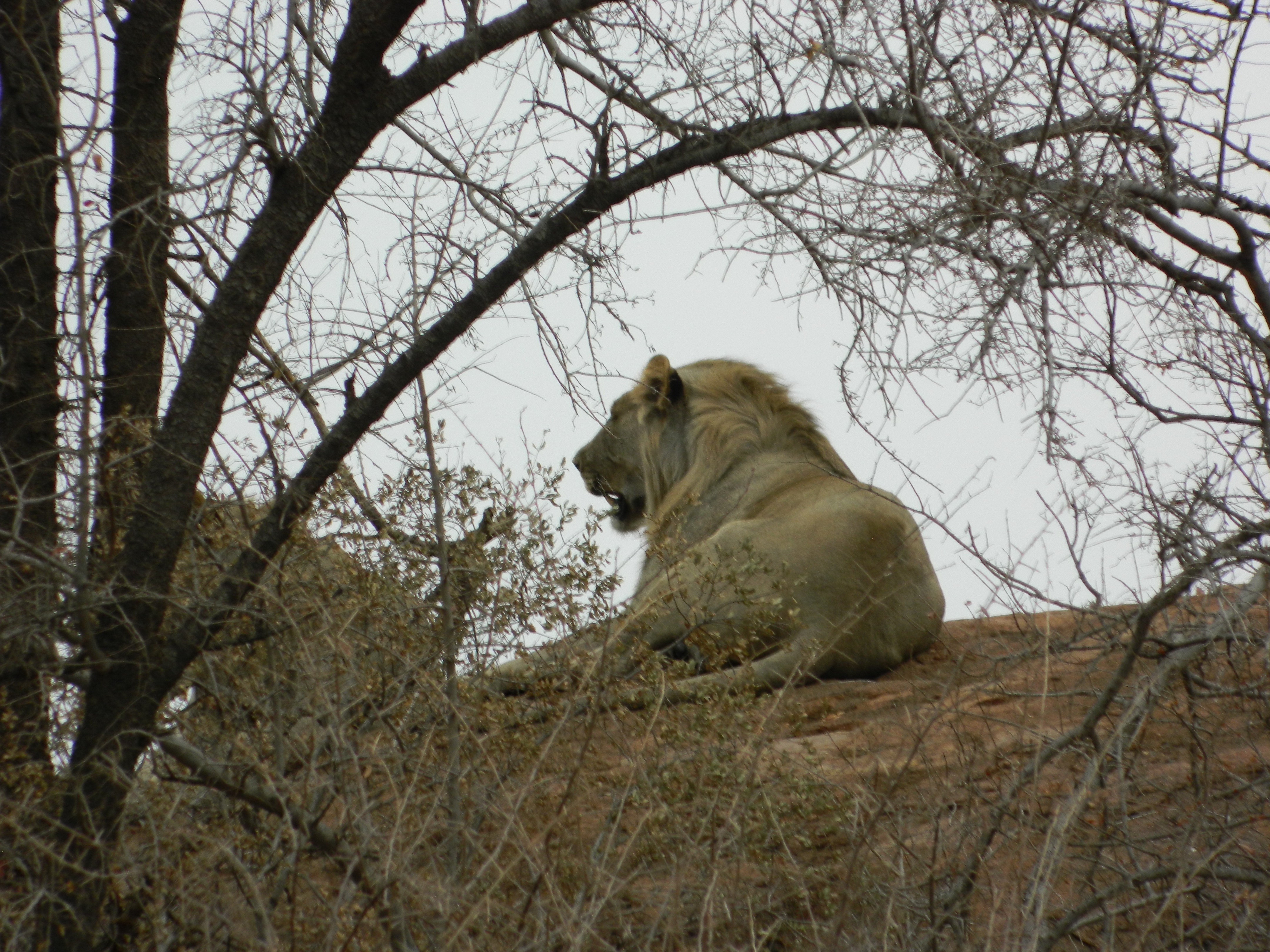
Lion – Pilanesberg National Park, 2019
They’ll be a while yet, but I can’t wait to share these novels with you.
Back at the edge of the Sports Field Lake. I’ve been coming here to Nangak Tamboree to write now for an entire month. I didn’t know, at the start, how or even if it would work out. By about day three I decided I’d made a terrible mistake. But then I settled into a rhythm.
It hasn’t always been easy. This month of writing coincided with an extremely stressful and far too busy time, so some days I’ve resented having to come here and other days my visits have been far too brief. Some days I’d think in advance about where to go (like walking the moat or visiting the Wildlife Sanctuary) and even a topic to think about (like the sculptures), but most of the time I simply wander off and see what happens.
I’ve seen and spoken to people working hard and thinking deeply about this place and how to work with it to make it more open for more people, and safer and healthier for more creatures and more local plantlife. I’ve watched the many ways people and wildlife use it already.
In this month, the acacia and melaleuca bloomed and faded, tadpoles hatched, nests are full of fledglings, and the wallaby grass is throwing up seed heads. Of course, the weeds and introduced grasses are shooting up everywhere too. It’s going to take years to manage this area of Nangak Tamboree into a revegetated, welcoming space. If the work already done around the Gresswell Ponds, Fozzie’s Waterhole, and along the moat is any indication, it’s in good horticultural hands, along with the wisdom and energy of the Narrap Rangers. Other parts of the Nangak Tamboree project may not seem quite so glamorous, like digging holes in the car parks to install reed beds for storm water drainage, but it’s specialist work, and all for the greater good. Cleaner waterways make for happier turtles.
I’ve learned a great deal in this last month: how to identify different ducks (although I still can’t tell one pigeon from another); about flax lilies and fairy wrens and darters; about storm water courses and aquatic plants; and about walking and stillness. I can tell wallaby and kangaroo grass apart (I think), and all this bird-spotting has rekindled a childhood love. My camera failed early on so I’ve had to use my phone, and its inadequacy in the zoom department has spurred me on to think about the kinds of photos I want to take when we’re back out in the world (and order a new camera).
I’ve learned a little about the recent history of the area, which I’ll continue to research. I’ve learned that I have too many projects at once and need to calm the fuck down, which will come as no surprise to anyone who knows me – several of whom have been telling me that for years. On the other hand, if you teach at a university, you are meant to have a lot on. And on yet another hand, which is exactly what I need, everything is so fascinating and I have ideas bouncing around in my head all the time.
But I hope I don’t lose the slowness of walking and writing practice. And slow reading, for that matter. This month I’ve also been slowly rereading War and Peace, my favourite book, as part of #TolstoyTogether, a global shared lockdown reading project. I tried it last year and then got so carried away with the story I raced ahead. Typical. This year I am trying very hard to only read the day’s allotted chapters. (We’re up to 1812, and the war is heading towards Bald Hills – this is the real test of my commitment.)
So here we are at the end of the month and the end of lockdown. I can walk here today without a mask. Everyone says we’ll soon be back to normal. (By that, I don’t even mean the idea of ‘COVID-normal’ embraced by politicians.) But we won’t or at least we shouldn’t. Because we know and see the world differently now. Instead of getting back to normal, let’s remember the small pleasures and daily lessons of hyperlocal living.
Today, a cormorant drying its wings on one log, a darter on another. Little lorikeets hopping along a branch. The drum band at their rehearsal in the bush. An ant crawling across the page of my notebook. The water glittering in the setting sun. The breeze rippling the lake. Corella cries. Spring warmth.
A perfect, almost-still morning in Nangak Tamboree, after the wildness of the past 48 hours.
It’s the second-last day of this little writing project, and I’m revisiting a couple of favourite spots – places I will continue to visit. Today’s it’s the ‘beach’ at the top of Sports Field Lake, but there’s only one chair left here. The other one has probably been blown across to Altona, like that flying trampoline. I can hear the sounds of an actual sports team training on the other side of the water. Haven’t heard that for a while.
Oh, no – I see the missing chair. I recognise that glimpse of slender grey bar sticking out of the water. I grab a stick and retrieve it from the lake. It’s not quite Excalibur, but I feel triumphant nevertheless, and lean it up against a tree trunk, where it drips water in a channel through the dirt.
Coots duck and surface, and startle away from me. Fair enough. Across the water, my old friend the Darter is drying his feathers on a fallen tree trunk and shouting at the sky every so often.
Another Darter, a female this time, with caramel feathers, surfaces quite close by and I see now why they are also called Snakebirds. She vanishes and must move fast underwater, because her long neck and dagger-like beak emerge many metres away. She launches herself into the air while her body and wings are still submerged, becoming half-bird, half-waterfall, then drags her feet across the surface before taking flight in an elegant arc across the lake.
There are so many fallen trees and branches down across the state, and this place is no exception. But so many other things have changed in the time I’ve been coming here to write. Lockdown is over now and today is the first day we are allowed to leave the city. So soon, we’ll hit the road to (at last!) get up to my little place in the country to check on it, do some fire season preparation, and spend the night. It feels extraordinary to go somewhere that is not the same as every other night for the past many months. Again. I remember this feeling from this time last year though, and I’m not going to fall for that optimism again. Anything could still happen with this pandemic.
We’ve gone, in the past month of me walking and writing here, from an enforced five kilometre limit to ten kilometres, to 25 kilometres, to the city boundaries, to the state borders. Our horizons keep changing, like a cinematic zoom.
But let’s not forget these little local spaces we’ve explored in such detail while we’ve stayed so close to home.
I’ll be back tomorrow to say goodbye. But I guess I won’t really leave Nangak Tamboree.