Falling apart

…when I hear of people taking a year off to write, I worry that a year might not be enough. You must fail as a writer for much longer than that, I think, before you know what failure is and what use you might make of it. I didn’t realise, when that first book fell apart, that every book falls apart. That this is the gig. You sit there and watch your word-count drop, and you hold your nerve. I have survived this process now many times.

~ Anne Enright being encouraging (I think) in The Guardian

Oh no!

“Australian poet Dorothy Porter died in Melbourne this morning from complications due to cancer. She was 54.

The writer is best known for The Monkey’s Mask, a crime thriller in verse about a lesbian detective that was published in 1994 and won The Age Poetry Book of the Year in the same year.”
(The Age)

Best reader of her own work I ever heard – and one of the best poets.

Too dreadful.

The forgotten heroes

Note to book publicists, feature writers and documentary makers: just because something happened a while ago, that doesn’t make it “forgotten”.
In the past couple of months, I’ve seen that description applied to the Anzacs of World War 2, naval veterans of both World Wars, HMAS Sydney, RAF crews, and in the week of Remembrance Day, not just John Monash but the entire Western Front.
Monash. One of our most famous and revered military minds. I find this astonishing.
Yes, the Howard Government obsessed over Gallipoli on Anzac Day and failed to organise Remembrance Day celebrations in Fromelles (mind you, I doubt John Howard, for all his failings, forgot the Western Front, either).
It’s perfectly reasonable to question both the Gallipoli campaign itself and its glorification. But to claim, as Jonathan King did in The Age last month, “it has taken the Commonwealth 90 years to realise the significance of the Western Front” is stretching the point beyond breaking.
The Western Front was the Great War in everyone’s mind, for its duration and for generations afterwards. It is so utterly seared into our collective memory, the photographs and poems absorbed on an almost visceral level, the diaries and letters amongst the literary canon, even though so many who came back who never discuss it.
But who exactly has forgotten?
Not me. Not anyone I know. Not anyone who has ever read one of the trench poets or seen a Frank Hurley photograph or read a war diary.
I grant you, the First World War campaigns in Serbia, say, are unfamiliar to many and don’t feature largely in the collective imagination.
But the Western Front?
What nonsense.
I can’t count the number of books on the Western Front sitting on my bookshelf: some may be obscure but many are certified best-sellers. Some of those are written for young readers. Not everyone has a precious copy of CEW Bean but countless people have copies of Carlyon or Adam-Smith – or indeed Sassoon and Graves or even Hemingway. Who do you think reads all these books and watches the movies, documentaries and TV series? Millions of people, of all ages. And they all remember.
A monumental national effort went into commemorating the dead in Europe after both World Wars; both here, in the form of the Shrine and the War memorial in Canberra, but also in the places where the bodies lay. Do you imagine the hundreds of thousands of people who remember our dead or fractured grandfathers and fathers and uncles (and grandmothers and aunts), don’t actually realise they served in the mud of Flanders and France and Italy?
You can’t really think we’re that stupid.
Next it’ll be “Weary Dunlop, the forgotten doctor of the Burma railroad”.
Or “Tobruk, the forgotten battle that turned the tide of war”.
There are myriad ways to remember and commemorate. Turning a cemetery into a tourist hotspot like Gallipoli in April is not the only possible form of acknowledgement. Turning life and precious ritual into a History Channel voiceover is absurd and alienates those who have not forgotten – and will never forget.

Recent reading

My inner life – such as it is – has returned to normal now that the US election is over and I don’t have to spend every spare moment worrying about Sarah Palin.
So I’ve been catching up on some reading:

Lighthousekeeping – Jeanette Winterson has climbed down from her self-conscious now-watch-while-I-do-some-amazing-writing thing and is back in fine form. Perhaps she just has to do that voice. Perhaps she’s a one-voice wonder. Who knows? When she gets it right, there’s nothing like it.

The Collector of Worlds – The new translation of Ilya Troyanov’s novel based on the life of that famously enigmatic explorer, Richard Burton. I hoped, from the first few pages, for insights into Burton but in the last pages was forced yet again to accept enigma as a fact of life. It’s compelling, suitably exotic and Orientalist, slightly frustrating and as fabulous as Burton’s life demands – and beautifully written.

Olive: The Life and Lore of a Noble Fruit – Mort Rosenblum. Unlike all those stupid pop history knock-offs (Dust, Flea, and for all I know Belch or Sandpaper) this is utterly fascinating, as indeed you would expect, because the story of the olive is the story of the Mediterranean region and the future of the trees and their precious produce critical to everything from the EU subsidy program to peace in the area around Jerusalem. And I’m a bit olive obsessed at present.

That said, I might now catch up on some writing.

Taste test

Read not to contradict and confute; nor to believe and take for granted; nor to find talk and discourse; but to weigh and consider.
Some books are to be tasted, others to be swallowed, and some few to be chewed and digested: that is, some books are to be read only in parts, others to be read, but not curiously, and some few to be read wholly, and with diligence and attention.
~ Francis Bacon

The morning after

On the other hand, maybe change is incremental – or relative – or selective – or something.

A giant rainbow-colored flag in the gay-friendly Castro neighborhood of San Francisco was flying at half-staff on Wednesday as social and religious conservatives celebrated the passage of measures that ban same-sex marriage in California, Florida and Arizona.
The across-the-board sweep, coupled with passage of a measure in Arkansas intended to bar gay men and lesbians from adopting children, was a stunning victory for religious conservatives.

(New York Times)

In the garden

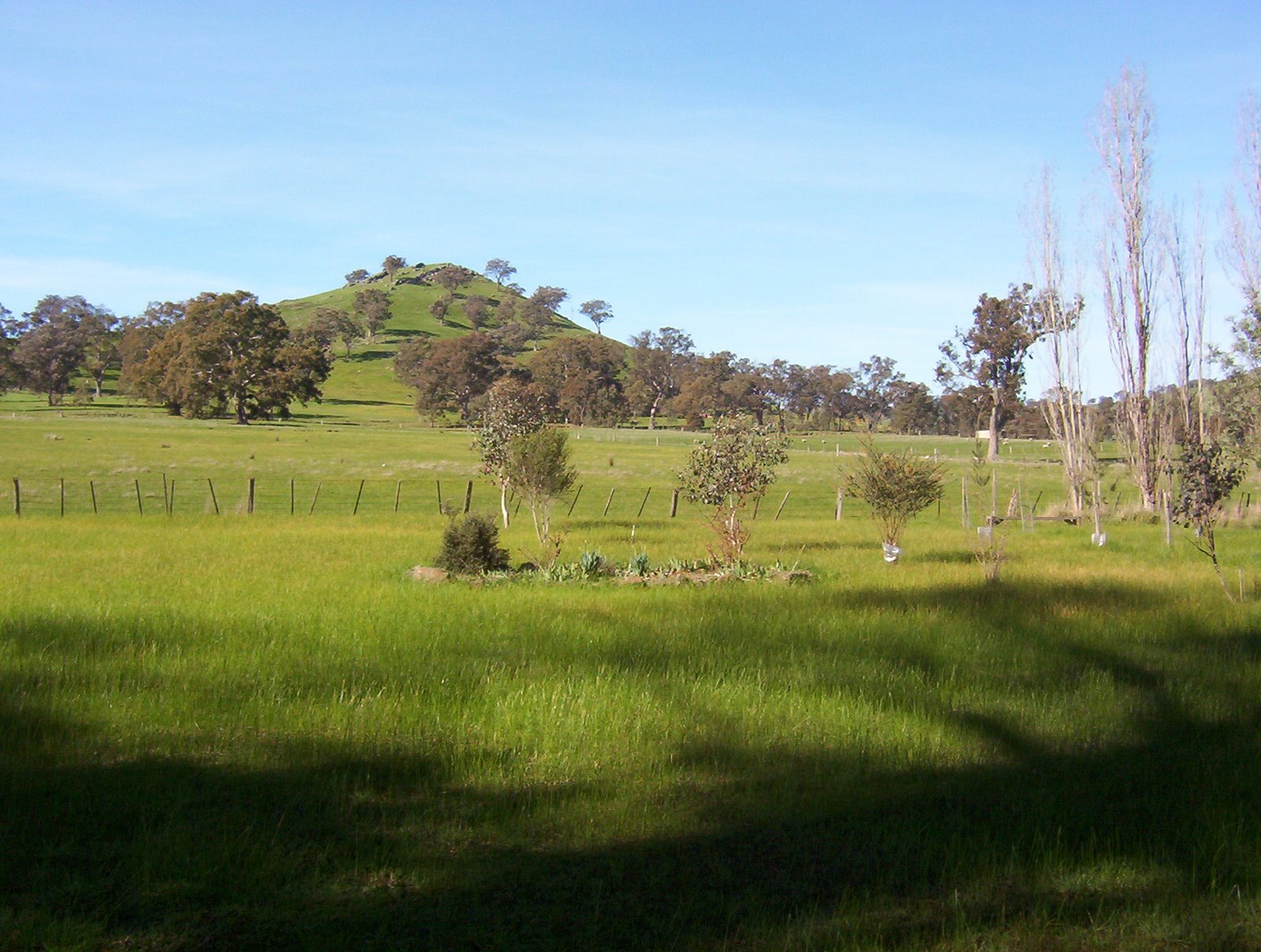
It’s raining.
Right into our new water tank, connected in the nick of time yesterday. Not much, granted, but if it does this for a couple of days, as predicted, I’ll be happy.
I had the feeling (and it’s only October) that it was never going to rain again.
So things I have learned this winter and spring:

• There is no such thing as a rabbit-proof plant*, with the possible exception of bearded iris**.
• Slaters like beer, just like snails, and die happy. Sadly, they also like seedlings.
• Very small kittens can take on very large rabbits and win.
• If you buy a bunch of spring onions at the supermarket, even if they’ve been in the fridge for a while, and stick the leftover ones in the garden, they will just keep growing.
• Parsley, even when not moved as seedlings, can go from baby leaves to bolt in about a week. Who wants to molly-coddle their parsley? (On the other hand, I do have a self-sown one flourishing in the driveway gravel – gardening is so random sometimes.) And ringtail possums love it.
• Raspberries will flower in the first year.
• Pear trees will not (and not much in the following year, for that matter, but I do have one centimetre-long Buerre Boscs so far this season). Cross-pollinators don’t always flower at the same time, but it somehow worked anyway.
• Roses are actually tough as old boots.
• Broccoli can be too – but when being eaten, not growing.
• Never think “Those cherries are coming along nicely – I’ll put the bird netting on at the weekend”. Your tree will be stripped by then.
• Sugar cane mulch actually stops water getting through to the soil.

Pleasant surprises• All the alliums seem ridiculously happy in my veggie patch: red onions, garlic, leeks, chives, garlic chives, ornamentals – all booming.
• Broad beans are going nuts, in spite of being badly mauled by slaters.
• Broccolini, as opposed to broccoli, grows like the clappers and tastes sublime, though it can be very hard to find in the first place.
• The rhubarb inherited from my dear late great-uncle (who could grow anything) divided into three crowns and thrives in his honour.
• Waving poppy seed heads around in the air one year creates poppy heaven the next (only I think they might be opium, so too many more and it’ll look like Afghanistan).

And I know it shouldn’t really be a surprise, but you’ve never tasted food as good as food you’ve grown and picked just before you eat it.

* Allegedly rabbit-proof plants include rosemary, grevillea, lavender, correa, borage, comfrey and succulents of all sorts. I’m a witness to the fact that rabbits will eat any or all of these, even when there is plenty of other green stuff around. Correas are simply pudding.
** Irises, however, are not sheep-proof, as I have learned to my cost in my country garden, but that may not concern too many gardeners.