21 October, 2021
Day 21 of Writing Nangak Tamboree.
There’s always someone caring for the land around here.
Most of the time when I walk along the creek, there are Council rangers on either Darebin or Banyule bank (or both), and workers mowing or slashing or spraying or whipper snipping. A couple of days ago, I passed two ute-loads of rangers out on the Banyule North Grasslands who were hand-weeding around newly planted patches of kangaroo grass – with those little pokey things we use in our veggie patches. Slowly, carefully, lovingly.
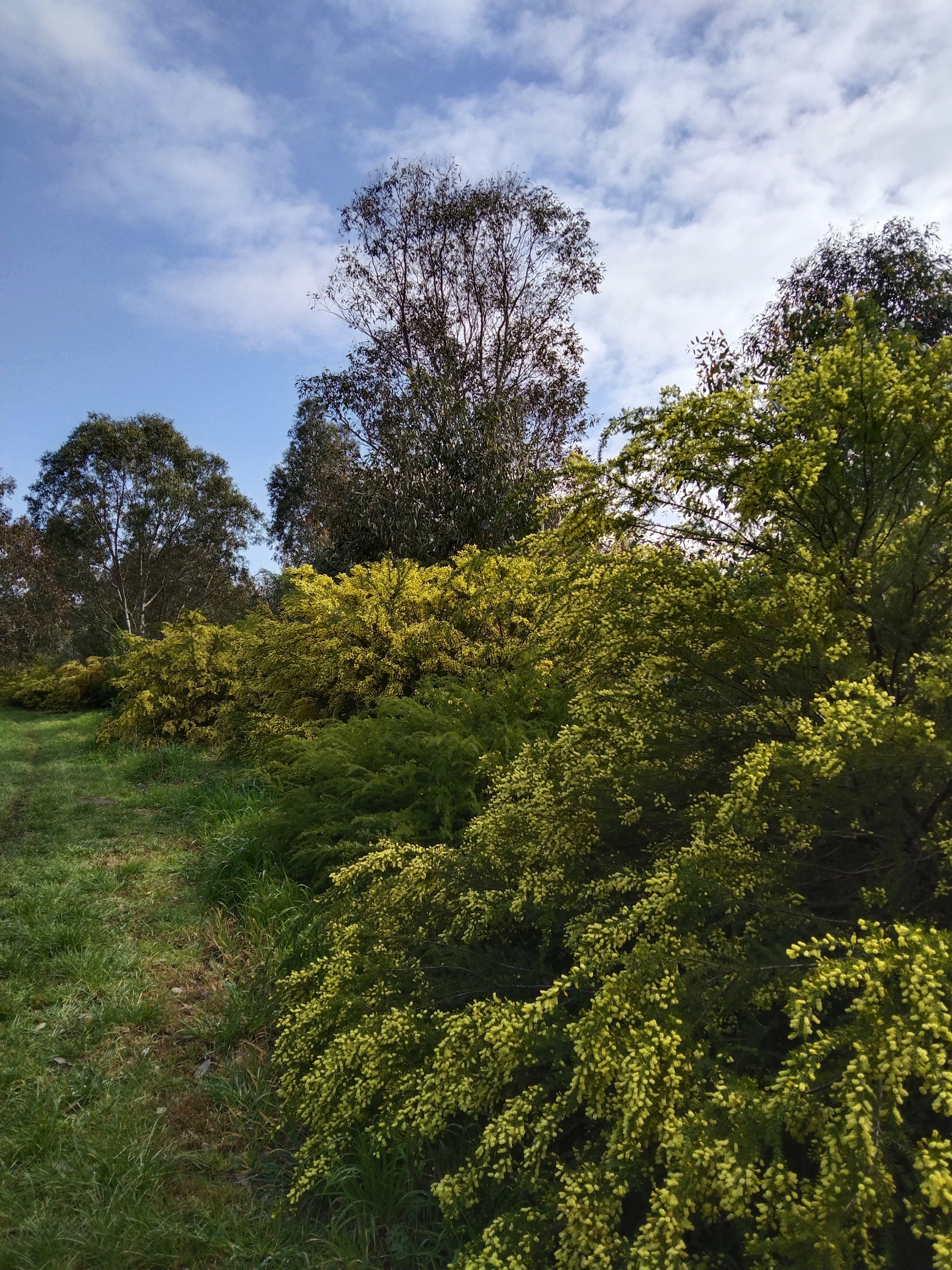
You can see generations of care all around here. There are callistemon planted along the banks (I’m not sure I’d choose them for that spot, but it must have been years ago) and further south a truly impressive bank of hedge wattle and prickly Moses. Both are far too symmetrical to be natural, but they are lovely, and the wattles, in particular, are home to many small birds.
I found this terrific short video about Friends of Darebin Creek and the Sweepers who pick up other people’s rubbish. It’s worth a look, even if only to get some great footage of the creek, but also a timely reminder about what flows along with all the storm water we’ve had lately.
But I’m not down there today. I’m at the other end of Nangak Tamboree, in Gresswell Forest Nature Reserve – in fact, technically it’s not part of Nangak Tamboree, but it is, if you like, the other end of the eco-system that Nangak Tamboree connects. A few days ago I walked through the Wildlife Corridor that connects to this area, and today I’ve come to walk in the Reserve itself, which is much bigger and fenced off to protect the wildlife. It is obviously popular with the locals, who are strolling, jogging and exploring along wide, well-maintained tracks, and with the birdlife, which is so prodigious I don’t know where to look next.
It’s remnant bush, but very different to the creekside: higher ground mostly, although there are still tiny creeks running through it into wetland areas. Scrub, rather than grassland, with Hop Goodenias as big as a car rambling under tremendous old eucalypts – Yellow Box alongside the Red and Manna Gums. Fallen branches are left where they land for habitat.
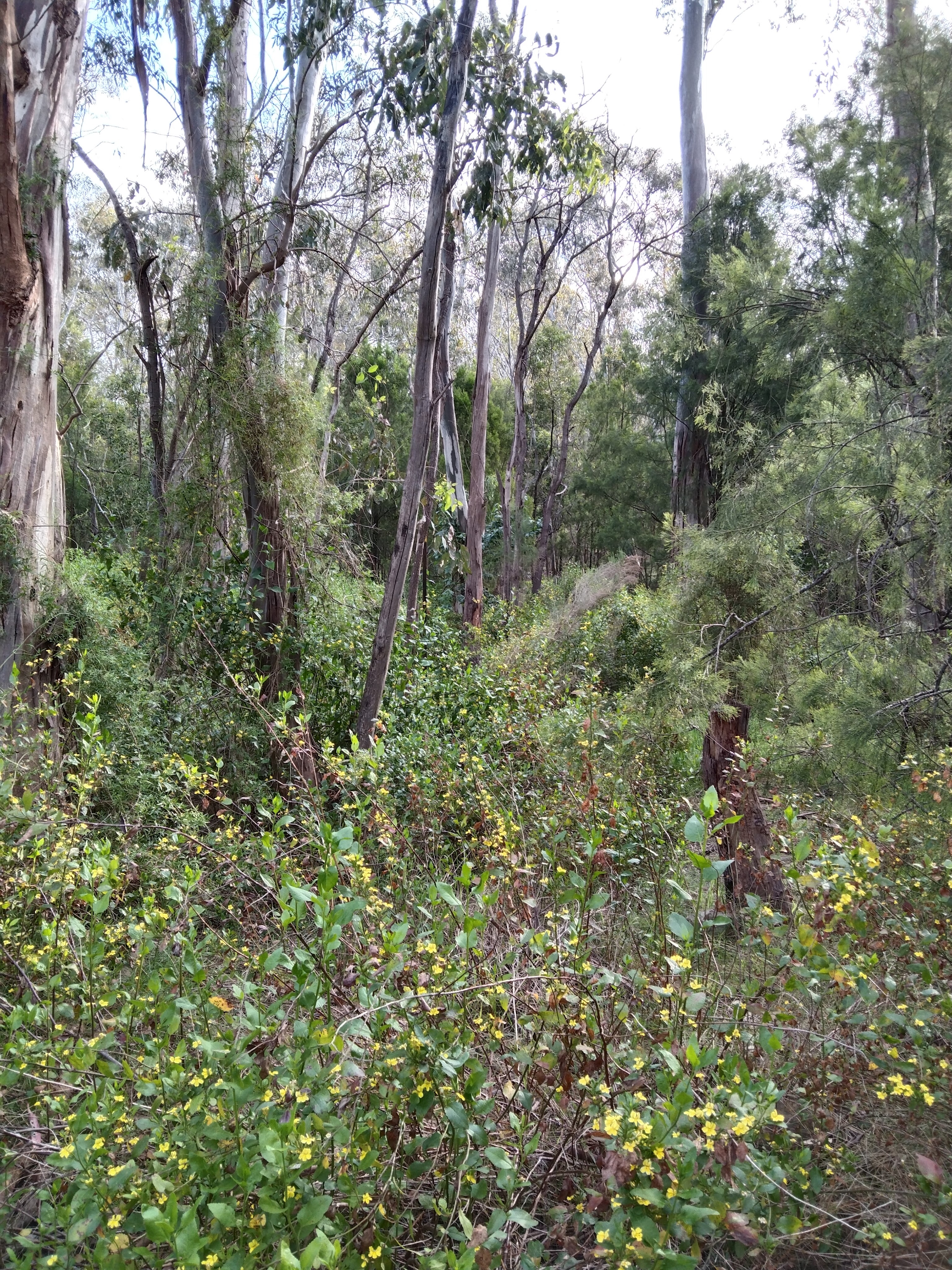
In fact, I’ve never seen the Goodenia so big, and I’m thinking now I may have made a strategic error with the two I planted in my front garden last year. Another example of care: my council runs a Gardens for Wildlife program, where they tell you all about local flora and fauna, help you design your garden, give you a plant voucher and a nesting box, and empower people to care for threatened or precious species by creating habitat. Which is a backyard version of what we’ve been looking at over the past few weeks.
And people do care for places by being here respectfully. Of course the workers and volunteers have a program of maintenance, weed management and revegetation. Wildlife volunteers and local vets and refuges care for injured creatures. But we all help by walking here, admiring everything, noticing if something’s wrong or hurt, logging birds or bugs in citizen science counts, or simply keeping to the tracks. We help by not wrecking the joint, taking our rubbish home, not killing anything. A low bar, I know, but it’s progress.
Yesterday, walking past the Nangak Tamboree revegetation area, I met Glenn, one of the Wurundjeri Narrap Rangers who are managing the cultural burns in the area, and advising on the project. (They were meant to burn yesterday but there’s been so much rain it’s been postponed.) It was Glenn who suggested moving the Frog Hollow. The last couple of weeks, the Narrap Rangers have been out spraying the invasive introduced grass with an agent that dries it off, ready to burn. They burn in patches, controlled and careful. We’ve heard a lot more about the wisdom of indigenous fire management since the 2020 bushfires, but this is gentle but dramatically effective weed management, blending scientific and cultural knowledge. He told me how the Flax Lilies had come back after the initial burn, and that kangaroo and wallaby grass would spread down the hill and re-establish itself quickly. He reckons it’ll take three to five years to get it how they want it.
Glenn said he’d spotted a brown snake the other day, near the ‘mother tree’, and as a former snake catcher he picked it up to have a good look. His colleagues apparently weren’t quite so enthusiastic, and since a brown can kill you about ten times over I’m not surprised. Rare around here, he reckons, but tigers are everywhere. He says all this with a grin I have seen on snake catchers before – they love snakes almost as much as how talking about snakes makes other people squirm. He also said there were roos in the area, though I haven’t seen any – that’s not surprising in all this high spring grass. They are pretty good at not being seen. I’ve seen them on campus from time to time, in the evenings, and once all the way down the creek near Darebin railway station. But never here.
Which brings me back to today. I’m sitting on a bench by the track, thinking over the past few days, when something thumps gently in the bush next to me, and I look up into the eyes of an Eastern Grey. Some people come along, chatting away happily, and it startles, and leaps off into the bush, followed by a friend I hadn’t even seen.
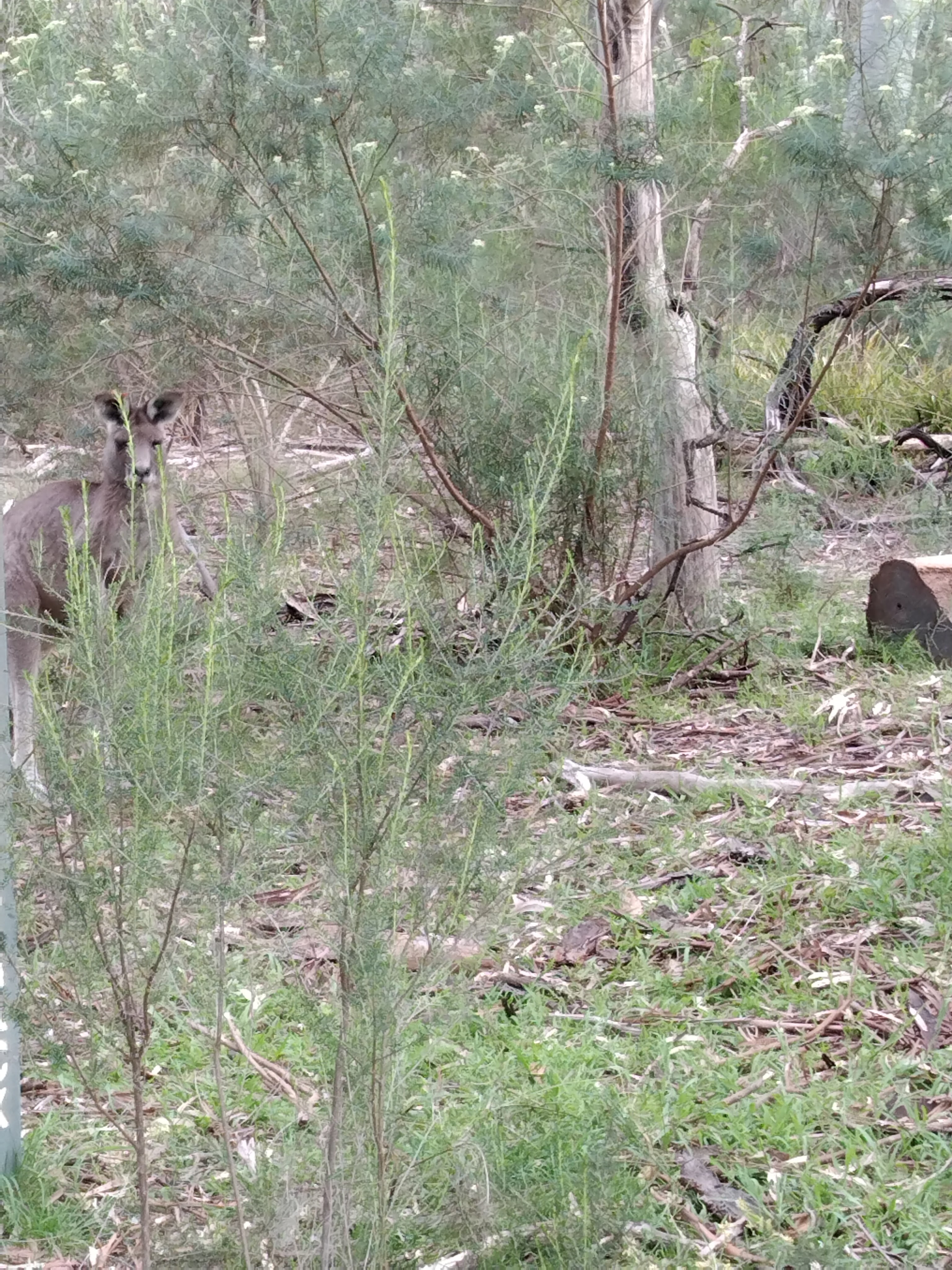
Even when you’re writing, don’t forget to look up.


 Kelly Gardiner