On the rocks

11 October, 2021

Day 11 of Writing Nangak Tamboree.

Boulder in long grass

Melbourne gardens are full of what’s known in the landscaping trade as honeycomb rock – especially gardens of a certain vintage. You might see a row of rocks carefully cemented into the edge of a garden border or – the classic approach – dotted about a rock garden populated by succulents and the odd cactus.

I always hated the look of them, myself. I don’t know why. Perhaps because they are so ubiquitous. Every front yard had them, or so it seemed, bordering the geraniums or lining up along the driveway, all over the city. We had a retaining wall (concreted, of course) at my childhood home and carefully constructed by my dad. Everyone had honeycomb rocks in the 1970s and 80s, especially, when the fashion for indigenous plants took off and every household had a copy of Ellis Stones’ (yes, really his name) book Australian Garden Design (Macmillan, 1971) on their mid-century Danish timber shelves. (I’m not being cynical – I have two of his books and treasure them.) Stones and other garden designers like Edna Walling and later Gordon Ford popularised the use of rock in the informal garden and Stones’ idea of stone outcrops was spread through magazines like House and Garden and into suburbia. Stones was a local here – he lived in Ivanhoe, there’s a great deal of his work around the area, he was a great advocate for the river and creeks, and he designed the Elliston estate, named after him, in Rosanna.

Anyway, I blame Ellis for all those honeycomb rocks. But it’s not his fault. The rocks in gardens around my family’s house were trucked in especially, and they looked out of place because they were. It wasn’t the siltstone and sandstone we found naturally in that area. I think maybe when I was little I thought someone had made them, like Violet Crumbles. They didn’t look natural, or like chips off a meteor.

But here, in and around Nangak Tamboree, they belong. The ultimate honeycomb rock border is the one I’m resting my notebook on today: massive boulders marking the border between Nangak Tamboree and the adjacent Banyule North Grasslands (and presumably preventing anyone but Mad Max from driving through here). Each one is about as big as a freezer.
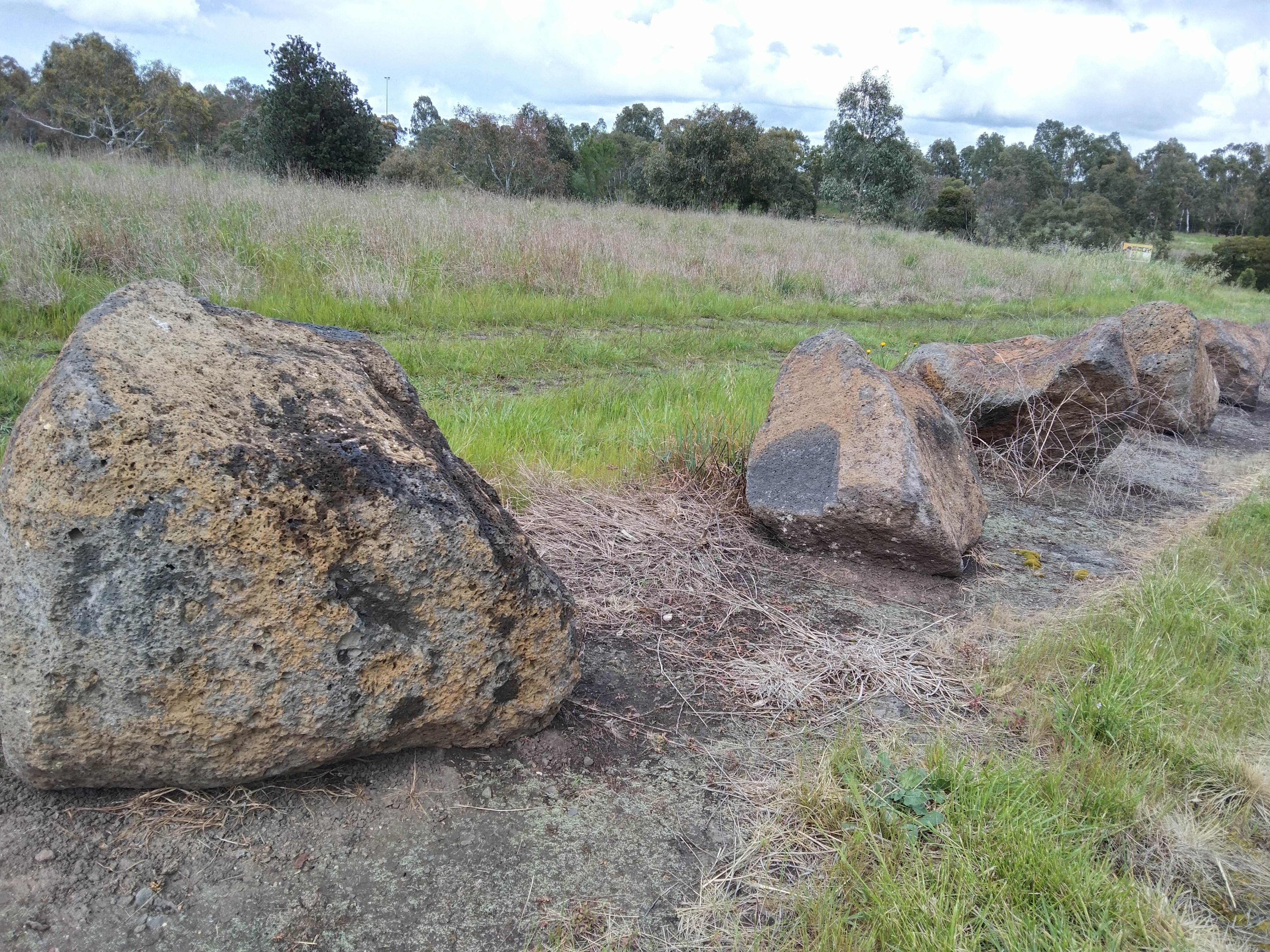
It doesn’t even seem right to call them honeycomb rocks here. The banks of Darebin Creek are edged by a low escarpment of boulders, still here after flowing as lava nearly a million years ago. White farmers cleared them away and used them as dry-stone fences and for building – there are places along the creek where you can see both the original escarpment and a whole lot of smaller rocks presumably chucked over the edge decades ago.
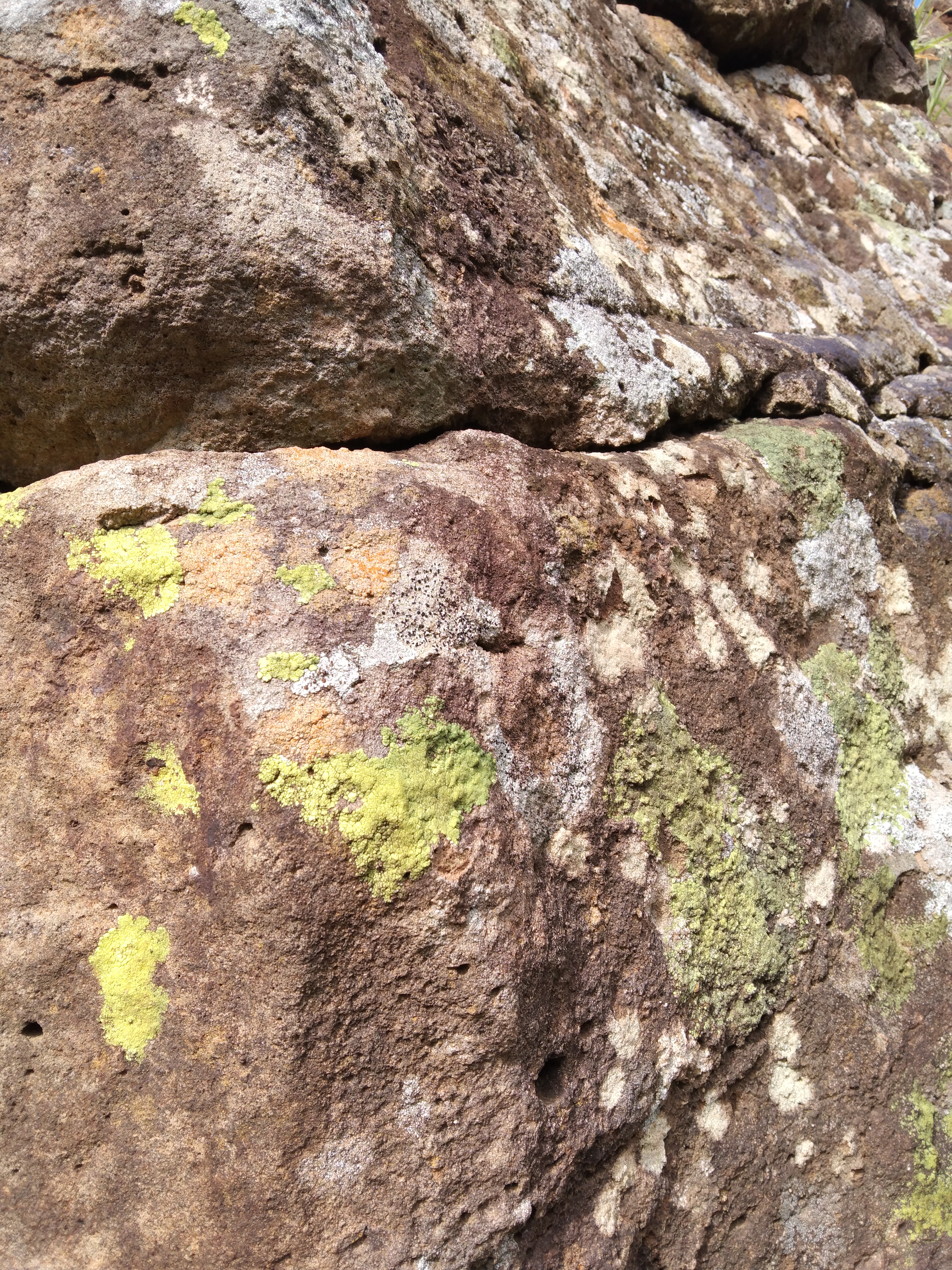
Rock with lichen

They lie under my feet, poking through the thin topsoil. They influence what grows here, and how it grows. My map of local plant communities tells me this area here – this flattish plain above the creek – is classified as volcanic Plains Grassy Woodland, dotted with River Red Gums, and bordered by the escarpment scrubland dominated by Tree Violets (Melicytus dentatus), Manna gums and Silver Wattle.

Rock under ground

The rocks are still used in gardens in the streets around here, and on campus. They even house tiny gardens of their own sometimes – lichen, mosses, miniature stands of wild grass and the smallest weeds you ever saw.
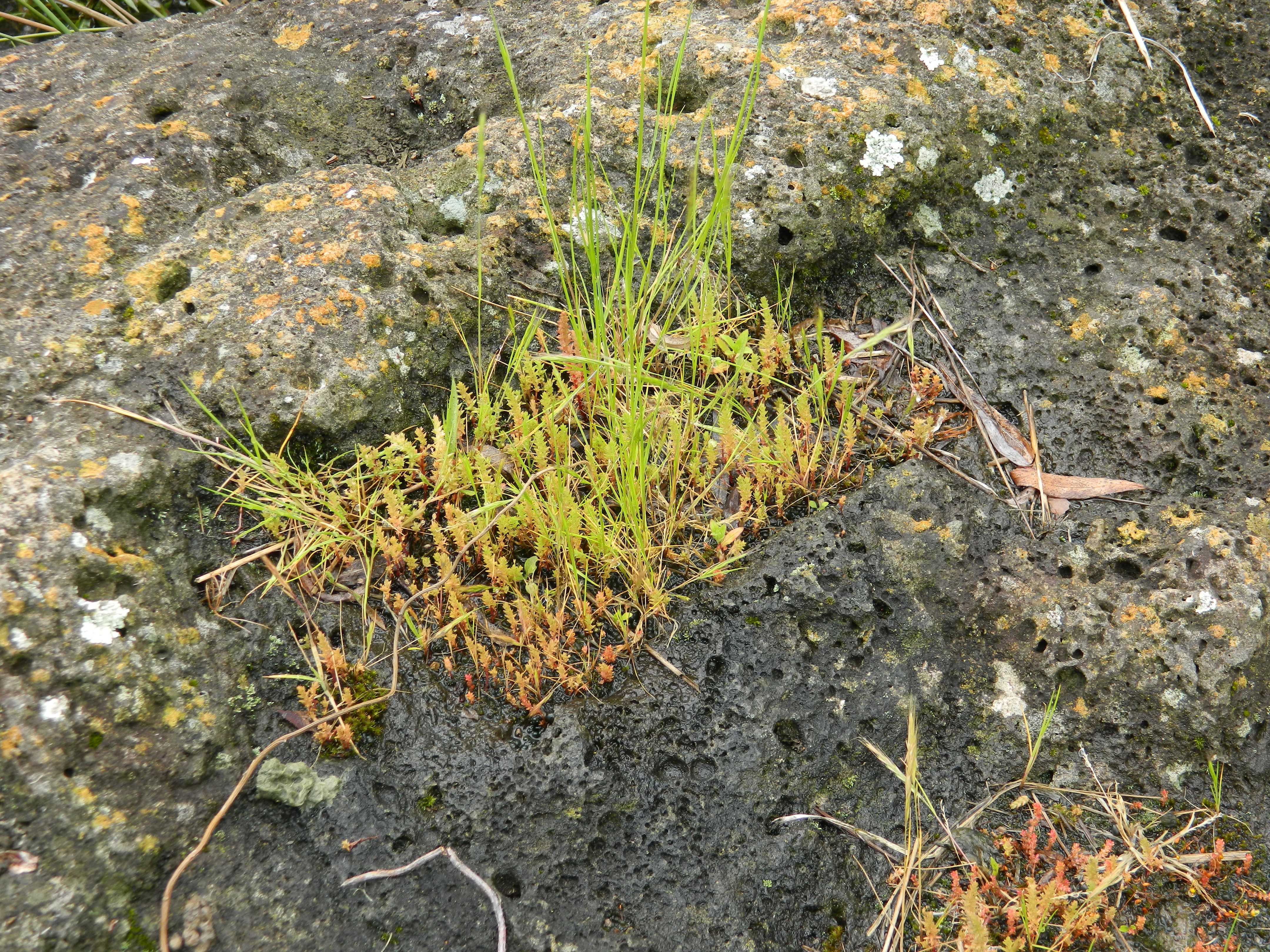
Rock near Main Lake on campus, hosting new growth

Creatures love them. Lizards and turtle sunbake on them, snakes burrow in between them, insects of all shapes and sizes crawl and nest and feed on them – these whoppers must feel like an entire planet to an ant. And even I have come to appreciate them lately. Ellis Stones would be proud.

Regeneration

10 October 2021

Day 10 of Writing Nangak Tamboree.

An evening visit today, after a long walk with a friend and a greyhound nearby at Bundoora Park (we saw ducklings!).

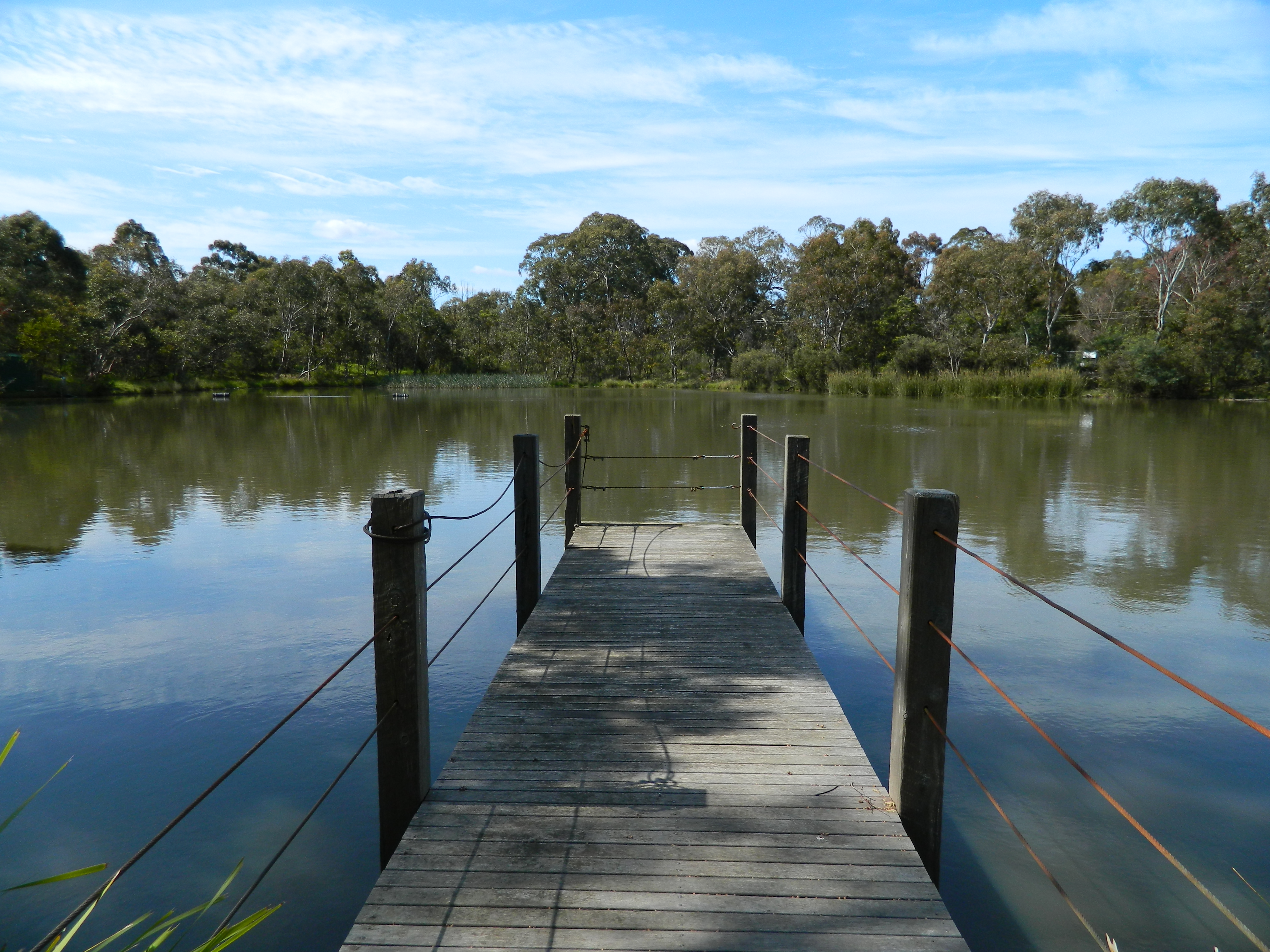
The waterhole near the front of the Nangak Tamboree Wildlife Sanctuary is called Fozzie’s Wetland (apparently after the first Ranger who worked in the sanctuary). It doesn’t even show up as blue on my Google map of daily writing spots, which I guess is OK as it’s more on the green side. Verging on dark brown.

Waterhole

It’s not huge, and half of it is behind the predator fence that guards the sanctuary. There are roads on two sides, a roundabout, and a normally busy campus carpark over the way. But it’s important for a few reasons: it supports a population of endangered freshwater Dwarf Galaxias fish; it’s home to turtles and my favourite frog, the Pobblebonk (or banjo frog); and to be honest it’s a bit of a showcase (to my eyes at least) for the revegetation process that’s going on.

Kennedia vine with red flower

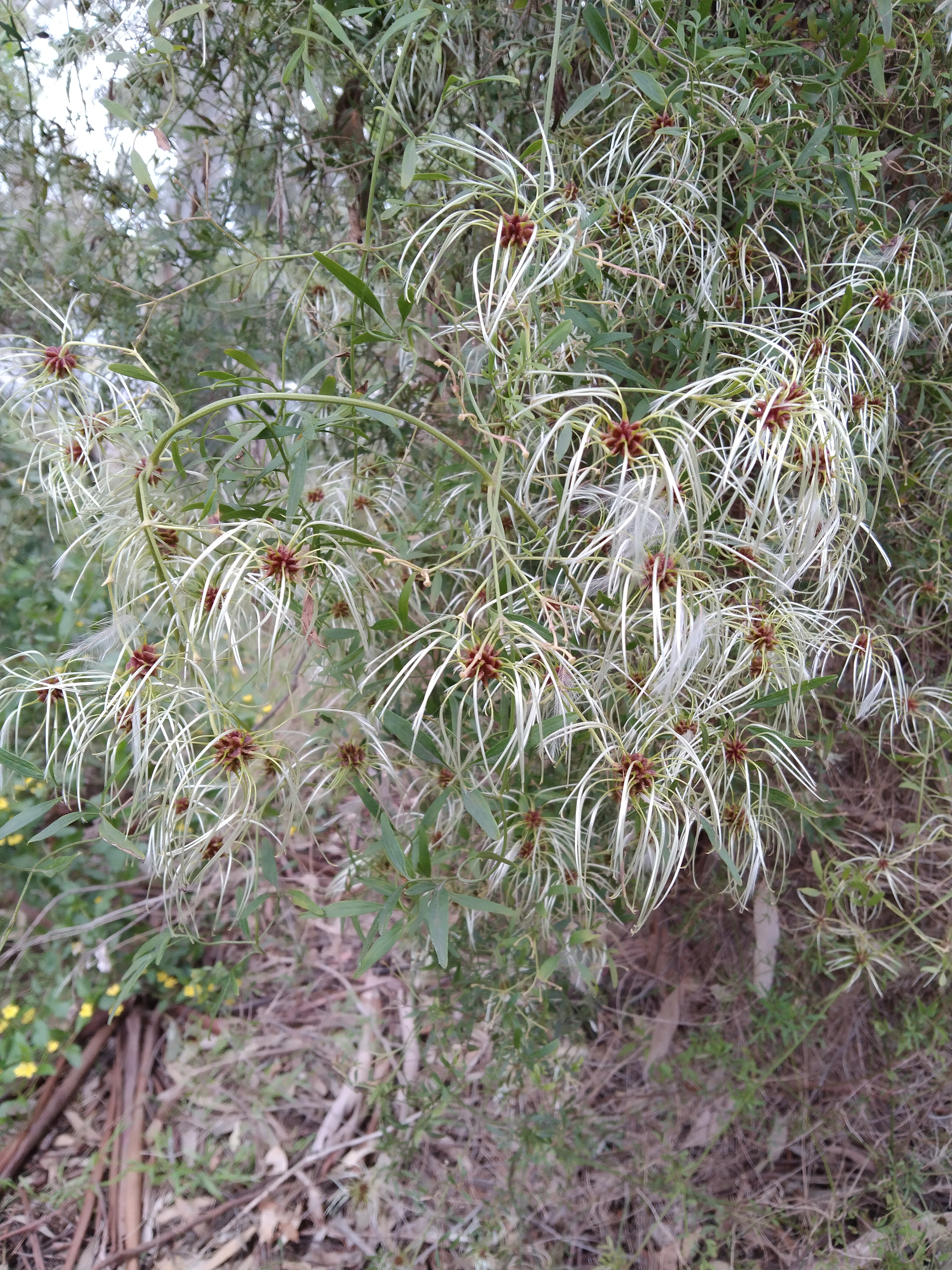
Careful mulching and planting around the edges of the water is having an effect – the Running Postman (Kennedia prostrata) look happy enough, creeping across the wood chips and ready to take off, and the paths are lined with wreaths of the local Clematis (I think it’s C. microphylla) blooming and self-seeding all over.

Clematis flowers

There are pockets of Poa and other grasses swaying in the breeze, Hop Goodenia in bloom, and the waterhole is ringed by established trees in which a host of different birds are having a wild old time. I tried to record the frogs for you, but they got drowned out by ravens and other ratbags.

You might only hear one bonk in among the croaks.

I’ll try again in a few days. I came by the other morning, and found a poor turtle squashed by the roadside. The pobblebonks were going off that day, but for some reason I managed to record nothing but wind blowing. Mysterious. Maybe they’re like vampires who don’t appear in mirrors. Nothing would surprise me.

Of pathways and picnics

9 October, 2021

Day 9 of Writing Nangak Tamboree.

Today, I’m walking. And walking. Didn’t have much of a plan, but it’s evolved into following every path I find, around the top of the Sports Field Lake. It’s a Saturday, so there are lots more people around, and since we still aren’t allowed to have friends over or go to cafes, everyone is meeting up outside. Picnics are permitted, under certain circumstances. So every park I visit, every open space, is dotted with people having picnics. Even people who hate picnics are having picnics.

Not so much here, because I’m not sure these places register with people as a destination, but there are many small groups scattered around campus, and I come across them in odd spots along the creek. Here, it’s more about movement – there are people strolling along with kids in pushers, cycling, or walking dogs, or bird-spotting. There’s even a bloody trail bike roaring along (no helmet).

By the edge of the lake, where there’s a kind of beach (dirt, not sand), someone’s left two outdoor chairs, and there’s a woman sitting there, reading an important-looking document, talking on the phone, and sipping on a takeaway coffee. She looks like she’s parachuted in from a Brunswick Street café. I can’t imagine where she came from – or the coffee.

Two chairs overlooking a lake

I walk discreetly around her and vow to come back to write in this spot later. But for now I keep going, following a track that meanders through casuarinas and Prickly Moses, following the curve of the lake.

Track through casuarina trees

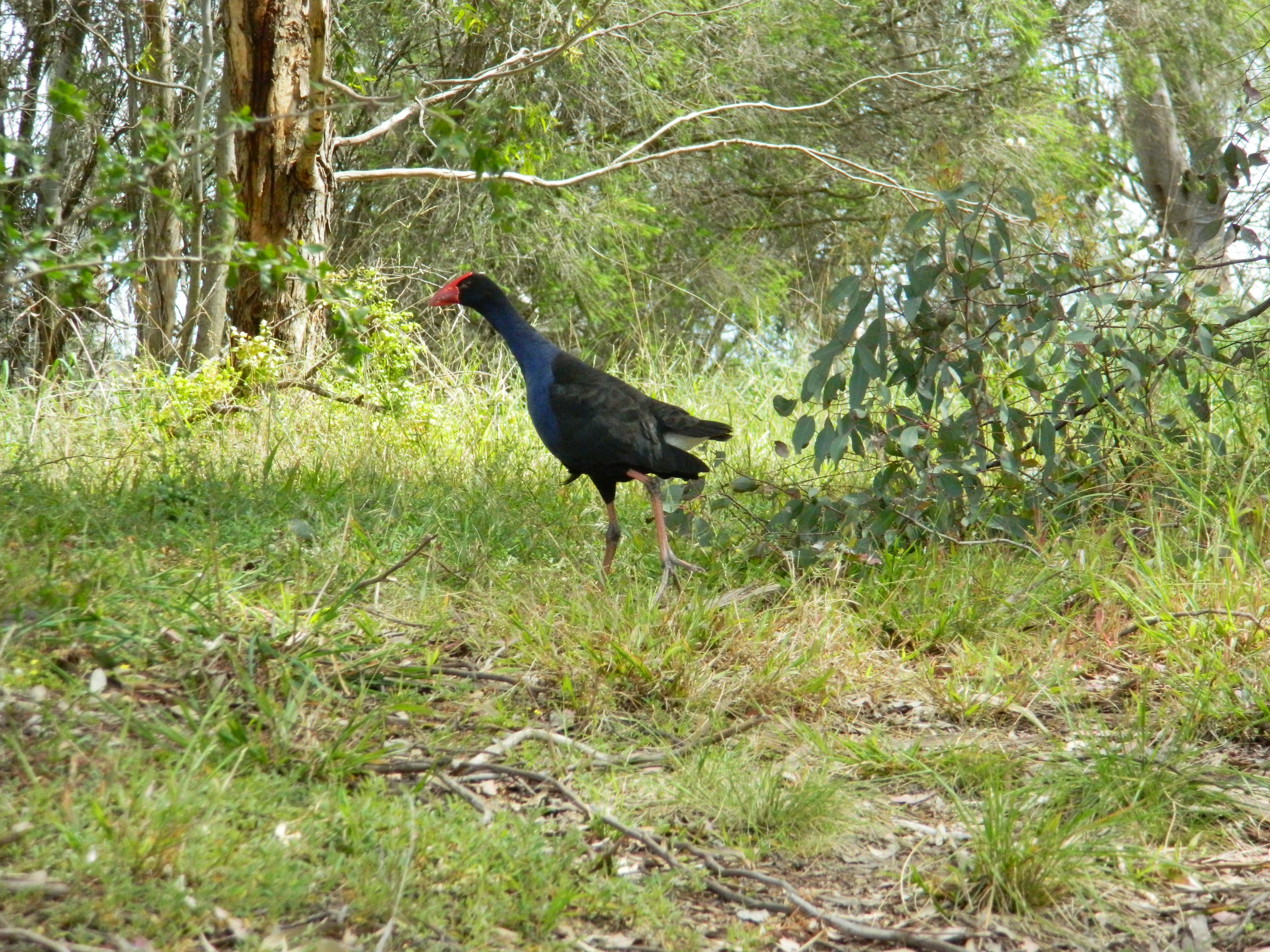
People, and presumably creatures, have made tracks all through here. I follow them all, around where the lake narrows at a little wooden footbridge, disappears under the road, and then pops out the other side to join the campus lake system. But I don’t follow it north (is it north? it feels north). There’s another track winding up what looks like a headland. Pukekos squawk hilariously but they don’t seem too perturbed by my presence.

path beside lake

Someone asked me the other day why I call them pukekos. Australians know them as Purple Swamp Hens. But in normal times I spend a great deal of time in NZ, where they are called pukeko, and they are iconic. You can buy pukeko fridge magnets and t-shirts at the airport. We have a sequinned pukeko Christmas tree decoration. New Zealanders think of them as uniquely theirs and my Kiwi friends and family visiting here in the past have been shocked that they dare to exist across the Tasman. As if I’ve stolen them. Like the pavlova. They are dear, funny birds, and there are many around these waterways, and if I was one I’d rather be known as a pukeko than a Swamp Hen.

Pukeko

So today the pukeko and I go about our business, not bothering each other. I scout around the headland. Three little kids rush past in their Speedos, parents trundling behind with pool noodles and beach towels, and even though it’s pretty obvious I ask the kids if they’re going for a swim.

‘Yes!’ they shout. ‘They made us stop and have a picnic and now we’re going back in.’

‘Is the water cold?’

‘Freezing!’

Not sure I’d swim here – at least, maybe not in October.

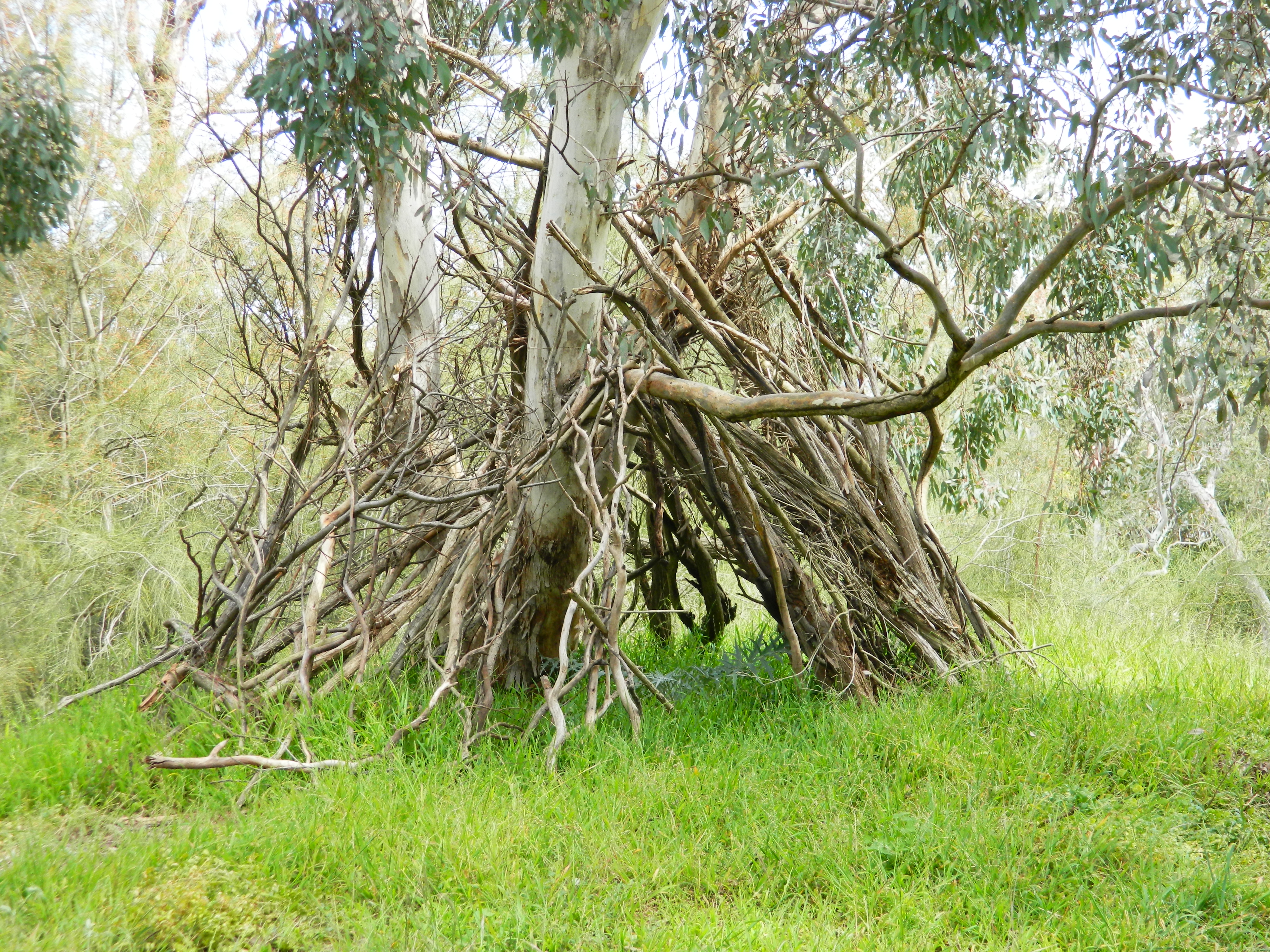
I wonder if these are the kids who made this excellent cubby house on the high ground.

Cubby house made of sticks leaning against gum tree

If you grow up near places like this, making cubby houses in the bush is a full-time occupation. I’ve made plenty in my time.

I keep on, following the track. It’s a hot day, and I’ve come out without a hat or sunblock, like the genius I am, but here there’s dappled shade and a breeze off the water. Wish I had a picnic lunch. Down near the shore, I peer through the undergrowth to spy on a darter drying its wings on its own personal island. At least, I think it’s a darter. It’s about the size of a B-52. It doesn’t dart, or swim about pretending to be a snake, as they do, but it’s having a grand old time.

Darter on rock

The track leads around to the sports grounds, which I decide to explore some other time. I circle back to the footbridge, prop myself on the now deserted chairs for a scribble, and then keep randomly following any narrow trail that presents itself, until I’m back on the bike path.

I like how people make use of places: the grass flattened by dozens of picnic blankets and socially distanced bottoms; the cubby house of sticks; the chairs picked up from the side of some road and brought here; the fallen log that every kid clambers along; the little spot someone’s made by the lake where you step through the reeds and balance on an old timber pallet and watch the water; and the paths trodden by thousands of feet, enticing me to keep walking.

A track through long grass

Pondage

8 October, 2021

Day 8 of Writing Nangak Tamboree.

Today I’m in a spot I really didn’t know existed before we were locked down and unable to travel more than five kilometres from home for exercise.

Gresswell lakes

I haven’t set foot here before. These are a couple of large ponds, or maybe small lakes, forming part of the Gresswell wildlife corridor at the northern end of the Nangak Tamboree waterways. They are carefully landscaped and nestled into what is now suburbia.

But it wasn’t always.

The original inhabitants were the Kurnaj-berring people of the Wurundjeri clan, and before the British invasion there were Brolgas (yes, Brolgas!) and platypus, freshwater mussels, eels and plenty of other creatures. But once the colony expanded, the land was cleared for farming, with only a few pockets of remnant bush left intact.

This specific area was once the Mont Park complex, which opened in 1912, at which time it was called the Mont Park Hospital for the Insane. It was an isolated spot then, surrounded by farmland. My great-grandfather worked there. His Army enlistment file records his occupation as ‘Warder, Lunatic Asylum.’ I hate to think what life was like in the hospital then but it was about to get a great deal worse. War broke out in 1914 and from then on the hospital had to deal with huge numbers of returned soldiers suffering from what became known as shell-shock, and other war-related traumas. My great-grandfather, after years as a stretcher-bearer in Palestine and on the Western Front, returned to work here.

After the war, in the hope of helping the patients feel that the world was not a complete horror, they built cricket grounds and tennis courts, in what is now the Nangak Tamboree Wildlife Sanctuary. The land stretching to the south, where the university campus now sits, was the Mont Park farm, growing food and grazing dairy cattle to help provision the hospital. It doesn’t sound like a great spot for a picnic:

…desolate, run-down farm in a swampy valley, devoid almost of trees or of views less depressing than the encircling panorama of mental hospitals, a cemetery, school yards, gasworks, and industrial backsides.’ 

Roy Simpson, Master Planner, quoted in Breen, W., Salmond, JA (1989). Building La Trobe University : Reflections on the first 25 years 1964-1989. La Trobe University Press. (p. 39)
Raven staring at the camera
Raven going full Gothic

There are still buildings from Mont Park and its sister institution Larundel dotted about all over here – many were derelict for years and some have now been turned into apartments or townhouses, and a few house university departments or accommodation. They are very stylish – Arts and Crafts or later 1930s brick and stucco. I wonder what stories those walls hold. I remember visiting a friend in a ward in Larundel when I was about twenty and it was pretty stark. But eventually people grew to understand mental health and illness better (and the language around it evolved too), and these hospital-based institutions were closed in favour of (in theory, if not properly supported with funding) community-based health services and supported housing.*

And this huge swathe of land was set for re-use. The Bundoora Mental Hospital became the magnificent Bundoora Homestead art centre & gallery, surrounded by spectacular parklands. The university opened in 1967, and the moat and southern waterways dug over the next decade or so. The housing estates around here are much more recent. Beyond the ponds (look, I can’t call them lakes, seriously) stretches a golf course and the Gresswell wildlife corridor and nature reserve, which I have yet to explore properly.

This doesn’t feel so much like an edgeland anymore, unlike the other end of Nangak Tamboree. There’s a pavilion for people to sit and watch the waterbirds (today, only a pair of ducks, and single pukeko, grebe, and coot eyeing each other off) and the vegetation carefully tended by the Sanctuary staff and local volunteers (I think). I walk around the pond/lake/dam/billabong and up onto the golf course, where people are playing again after months of no sport. To be honest, I preferred it when golf was not allowed in deep lockdown, and everyone could wander all over Melbourne’s fifty gazillion courses and explore them without being shooed away or hit by a ball. I bet the local wildlife liked it too.

This is a suburban open space, edged by houses and roads, with buses trundling by and kids on bikes passing, and clearly enjoyed by people out strolling, masked up, getting their allotted hours of exercise.
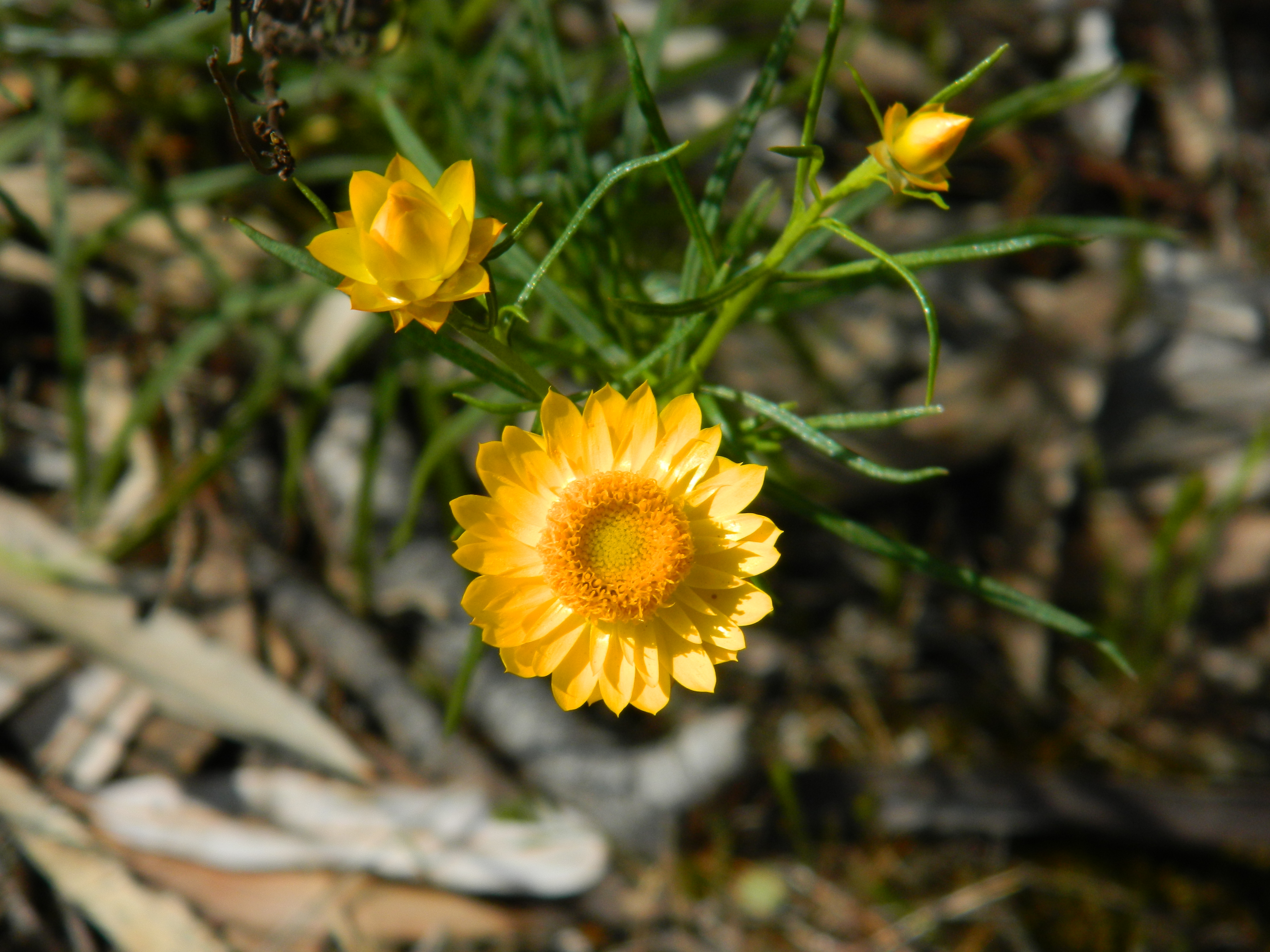
yellow daisy
Everlasting daisy

We have never needed these places more than in these last two years, have we? We’ve never so intimately explored our neighbourhoods, noticed the seasonal changes in gardens and parks and our own backyards, chatted over front fences (at a safe distance), counted the birds, pounded the pavements and followed the bike trails.

I wonder if we’ll keep doing it, when the pandemic is over. Or will our horizons shift outwards again?

* Note: There are still hospitals and clinics, of course – just not here, and not enough.The pandemic has laid bare the great need for responsive and accesible mental health services of all kinds.

Edges

7 October, 2021

Day 7 of Writing Nangak Tamboree

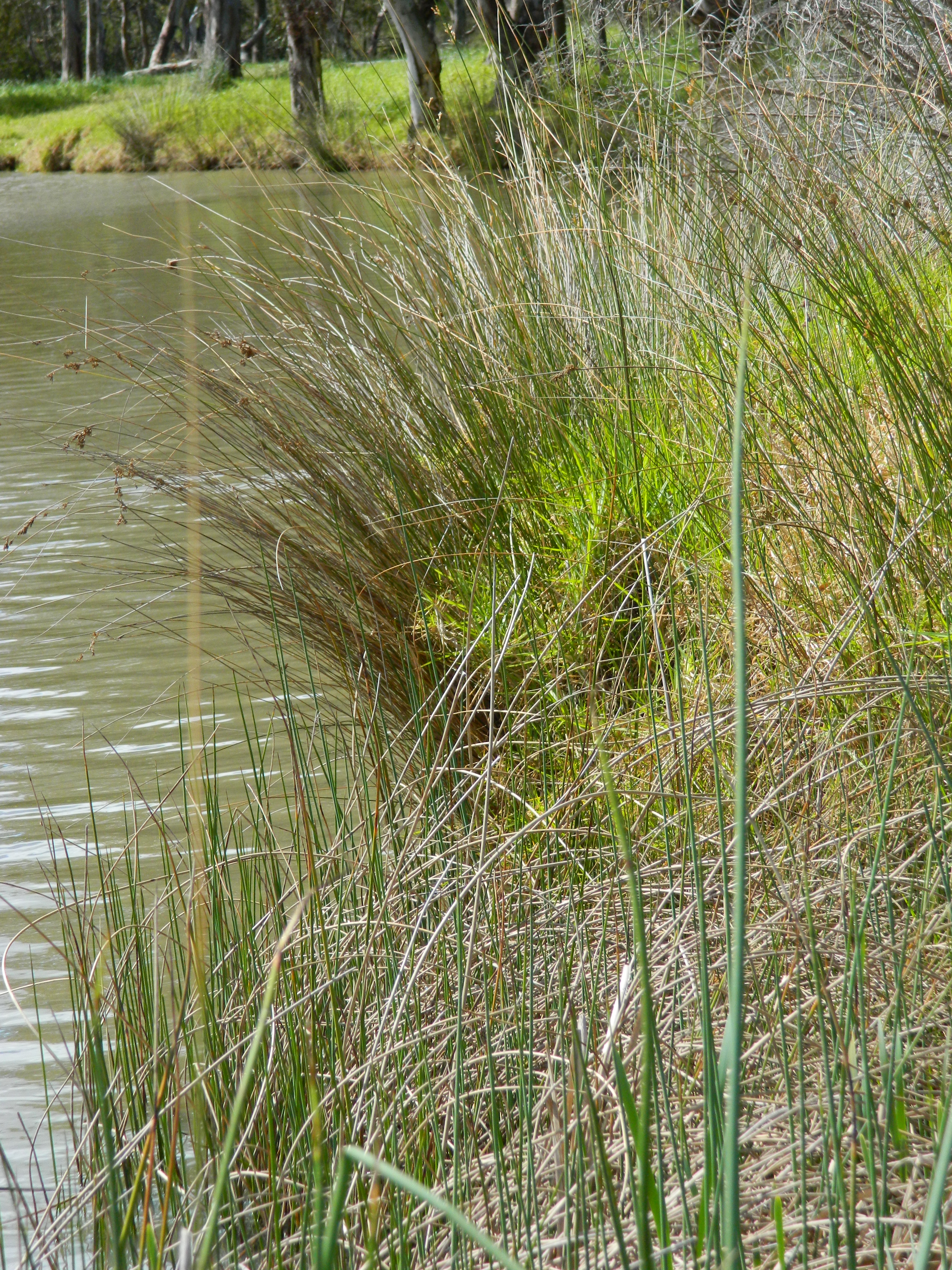
Reeds at the edge of the lake

I walk along the edge of the lake. It’s not yet warm enough for me to startle at every rattle in the long grass, but there are creatures everywhere. I can show you photos of trees and herons and the lake, and I will. But the horizon here is speared by a mobile phone tower and sports field flood lights. Behind me is a high factory wall. And on the edges of my hearing, forklifts, a truck beeping backwards, and a Council worker with a whipper snipper.

Marion Shoard has described the ‘edgelands’ of Britain: the edges of cities, the ignored interfaces where cities meet the countryside, where factories sprawl and spill into farmland and trees are cleared for housing developments. I think the word can apply where development meets remnant bush or regenerated places. Like this one.

My first job was nearby in Bundoora, a thousand years ago on the campus that is now RMIT, before the tram reached so far out of town. I can remember that feeling of passing from established suburbs built in the 50s and 60s, with shopping strips and the odd pub, hitch-hiking from the last tram stop or trundling on the bus past Mont Park and Larundel, through more recent housing developments which clung along Plenty Road. Beyond it was countryside.

So this was once on the edge, but the city now spills well beyond this place, gobbling up Mernda and sprawling out towards Whittlesea. As Shoard writes:

Although yesterday’s interfacial zones are often swallowed up by subsequent building, sometimes they survive as edgeland within built-up areas.

‘Edgelands’, in Remaking the Landscape ed. J Jenkins, Profile Books, 2002 (p124)

I grew up in a place like that – out on the eastern edge of town, in one of those housing developments ringed by bush and old orchards and big new roads. My childhood was marked by bushfires and droughts and blackberry-picking and either mud or dust. There was a filthy creek that ran dry over summer, and horse paddocks dotted with thistles, and an old stone settler cottage where we ran wild. (It’s all beautiful now: Mullum Mullum creek is regenerated, the cottage houses the Historical Society, and like here, it is no longer the edge of the city.)

So these places feel familiar to me. They are many things at once. An edgeland can look like a rubbish dump or a forest of weeds, but it can be a refuge for wildlife and indigenous plants, an escape for people who need it, or a green or blue patch of wild. And in many places, like this, they are being brought back to beauty. Or perhaps they always have an edgy beauty (to my eyes anyway) and regeneration is more about recreating biodiversity and creating urban spaces that are truly interfaces – between people, wildlife, plantlife, aquatic life, wind, water, sky, earth. The Nangak Tamboree project calls it ‘blurring the boundaries’, and I like that idea, but it’s also informed by the Wurundjeri community’s understanding of interconnectedness.

Today, I watch a simply enormous turtle warm itself on the far bank, right next to a football field. A heron struts along the bike path, refusing to pose for a photo.

White faced heron (I think)

Later I hear the heron shouting at something and silently salute Lian Hearn for naming her novel The Harsh Cry of the Heron, because it sounds like it’s being strangled. Such elegant legs and such a honk.

It’s one of those days that my mother would call ‘brisk’ and I would call bloody freezing. A bloke rides by and asks me the name of the lake and he, like me, considers ‘Sports Field Lake’ to be somewhat inadequate. Two handsome wood ducks preen and graze in the grass right in front of me, not in the least worried when I move closer.

Wood duck

They’re not listed in my Gould League series handy pocket guide to birds. It has let me down. But I do see that I have misidentified that fantail the other day. It’s actually a Jacky Winter, which I find thrilling for some reason, perhaps because Jacky Winter sounds like a saxophonist in a jazz band and not a tiny flittery thing.

Here we all are – me, the odd jogger and cyclist, a heron, a turtle, blokes on smoko from the factories, and who knows who else is going about their business in the treetops or under the water or in the long grass. Exploring edges.

Nesting

6 October, 2021

Day 6 of Writing Nangak Tamboree

I’m sitting on a fallen log by the lake. It’s a bright, clear, breezy morning after days of grey sky and rain. After something like 245 days of lockdown over two years (and I managed to get locked down in Auckland as well over summer), we could do with a bit of blue sky. Light ahead, all that.

One small but seemingly significant aspect of lockdown is extreme hair length. None of us have been to the hairdresser or barber for months. So last night I hacked off all my hair. Had to happen. And this morning, out here, my ears and forehead are cold and it’s all my own fault.

This is a favourite sitting spot. I often see people here, resting mid-ride with bikes scattered everywhere, or feeding kids in pushers. There’s a young man who often practices tai chi by the water of an evening.

Dead trees in lake

It seems to be mowing time, after the rain. I walked along freshly slashed tracks to get here. Across the lake, on the sports fields, someone’s pushing a mower, leaving stylish lime green stripes in their wake. How strange, all these not-quite abandoned places, standing empty for so long during lockdown but kept on life support until the return of the (vaccinated) hordes in slightly-too-tight sports gear.

A jogger slogs past, puffing, feet slapping on the bitumen. I feel like cheering them on.

The water glitters in the early morning light, reflections rippling up under dead tree trunks. Three ducks zoom past, arguing about something. My handy pocket guide tells me they’re Pacific black ducks, although frankly up until now all ducks look the same to me. It’s the same handy pocket guide to birds as I had when I was a teenager, though. Do birds go out of date? (Don’t worry: I also have an app.) Some, at least, are extinct – more all the time – and some have taken over the world. When I first had my handy pocket guide (Gould League series, published 1969, though I bought this 1990 edition for an entire dollar at an Op Shop), ibises were dead exotic and Mynahs hadn’t yet pushed every other bird into the margins.

I spend quite some time trying to photograph a pair of Little Lorikeets before realising that the Rainbow Lorikeets on the other branch are taking it in turns to swoop at me. They’re nesting in a hollow. Everyone’s got the swoops lately. I move back so they don’t have to worry.

Rainbow lorikeet

A decent nesting hollow is as valuable as beachside real estate. They take years to develop. Here, and all through the parks around the area, trees are dotted with nesting boxes to compensate for all the nesting hollows lost in land clearing years ago. There are different designs for different birds and creatures (I have one at home for microbats).

nesting box high on a eucalypt

This one’s been colonised by bees. Not great for the intended occupant, but it does make an excellent mini-hive.

I’m sure they’re very cosy if you’re a possum or flying fox or rosella. It seems a sad business to be making plywood boxes when you could have just left the trees in the first place. But that’s where we are now – regenerating vegetation that’s been lost, cleaning up waterways, reintroducing species and keeping them safe.

See? Light ahead.

Familiar & unfamiliar places

5 October 2021

Day 5 of Writing Nangak Tamboree

What does it mean to know a place?

Are there places you really know?

And what does that knowing feel like?

At the weekend, I rode my bike around Port Melbourne. That’s where I was born, where I lived – all of us together in my grandparents’ house – for the first part of my life. Everyone we knew lived within a couple of hundred yards and we were related to half of them. All our family stories revolved around Port. I knew it better than I’ve ever known any place. It’s still lovely, but I don’t know it anymore. Our old house is done up and fancy and worth millions. They all are. The factories where my grandparents once worked have been turned into apartments where I couldn’t afford to live. But they knew that place, deep in their souls. Never lived anywhere else. It was part of them. It’s part of me, too, but in memory.

So maybe knowing places is about memory as well as about now.

I’ve lived in lots of places, different cities, different landscapes, even different countries. I’ve felt at home in places and homesick, unsettled and excited. There are different types of knowing.

One of the great nature writers, Nan Shepherd, lived most of her life in the Cairngorm mountains in Scotland, walked out on the mountain in all weathers, and watched them season on season, from the highest peak to the smallest insect. She felt, walked, listened her way into the mountains. And she wrote them, and in the writing was her knowing – or a way into knowing. And in the writing, she made one of the best books about a place: The Living Mountain.

On the other hand, I’ve read plenty of travel books by people who feel they know a place well enough after a few days or weeks to write a whole book about it (spoiler: they don’t).

Here, I walk on colonised land and the idea of knowing places is complex and conflicted. Indigenous and non-Indigenous people have different traditions of knowing and being with country and in the past the way that has been privileged has been the European tradition – seeing country as landscape, or more often as resource. That’s changing. It has to.

I’ll write more about that another time. For now, what I’m trying to do is slow down and really look – for moments, for telling details – and feel my way into this place that I don’t know at all: Nangak Tamboree.

Rain drops on casuarina leaves

Wondering

4 October 2021

Day 4 of Writing Nangak Tamboree

I walked quite a long way today: from home, meandering along the Darebin Creek to the Sports Field Lake, then almost completely around a huge section of grassland that’s fenced off for plant regeneration. work. I thought I could circumnavigate it, but there’s been so much rain I couldn’t get through the watery sections closest to the sports grounds. These are, after all, wetlands. And it is very wet.

But one advantage of that – more frogs! (This time featuring the distant roar and rattle of the Plenty Road tram for a touch of authentic Melbourne.)

This is the area I barely knew was here before a few weeks ago – I certainly didn’t register how enormous it is. It runs from the Darebin Creek bike path turn-off and pedestrian bridge through to Plenty Road. The majority of it is grassy Eucalypt woodland, spreading over undulating hills from lake to creek.

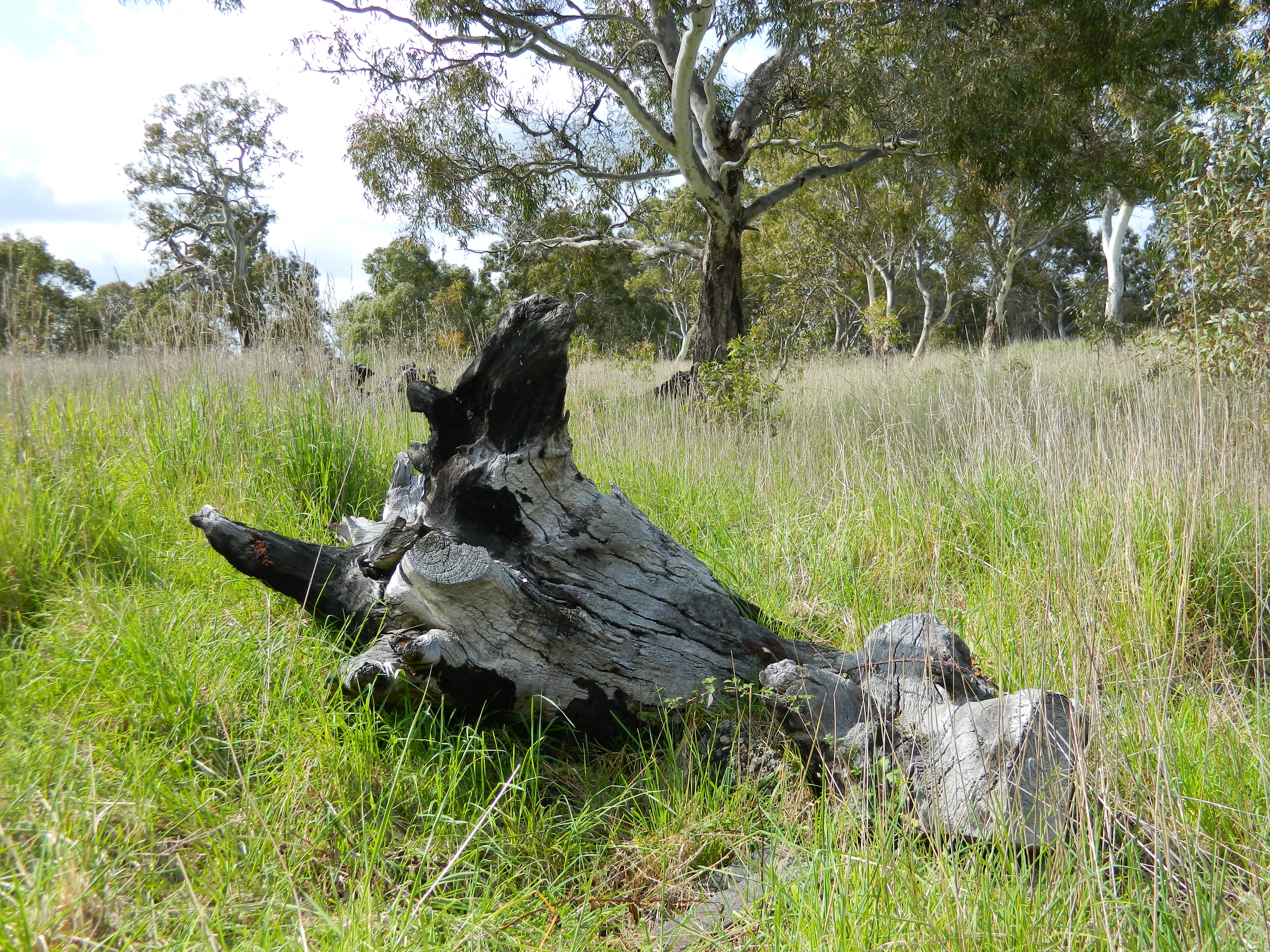
Stump in foreground, grassy woodland

It’s not untouched, by any means. It seems to me there’s an old house site at the top of the hill – perhaps a farmhouse – as there are old pine and fruit trees circling. Further down near the creek, you can see fragments of rusted metal sticking out of the mud – perhaps where cars were dumped decades ago. I skirted around what must be a huge pile of landfill, perhaps dug out for the lake or sports grounds years ago.

Galah in tree

There was nobody at all around, besides the usual feathered suspects (rainbow lorikeets, magpies), a galah nesting in a high hollow, dusky woodswallows, and some kind of thornbill in the paperbarks by the creek. I had to remind myself to stop and write instead of wandering about staring at things and wondering.

But I am wondering, so now I’m off to absorb a bit more history of these places.

Carol

3 October, 2021

Day three of Writing Nangak Tamboree.

It’s swooping season here.

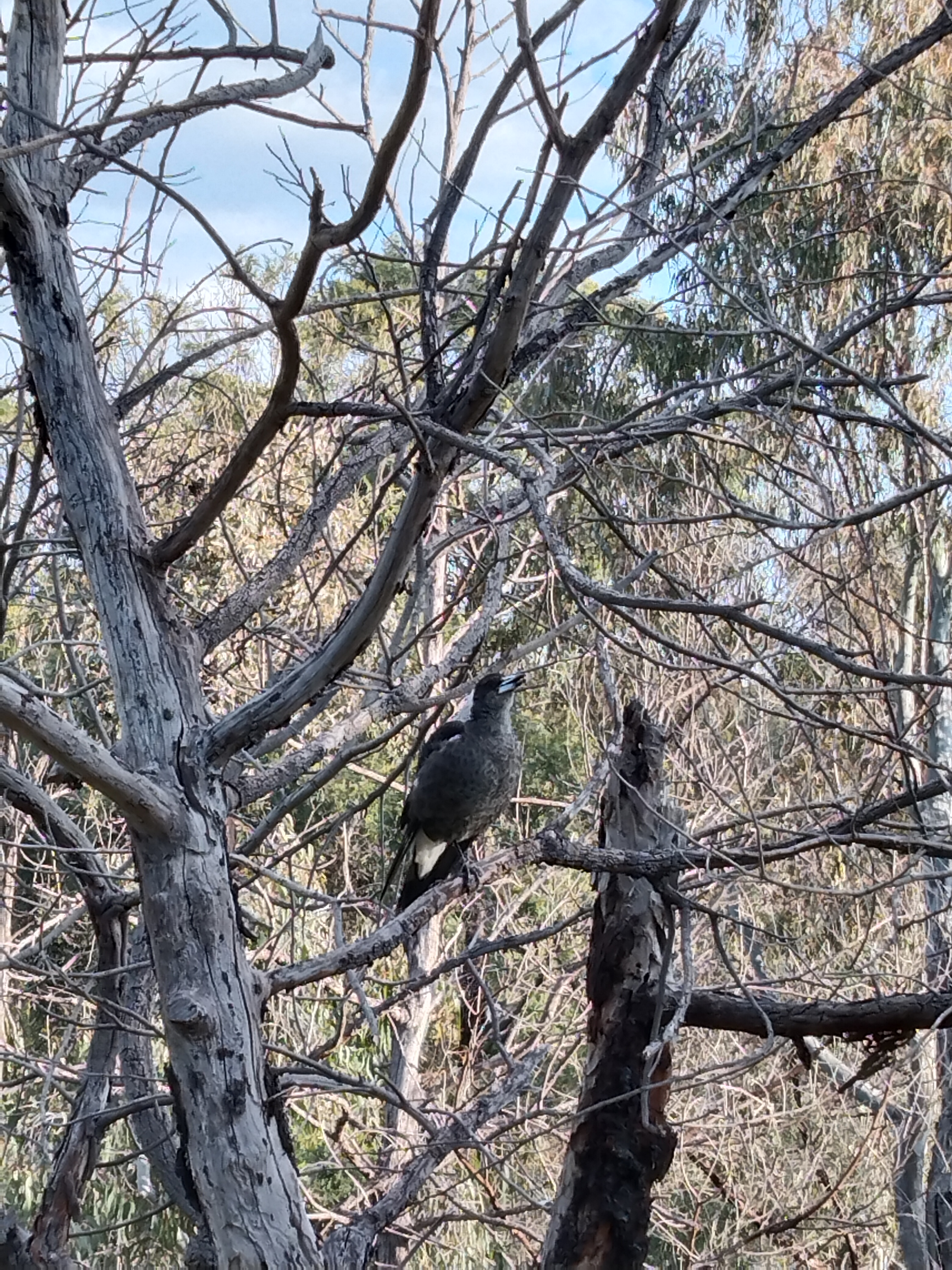
In other words, it’s magpie nesting time, when eggs and young must be defended at all costs from interlopers.

Swooping season was never a thing when I was a kid, even though magpies were everywhere near our house. I first remember hearing about it from people who grew up in Canberra, where children apparently lived in terror of springtime and everyone had a theory about how to prevent your eyes being plucked from your head by a marauding maggie.

I have been swooped a few times since, and it is freaky. But you know what is deeply unnerving? Being watched solemnly by dozens of magpies as you walk along. They’re on the ground. You’re way bigger than they are. They don’t care. They don’t shuffle aside. They follow you along the creek path to make sure you keep walking. Move along, pathetic human. This is our place.

So you do.

Don’t look back.

Darebin Creek track, on my way to Nangak Tamboree

But generally speaking, when they’re not psyching me out or swooping at my head, I love magpies. Most countries have birds called magpies, but they aren’t as gnarly as ours. And they don’t sound the same.

The carolling of magpies is one of the most familiar sounds of my childhood, along with a cricket broadcast on a distant radio and suburban lawn mowers. When I first moved back to Melbourne after a few years in NZ, I woke up and heard the magpies and wept. (In NZ you wake up to the distinctive warble of the tui, which is beautiful but not the same thing.)

If you’ve never heard it, here’s an adolescent magpie carolling by the creek. It has a few friends in the background.

The day of the turtle

2 October 2021

Day two of Writing Nangak Tamboree.

Different site today – one that is familiar, and yet not. Nangak Tamboree waterway stretches through the campus where I work. I’ve been coming here – first as a PhD student and more recently as a lecturer – a few days a week, for years. But of course for much of the past two years, the campus has been closed except for critical research (keeping plants alive in greenhouses or lab work) and we’ve all been working and studying from home during lockdown. So I haven’t seen it much lately, and I certainly haven’t sat about scribbling.

Ours is a classic outer suburban campus, built in the 1970s on old farmland, with buff-brick buildings of an era anyone who studied at Monash or Macquarie will recognise. The site is dotted with magnificent old River Red Gums, landscaped beautifully, and also has another layer of life as a massive sculpture garden.

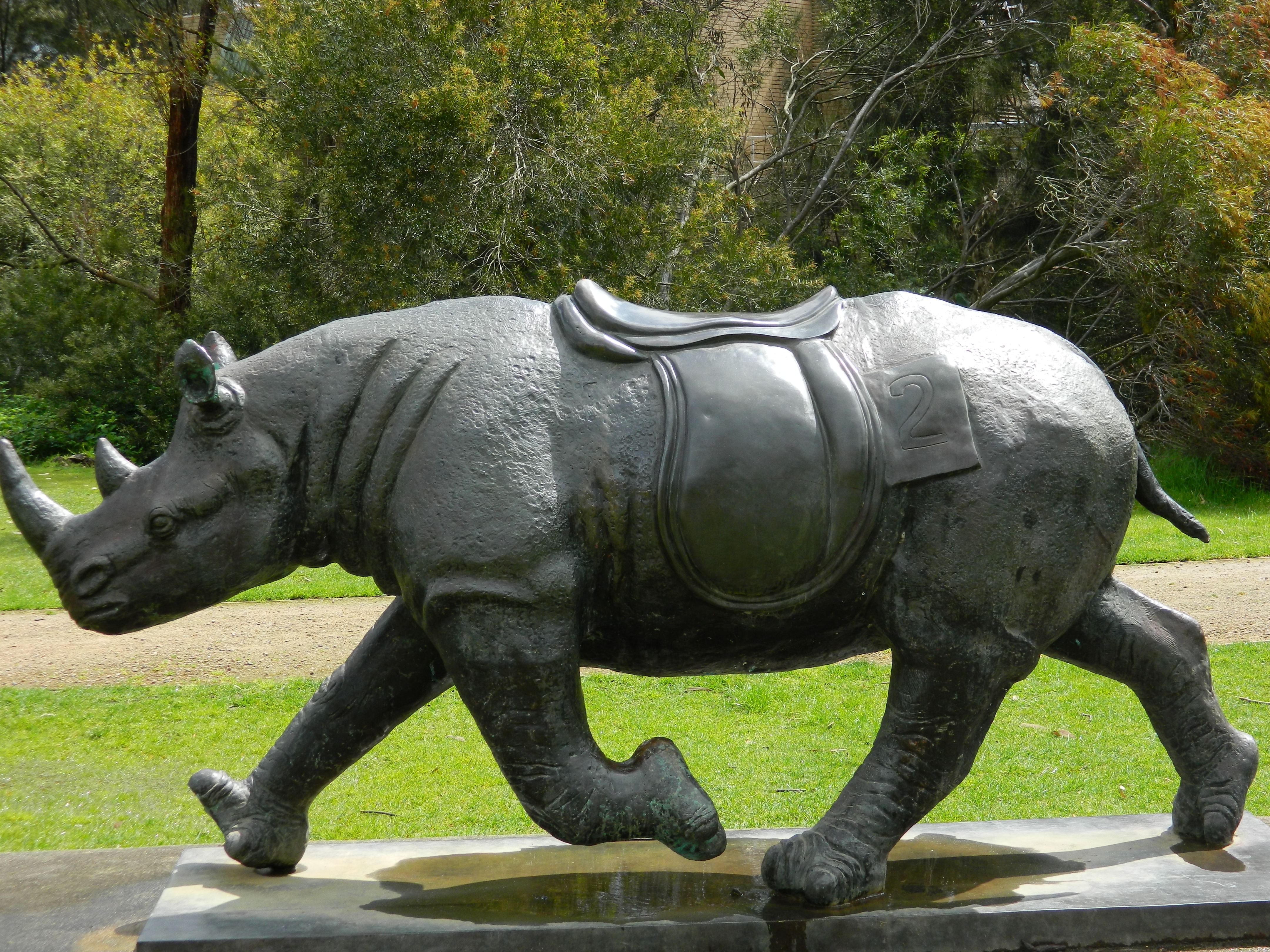
Statue of rhino
Run For Your Life, by Gillie and Marc 

But one of its most famous features is the Moat, which flows through to the lakes south of campus, circling the buildings and grounds. It’s the vital link in the waterways between Darebin Creek and Greswell nature reserve, and it is – normally – a legendary part of campus life. There’s an amphitheatre overlooking the moat, an annual Moat theatre festival, a running track alongside it, picnic tables and lawns and community garden, and different disciplines use it for applied work – studying water quality or aquatic life, regenerating plants or whatever those mysterious science people do, wading about with equipment and serious faces. In the early years, it used to host boat races and all kinds of high-jinks, but I think the water quality studies may have put paid to that. (I just made that bit up.)

It’s quiet today. It’s a rainy weekend, and anyway we’ve been locked down for months now, so there’s hardly anyone here most of the time. Some students are still living on campus and I feel for them – it is usually alive and filled with people, cafes open and the evenings filled with the thunk of tennis balls and distant laughter. But not now. I walk along the gravel path, slippery after the rain. There are a few cyclists, the odd jogger, all probably passing through from nearby suburbs.

path with beware of snakes sign

Here the water is edged, in some places with bluestone blocks, and guided on its way. I’m on the lookout for ducklings, but today they’re hiding. Coots scud along, heads bobbing back and forth like pistons. I creep up on a turtle warming itself on a rock – I think it’s an Eastern Long-Necked (or snake-necked) turtle, and I’m told they can walk for miles and miles.

Turtle next to water

This one has no interest in moving anywhere. Two more surface in the water nearby, and – at the risk of anthropomorphising them – kiss. Then all three spot me at once, and vanish, leaving me, and the water, and the sky.

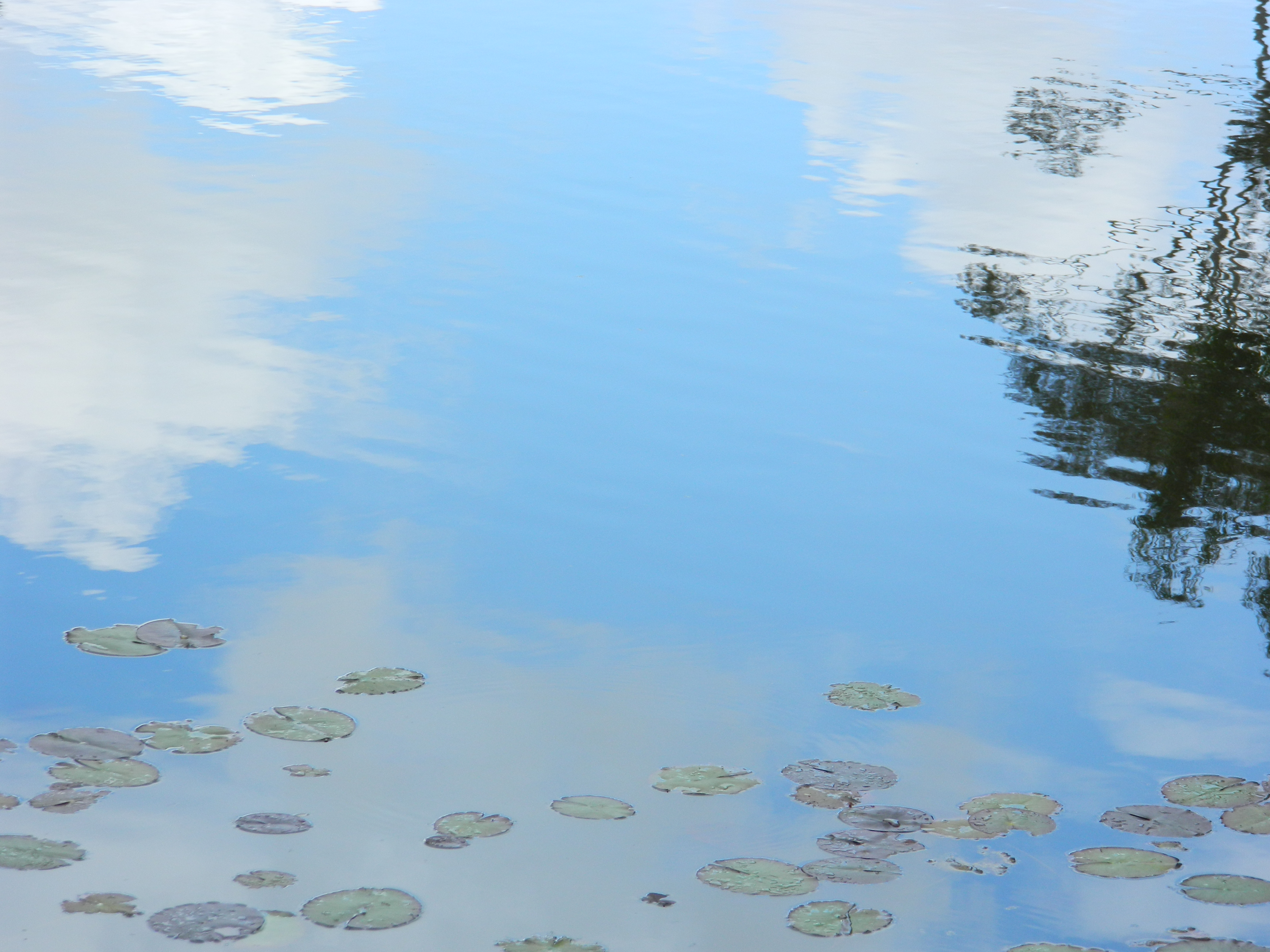
Not Monet’s waterlilies