Regeneration

10 October 2021

Day 10 of Writing Nangak Tamboree.

An evening visit today, after a long walk with a friend and a greyhound nearby at Bundoora Park (we saw ducklings!).

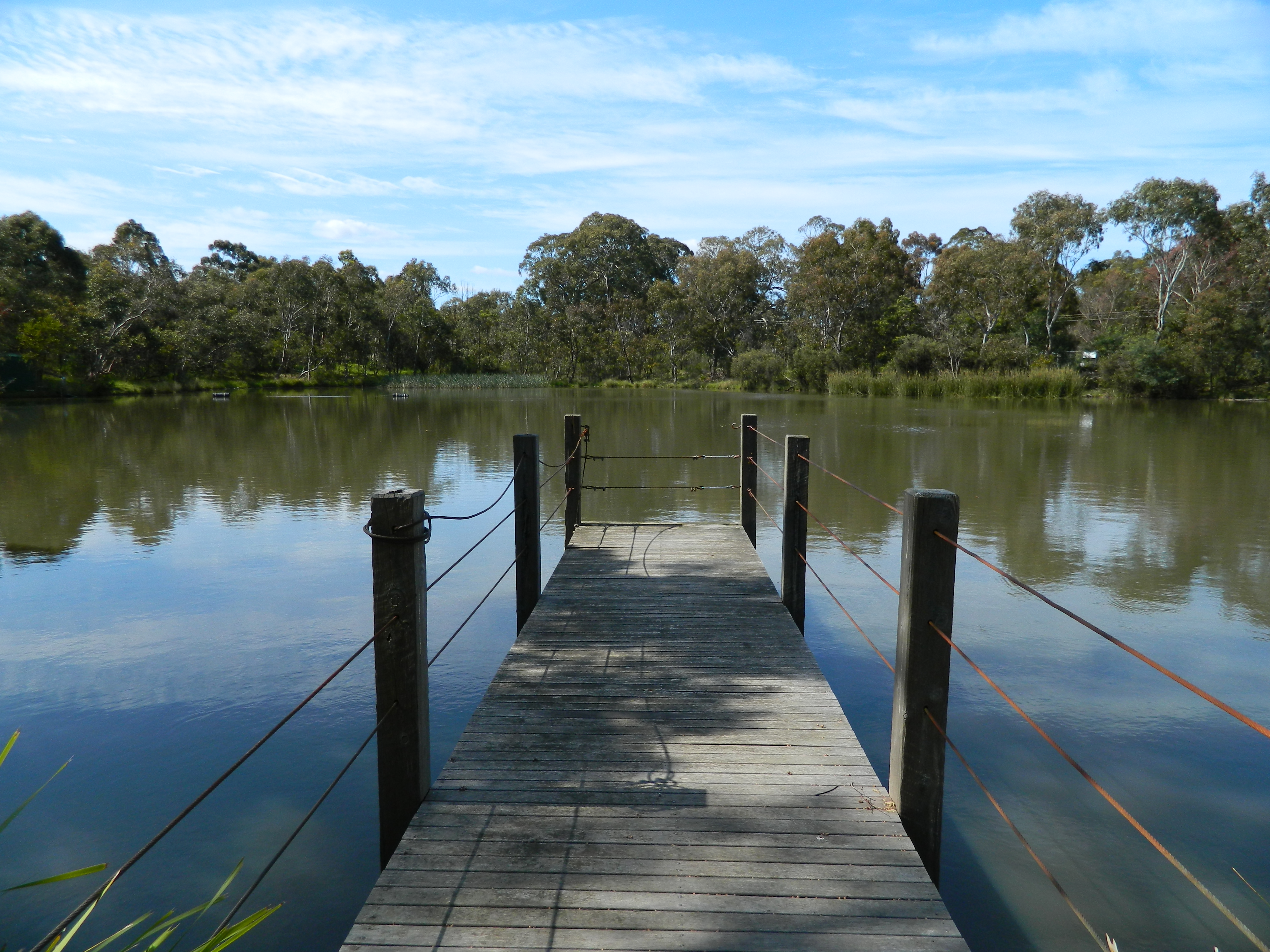
The waterhole near the front of the Nangak Tamboree Wildlife Sanctuary is called Fozzie’s Wetland (apparently after the first Ranger who worked in the sanctuary). It doesn’t even show up as blue on my Google map of daily writing spots, which I guess is OK as it’s more on the green side. Verging on dark brown.

Waterhole

It’s not huge, and half of it is behind the predator fence that guards the sanctuary. There are roads on two sides, a roundabout, and a normally busy campus carpark over the way. But it’s important for a few reasons: it supports a population of endangered freshwater Dwarf Galaxias fish; it’s home to turtles and my favourite frog, the Pobblebonk (or banjo frog); and to be honest it’s a bit of a showcase (to my eyes at least) for the revegetation process that’s going on.

Kennedia vine with red flower

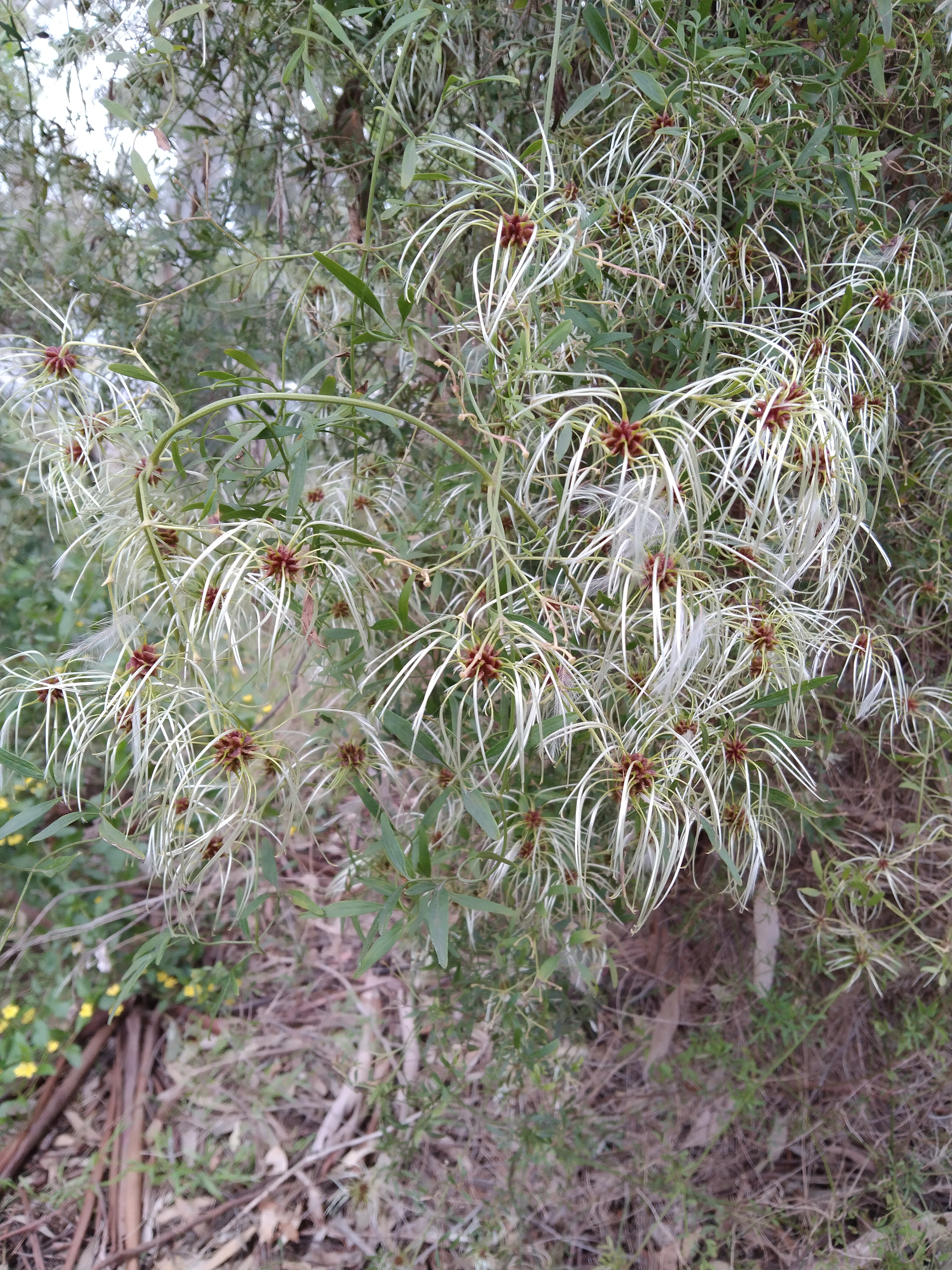
Careful mulching and planting around the edges of the water is having an effect – the Running Postman (Kennedia prostrata) look happy enough, creeping across the wood chips and ready to take off, and the paths are lined with wreaths of the local Clematis (I think it’s C. microphylla) blooming and self-seeding all over.

Clematis flowers

There are pockets of Poa and other grasses swaying in the breeze, Hop Goodenia in bloom, and the waterhole is ringed by established trees in which a host of different birds are having a wild old time. I tried to record the frogs for you, but they got drowned out by ravens and other ratbags.

You might only hear one bonk in among the croaks.

I’ll try again in a few days. I came by the other morning, and found a poor turtle squashed by the roadside. The pobblebonks were going off that day, but for some reason I managed to record nothing but wind blowing. Mysterious. Maybe they’re like vampires who don’t appear in mirrors. Nothing would surprise me.

Of pathways and picnics

9 October, 2021

Day 9 of Writing Nangak Tamboree.

Today, I’m walking. And walking. Didn’t have much of a plan, but it’s evolved into following every path I find, around the top of the Sports Field Lake. It’s a Saturday, so there are lots more people around, and since we still aren’t allowed to have friends over or go to cafes, everyone is meeting up outside. Picnics are permitted, under certain circumstances. So every park I visit, every open space, is dotted with people having picnics. Even people who hate picnics are having picnics.

Not so much here, because I’m not sure these places register with people as a destination, but there are many small groups scattered around campus, and I come across them in odd spots along the creek. Here, it’s more about movement – there are people strolling along with kids in pushers, cycling, or walking dogs, or bird-spotting. There’s even a bloody trail bike roaring along (no helmet).

By the edge of the lake, where there’s a kind of beach (dirt, not sand), someone’s left two outdoor chairs, and there’s a woman sitting there, reading an important-looking document, talking on the phone, and sipping on a takeaway coffee. She looks like she’s parachuted in from a Brunswick Street café. I can’t imagine where she came from – or the coffee.

Two chairs overlooking a lake

I walk discreetly around her and vow to come back to write in this spot later. But for now I keep going, following a track that meanders through casuarinas and Prickly Moses, following the curve of the lake.

Track through casuarina trees

People, and presumably creatures, have made tracks all through here. I follow them all, around where the lake narrows at a little wooden footbridge, disappears under the road, and then pops out the other side to join the campus lake system. But I don’t follow it north (is it north? it feels north). There’s another track winding up what looks like a headland. Pukekos squawk hilariously but they don’t seem too perturbed by my presence.

path beside lake

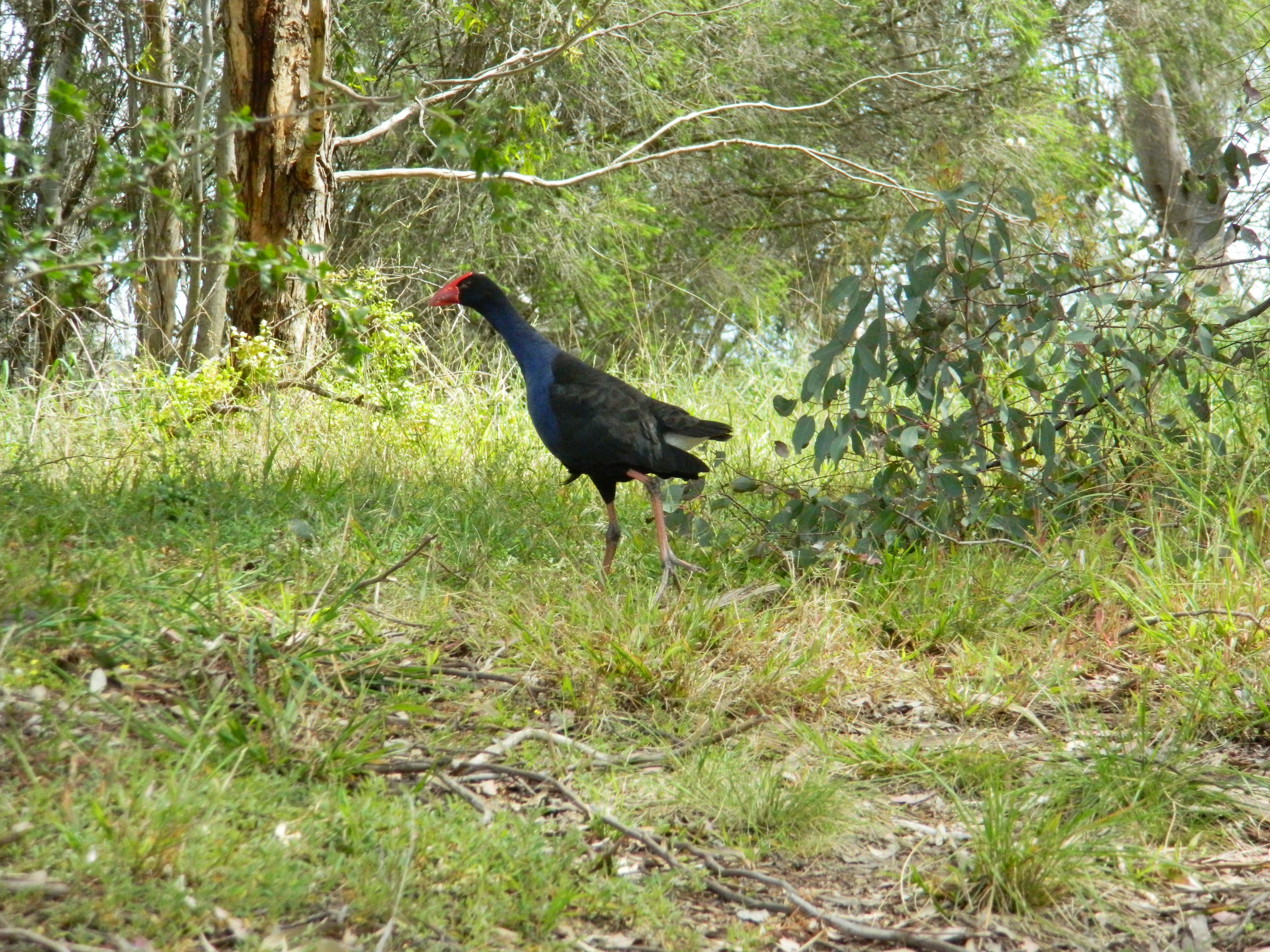
Someone asked me the other day why I call them pukekos. Australians know them as Purple Swamp Hens. But in normal times I spend a great deal of time in NZ, where they are called pukeko, and they are iconic. You can buy pukeko fridge magnets and t-shirts at the airport. We have a sequinned pukeko Christmas tree decoration. New Zealanders think of them as uniquely theirs and my Kiwi friends and family visiting here in the past have been shocked that they dare to exist across the Tasman. As if I’ve stolen them. Like the pavlova. They are dear, funny birds, and there are many around these waterways, and if I was one I’d rather be known as a pukeko than a Swamp Hen.

Pukeko

So today the pukeko and I go about our business, not bothering each other. I scout around the headland. Three little kids rush past in their Speedos, parents trundling behind with pool noodles and beach towels, and even though it’s pretty obvious I ask the kids if they’re going for a swim.

‘Yes!’ they shout. ‘They made us stop and have a picnic and now we’re going back in.’

‘Is the water cold?’

‘Freezing!’

Not sure I’d swim here – at least, maybe not in October.

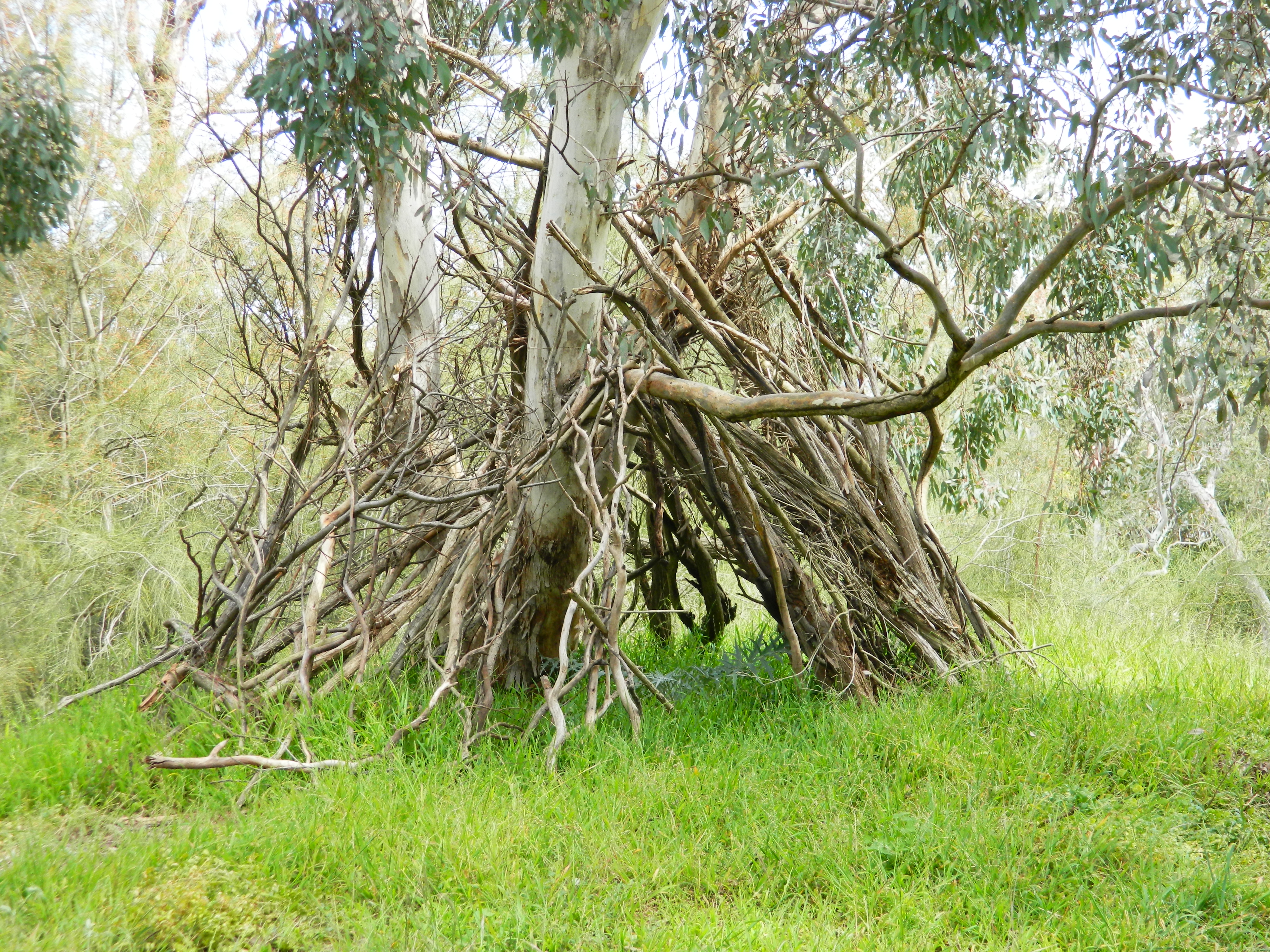
I wonder if these are the kids who made this excellent cubby house on the high ground.

Cubby house made of sticks leaning against gum tree

If you grow up near places like this, making cubby houses in the bush is a full-time occupation. I’ve made plenty in my time.

I keep on, following the track. It’s a hot day, and I’ve come out without a hat or sunblock, like the genius I am, but here there’s dappled shade and a breeze off the water. Wish I had a picnic lunch. Down near the shore, I peer through the undergrowth to spy on a darter drying its wings on its own personal island. At least, I think it’s a darter. It’s about the size of a B-52. It doesn’t dart, or swim about pretending to be a snake, as they do, but it’s having a grand old time.

Darter on rock

The track leads around to the sports grounds, which I decide to explore some other time. I circle back to the footbridge, prop myself on the now deserted chairs for a scribble, and then keep randomly following any narrow trail that presents itself, until I’m back on the bike path.

I like how people make use of places: the grass flattened by dozens of picnic blankets and socially distanced bottoms; the cubby house of sticks; the chairs picked up from the side of some road and brought here; the fallen log that every kid clambers along; the little spot someone’s made by the lake where you step through the reeds and balance on an old timber pallet and watch the water; and the paths trodden by thousands of feet, enticing me to keep walking.

A track through long grass

Pondage

8 October, 2021

Day 8 of Writing Nangak Tamboree.

Today I’m in a spot I really didn’t know existed before we were locked down and unable to travel more than five kilometres from home for exercise.

Gresswell lakes

I haven’t set foot here before. These are a couple of large ponds, or maybe small lakes, forming part of the Gresswell wildlife corridor at the northern end of the Nangak Tamboree waterways. They are carefully landscaped and nestled into what is now suburbia.

But it wasn’t always.

The original inhabitants were the Kurnaj-berring people of the Wurundjeri clan, and before the British invasion there were Brolgas (yes, Brolgas!) and platypus, freshwater mussels, eels and plenty of other creatures. But once the colony expanded, the land was cleared for farming, with only a few pockets of remnant bush left intact.

This specific area was once the Mont Park complex, which opened in 1912, at which time it was called the Mont Park Hospital for the Insane. It was an isolated spot then, surrounded by farmland. My great-grandfather worked there. His Army enlistment file records his occupation as ‘Warder, Lunatic Asylum.’ I hate to think what life was like in the hospital then but it was about to get a great deal worse. War broke out in 1914 and from then on the hospital had to deal with huge numbers of returned soldiers suffering from what became known as shell-shock, and other war-related traumas. My great-grandfather, after years as a stretcher-bearer in Palestine and on the Western Front, returned to work here.

After the war, in the hope of helping the patients feel that the world was not a complete horror, they built cricket grounds and tennis courts, in what is now the Nangak Tamboree Wildlife Sanctuary. The land stretching to the south, where the university campus now sits, was the Mont Park farm, growing food and grazing dairy cattle to help provision the hospital. It doesn’t sound like a great spot for a picnic:

…desolate, run-down farm in a swampy valley, devoid almost of trees or of views less depressing than the encircling panorama of mental hospitals, a cemetery, school yards, gasworks, and industrial backsides.’ 

Roy Simpson, Master Planner, quoted in Breen, W., Salmond, JA (1989). Building La Trobe University : Reflections on the first 25 years 1964-1989. La Trobe University Press. (p. 39)
Raven staring at the camera
Raven going full Gothic

There are still buildings from Mont Park and its sister institution Larundel dotted about all over here – many were derelict for years and some have now been turned into apartments or townhouses, and a few house university departments or accommodation. They are very stylish – Arts and Crafts or later 1930s brick and stucco. I wonder what stories those walls hold. I remember visiting a friend in a ward in Larundel when I was about twenty and it was pretty stark. But eventually people grew to understand mental health and illness better (and the language around it evolved too), and these hospital-based institutions were closed in favour of (in theory, if not properly supported with funding) community-based health services and supported housing.*

And this huge swathe of land was set for re-use. The Bundoora Mental Hospital became the magnificent Bundoora Homestead art centre & gallery, surrounded by spectacular parklands. The university opened in 1967, and the moat and southern waterways dug over the next decade or so. The housing estates around here are much more recent. Beyond the ponds (look, I can’t call them lakes, seriously) stretches a golf course and the Gresswell wildlife corridor and nature reserve, which I have yet to explore properly.

This doesn’t feel so much like an edgeland anymore, unlike the other end of Nangak Tamboree. There’s a pavilion for people to sit and watch the waterbirds (today, only a pair of ducks, and single pukeko, grebe, and coot eyeing each other off) and the vegetation carefully tended by the Sanctuary staff and local volunteers (I think). I walk around the pond/lake/dam/billabong and up onto the golf course, where people are playing again after months of no sport. To be honest, I preferred it when golf was not allowed in deep lockdown, and everyone could wander all over Melbourne’s fifty gazillion courses and explore them without being shooed away or hit by a ball. I bet the local wildlife liked it too.

This is a suburban open space, edged by houses and roads, with buses trundling by and kids on bikes passing, and clearly enjoyed by people out strolling, masked up, getting their allotted hours of exercise.
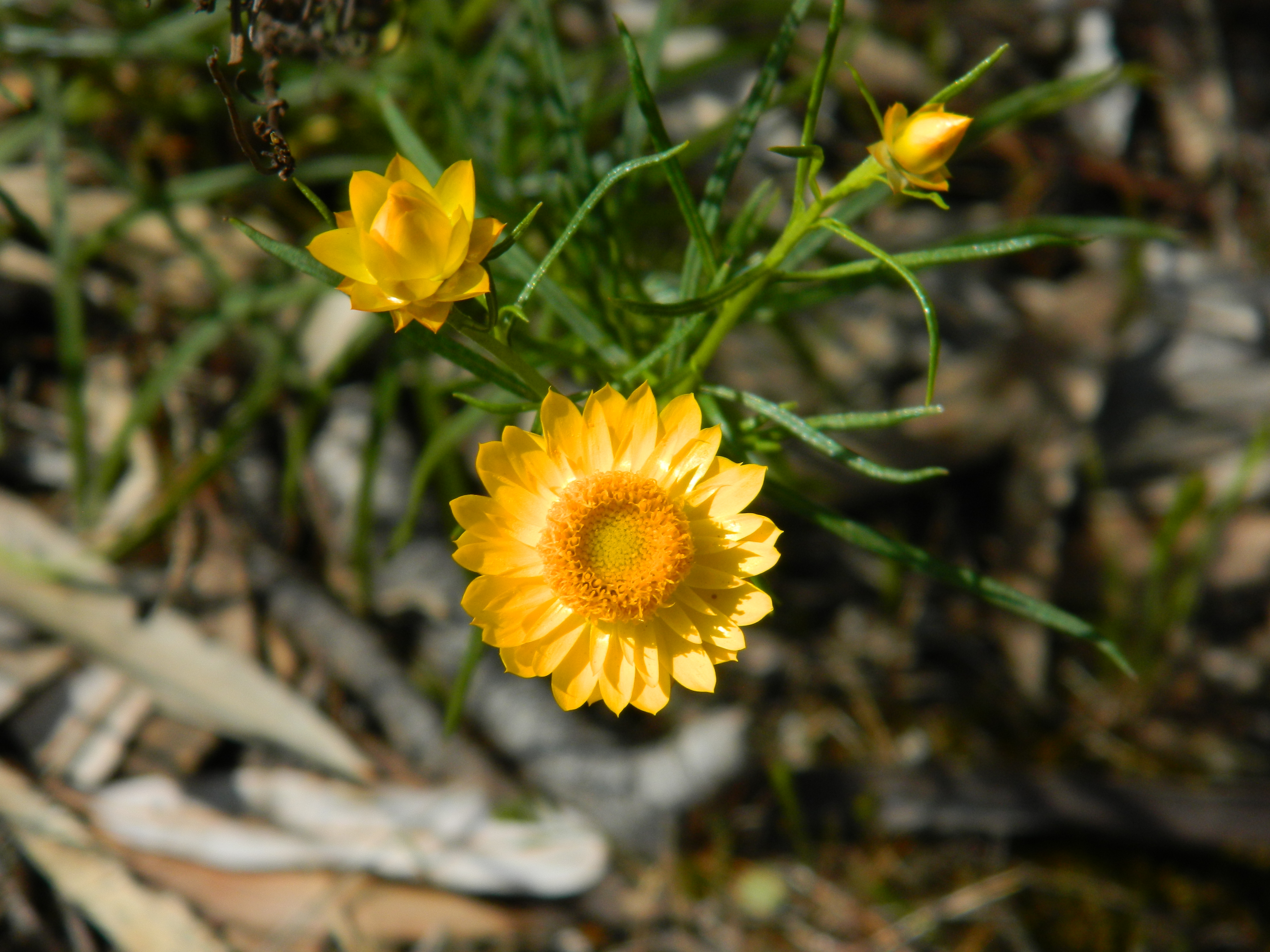
yellow daisy
Everlasting daisy

We have never needed these places more than in these last two years, have we? We’ve never so intimately explored our neighbourhoods, noticed the seasonal changes in gardens and parks and our own backyards, chatted over front fences (at a safe distance), counted the birds, pounded the pavements and followed the bike trails.

I wonder if we’ll keep doing it, when the pandemic is over. Or will our horizons shift outwards again?

* Note: There are still hospitals and clinics, of course – just not here, and not enough.The pandemic has laid bare the great need for responsive and accesible mental health services of all kinds.

First steps

1 October 2021

Day one of a new project: writing Nangak Tamboree.

As it happens today is also about Walking the Land’s Watermark project, an international collaboration about walking and making art. So I’ve joined in, to be part of a (sort of) synchronised walking and making moment, this month on the theme of flow.

Today is about starting, about walking, and about flow.

I walk the long way around. No short-cuts today. In fact, I squelch my way along the creek bank. It rained yesterday and overnight, so the creek is way up, flowing fast, and my feet slip on muddy gum leaves. There’s nobody else here. I spot a Noisy Miner tucked into a nest, a lone currawong, and red wattle birds sweeping. Frogs fall silent when they hear my footsteps.

On the far bank, someone stands alone in the bush practising on their trumpet, the notes long and low over running water.

Darebin Creek
Darebin Creek

It’s spring here – tadpole season, or Poorneet in the Wurundjeri calendar, as I have only recently learned. The wattle blossom is finishing – even the Prickly Moses is browning off – and the leaf tips show bright new growth.

It takes me a while to reach the corner where Nangak Tamboree meets the Banyule North grasslands. I wander along the creek a little further and then uphill to the Sports Field Lake (which really needs a more glamourous name). And there, in spite of the mud and the little black ants, I sit at the water’s edge and watch and listen and write.

There’s no flow in me right now, but that’s fine. There’s flow in the water, the reeds, the swooping swallows, and the wind flicking at the eucalyptus leaves. I listen.

A pukeko (or Purple Swamp Hen) flies ungainly as a freight plane across the lake and crash lands in the reeds. Welcome Swallows dip and arc. Gulls croak high up and gather on the footy ground, before someone startles them and they scatter, screeching.

Things I don’t know today:

  • What is the roaring overflow thing in the middle of the lake?
  • How old is the lake and is it man-made?
  • What did it look like before?
  • Where are my binoculars?
  • How will I write this place? Can I?
View of lake and grass edges

There is a flock of fairy wrens skittering about me as if I’m not here. I stay still, and I’m so busy watching them I’m not looking at the lake when an enormous fucking fish leaps out of the water and splashes back down – I see a glimpse of white belly and white water. That’s all. The water subsides until its skin is still unless rippled by light.

This is the edge of the place I’ve chosen to write. From today on, I’m going to come and write around here somewhere every day for a month. But don’t worry: sitting and staring and cataloguing birds is going to get very dull very fast, for all concerned. Every day will be different. I don’t know how yet. I’m trying not to plan it, or not to do too much research beforehand. I think of all the other people walking and creating today, finding watery edges and flows, capturing sensation and space. I wonder what they’ll make, where they are. I’m not sure, given the time zones, whether I’m ahead or behind. I’m on the other side of the world. I’m here, always here, in the same place – five kilometres from home, masked up – that I’ve been all through this lockdown, and the many lockdowns before that. But it’s still new to me, this place.

I walk some more, skirting around a section of grassland that is fenced off as part of the regeneration project, and climb up on to a tussock. This is not a wild place. It is edged by busy roads – I can hear the traffic murmur to the north – and factories – someone’s hammering somewhere – sports fields, schools and my own university. There’s a flash of red as someone ride by on the bike path. If you look in one direction you see only eucalypts and grasslands and the water. Turn your head, and there are gulls scattered across carefully mown fields, goal posts and floodlights and the silvery new stadium.

At my feet, wallaby grass but also dock and wild fennel. Nearby, in an area that looks like it’s been burned, blackberries are shooting up from the earth. The regeneration of this place is going to take a while.

I hope I get to see it.

I hope I can show you.

Before I begin…

I write, work, and live on stolen country.

This place was for millennia the home of the Wurundjeri willam people of the Kulin Nations, speakers of the Woi-Wurrung language, and it always will be. This country was never ceded.

I want to acknowledge that, before I start writing about Nangak Tamboree.

Reeds and water - Sports Field Lake, nangak tamboree

Nangak Tamboree (pronounced: nan-ynack tam-bor-ee) means respecting, sharing and looking after the waterway in the Woiwurrung language. The naming of Nangak Tamboree was a collaborative process with the traditional owners of the land where La Trobe University’s Bundoora campus now sits, through the Wurundjeri Woiwurrung Cultural Heritage Corporation and the University’s Indigenous Elder, Aunty Joy Murphy (University statement, 15 April, 2019).

In their own words, this is how the Wurundjeri Woi-Wurrung Cultural Heritage Corporation talks about its community’s relationship with country:

For the Wurundjeri community the natural world is also a cultural world; therefore the Wurundjeri people have a special interest in preserving not just their cultural objects, but the natural landscapes of cultural importance. The acknowledgement of broader attributes of the landscape as cultural values that require protection (encompassing, among other things, a variety of landforms, ecological niches and habitats as well as continuing cultural practices and archaeological material) is essential to the identity and wellbeing of the Wurundjeri people.

Statement on Corporation’s website, 2021

The community is deeply involved in planning, naming, reimagining and regenerating the place that is called Nangak Tamboree, including conducting cultural burning as part of the regeneration process.

As I write and walk here I acknowledge this and honour the Wurundjeri people’s past and ongoing cultural connections to country, to building community, and to story. I promise not to harm this place, and to respect the incredible knowledge of Elders and experts like the Narrap Rangers involved in caring for country.

New project: Writing Nangak Tamboree

We’re still deep in lockdown here. I’m OK with that if it saves lives and keeps our vulnerable communities safe.

I’ve got four books and three papers to finish writing, we’re all working from home, and teaching online (at present, anyway) takes three times as long. But we wouldn’t want to be bored, would we?

So.

I’m starting a new writing project. I don’t know yet how big it will be, or where it’ll go. It’s about water, and place, and walking in place – lately we haven’t been able to go more than five kilometres from home, although our circles are widening ever so slightly soon.

I’ve written more about it here. It’s called Nangak Tamboree.

So for the next month, I’ll be writing here more often and posting on Instagram, exploring in detail a place I normally charge by on my way to work.

Instead, I’ll be resting there a while, recording and scribbling, walking and watching.

Let’s see what happens.

1917 places near and far

Anzac Day, 2017.

I’m remembering the fallen.

Remembering the airmen in the skies over the Battle of Arras in April 1917, whose life expectancy was only 17.5 hours.

Yes. Hours.

The Red Baron and the German hunting packs dominated the air war on the Western Front. The new RE8 two-seaters were being brought into the Front Lines.

On the Eastern Front, Russia was falling apart, following the February Revolutions.

The war hung in the balance. Again.

I’m remembering being in Ypres, and standing under the Menin Gate, waiting to lay a wreath to honour my great-grandfather.

So today I’m remembering places – places I visited, touched by the war, places I tried to capture in 1917. And some places I borrowed as sites for my fictional family.

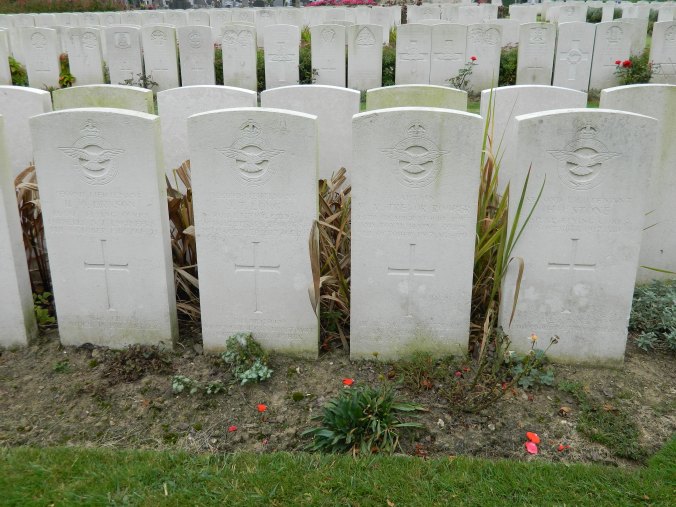
This is Bailleul in Flanders, the site of the airfield (I think) where 3 Squadron AFC was based. This is where Alex and Charlie end up in 1917.

There are so many airmen buried in the cemetery right next door. (There are so many cemeteries, large and small, in Flanders and across northern France. All are immaculately maintained.)
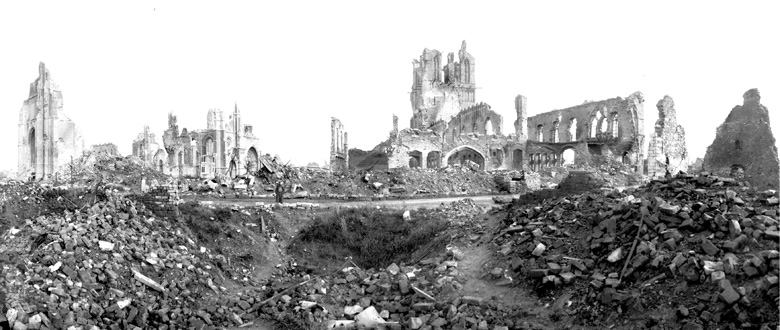
A few miles away as the RE8 flies, the town of Ypres was reduced to rubble by shelling during the war.

Source: Australian War Memorial

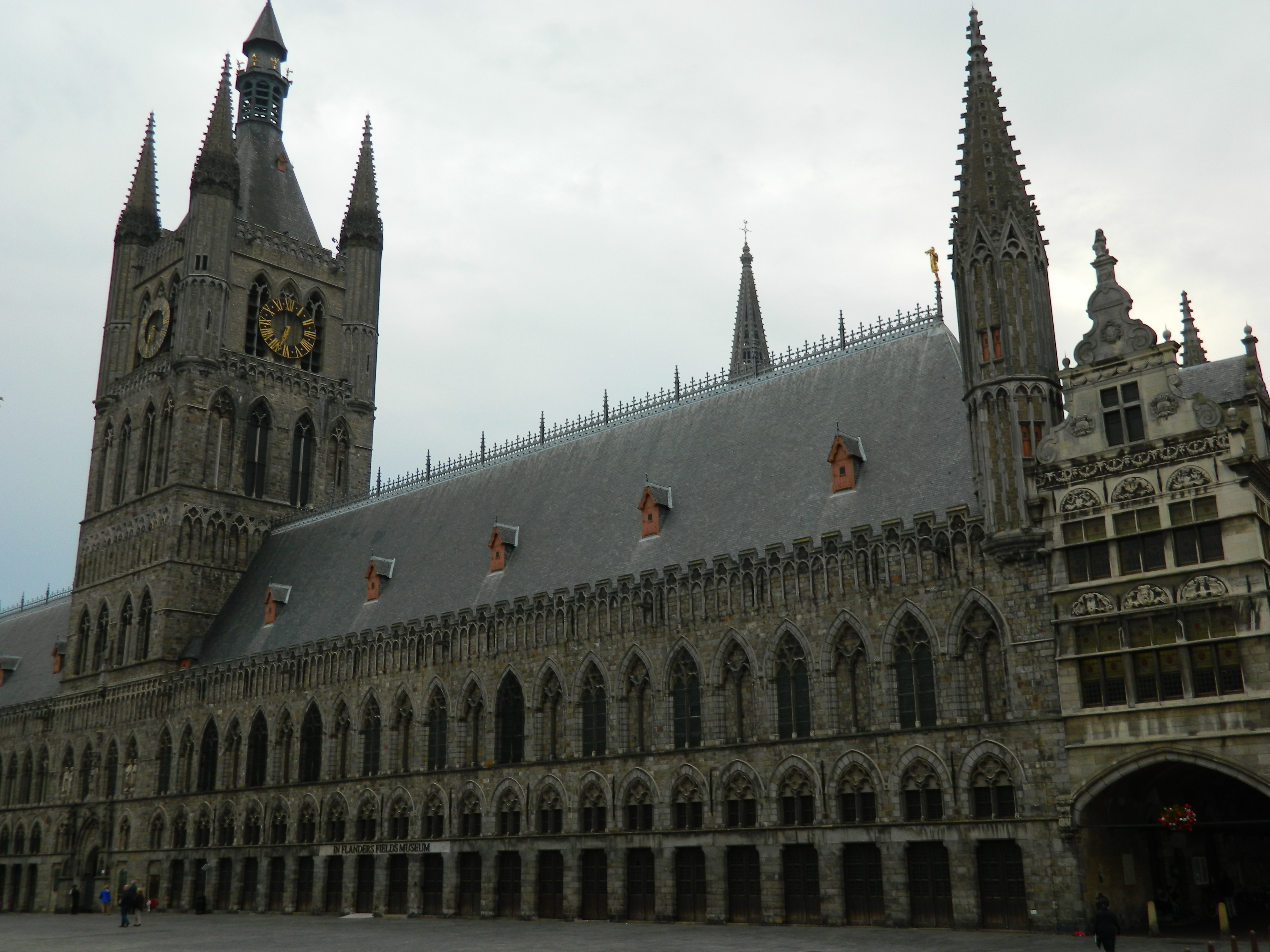
Those few walls you can see were all that remained of the medieval Cloth Hall.

But after the war, it was rebuilt, and today it houses the brilliant In Flanders Fields museum.

But 1917 is not only set in Flanders, of course.

It’s also set near my home, in Melbourne, in the suburb where my great-grandfather lived before he left to serve in the Medical Corps in Flanders.

If you’ve read the book, you’ll know that Maggie and the family live next to the railway station, in a station manager’s house. Here’s one just like the house they might have lived in – near Moreland Station in Melbourne.

Railway house. Source: Pictures Victoria/Coburg Historical Society

And the station – which still stands – looked like this. So you can imagine little Bertie running wild around this very impressive-looking Victorian edifice, while his father tries to appear dignified.
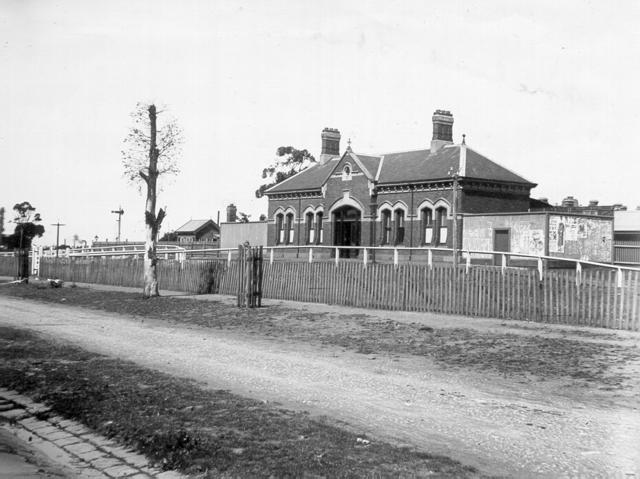
Source: Pictures Vic/Moreland Libraries

It still looks a lot like it did then. Even the signal box in which I imagined Bertie playing is still there, although it’s not in use any more. But there’s a lovely park now on both sides of the lines. (The Government is about to remove the level crossing – I hope they don’t also remove the heritage station or signal box.)

One place in the book that’s very close to my heart is Station Pier in Port Melbourne. That’s where so many families waved off the men and women going to war, not knowing they’d never see them again. And then later in the year it was the scene of strife during the General Strike, and Dame Nellie Melba’s inglorious concert.

(My grandfather worked on the wharf, and he used to take us there to look at the ships, when I was little.)
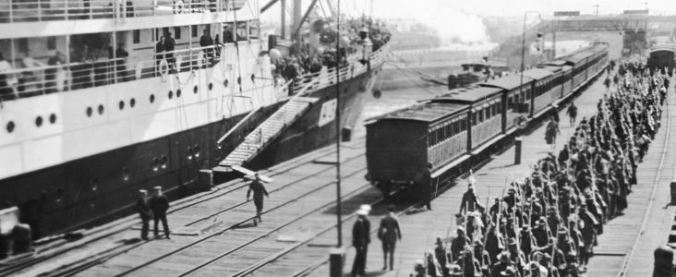
Source: Victorian ANZAC Centenary

And what about Maggie’s life on the farm? Well, here’s Main Street in Mordialloc (around 1910), which is now a very busy spot indeed.
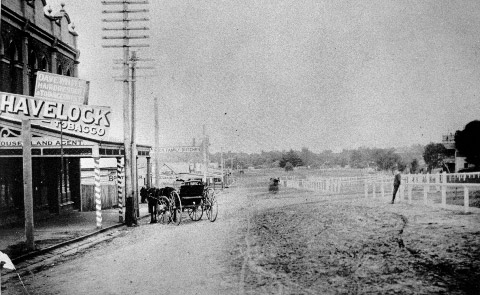
Source: Kingston Libraries/Kingston Collection

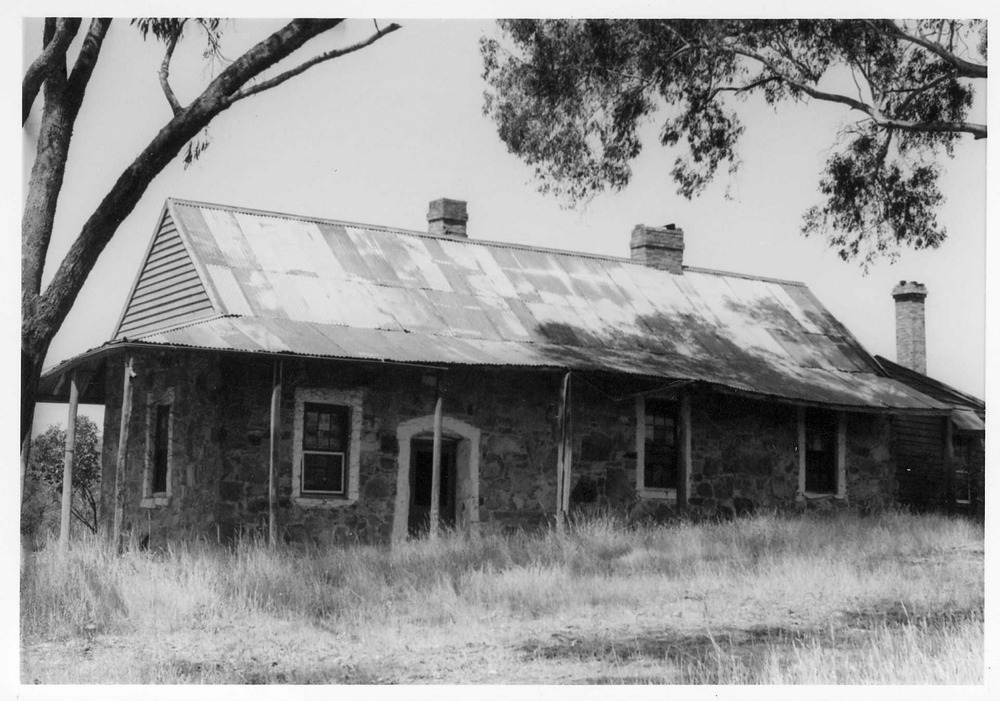
And this is the place I had in my mind for the orchards and farms around Box Hill where Maggie and Lizzie work: Schwerkolt’s Cottage, Mitcham,  just a few doors from where I grew up. In fact, it gets a mention in the book, and the room where Maggie and Mrs Bennett chat is exactly a room at Schwerkolt’s – and they were one of the German families affected by the war. (I spent a lot of time as a kid exploring the bush and old orchards around the cottage. It has since been restored and houses the local museum.)

Source: J.T. Collins Collection, La Trobe Picture Collection, State Library of Victoria.

And I realise as I write this how often I include places close to my heart in my books. Venice. Paris. London. Station Pier. (It’s like one of those tea towels – “New York. Paris. Mitcham.”)

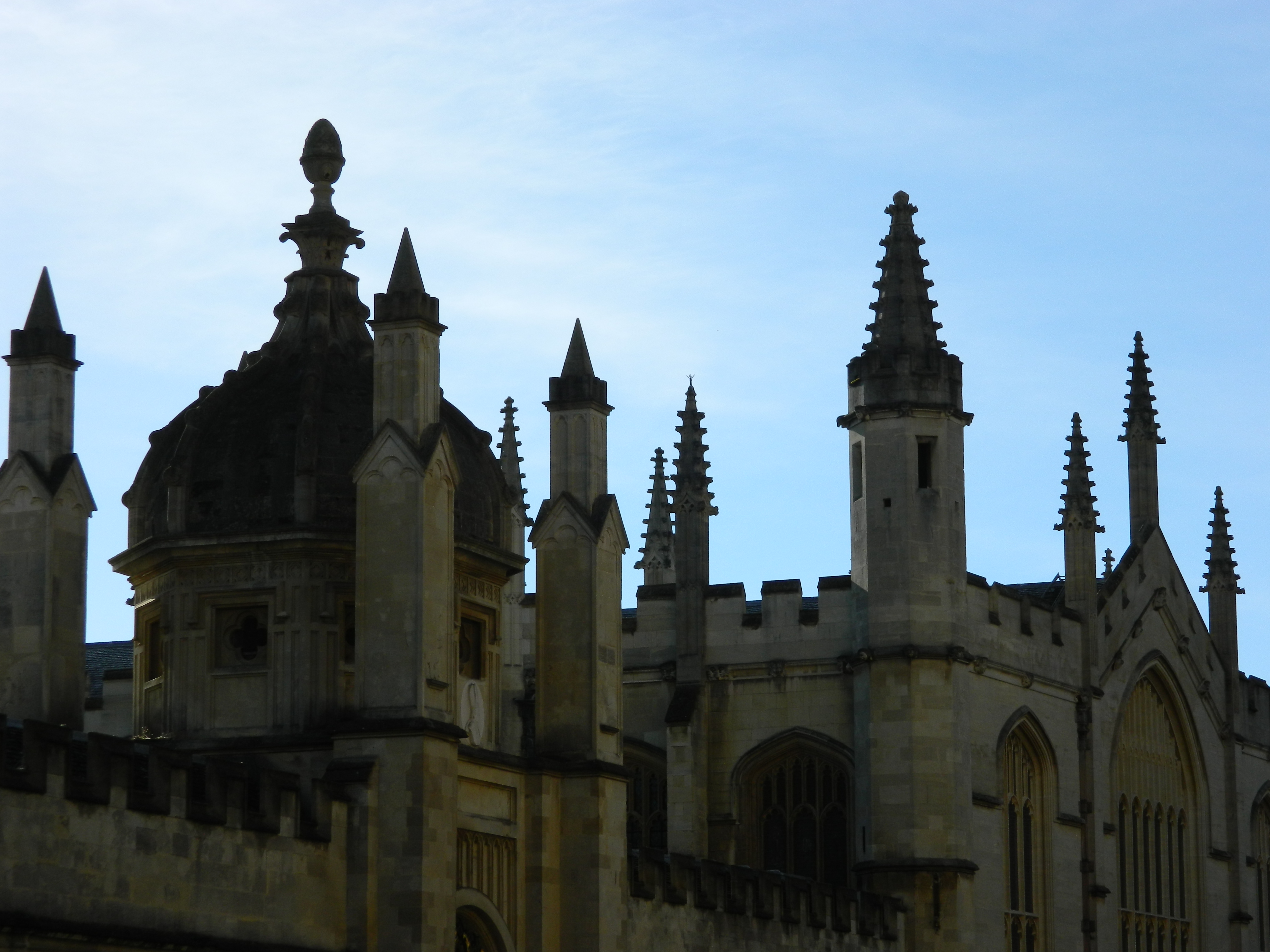
So here’s one more place that I love. Oxford. I can’t tell you how delighted I was to discover, last time I stayed there, that the airmen had trained there during the war. Hoorah! I thought. I can put it in the book. And so I did.
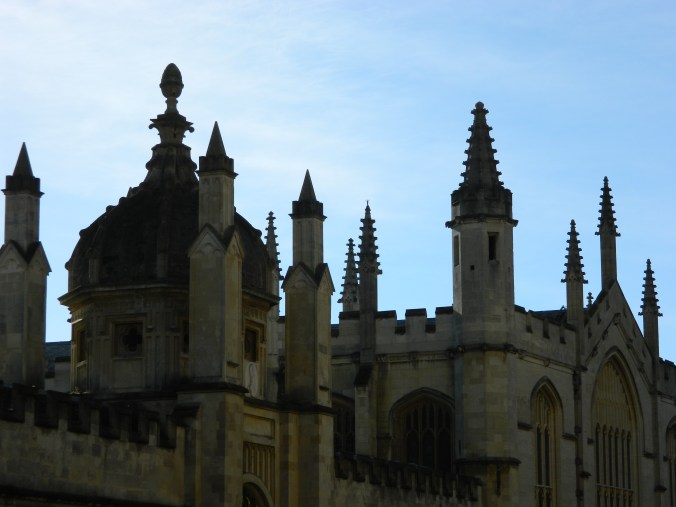
All those spires. Excellent navigation aids.