27 October, 2021
Day 27 of Writing Nangak Tamboree.
At last! The missing link in the waterways.
Like most of Melbourne, the Nangak Tamboree Wildlife Sanctuary has been closed for weeks – months. But as an outdoor space, with no contact required of visitors, it has been able to re-open this week.
The Sanctuary is as old as the university, which just tells you everyone had their priorities straight from the beginning. It spreads over 30 hectares and is now protected by a Trust for Nature conservation covenant. The land was once a farm, then part of Mont Park, and includes areas that were once recreation facilities for the patients, like a croquet lawn and cricket oval. That means that while the vegetation now looks substantial, much of it has been reintroduced.
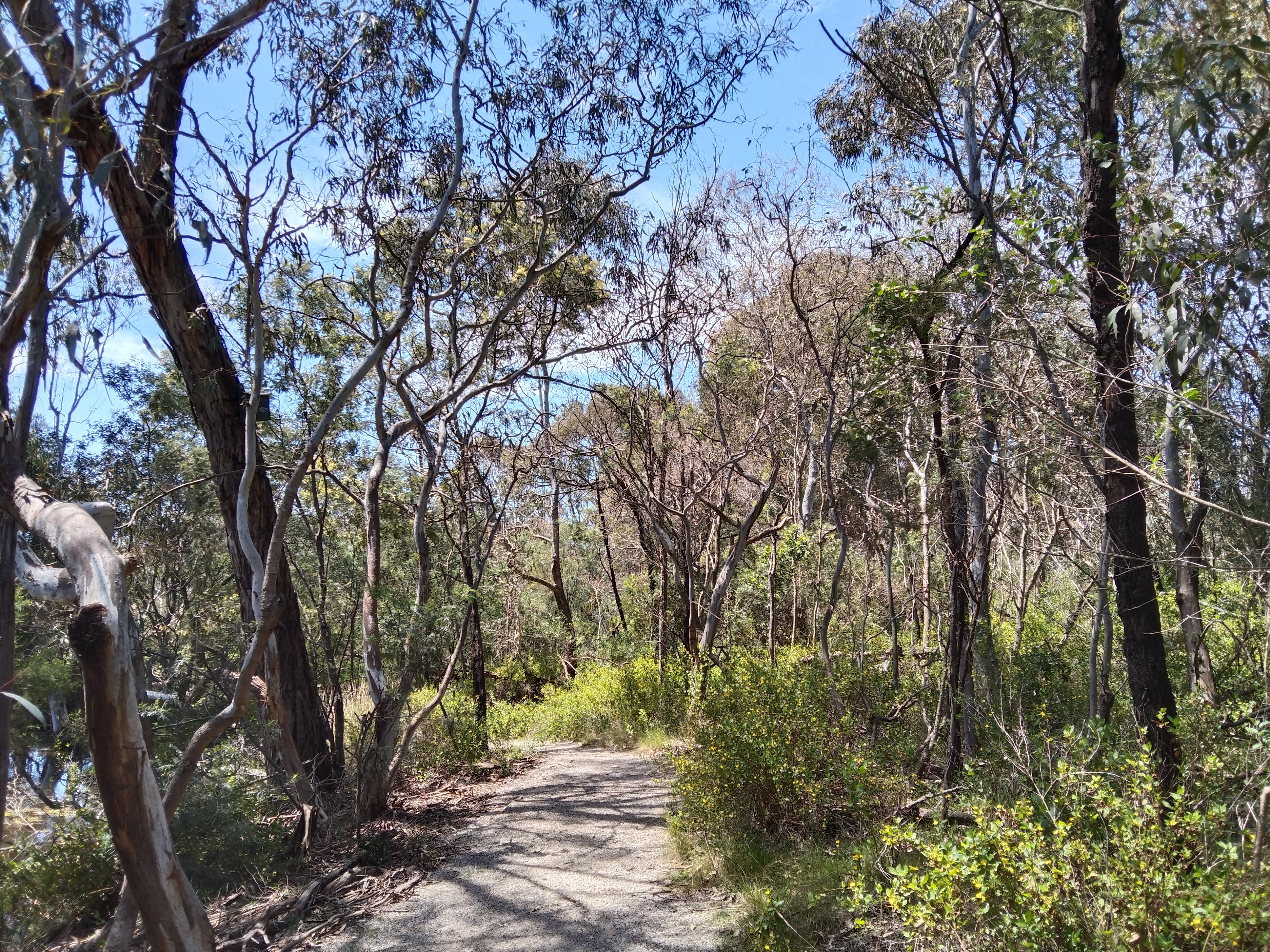
But there are some truly magnificent and very old trees.

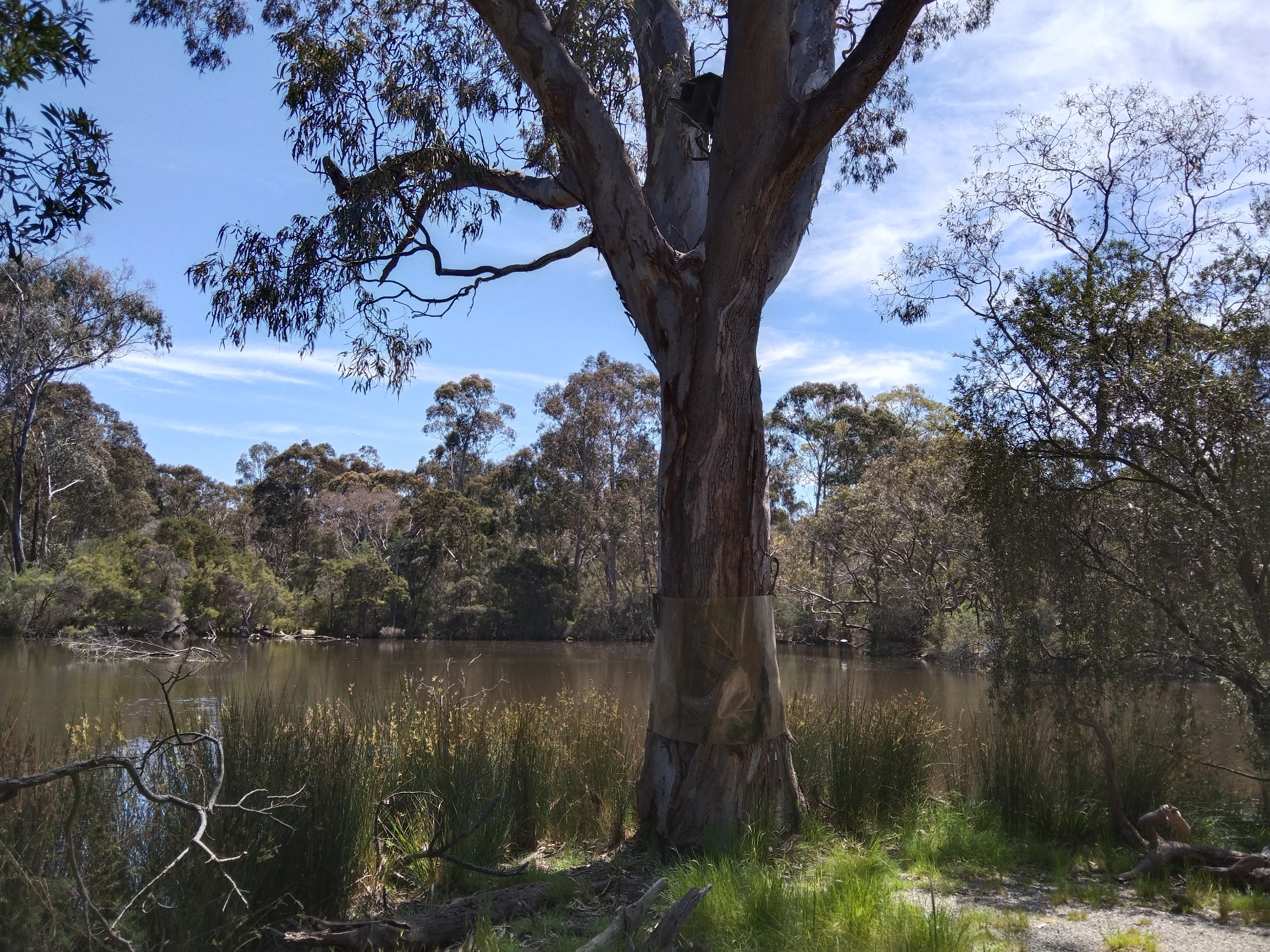
The older trees are mostly River Reds, but there are also stands of Ironbarks, Manna Gums and what might be Red Box – many of which, I imagine, are around fifty years old and were planted in the early years of the sanctuary. The regeneration work goes on – there are quite a few areas fenced off to protect the flora inside.
When you visit a wildlife sanctuary, you are on the lookout for creatures, right? And I guess I am, but I don’t seem able to concentrate on peering into bushes or focusing binoculars. There are all the usual avian suspects of course, croaking and squeaking and quacking, and I do spot a brushtail possum’s brushtail poking out the hole of a nesting box that is possibly not intended for someone their size.
But it’s actually the trees that are the show-stoppers here, even the younger, possibly self-sown, eucalypts and maleleucas, underlined by local grasses and swathes of goodenia, everlasting daisies, and pomaderris in bloom.
And of course the waterways. Again, these were dug as part of the creation of the university, and creeks are channelled between them, but I imagine these were planned following natural water courses or seasonal creek beds. So this is the core of Nangak Tamboree, the connected waterways running down from the high ground in Gresswell Nature Reserve and Gresswell Hill, into the alleged lakes at the bottom of the Wildlife Corridor, gathering run-off from the lower slopes on the old hospital site, through the Sanctuary, into the campus moat, where it combines with a creek running underground (now) from Bundoora park, into the campus lake system, and down to the Darebin Creek.
If you can’t visualise it as a system, here’s my little Google map of writing sites.
The sanctuary has its own system of waterways: two waterholes out the front, the reddish pond I admired through the fence yesterday, expansive swampland, and a series of lakes and connecting creeks, with – you won’t believe it – names like Main Lake and Eastern Swamp. (Seriously, someone has to get onto naming all of these waterways properly. That makes two Main Lakes at one university. And name them after trees or creatures, not former Deans. Or maybe ask the Wurundjeri Elders if they would like to put words to them.)
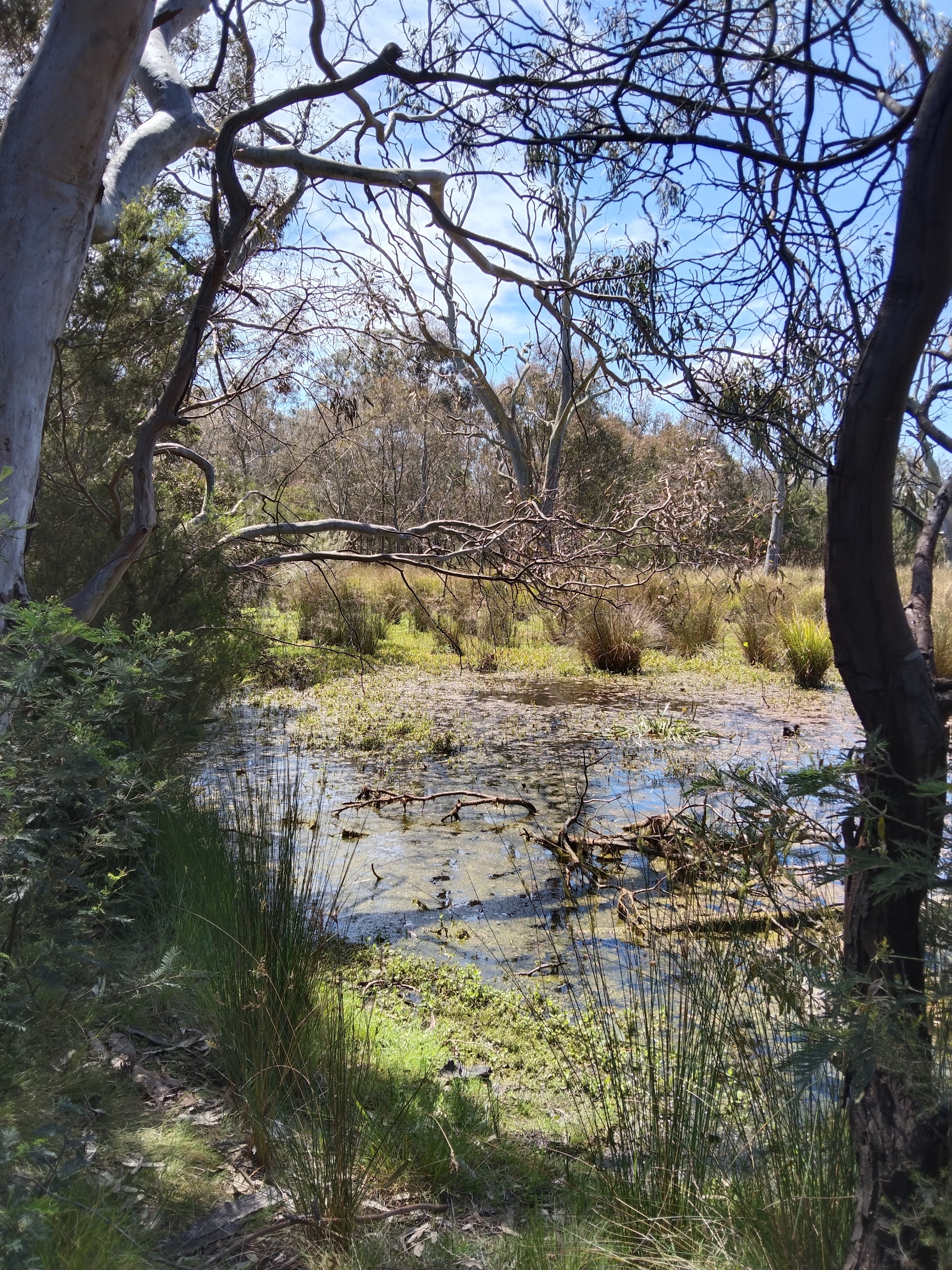
The names may be prosaic, but the waterways are lovely to look at, and are home to endangered Dwarf Galaxia and other fish and eels, a gazillion frogs, and many waterbirds, as well as of course providing water to everyone else who lives here or passes through the bio-corridor, from bats and flying foxes to wallabies and pardalotes. (All I see are a few ducks and a pair of coots diving in the reeds.) In one spot, I walk along an ‘isthmus’ (I definitely approve of that name) with Main Lake on one side, and on the other, a waterhole filled with Water Ribbons (Cycnogeton procerum) while on its banks a line of Manna Gums shed their own ribbons of bark.
Now that’s poetic.


 Kelly Gardiner