Slowing down

20 October, 2021

Day 20 of Writing Nangak Tamboree.

I may have been slightly hysterical yesterday. I do need to slow down. But I feel calmer today after a long, slow walk beside the Darebin Creek, back and forth along the stretch between Plenty and Southern Roads, on the muddy, grassy right bank. Or is it the left? The north-easterly-ish bank.

It’s early morning but the sun is warm already and the sky a blistering blue. Summer is coming.

Tree branches against bright sky

The creek is still running high from all the rain. It’s not, you’d have to say, a creek famous for white water. Nobody, I’m sure, is going adventure rafting along here. But with high water like this, you do get a few little rapids.

Water running over stones – bird calls

Trying to record sound, I keep having to dodge perpetrators of my new pet hate – people who talk very loudly on speaker phone while walking their dogs out in the middle of nowhere.

Now I’m at my ‘standing desk’, which is, to all other eyes, an unattractive concrete storm water system something-or-other. I’m sure there’s an engineering term for it, but it looks like a miniature Martello tower, just below the Nangak Tamboree revegetation area.

I’m doing the Bird Count in a more relaxed fashion today, after yesterday’s frenzy – glance up, anything there? hear a call, focus binoculars. A Willie Wagtail chirrups from the wire fence, and when I move on it keeps me company, reminding me of the robin in Frances Hodgson Burnett’s The Secret Garden. It’s the little birds that elude me but also delight. On my way here, a New Holland Honeyeater almost flew right into me, swerving at the last moment, and a flock of fairy wrens always makes my day.

There’s something flitting about in a Cootamundra wattle on the riverbank, but I can’t for the life of me catch a glimpse. A raven sitting in an old acacia hunches its shoulders at every croak, like some minor Dickens character.

I walk on towards Plenty Road. This is a lovely stretch. The escarpment rises up on one side, just under where they’re moving Frog Hollow. I can hear the heavy equipment in action today – I don’t want to go look because I fear for the swathe of grassland and eucalypts in between the former golf range and the hillock of old fill.

trees on a hilltop

Apparently one day there’ll be a bike path through here too, which my bike-riding self approves, but my walking self wishes it could stay like this always. It’s hard to believe I’m in the middle of an enormous sprawling city, next to a major road and a university campus.
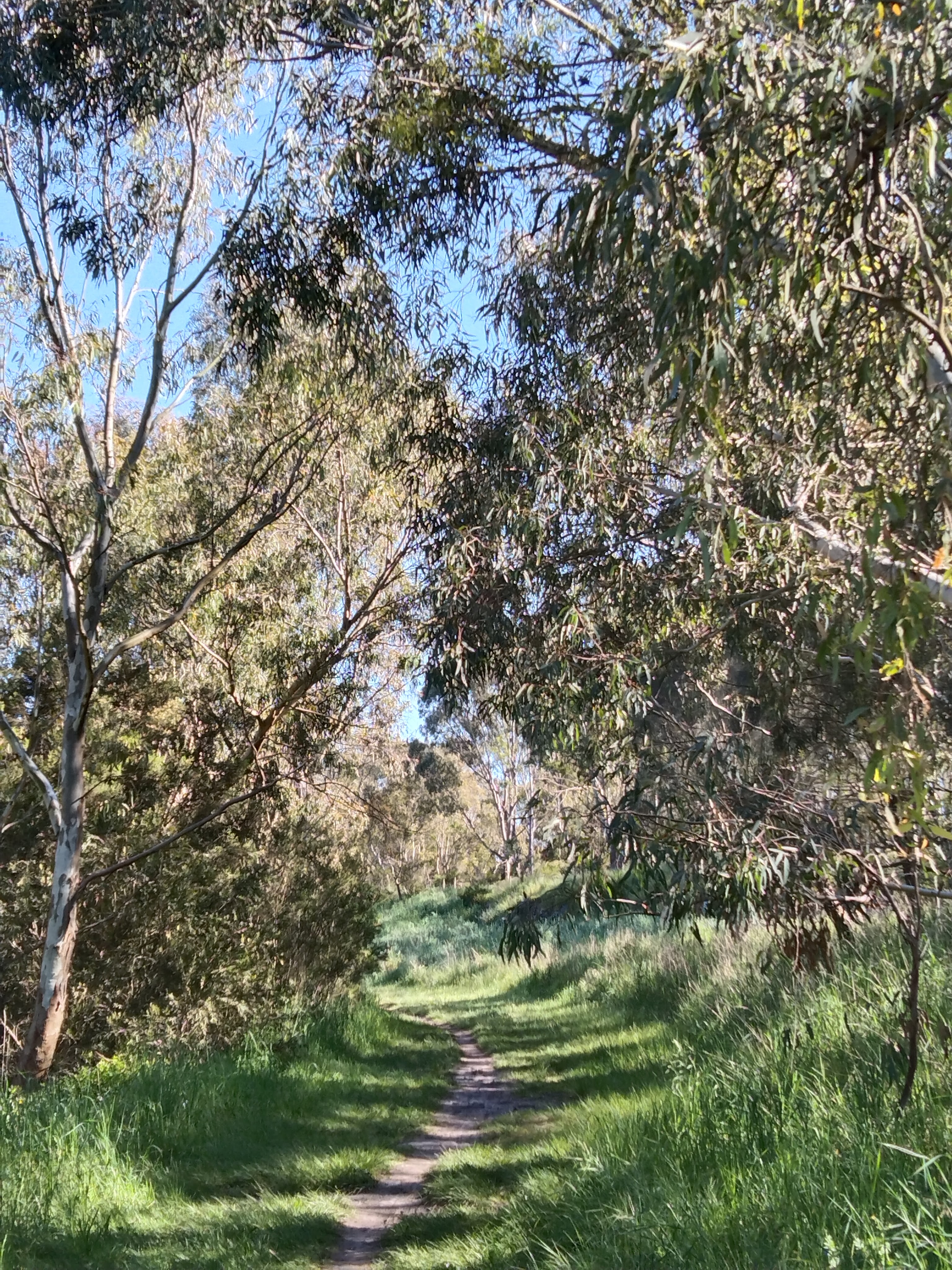
Track through bush

Slow/fast writing

19 October 2021

Day 19 of Writing Nangak Tamboree.

I’m back on my writing rock today. Well, it might be the same boulder as I sat on to scribble the other day. Or a totally different rock. So observant.

This morning I was reading this excellent essay on Slow Writing by Melissa Matthewson. It begins:

I’ll invite you to read this slowly. To remember that a voice is embodied in this text, that in this process of following the sentence towards its meaning, in a kind of walking, as in a procession or parade, the writer’s creative process will emerge, a deliberate motion with care as the foundation for which the writer is then able to articulate beauty and suggest some new knowledge, but of course, this will take time.

‘A Revolution in Creativity: On Slow Writing’, Melissa Matthewson, LitHub, 12 October, 2021.

She’s so right. I am all in favour of slow food and slow travel. But when it comes to writing, speedy is my default setting. Even here. Sometimes I dash to Nangak Tamboree, stand and look and listen, scribble a few notes, take a few shots, then dash away again. What I try to do, and want to do, is walk the long way here, then keep walking, and write in a few spots as I go over an hour or two.

It depends on the day, the time of day, and what else is happening. Ideally, I’d spend long slow hours here, but ideally I wouldn’t have books to finish, emails to send, meetings to attend, assignments to mark, meals to cook, and seemingly endless To Do lists. So I visit before or after work, and can stay for longer when it’s not a work day. Then post each evening.

Old eucalypt tree in long grass

But anyway, I write fast. Even writing a novel, I draft fast. It’s not a race, but sometimes it feels like it. There are so many stories to tell and so little time. I am not one of those people who thinks writing is painful. I enjoy it and I like drafting fast. If I have a writing week or, even better, a month, especially at a writer’s residency, I aim for 2000 words a day and often go well over. But then, I don’t have to think about anything else – just writing, sleeping and eating. Maybe a walk once a day. I wish life was always like that, and I know it is for some people. But not for me.

I have two academic papers to finish in the next two weeks and a big conference this weekend, on top of everything else, and that seems ridiculous (and it is) but it’ll be fine. Somehow. Then I’ll tell myself never to put myself in that position again.

Until the next time.

So even though some days I curse the person whose idea it was to come here every day and write (me), it’s writing that’s just for me. If anybody reads it, that’s a bonus. I’ve had some gorgeous emails and comments over the last few days about these posts and I’m genuinely surprised that you can make head or tail of these scribbles.

But I do admire the idea of slow writing. I link the idea in my mind with the essay by Michael LaPointe I mentioned the other day, on writers walking, and making sure that the walking doesn’t just become a chore – or a race. Or subsumed into some other frenetic activity.

Like the bloody Bird Count. It started yesterday. Today I’m out on a hillock near Sports Field Lake, and the Bird Count app timer is going (you have to do it for 20 minutes) and I’m looking this way and that and madly pushing buttons to record them all (24 wood ducks!) and end up swearing. I decided to do it since I was here staring at birds anyway, and I’ve never been part of a citizen science event, but measuring the blighters is a whole other thing. Thank God it only goes for a few days. Because that does feel like a race, let me tell you. Writing about them is much more fun.

lake with dead tree

Nice weather for frogs

18 October, 2021

Day 18 of Writing Nangak Tamboree.

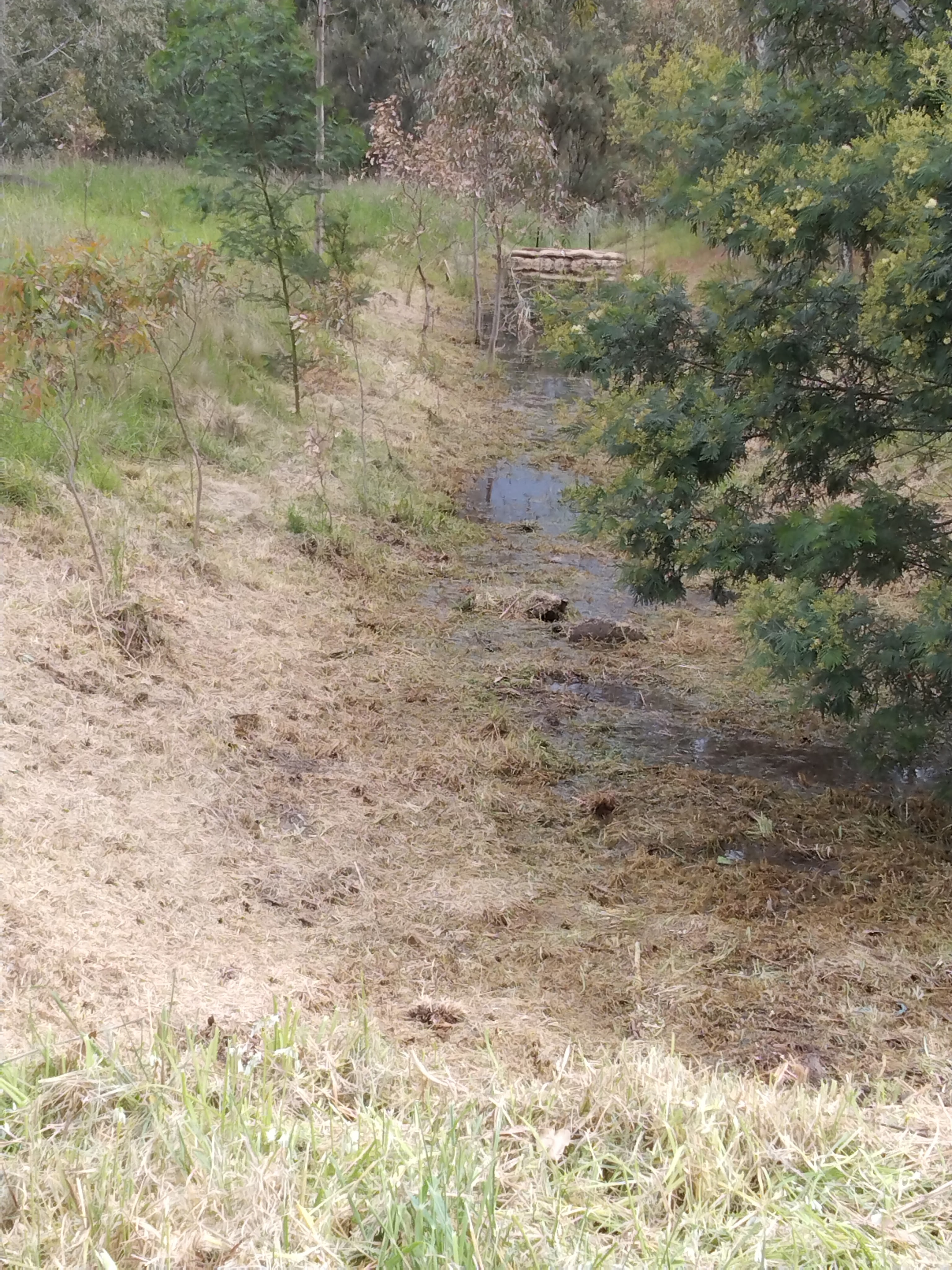
Excellent frog action today. All the waterholes – of which I come across more every day – are brimming and everyone in them is filled with the joy of spring rain (and maybe mating season may have something to do with it too),

No idea what frogs these are but they are going off.

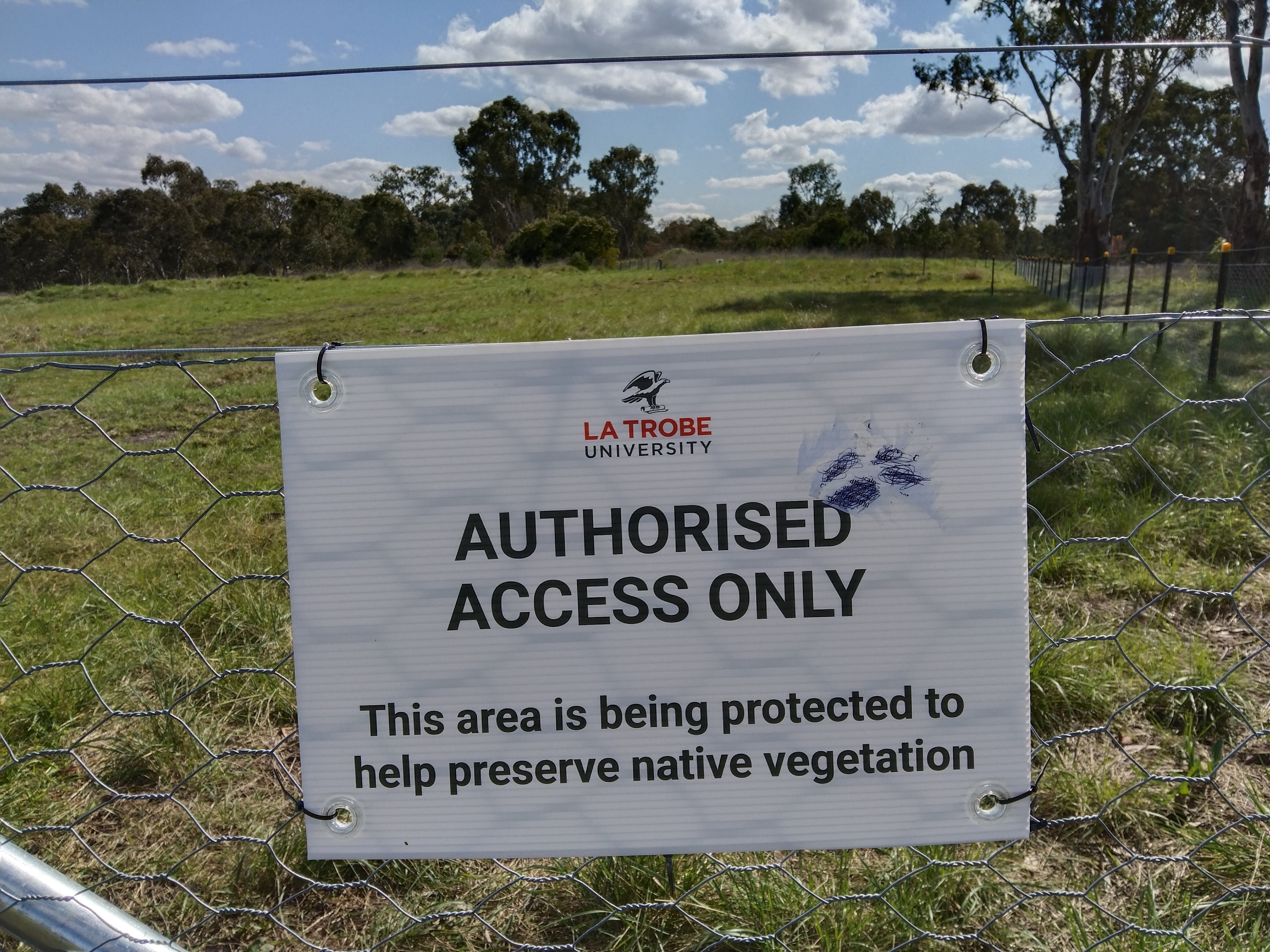
I didn’t walk alone today. Instead, I was given a guided tour of frog hollows and tree hollows and the grasslands closest to the Darebin Creek, with Nangak Tamboree project manager, Tony Inglis, who kindly and possibly foolishly agreed to answer my million questions. We even ventured into the (cue dramatic music) Forbidden Zone.

Sign saying 'Authorised Access Only - Native vegetation'

Thrilling. Because this is the area in which the recent use of cultural burning by Wurundjeri Woi-wurrung Narrap Rangers has led to the re-emergence of the endangered Matted Flax Lily. It’s also been discovered recently nearby – outside the fence, in a site where a new series of sports fields are planned – and so in the next few days those wild clumps will be removed, divided, propagated, and cared for in the nursery at the Wildlife Sanctuary. In time, those few clumps will become 250 plants, ready to be replanted in the revegetation area – that’s not a bad percentage of the 2,500 left in the state.

The involvement of the Wurundjeri Woi-wurrung Elders and Rangers is central to Nangak Tamboree – after Tony finishes showing me around, he’s off to greet one of the Elders who is providing a cultural heritage briefing to new contractors. That’s important in itself, as a way of thinking for an institution as big as a university, but it also informs the planning for the grasslands. Often, in these kinds of projects, you might see plantings arranged in the same way we think of garden design: layers of ground cover, low shrubs and taller shrubs, in groups around major trees. But this is grassy woodland. And what the Narrap Rangers have shown, Tony says, is that if you let the burning do its work, the local plants that have adapted to the presence of fire for tens of thousands of years will come back. Introduced weeds might take a bit of burning off, but eventually they will vanish. The rangers usually burn in autumn and think it’ll take three to five burning seasons to fully spur this revegetation. It will still be grassland, with these widely scattered eucalypts, but instead of onion weed and Kikuyu, it’ll be flax lilies, wallaby grass and kangaroo grass.

Grassy woodland with trees
Nangak Tamboree revegetation area

Inside the fence is two hectares of woodland, undulating down to the creek. It’s the protected (and more glamorous) part of a broader ten hectare area, some of which, beyond the fence, includes an old golf range and building sites, and the dumping ground for old cars and fill I mentioned days ago. This is planned to include new sports facilities for the Matildas (Go, team!) and for Rugby Union in Victoria. I might come back to the details on that another time but in the few days since I was last here what looks like kilometres of fencing has gone up around the soon-to-be-construction zone.

And here’s the most fascinating thing. There’s a waterhole – naturally, full of frogs – by the golf range. It’s not old, and not always full, but it’s ringed with reeds that are apparently endemic to the area. So the Narrap Rangers, the Council, and the project crew are about to move the reeds, the water and the frogs to a newly made waterhole on the other side of the track – out of harm’s way and closer to the creek. A whole waterhole! I’m not sure they’ve given each frog an eviction notice yet, but they are confident if they move the water any stray frogs will quickly follow it.

Excavation for new waterhole
The new waterhole, waiting for its water

I’ll check on progress in a couple of days. But I kinda like that this is a construction site that bothers to move a waterhole.

Tony answers more of my questions than I can report here, and he reckons he’s trying to be vague sometimes because he likes me trying to work stuff out on my posts. Bless. I’ll come back to some of the issues and info later. After he heads off, I wander back to listen to the frogs a bit more. Up on the hillock of displaced dirt, I stand still, one arm outstretched towards Frog Central with my sound recorder, and a flock of red-browed finches flits about me. Fairy wrens dance on the new fence. Lorikeets screech overhead. It’s the first day of the Backyard Bird Count and I’ll have to record them in bulk.

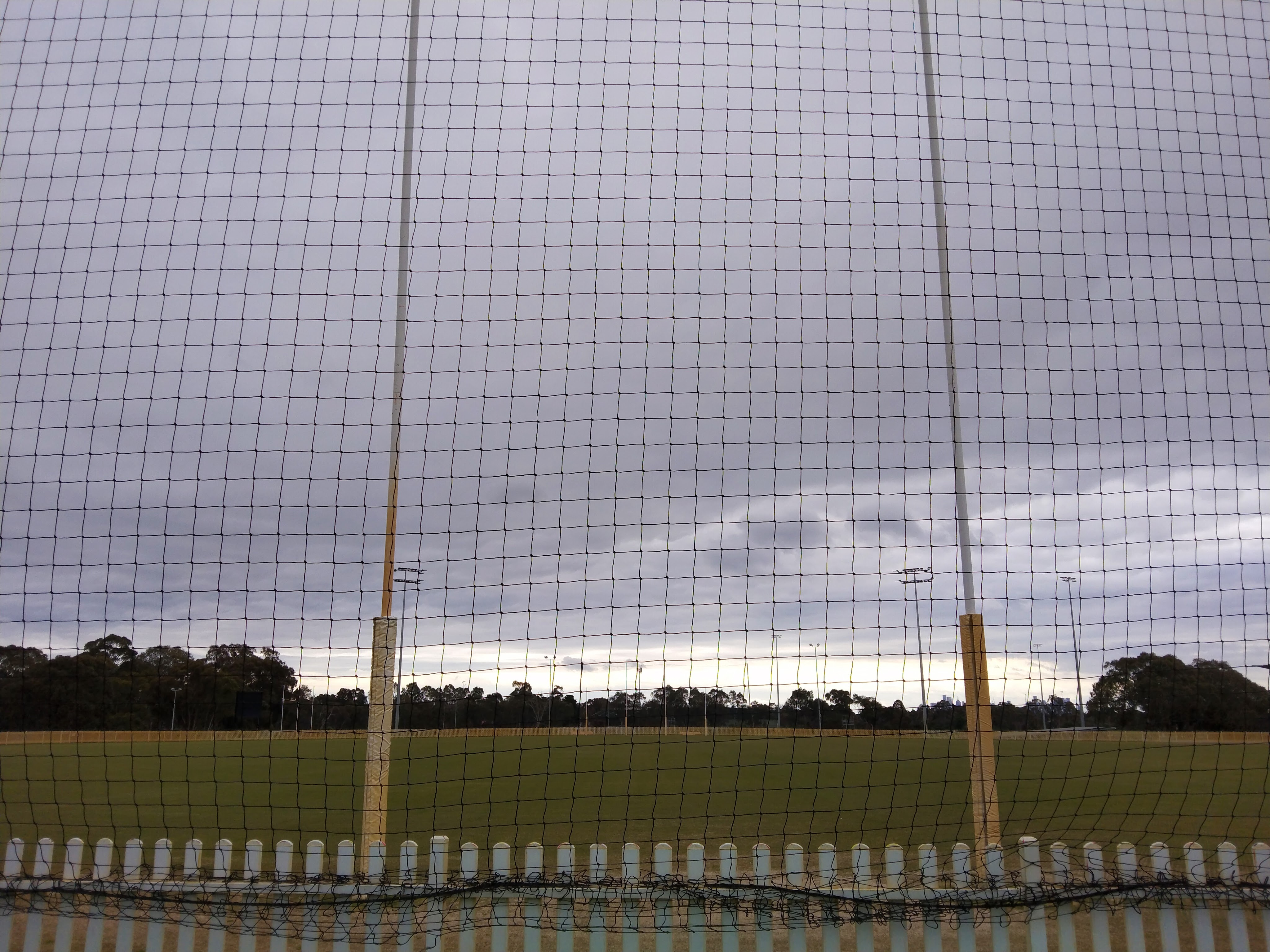
I walk back through the existing sports fields. There’s nobody here at all besides a security guard on their rounds and a dozen silver gulls. The new pavilion and stadium stand empty. Dusky woodswallows sweep low in circles around me as I walk.

Empty football field

The sky threatens more rain. I just make it home in time.

At least the frogs will be happy.

Water, water everywhere

16 October, 2021

Day 16 of Writing Nangak Tamboree.

So much rain last night. Just so much. The Darebin Creek is gushing and swirling, way up above its normal sluggish level, and judging by the swept reeds and grasses along the banks it was even higher overnight. I’m worried about ducklings getting swept away, and then as I approach the campus I see a pair of ducks leading a flock of ten or so fluffy dots across a roundabout. I stop to make sure no cars come along but then – drama! A magpie swoops out of nowhere, presumably defending its own nest, and attacks them. Then another.

How dare they? The adult ducks fight back bravely. I shout, though that probably isn’t very helpful since it freaks everyone out. Then the magpies get distracted by a pair of Noisy Miners who are swooping the swoopers and are of course much more threatening to everyone’s baby chicks. So they all go at it and honestly it is like the last flight of the Red Baron. Bird drama galore. While everyone else is busy brawling, the teeny weeny ducklings waddle happily on their way towards the moat. Phew.

It’s very soggy underfoot. I traipse across mown lawn to check out the Small Lake which is, naturally, small and is the link between the moat, Main Lake and the Sports Field Lake. I have walked past it so many times and never bothered to walk around it, because I’m usually striding along from home to office. The view from the footpath next to the road is of a brownish sort of channel, so it hardly invites exploration. But I have long admired the lines of this road bridge.

The underneath and pillars holding up the Kingsbury Drive bridge

Honestly, the aesthetics of basic civil engineering (especially in the 60s and 70s) take some beating, don’t they?

Even though the grass is mown, the Small Lake feels a little bit neglected. It’s not glamorous like Main Lake, which is overlooked by important university offices, boasts sweeping lawns and picnic tables and even has its own island (which I feel must raise the status of any body of water), and it’s not half-wild like Sports Field Lake. There are a few blackberries growing along the banks, a bit of rubbish swept in on the storm water, and not a single duck. There’s a gate under the bridge, twisted open long ago, which leads into a pocket of woodland with grass so vividly green after all the rain it’s almost neon. The traffic thundering overhead along Kingsbury Drive means it’s never going to be a picnic spot of choice.

Small Lake is Nangak Tamboree’s middle child.

But it’s actually quite lovely and I vow to visit it more often.

And as we have established, it has the most excellent bridge.

View of lake looking back towards campus

Corridors

14 October, 2021

Day 14 of Writing Nangak Tamboree.

I’m walking with a stick today. It’s one of those fancy hiking sticks, and I bought it years ago for walking along Hadrian’s Wall (but that’s another story). A colleague shared with me a photo of a tiger snake he saw near the Sports Field Lake last summer, and a very impressive creature it was too, so I am prepared. Most snakes I’ve ever met while walking are only too happy to slink away and I’m only too happy to watch them go. Like most Australian kids I was raised to stand perfectly still at any snake sightings, and I have managed to do that. I even do it in New Zealand whenever there’s a scurrying in the undergrowth and there are no snakes there at all.

But one time, high in the lakes of central Tasmania, fly-fishing without the protection of waders, I was chased by a tiger snake – no kidding, you think I’m exaggerating, don’t you? – its head up, rearing and racing towards me. No standing still that time. I have never run so fast in my life and it came after me, like a scene from an old cartoon, with my legs spinning around like the Road Runner.

So forgive me, reptile enthusiasts, but I’m emotionally scarred. I feel safer carrying my stick, although it’s more for poking around before stepping than any possible violence. Many snakebites result from people trying to hurt snakes or pick them up and I have no desire to do either.

Anyway, today I am bravely striding with my stick through the Gresswell Habitat Link, a bush corridor between Nangak Tamboree Wildlife Sanctuary and the Gresswell Forest to the north that is designed to allow wildlife to move from from end of Nangak Tamboree to the other, and beyond into the forest reserve. This area begins beside the alleged lakes (aka ponds) I visited the other day and runs alongside a golf course and edged by a relatively recent housing estate built on the former Mont Park hospital site.

Walkway through bush

This is grassy woodland, verging on scrubland on the higher ground, and dotted with some truly magnificent old trees – River Red Gums and Manna Gums, mostly. Narrow creeks and channels run through here, under built-up walkways, and alongside wide gravel tracks. There’s even a park bench to sit on and write which is pretty posh, and lots of new planting. I note, with my late spring snake awareness, that there’s no mowing of the grasslands here, but it all looks well-cared for. In the wetland area near the front gate, the frogs are having a lovely time.

There are plenty of people strolling or jogging around here, but the birds seem pretty used to them. I spot galahs, Eastern Rosellas, butcher birds, and hear a kookaburra laughing in a distant tree. But the entire place seems to be populated by Noisy Miners, the annoying neighbour nobody wants to move into the nest next door. I also spot wombat and wallaby or roo poo but there’s no sign of either this evening.

There are a couple of little kids in bike helmets digging a hole with a garden spade. I hope they aren’t burying a body. I suppose since it’s a nature reserve, some responsible adult should stop them, but since I am not a responsible adult, and since I did much the same thing in my neighbouring park as a kid (it was archaeology, I swear!) I walk on by.

I love these pockets of bush tucked away inside suburbs. I used to walk through one to and from primary school and now I think about it that must have been tonic for our little souls, hiking through tall trees every morning and afternoon. On rainy days like today we got to splash through puddles all the way home. Everyone called it “the bush” and when they taught us about the “Bush Poets” we expected to come across Banjo Paterson on our way home from school. Because that was the bush. Right there, past the footy oval. I suppose now people from elsewhere go to walk through it and marvel at the pink heath and the stands of red box. I should do the same one day.

But for now, I’ll keep walking through those kids’ adventure playground.

Update: A few weeks after I wrote this, I spoke to Glenn, one of the Wurundjeri Narrap Rangers, who by the way told me how hilarious it is when people tell tall stories about being chased by snakes. Snakes, he said, if disturbed, are only ever trying to find shelter. They are very territorial and have established bolt-holes in which to hide. So if you ever think a snake is attacking you, it is just trying to get past you to safety. I will try to remember this. (It doesn’t make it any less scary for me, but Glenn is a former snake handler so he has years of experience and great knowledge, and clearly much more empathy.)

On walking

13 October, 2021

Day 13 of Writing Nangak Tamboree.

I walk most mornings and have for many years now. I didn’t always. I come from a family of walkers – I mean, serious, best-in-the-country race walkers, who think nothing of a ten kilometre stroll before breakfast. I was brought up by the side of an athletics track as my dad was in Olympic and Commonwealth Games and my grandfather was an Australian champion and lifelong walking official. So going for a walk in my family holds a slightly different meaning to most. My mum also used to walk every morning: not race walking, but more the kind of stepping out for health we’ve all been doing in our allotted exercise times during lockdown.

But I, being the family rebel, didn’t walk until relatively recently. I quite like proper hiking, and can walk all day when travelling and looking at really interesting stuff, but going for an evening stroll on a beach seemed absurd, and walking for exercise far too dull. I’d be on holiday, and friends would suggest going for a walk and I’d inevitably ask why. Pointless walking, without it being a race, or to discover some particularly excellent thing, seemed like a ridiculous thing to do when you could be lying about reading. Still, I guess it’s been ten years that I’ve walked most days, except for a long stretch last year in deep lockdown when I basically refused to leave the house.

I walk for exercise, yes, and sometimes even jog. But mostly I walk to clear my head. Actually, that’s a lie. I don’t clear my head; in fact, I’m thinking all the time. I clear it of nonsense, and it fills with better or at least more interesting things. I tried listening to podcasts but I just want everyone to shut up and stop talking at me. If I’m deep in a writing project, even – perhaps especially – on a writing retreat or residency, walking is a time to unravel knotty plots or have conversations with imaginary people. Then, I’ll carry a tiny notebook and stop and scribble as I go.

The connection between writing and walking is long and celebrated – the Romantics made it a thing and it’s a thing again now, with nature writers wandering all over the shop. Writers like Rebecca Solnit have made it a focus of some of the most beautiful prose in recent years. I confess I’m a bit more random and not nearly as intentional – normally – as one apparently should be. Even now, with the daily walks designed as writing process, I never know what will happen and usually don’t plan where I’ll go.

A few years ago, I was in a group led by writer and local legend Sophie Cunningham which walked one night following in the footsteps of Melbourne’s first elephant (Port Melbourne to the zoo) and another day the first leg of Burke and Wills’ expedition (Royal Park to Moonee Ponds, although we didn’t take a piano with us like they did). Sophie researched carefully beforehand and wrote about those walks later in her excellent essay collection, City of Trees. Intentional, writerly walking, but we never really knew what would happen, and a group of writers walking generates its own story.

In 1927, Virginia Woolf went for a stroll to buy a new pencil, and, being Virginia Woolf, wrote the most gorgeous essay about it – ‘Street Haunting’ – about walking, about London, and about how your mind slips and listens and glides as you walk:

How beautiful a street is in winter! It is at once revealed and obscured. Here vaguely one can trace symmetrical straight avenues of doors and windows; here under the lamps are floating islands of pale light through which pass quickly bright men and women, who, for all their poverty and shabbiness, wear a certain look of unreality, an air of triumph, as if they had given life the slip, so that life, deceived of her prey, blunders on without them. But, after all, we are only gliding smoothly on the surface. The eye is not a miner, not a diver, not a seeker after buried treasure. It floats us smoothly down a stream; resting, pausing, the brain sleeps perhaps as it looks.

Street Haunting‘, Virginia Woolf, first published 1930.

See how her prose does what she’s describing?

Genius.

Sadly, I am not Woolf, I’m just me, plodding along a muddy track beside a creek. I take the long way to Nangak Tamboree today, which takes me about half an hour each way, and longer if you stop to try to take photos of uncooperative birds with an even more uncooperative camera. There’s a stand of wattles and kangaroos apples along the Darebin Creek inhabited by a family of fairy wrens, and a flittery population of robins, honeyeaters, and little hoppy brown things (that’s the technical term) which never sit still for a moment. (On the way home, I’ll meet a group of park rangers in this spot, all pointing and gasping, thrilled at the shenanigans.)

White-browed scrubwren on a tree branch
White-browed scrubwren finally sitting still

When I reach Nangak Tamboree, I sit on a boulder between the creek and the fenced-off revegetation area, and scribble this down, thinking about writing and walking.

There are now books galore about the creative benefits of walking, and research that indicates that Wordsworth was right – walking does enable writing. A Stanford University study claims that ‘A person’s creative output increased by an average of 60 percent when walking’ but it’s creativity of the random kind, not necessarily the problem-solving sort. That chimes with my experience.

And as Michael LePointe warns:

The more conscious writers become of its creative benefits, the more walking takes on the quality of goal-driven labor, the very thing we are meant to be marching against. 

‘The Unbearable Smugness of Walking’, The Atlantic, August 2019.

Much better to wander off, and let your mind wander as well: ‘only gliding smoothly on the surface.’

A white faced heron in long grass
White-faced heron on the hunt

Of pathways and picnics

9 October, 2021

Day 9 of Writing Nangak Tamboree.

Today, I’m walking. And walking. Didn’t have much of a plan, but it’s evolved into following every path I find, around the top of the Sports Field Lake. It’s a Saturday, so there are lots more people around, and since we still aren’t allowed to have friends over or go to cafes, everyone is meeting up outside. Picnics are permitted, under certain circumstances. So every park I visit, every open space, is dotted with people having picnics. Even people who hate picnics are having picnics.

Not so much here, because I’m not sure these places register with people as a destination, but there are many small groups scattered around campus, and I come across them in odd spots along the creek. Here, it’s more about movement – there are people strolling along with kids in pushers, cycling, or walking dogs, or bird-spotting. There’s even a bloody trail bike roaring along (no helmet).

By the edge of the lake, where there’s a kind of beach (dirt, not sand), someone’s left two outdoor chairs, and there’s a woman sitting there, reading an important-looking document, talking on the phone, and sipping on a takeaway coffee. She looks like she’s parachuted in from a Brunswick Street café. I can’t imagine where she came from – or the coffee.

Two chairs overlooking a lake

I walk discreetly around her and vow to come back to write in this spot later. But for now I keep going, following a track that meanders through casuarinas and Prickly Moses, following the curve of the lake.

Track through casuarina trees

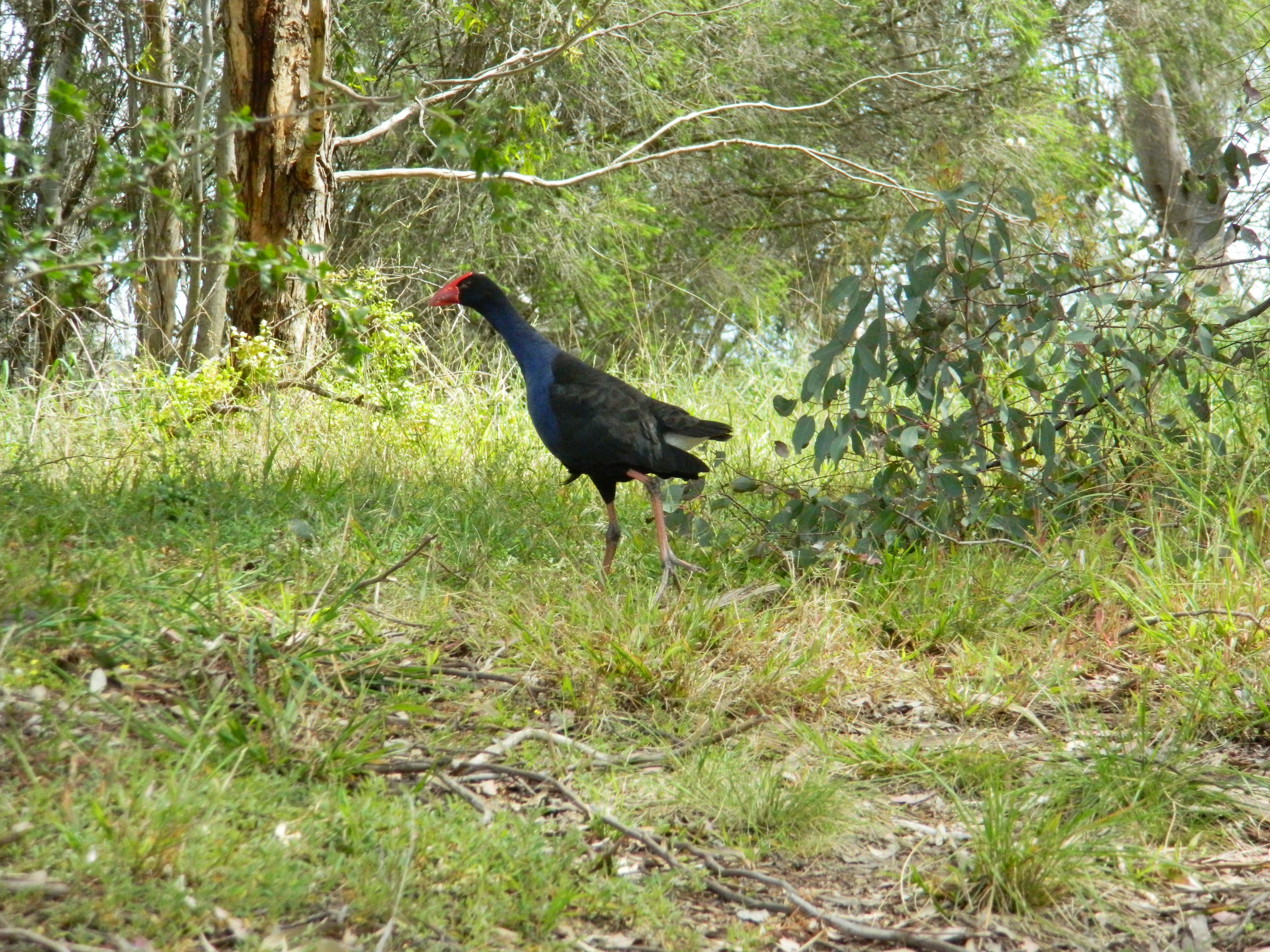
People, and presumably creatures, have made tracks all through here. I follow them all, around where the lake narrows at a little wooden footbridge, disappears under the road, and then pops out the other side to join the campus lake system. But I don’t follow it north (is it north? it feels north). There’s another track winding up what looks like a headland. Pukekos squawk hilariously but they don’t seem too perturbed by my presence.

path beside lake

Someone asked me the other day why I call them pukekos. Australians know them as Purple Swamp Hens. But in normal times I spend a great deal of time in NZ, where they are called pukeko, and they are iconic. You can buy pukeko fridge magnets and t-shirts at the airport. We have a sequinned pukeko Christmas tree decoration. New Zealanders think of them as uniquely theirs and my Kiwi friends and family visiting here in the past have been shocked that they dare to exist across the Tasman. As if I’ve stolen them. Like the pavlova. They are dear, funny birds, and there are many around these waterways, and if I was one I’d rather be known as a pukeko than a Swamp Hen.

Pukeko

So today the pukeko and I go about our business, not bothering each other. I scout around the headland. Three little kids rush past in their Speedos, parents trundling behind with pool noodles and beach towels, and even though it’s pretty obvious I ask the kids if they’re going for a swim.

‘Yes!’ they shout. ‘They made us stop and have a picnic and now we’re going back in.’

‘Is the water cold?’

‘Freezing!’

Not sure I’d swim here – at least, maybe not in October.

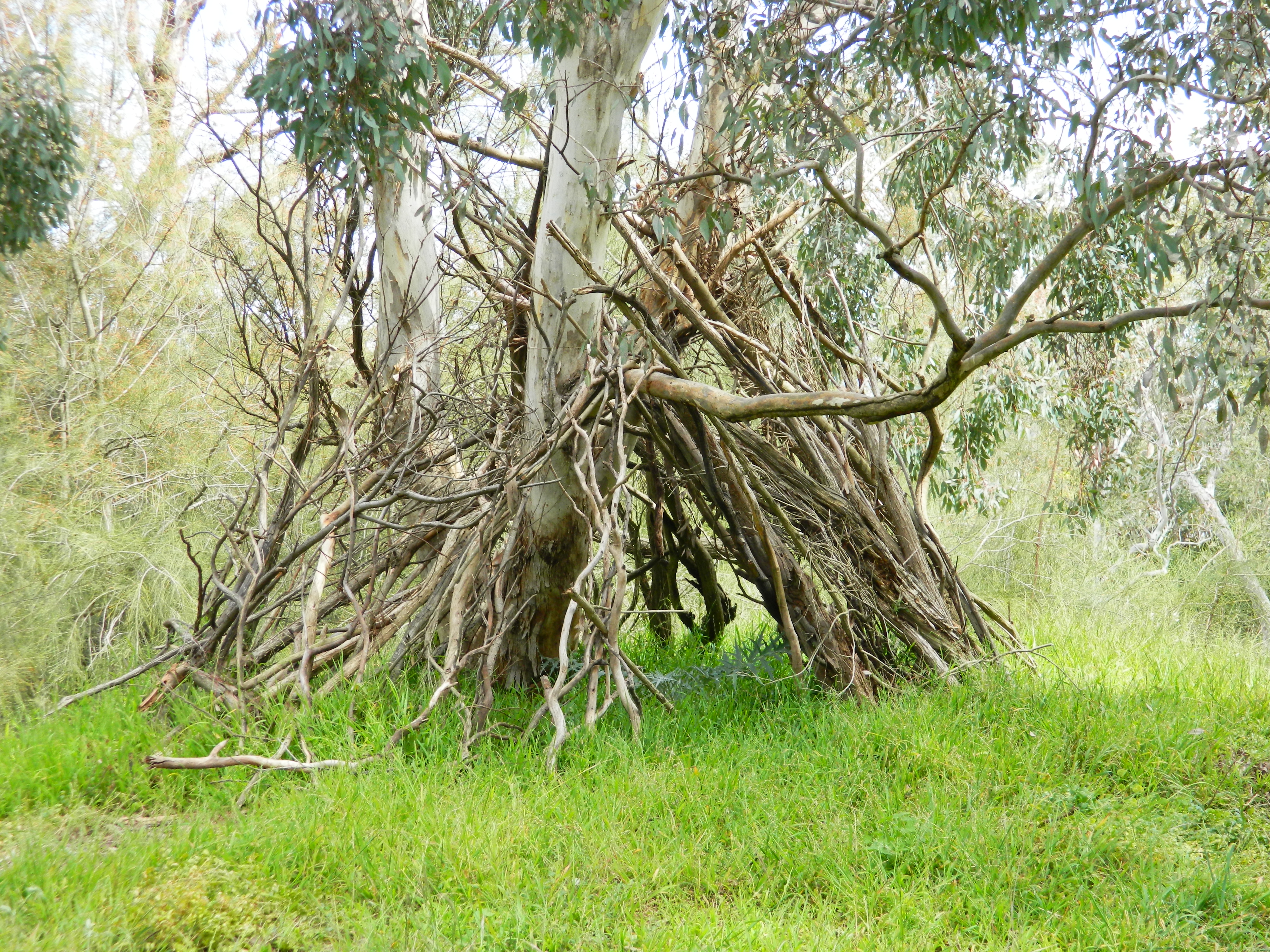
I wonder if these are the kids who made this excellent cubby house on the high ground.

Cubby house made of sticks leaning against gum tree

If you grow up near places like this, making cubby houses in the bush is a full-time occupation. I’ve made plenty in my time.

I keep on, following the track. It’s a hot day, and I’ve come out without a hat or sunblock, like the genius I am, but here there’s dappled shade and a breeze off the water. Wish I had a picnic lunch. Down near the shore, I peer through the undergrowth to spy on a darter drying its wings on its own personal island. At least, I think it’s a darter. It’s about the size of a B-52. It doesn’t dart, or swim about pretending to be a snake, as they do, but it’s having a grand old time.

Darter on rock

The track leads around to the sports grounds, which I decide to explore some other time. I circle back to the footbridge, prop myself on the now deserted chairs for a scribble, and then keep randomly following any narrow trail that presents itself, until I’m back on the bike path.

I like how people make use of places: the grass flattened by dozens of picnic blankets and socially distanced bottoms; the cubby house of sticks; the chairs picked up from the side of some road and brought here; the fallen log that every kid clambers along; the little spot someone’s made by the lake where you step through the reeds and balance on an old timber pallet and watch the water; and the paths trodden by thousands of feet, enticing me to keep walking.

A track through long grass

Edges

7 October, 2021

Day 7 of Writing Nangak Tamboree

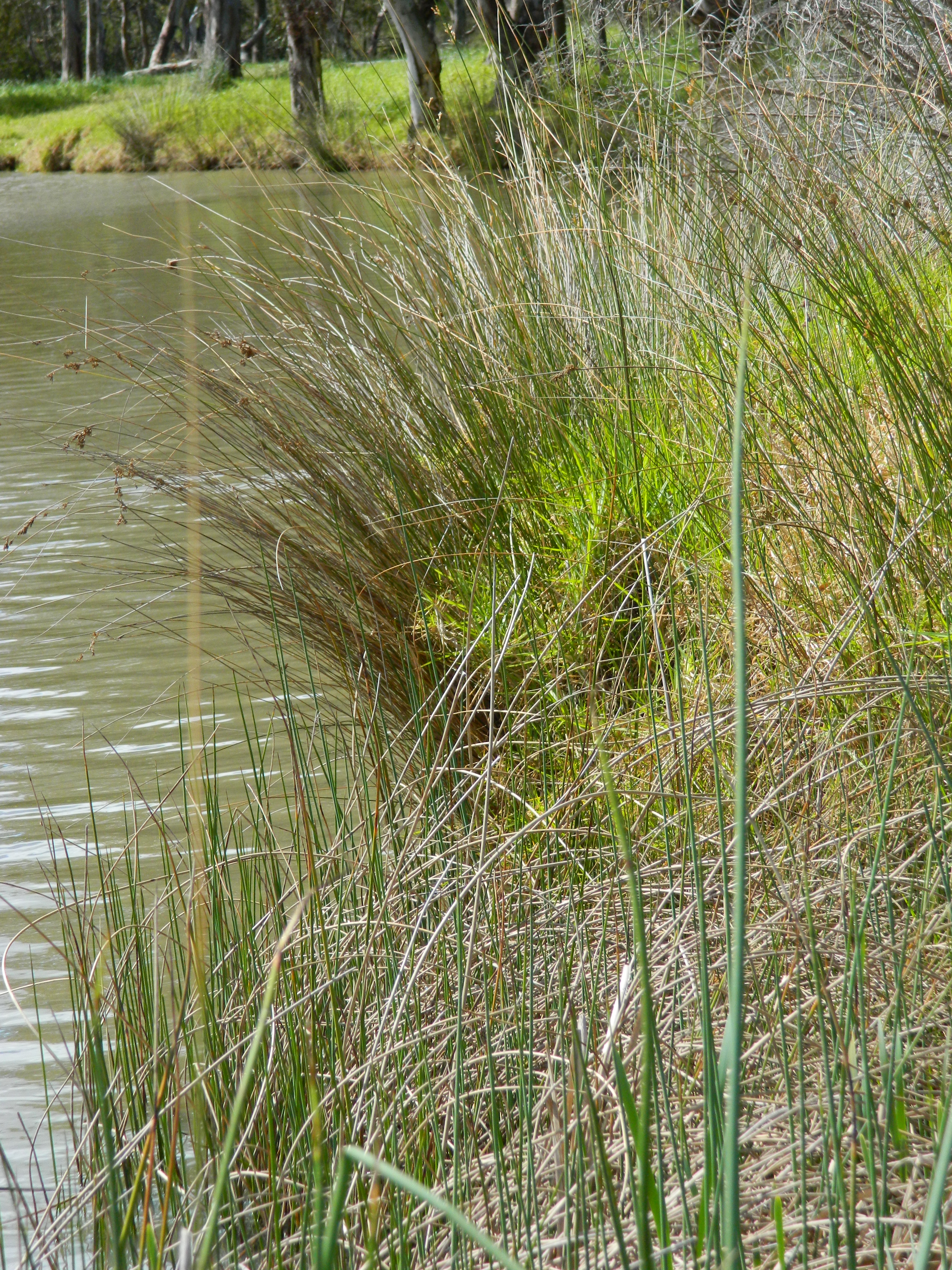
Reeds at the edge of the lake

I walk along the edge of the lake. It’s not yet warm enough for me to startle at every rattle in the long grass, but there are creatures everywhere. I can show you photos of trees and herons and the lake, and I will. But the horizon here is speared by a mobile phone tower and sports field flood lights. Behind me is a high factory wall. And on the edges of my hearing, forklifts, a truck beeping backwards, and a Council worker with a whipper snipper.

Marion Shoard has described the ‘edgelands’ of Britain: the edges of cities, the ignored interfaces where cities meet the countryside, where factories sprawl and spill into farmland and trees are cleared for housing developments. I think the word can apply where development meets remnant bush or regenerated places. Like this one.

My first job was nearby in Bundoora, a thousand years ago on the campus that is now RMIT, before the tram reached so far out of town. I can remember that feeling of passing from established suburbs built in the 50s and 60s, with shopping strips and the odd pub, hitch-hiking from the last tram stop or trundling on the bus past Mont Park and Larundel, through more recent housing developments which clung along Plenty Road. Beyond it was countryside.

So this was once on the edge, but the city now spills well beyond this place, gobbling up Mernda and sprawling out towards Whittlesea. As Shoard writes:

Although yesterday’s interfacial zones are often swallowed up by subsequent building, sometimes they survive as edgeland within built-up areas.

‘Edgelands’, in Remaking the Landscape ed. J Jenkins, Profile Books, 2002 (p124)

I grew up in a place like that – out on the eastern edge of town, in one of those housing developments ringed by bush and old orchards and big new roads. My childhood was marked by bushfires and droughts and blackberry-picking and either mud or dust. There was a filthy creek that ran dry over summer, and horse paddocks dotted with thistles, and an old stone settler cottage where we ran wild. (It’s all beautiful now: Mullum Mullum creek is regenerated, the cottage houses the Historical Society, and like here, it is no longer the edge of the city.)

So these places feel familiar to me. They are many things at once. An edgeland can look like a rubbish dump or a forest of weeds, but it can be a refuge for wildlife and indigenous plants, an escape for people who need it, or a green or blue patch of wild. And in many places, like this, they are being brought back to beauty. Or perhaps they always have an edgy beauty (to my eyes anyway) and regeneration is more about recreating biodiversity and creating urban spaces that are truly interfaces – between people, wildlife, plantlife, aquatic life, wind, water, sky, earth. The Nangak Tamboree project calls it ‘blurring the boundaries’, and I like that idea, but it’s also informed by the Wurundjeri community’s understanding of interconnectedness.

Today, I watch a simply enormous turtle warm itself on the far bank, right next to a football field. A heron struts along the bike path, refusing to pose for a photo.

White faced heron (I think)

Later I hear the heron shouting at something and silently salute Lian Hearn for naming her novel The Harsh Cry of the Heron, because it sounds like it’s being strangled. Such elegant legs and such a honk.

It’s one of those days that my mother would call ‘brisk’ and I would call bloody freezing. A bloke rides by and asks me the name of the lake and he, like me, considers ‘Sports Field Lake’ to be somewhat inadequate. Two handsome wood ducks preen and graze in the grass right in front of me, not in the least worried when I move closer.

Wood duck

They’re not listed in my Gould League series handy pocket guide to birds. It has let me down. But I do see that I have misidentified that fantail the other day. It’s actually a Jacky Winter, which I find thrilling for some reason, perhaps because Jacky Winter sounds like a saxophonist in a jazz band and not a tiny flittery thing.

Here we all are – me, the odd jogger and cyclist, a heron, a turtle, blokes on smoko from the factories, and who knows who else is going about their business in the treetops or under the water or in the long grass. Exploring edges.

Familiar & unfamiliar places

5 October 2021

Day 5 of Writing Nangak Tamboree

What does it mean to know a place?

Are there places you really know?

And what does that knowing feel like?

At the weekend, I rode my bike around Port Melbourne. That’s where I was born, where I lived – all of us together in my grandparents’ house – for the first part of my life. Everyone we knew lived within a couple of hundred yards and we were related to half of them. All our family stories revolved around Port. I knew it better than I’ve ever known any place. It’s still lovely, but I don’t know it anymore. Our old house is done up and fancy and worth millions. They all are. The factories where my grandparents once worked have been turned into apartments where I couldn’t afford to live. But they knew that place, deep in their souls. Never lived anywhere else. It was part of them. It’s part of me, too, but in memory.

So maybe knowing places is about memory as well as about now.

I’ve lived in lots of places, different cities, different landscapes, even different countries. I’ve felt at home in places and homesick, unsettled and excited. There are different types of knowing.

One of the great nature writers, Nan Shepherd, lived most of her life in the Cairngorm mountains in Scotland, walked out on the mountain in all weathers, and watched them season on season, from the highest peak to the smallest insect. She felt, walked, listened her way into the mountains. And she wrote them, and in the writing was her knowing – or a way into knowing. And in the writing, she made one of the best books about a place: The Living Mountain.

On the other hand, I’ve read plenty of travel books by people who feel they know a place well enough after a few days or weeks to write a whole book about it (spoiler: they don’t).

Here, I walk on colonised land and the idea of knowing places is complex and conflicted. Indigenous and non-Indigenous people have different traditions of knowing and being with country and in the past the way that has been privileged has been the European tradition – seeing country as landscape, or more often as resource. That’s changing. It has to.

I’ll write more about that another time. For now, what I’m trying to do is slow down and really look – for moments, for telling details – and feel my way into this place that I don’t know at all: Nangak Tamboree.

Rain drops on casuarina leaves

Carol

3 October, 2021

Day three of Writing Nangak Tamboree.

It’s swooping season here.

In other words, it’s magpie nesting time, when eggs and young must be defended at all costs from interlopers.

Swooping season was never a thing when I was a kid, even though magpies were everywhere near our house. I first remember hearing about it from people who grew up in Canberra, where children apparently lived in terror of springtime and everyone had a theory about how to prevent your eyes being plucked from your head by a marauding maggie.

I have been swooped a few times since, and it is freaky. But you know what is deeply unnerving? Being watched solemnly by dozens of magpies as you walk along. They’re on the ground. You’re way bigger than they are. They don’t care. They don’t shuffle aside. They follow you along the creek path to make sure you keep walking. Move along, pathetic human. This is our place.

So you do.

Don’t look back.

Darebin Creek track, on my way to Nangak Tamboree

But generally speaking, when they’re not psyching me out or swooping at my head, I love magpies. Most countries have birds called magpies, but they aren’t as gnarly as ours. And they don’t sound the same.

The carolling of magpies is one of the most familiar sounds of my childhood, along with a cricket broadcast on a distant radio and suburban lawn mowers. When I first moved back to Melbourne after a few years in NZ, I woke up and heard the magpies and wept. (In NZ you wake up to the distinctive warble of the tui, which is beautiful but not the same thing.)

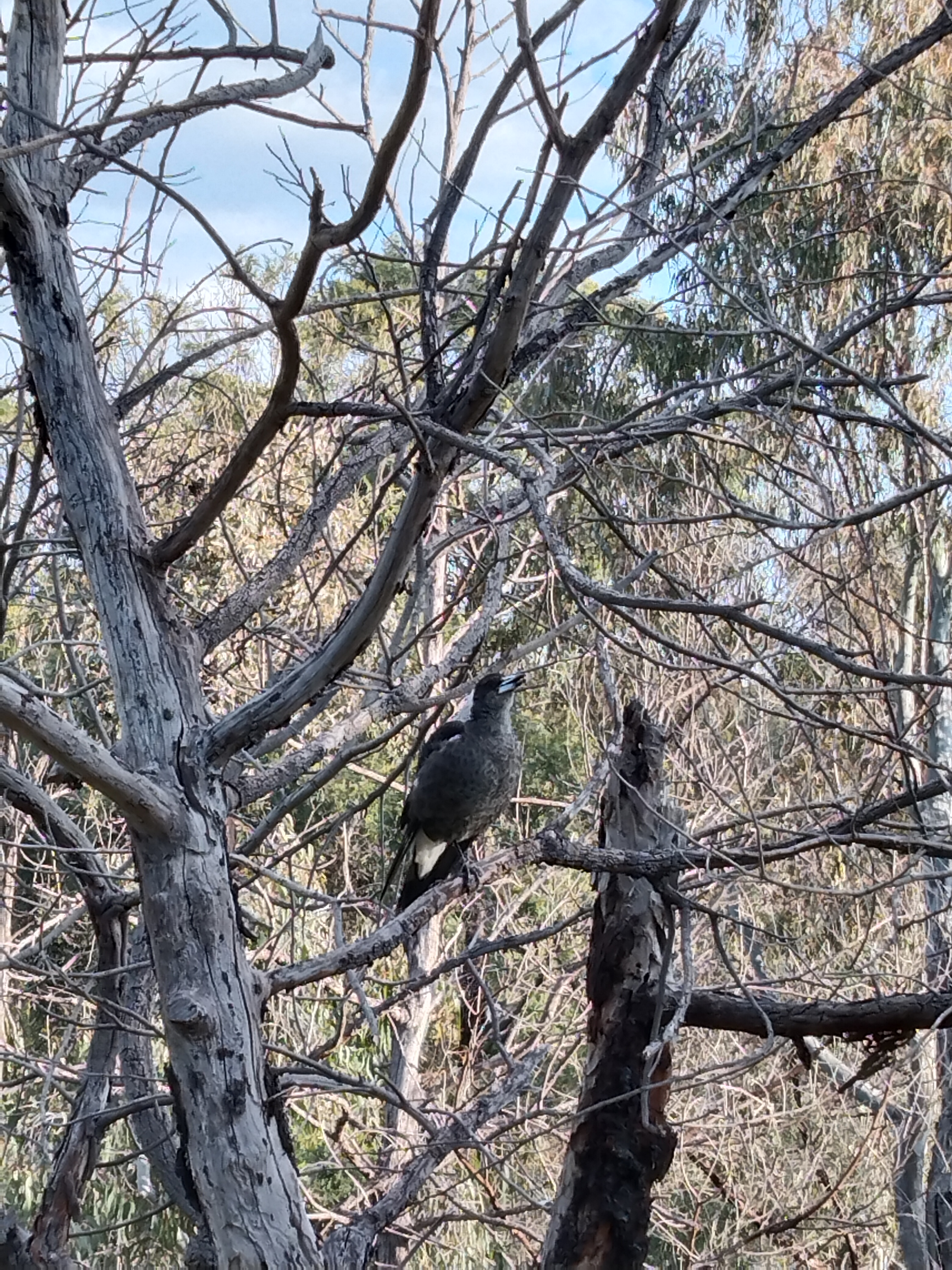
If you’ve never heard it, here’s an adolescent magpie carolling by the creek. It has a few friends in the background.