Miss Caroline Bingley’s unceasing attempts at world domination continue. We can’t stop her. God knows we’ve tried, but she persists, and who are we, mere authors, to stand in her way?
Coming up soon:
Warm Winter Reads, Northcote Library: 16 July
I’m looking forward to giving an author talk as part of the Winter Reads series at Darebin Libraries, on Wednesday 16 July at 6pm. You’ll hear about how and what I write, and especially the influence of Miss Austen and our version of Caroline Bingley. It’s free, but do book here. Fairfield Bookshop will be on hand and I believe there may even be cake! I know it’s hard to leave the house on a Melbourne winter night, but it’ll be worth it.
Virtual JaneCon, online: 19 July
Virtual JaneCon is billed as a “radically inclusive Jane Austen event”, and it’s held online so people can attend anywhere in the world. My co-author Sharmini and I appear with our dear colleague Dr Kylie Mirmohamadi, talking about Miss Bingley and Mary Bennet, two characters Jane Austen doesn’t seem to like much, and all the other sessions look fascinating. It’s over the weekend July 19-20, with video sessions posted on YouTube. You can see all the details here.
Afternoon tea, Antipodes bookshop Sorrento: 30 July
Join me and Sharmini for a special afternoon tea celebration of Miss Austen’s 250th birthday in Sorrento, at the always-stylish Antipodes Bookshop. Murder, mystery, and afternoon tea (there will be no actual murder, you understand, just discussion of imaginary murders). Also bubbles. 2pm on Wednesday 30 July. Bookings essential and details here.
Bendigo Writers Festival, 16-17 August
Always a terrific writers’ festival, with a huge programme and always thoughtful guests. I’m involved in three events this year:
On the Lam 10:15 am, Saturday 16 August. I’m part of a panel with Tara Calaby and Lucy Sussex, chaired by Steph Downes, on spirited women of the past – in fact and fiction.
Carrying On 10:30 am, Sunday 17 August. I look forward to interviewing Melanie Cheng, Kylie Mirmohamadi and Jock Serong on the nature of grief and ghosts, legacies and loss and their beautiful novels.
Edinburgh: Midnight and Blue 11:45 am, Sunday 17 August. I’m interrogating crime writers Fiona Hardy and Jock Serong about Ian Rankin and his take on justice, redemption and the blurred lines between right and wrong in the book, Midnight and Blue.
Talking crime with champion chair Jacqui Horwood and Zane Lovitt, author of The Body Next Door. We’ll be trying to answer the enormous questions, crime fiction: who writes it and why? 11.30am, Sunday 24 August, Hotel Bellinzona, Hepburn Springs. Tickets and details here, and check out the rest of the program because there are some great writers involved (Tony Birch, Nadia Mahjouri, Izzy Roberts-Orr and many more!).
Hope to see you out there!
PS This time two years ago I was walking (well, at this point, plodding along slowly and painfully with boots full of blisters) the length of Hadrian’s Wall, so here’s a gratuitous photo of that most spectacular country, because it never ceases to amaze me. In fact, I’ve written a whole novel set there now (still rewriting).
Things have calmed down a little, as Sharmini and I are in Hobart, working on Miss Bingley’s further adventures. We are grateful to the Salamanca Arts Centre for hosting us in the gorgeous cottage set aside for artist residencies, and we’ve been working hard, and plotting even harder. It’s the perfect place to think Regency, surrounded by Georgian buildings and exploring museum collections of the era. But more of that another time.
It’s not all long days bent over the desk. We’re appearing at Dymock’s Hobart on 11 June at 6pm, to talk about Miss Bingley, crime in the Regency era, and writing historical fiction. It’d be lovely to see some Tasmanian crime and/or historical novel readers there. Details and bookings here.
Then the events in Australia continue with an afternoon tea at Antipodes Books in Sorrento on 30 July. Bookings are essential for this one, and we anticipate delicious morsels! Find out more and book here.
After that, we have writers’ festivals and events lined up – I’ll let you know as they arise, but in the meantime, book ahead for the Historical Novel Society of Australasia’s History Unbound festival in Parramatta in November. Sharmini, Alison Goodman, and I will all be on a panel together, hosted by the magnificent Pamela Hart. Now, THAT’S Regency.
And if you haven’t seen it, here’s the stunning US cover.
When I write something – when I really write it – I inscribe it on my skin. On my self.
I start somewhere – anywhere – I hardly know. Couldn’t tell you. I feel my way in, slowly, as if through a tunnel. No. A cave. A labyrinth of caves. Some brightly lit, others black as winter: more often they are candlelight, welcoming paths, and it takes a while to make out the shape of it, of all of them, and how they fit and turn together.
It’s a feeling as much as a thought process as much as craft. I teach writing but I often can’t explain it, because how can I? I say: Here – take this headlamp and swim through the depths.
That’s partly why I do so much historical research – I bathe in the story, in the people, in the place, in the tiny details and the world-smashing questions.
And everything I write is then part of me. I feel it become part of me, as I fit the words together. I write myself into it and write it out of me and it never leaves, not even years later, when I’ve forgotten character names or plot points (although I’m sure I’ll never forget, I do). The story and the memory of writing of it are in me.
Here’s what’s coming up for the first little while as we take to the high road. Three authors, two books, wonderful booksellers, and plenty of laughs.
Sydney launch, Miss Caroline Bingley, Private Detective, Monday 7 April, 6pm for drinks and nibbles, followed by a conversation with author Pamela Hart – at Better Read than Dead in Newtown
Writers to Watch is an online event for librarians in North America hosted by Library Love Fest but anyone is welcome, featuring new or forthcoming books including Miss B. It’s broadcast live at 7pm ET (8 April in the US) or 9am Melbourne/Sydney time (9 April) and you can RSVP here for Facebook or here for Crowdcast.
Ballarat celebration: Sharmini and I, in conversation, on Thursday 10 April, 6pm, at the Old Colonists’ Club in Lydiard Street, with Collins Booksellers (free, but please book)
Austen Con: April 12, Abbotsford Convent – Alison Goodman and I are on a panel in the morning, and there’s a dramatised reading of a scene from the book, as well as all sorts of Austen-world delights. Sharmini is hosting as always.
Moonee Ponds, in conversation: on April 16, Sharmini and I will be in-store at Collins Booksellers in Puckle Street, having a chat and answering questions from 6pm (free, but do book)
Then we’re all having a little break over Easter to breathe and eat chocolate.
The novel, co-written with Sharmini Kumar, is published by HarperCollins and out now in Australia and New Zealand. It will be in shops in the UK next week (April 6).
We hope you like it.
We’ve got lots of events lined up, and some of them are with our friend and Regency co-conspirator Alison Goodman, whose fabulous new novel, The Ladies Road Guide to Utter Ruin, is also out about now.
It’s an exciting time, but listen up, emerging authors: nobody tells you how nerve-wracking it is to have your book released, so I’m warning you now. And it doesn’t diminish with age or repetition. Well, maybe a little. For your first book, you think your world is about to change, and it kinda does, but then it settles down again. Unless you’re Helen Garner or Sally Rooney.
Anyway, I’m off again, like an old steeplechaser out of the gate, but this time alongside my co-author, Sharmini Kumar, for whom this is a first novel so she gets to have all the thrills, and I get to enjoy it.
I’ll post our upcoming events as I have details, but here are a few:
The Melbourne launch is on 3 April at Readings State Library but it’s well and truly booked out, so you can relax about that.
The night after, we’re on a panel at Sisters in Crime, with the lovely Alison Goodman, whose latest Regency rip-roarer is The Ladies Road Guide to Utter Ruin. 8pm, 4 April, Rising Sun Hotel South Melbourne. Bookings here.
On 7 April, we’re in Sydney for a launch event at Better Read Than Dead in Newtown, in conversation with the darling Pamela Hart. 6.30 pm: details and bookings here.
On 16 April, we’ll be at Collins Booksellers in Moonee Ponds, in conversation about all things Austen and crime. Bookings here.
On 30 April, we’ll be in Geelong for the legendary Books in Bars session at the Waurn Ponds Hotel with Dymocks Geelong. Details and bookings here.
I’ll post more Miss B events here very soon.
In the meantime, I’ve just emerged from running my first writers’ retreat at the gorgeous Continental House in Hepburn Springs. I mean, I go on retreats all the time, as regular readers know, and find them incredibly productive. But this was different – 13 writers and me, lots of teaching and writing and eating excellent food, in a lovely 1920s guesthouse. It was a huge amount of fun (and work, but I don’t mind that), and I look forward to many more. Now I’m planning future retreats and some new courses and masterclasses for after Miss Bingley comes out. Writers, watch this space.
Last week, it was my great honour to launch Marion Taffe’s debut novel, By Her Hand– a historical novel set in Mercia in the early tenth century that I highly recommend.
On 3 May, I’m launching another debut novel by a local author, The Butterfly Women by Madeleine Cleary. It’s set in the heart of Little Lon, and that’s where the event’s being held. Details and bookings here.
No rest for the wicked.
(Which reminds me, I LOVED Wicked. I’d just seen the new Melbourne production, which I think was even better than the first, with two incredible leads, so wasn’t expecting the film version to blow my mind. But it did, or at least it’s really grown on me.)
It’s not long now until Miss Caroline Bingley, Private Detective descends upon an unsuspecting world. I’ll post soon about launches and events in April and May (that’s when the book is out in Australia, New Zealand and the UK, although of course you can pre-order now). US readers will have to wait until July (sorry!).
In the meantime, we’ve received some lovely praise for the book. Here’s a sample:
‘Loved this adventure in Austen’s world, with Caroline Bingley taking centre stage and proving what we knew all along; that there was much more to her character than met the eye! Wonderful scene setting and addictively pacey, this book will delight Jane Austen and Agatha Christie fans alike. Queen of the one-line put-downs, Miss Bingley makes the most brilliant sleuth – proving that detective work is right up there with watercolours and dancing as the height of ladylike accomplishments!’ – Fliss Chester, author of the Cressida Fawcett Mysteries
‘Utterly delightful! Miss Caroline Bingley is revealed as a perfectly imperfect heroine in this charming Austen-inspired escapade. Beyond its entertaining surface and mannered Regency dialogue also lies a shrewd critique of British imperial rule and a resounding message of female empowerment. As Miss Bingley would say, no hand wringing allowed!’ – Kyra Geddes, author of The Story Thief
‘I can only assume that Jane Austen would be delighted to read of Miss Bingley’s exploits. An elegant and utterly accomplished mystery’ – Sulari Gentill, bestselling author of The Woman in the Library and The Mystery Writer
Thanks to the many authors who’ve supported Sharmini and me in the lead-up to launch with blurbs, encouragement and hugs.
People – especially emerging writers – often ask me what happens when you publish a book? How long does it take? Can you say you don’t want to change anything? Do you get any input on how it looks? Don’t you resent being edited? (Short answer: no, I love it.)
First, you write your book. I know that sounds silly, but plenty of aspiring writers worry way too much about getting published before they’ve actually finished the thing. I get that. It’s scary and also exhilarating to think you might one day publish a book, but you won’t publish anything at all if you don’t write it first, and make it as good as it can be.
Second, you pitch your book. That’s a whole topic of its own so I won’t bang on about it, and anyway I leave that to the experts nowadays – my fabulous agents at Jacinta Di Mase. They know what they’re doing, and they do all the hard work.
Then, once you have secured a publishing contract, your publisher’s processes kick in.
Editing rounds
So, you get early feedback on the manuscript from the publisher. These might be queries about plot points that miss the mark somehow, or about character development or voice: the big questions that an expert eye picks up, from someone who really cares about the book. Your publisher also knows what else they’ve got coming out (maybe similar titles, or in the same genre), in general what other houses have out, what the market’s doing, and what readers expect.
You have a think about any issues they’ve raised, respond accordingly with any amendments, and submit your final manuscript. Your book is given a slot in the publishing timeline which gives everyone enough time to work on it, but also aligns it with overall strategy (eg, not clashing with another similar title, lining it up for Mother’s Day or Christmas sales, hitting shops at the right time for its anticipated readers). At this point, your agent or publisher will start pitching it elsewhere – for translation rights, or adaptation.
Then there’s a structural edit. This may be done by an in-house editor or outsourced – either way, it will be done by someone who knows their stuff. They focus on big structural issues like character and plot, and their fresh eyes can pick up continuity errors or variations in voice, for example. They might recommend structure or plot changes, or point out the need for more clarity. Often they ask questions rather than edit – they leave the resolution up to the author. I’ve never had a serious argument about anything significant with an editor or publisher, and find that questions are usually insightful and all about making the book better.
Ideally this feedback also includes any outstanding issues from the publisher. In the case of Miss Bingley, our publisher, HarperCollins, brought together any feedback from all three publishers who are releasing the book (Australia/NZ, UK and US), plus the editor’s notes. And as the book is co-written with Sharmini Kumar, the two of us had to go away and figure out what we thought about anything significant, and we both went over the manuscript again to make any changes.
By this time, generally, you’re pretty sick of reading your novel, but again, you read through it all, correct any errors and give thanks they were discovered early on (!), and again amend the manuscript to make sure it works for you and the publisher.
But there’s no rest for the wicked, since after that comes the copy edit. Again, this is done by a professional editor, in-house or outsourced, who goes over the manuscript word by word, line by line, noting any errors (simple things like missing words or typos) and making suggestions about anything they find – might be word choice, sentence structure, the rhythm of a scene, overall pacing, dialogue, plot – anything. And when it’s historical fiction, they also ask questions like, “are you sure that type of hat was worn that year?”, to send you scurrying for your research notes (they are usually right to ask). And again you go through it, word by word, line by line, accepting their suggested changes, coming up with your own solutions, or flagging things for further discussion.
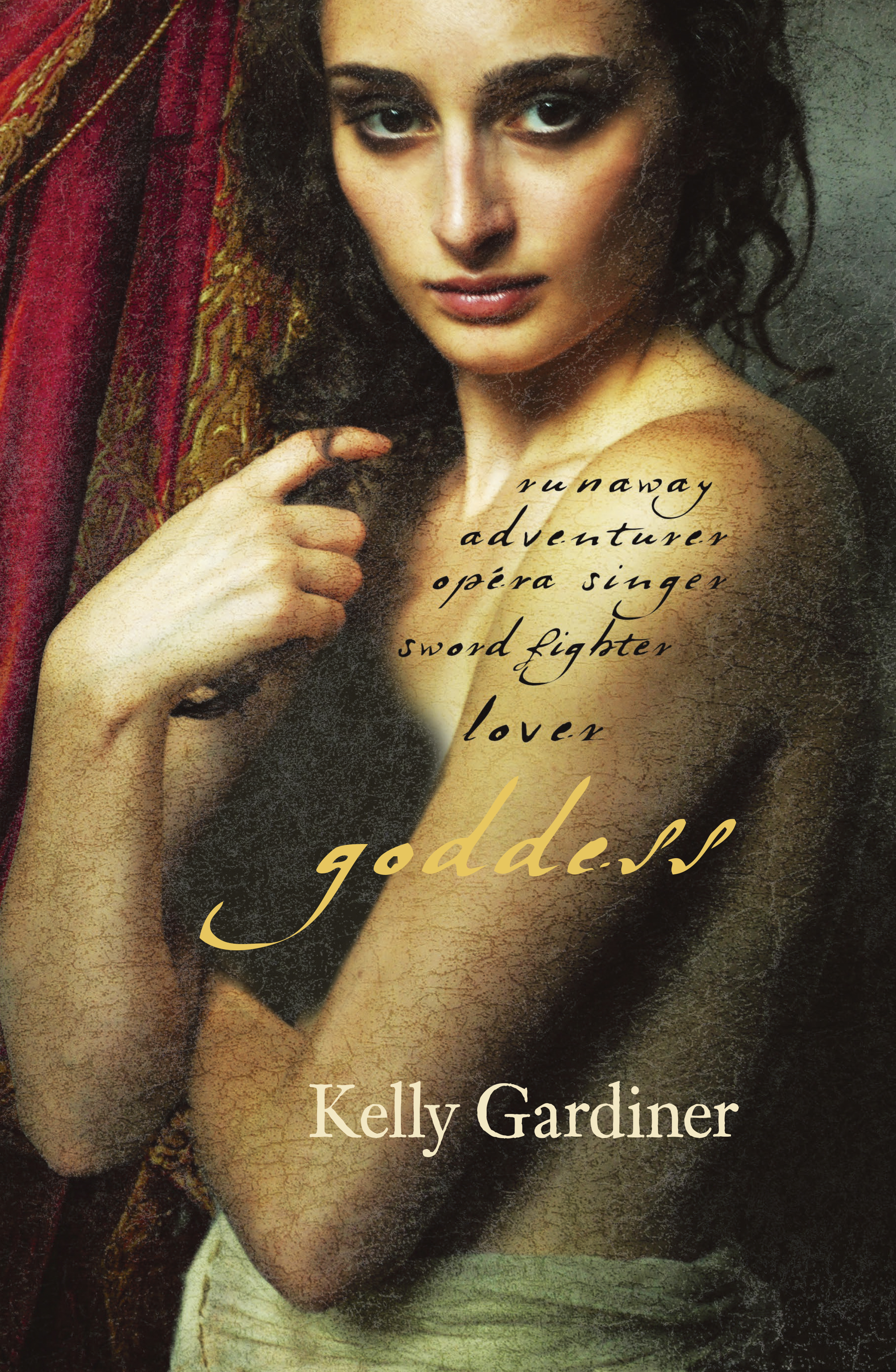
By now you probably have some cover concepts presented to you. It happens sometimes that authors hate their book covers, but I think it’s pretty rare, since publishers want you to love it. After all, you have to sell it too. Sometimes you get a few options to choose from, and sometimes they design different covers for different publishing territories. Whatever happens, I always go into the process knowing (from years working with designers in print media) that it’s someone else’s creative process, and I respect that. By the time it gets to you, a lot of people have worked on it, and they know what they’re doing, but you usually get a chance to make suggestions as well. (A confession: I asked for more arm muscles on the Julie figure on Goddess! Got knocked back on that. But that was such a gobsmackingly gorgeous image, and cover, I was very happy. And anyway, it wasn’t her sword arm.)
After the copy edit, your changes are incorporated, there may be a bit of back and forth about little things, and then the book is typeset. Yes, we still call it that. Every book has an internal design, even if you don’t really notice it, with creative decisions on typeface, chapter headings, drop caps, etc. This is the critical stage, because after this, it’s hard to change anything major.
Once it’s typeset, everyone proofreads it, over and over, even though by now you never want to see the bloody thing again. For some books, there’ll be a slightly different edition for different territories – the main issue is US spelling for that edition.
For each of these stages, you’re on a deadline and so are all the people behind the scenes at the publishing house. So be kind to anybody who says they’re proofreading or working through copy edits. They may have letters dancing before their weary eyes.
While this is happening, advance reading copies (called ARCs – without your final corrections) go out to booksellers, reviewers and journalists. So this is the first time your book is out in the world, even though it’s semi-secret and may contain errors. These early copies are for people who need to know in advance what the story is, who it’s for, and what they can do with it – order a million copies, set up interviews, book you for festivals, or get ready to review when it hits the shops.
And from then on, it’s in the hands of the publisher’s sales, marketing and publicity teams for pre-order, then promotions and sales to booksellers. And eventually in the loving hands of your readers.
All of that, in the case of Miss Caroline Bingley, Private Detective, will have taken about a year and a half, from contract to publication in April 2025.
Haven’t posted for ages, sorry. I think the pandemic ate my brain.
Don’t know about you, but all through our many lockdowns I found it hard to read, hard to write, and hard to focus. My teaching work has been demanding, with the sudden shift to online and everything else going on (remind me not to volunteer to write any more academic articles this year!).
But I have been chipping away at a few writing projects and right now I’m on my Creative Fellowship at Varuna, the national writer’s house, so I’m ploughing through stuff.
Gorgeous, wintry Varuna
Here’s what I’ve been working on lately:
Fine Eyes: Miss Caroline Bingley, Private Investigator
I’ve told you this before, but I’ve been collaborating (for the first time) on an Austen-inspired crime novel, with playwright and Austen expert Sharmini Kumar. We’ve had great fun testing out our Regency research and plotting mysteries, and we’re nearly done. I know a few people who write collaboratively, and it’s been such an interesting way to work – especially during lockdown.
Wildfall
Wildfall is a YA historical fantasy novel – I mean, it’s fantasy, set in an imagined world, but influenced by the history of eighteenth century Europe. Sort of. Except with giant eagles. I’m in the late stages of drafting.
Roar
What I’m working on here at Varuna is Roar, a YA novel set in the 1980s in London and then in Africa, and especially Apartheid-era South Africa. I wrote a solid draft a while ago, on a May Gibbs Trust Fellowship in Canberra, and then undertook another round of research in South Africa, but then had to put it aside when the pandemic struck – like just about everything else. But I’m enjoying revisiting it now, and hope to have a final draft by the end of my time here.
Lion – Pilanesberg National Park, 2019
They’ll be a while yet, but I can’t wait to share these novels with you.
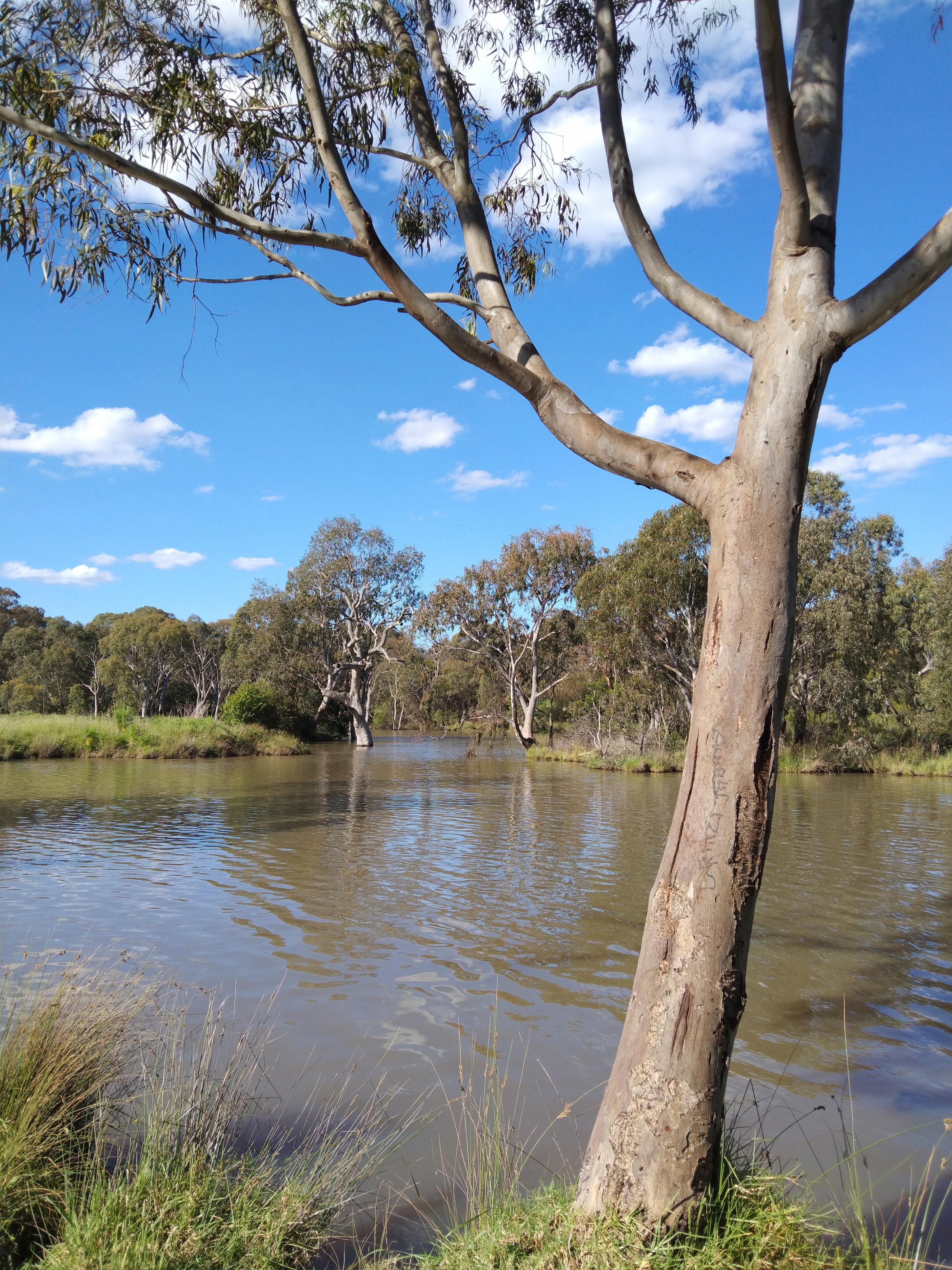
Back at the edge of the Sports Field Lake. I’ve been coming here to Nangak Tamboree to write now for an entire month. I didn’t know, at the start, how or even if it would work out. By about day three I decided I’d made a terrible mistake. But then I settled into a rhythm.
It hasn’t always been easy. This month of writing coincided with an extremely stressful and far too busy time, so some days I’ve resented having to come here and other days my visits have been far too brief. Some days I’d think in advance about where to go (like walking the moat or visiting the Wildlife Sanctuary) and even a topic to think about (like the sculptures), but most of the time I simply wander off and see what happens.
I’ve seen and spoken to people working hard and thinking deeply about this place and how to work with it to make it more open for more people, and safer and healthier for more creatures and more local plantlife. I’ve watched the many ways people and wildlife use it already.
In this month, the acacia and melaleuca bloomed and faded, tadpoles hatched, nests are full of fledglings, and the wallaby grass is throwing up seed heads. Of course, the weeds and introduced grasses are shooting up everywhere too. It’s going to take years to manage this area of Nangak Tamboree into a revegetated, welcoming space. If the work already done around the Gresswell Ponds, Fozzie’s Waterhole, and along the moat is any indication, it’s in good horticultural hands, along with the wisdom and energy of the Narrap Rangers. Other parts of the Nangak Tamboree project may not seem quite so glamorous, like digging holes in the car parks to install reed beds for storm water drainage, but it’s specialist work, and all for the greater good. Cleaner waterways make for happier turtles.
I’ve learned a great deal in this last month: how to identify different ducks (although I still can’t tell one pigeon from another); about flax lilies and fairy wrens and darters; about storm water courses and aquatic plants; and about walking and stillness. I can tell wallaby and kangaroo grass apart (I think), and all this bird-spotting has rekindled a childhood love. My camera failed early on so I’ve had to use my phone, and its inadequacy in the zoom department has spurred me on to think about the kinds of photos I want to take when we’re back out in the world (and order a new camera).
I’ve learned a little about the recent history of the area, which I’ll continue to research. I’ve learned that I have too many projects at once and need to calm the fuck down, which will come as no surprise to anyone who knows me – several of whom have been telling me that for years. On the other hand, if you teach at a university, you are meant to have a lot on. And on yet another hand, which is exactly what I need, everything is so fascinating and I have ideas bouncing around in my head all the time.
But I hope I don’t lose the slowness of walking and writing practice. And slow reading, for that matter. This month I’ve also been slowly rereading War and Peace, my favourite book, as part of #TolstoyTogether, a global shared lockdown reading project. I tried it last year and then got so carried away with the story I raced ahead. Typical. This year I am trying very hard to only read the day’s allotted chapters. (We’re up to 1812, and the war is heading towards Bald Hills – this is the real test of my commitment.)
So here we are at the end of the month and the end of lockdown. I can walk here today without a mask. Everyone says we’ll soon be back to normal. (By that, I don’t even mean the idea of ‘COVID-normal’ embraced by politicians.) But we won’t or at least we shouldn’t. Because we know and see the world differently now. Instead of getting back to normal, let’s remember the small pleasures and daily lessons of hyperlocal living.
Today, a cormorant drying its wings on one log, a darter on another. Little lorikeets hopping along a branch. The drum band at their rehearsal in the bush. An ant crawling across the page of my notebook. The water glittering in the setting sun. The breeze rippling the lake. Corella cries. Spring warmth.









 Kelly Gardiner