History and fiction

Here’s the text of a speech I gave at a History Council of Victoria seminar on History and Fiction, 28 August 2018.

Other speakers were Linda Weste and Ali Alizadeh, and the panel was chaired by Kathleen Neal.

Here’s (roughly) what I said.

What is historical fiction? You may have an idea in your head – a shelf of maritime novels by Patrick O’Brien, or blockbusters glimpsed in airport bookshops – all armour and abs and authors names in gold lettering. In truth, it’s a broad church. The definition of the Historical Novel Society is simply that it is fiction set more than 50 years ago, or beyond the personal experience of the author. It includes incredibly popular genres such as historical crime and romance, sub-genres such as military or adventure tales, cosy mysteries and thrillers, literary or experimental fiction set in the past, entire industries of Regency and Tudor novels, or biographical novels, especially about neglected figures. It includes War and Peace and Wolf Hall and The Book Thief. And as you see this evening, we three alone span thousands of years in terms of era and setting.

We can make a few generalisations across genres and forms, across diverse readerships, and across international boundaries. Every novelist I know is obsessed with research and takes the accuracy of historical detail extremely seriously, just as every historian I know sees their writing as a creative process, and takes the task of story-telling extremely seriously. We have much to learn from each other, and much in common – more than you might think, given some of the fraught debates of the past.

How do we balance documented historical data with informed speculation? And how do we understand and convey the world view of people from the past?

These questions become even more critical when writing about people who really lived, as they do for a historian writing a biography of an individual.

Here are a few questions and approaches involved in two of my projects based on the lives of real historical figures but imagined in fiction. The first, Goddess, published a few years ago now, was an interpretation of the life of Julie d’Aubigny, or Mademoiselle de Maupin, a seventeenth-century French swordswoman and opera singer.

Her story has been told before, on the page and on screen, usually as a series of extraordinary events. But her life is largely undocumented. I undertook years of original research into her life and career, for example, compiling the first comprehensive list of her opera performances, as any biographer would do. I wanted to create a credible narrative of her life, but I also had to decide how to treat those incredible episodes for which she is most famous. My decision as a novelist, which is probably not a decision a historian could make, was to include the wild stories if they served the narrative, unless I could prove them demonstrably wrong. I also knew that leaving them out would’ve meant the novel would disappoint many people.

Because famous or infamous people already loom larger than life in the mind of the reader. One of the most dramatic episodes in La Maupin’s early life was when she fell in love with another young woman whose family then threw her into a convent to get her away from Julie’s influence. Julie followed, and together they burned down the convent and eloped. It’s this kind of adventure that has seen her dubbed bad ass of the month online and made her into a Thelma and Louise-style feminist icon.

But I wanted to dig into that.

I crawled through the early accounts, trying to pin down details and find proof of the whole affair. But it’s the sort of thing that no convent is going to crow about, and the early biographers are coy. I found the most likely candidate for the convent in Avignon, but its current owner has no record of the incident.

Perhaps it was another convent, in another town.
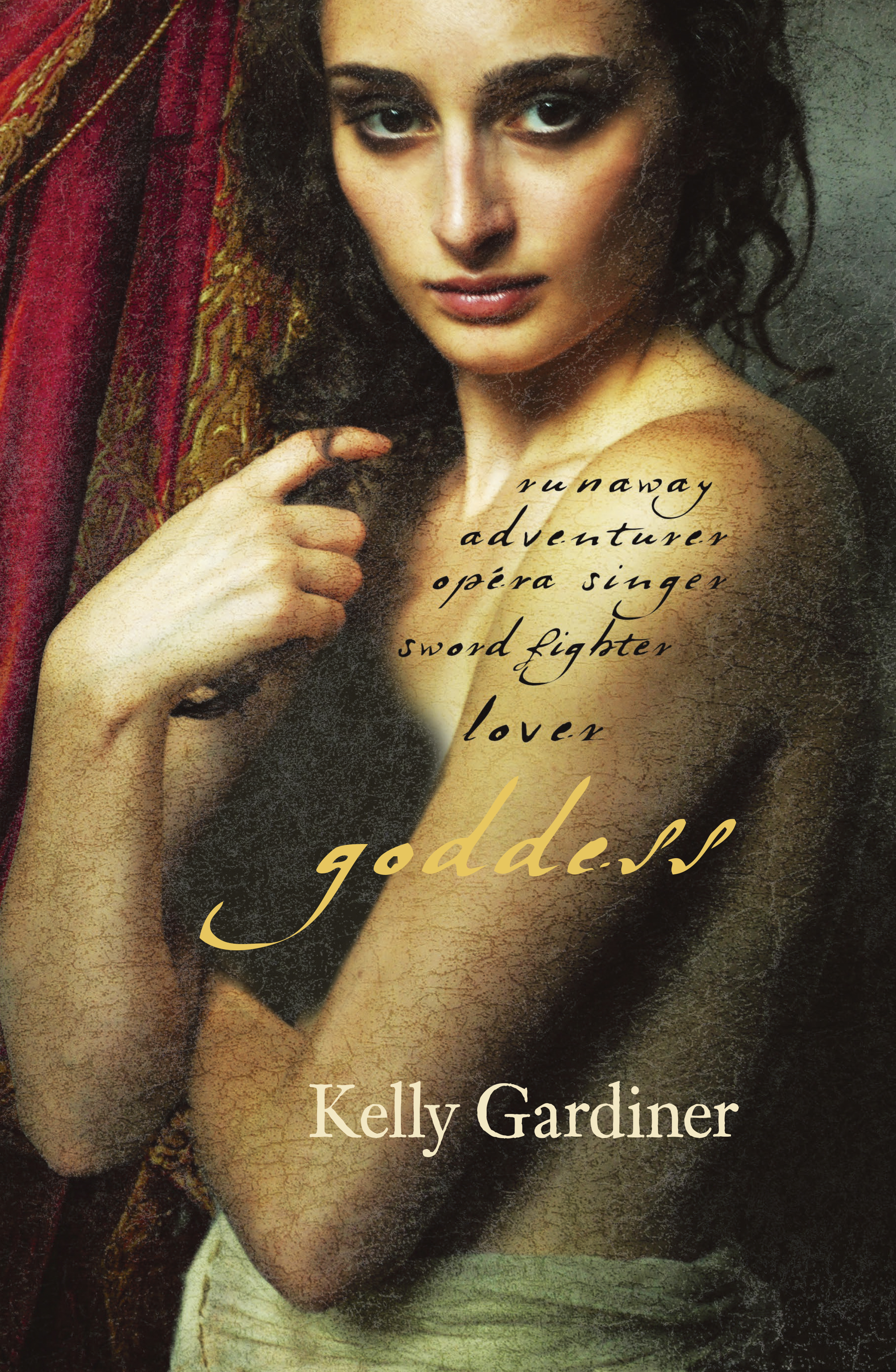
Image of front cover of GoddessPerhaps it never happened. But it’s not worth writing the story of the legend of La Maupin without that episode. She was fifteen and on the run, having committed what even she would have acknowledged as a sin, sentenced to burn at the stake. The two girls had no money, no friends, nowhere to go. The girl was found and sent to another convent, where she died. Julie became a star. Imagine how that was for her.

It must surely, if true, have made her into the adult woman she became, strutting through Paris in men’s clothes, fighting three duels on one night, at once brave enough to be openly bisexual and challenge noblemen to duels, and fragile enough to attempt suicide. So in my imagined life of La Maupin, it became one of the emotional events that defined her as a character.

A novelist looks for the stories that help explain the people, and keep the plot humming along, but has to decide whether the action is likely – truth may be stranger than fiction, but is it credible?

More recently, writing Grace, a novel about the lives of Queen Elizabeth I and the Irish pirate Grace O’Malley, I’ve faced similar questions, but from different angles. Again, two enigmatic people – why do I do it to myself? And although their stories are better documented, their inner lives remain elusive.

The tale I’m telling – and I’ve just finished redrafting it – is of the meeting of Grace and Elizabeth at Greenwich Palace in 1593. They were older when they met, both shrewd politicians and warriors in different ways. They were, in theory, lifelong enemies. Grace had led the rebellion against Elizabeth’s troops in the west of Ireland, for decades.

They were also, possibly, more alike than anyone either of them had ever met. They surely both experienced the shock of meeting a woman as assured, as cunning, as dangerous, as themselves.

Nobody knows what they said to each other. And in that absence, lies my fiction.

The Irish writer Emma Donoghue has said that ‘stories are a different kind of true.’[i] So how do we get to some truth of these two women’s stories? Can we? Whose truth is it? Theirs? Mine? Yours? The many historians who’ve written their own versions?

For me, and my readers, fiction has to be as historically accurate as possible. I’m not one of those authors who easily shifts the past around to make it fit the story I want to tell.

That means I try to get everything right – all the biographical and historical data – as well as all those moments that I can and must imagine.

I have the liberty to ask: how might Grace have felt, out on the open sea, or in a prison cell facing execution, or going to the palace to meet her enemy? There’s nothing in the archives to tell me that.

In many ways, Elizabeth is just as difficult to capture on the page. Her life was more regimented and more documented, and as she once said, ‘A thousand eyes see all I do.’ [ii]

But Elizabeth is just a little too iconic.
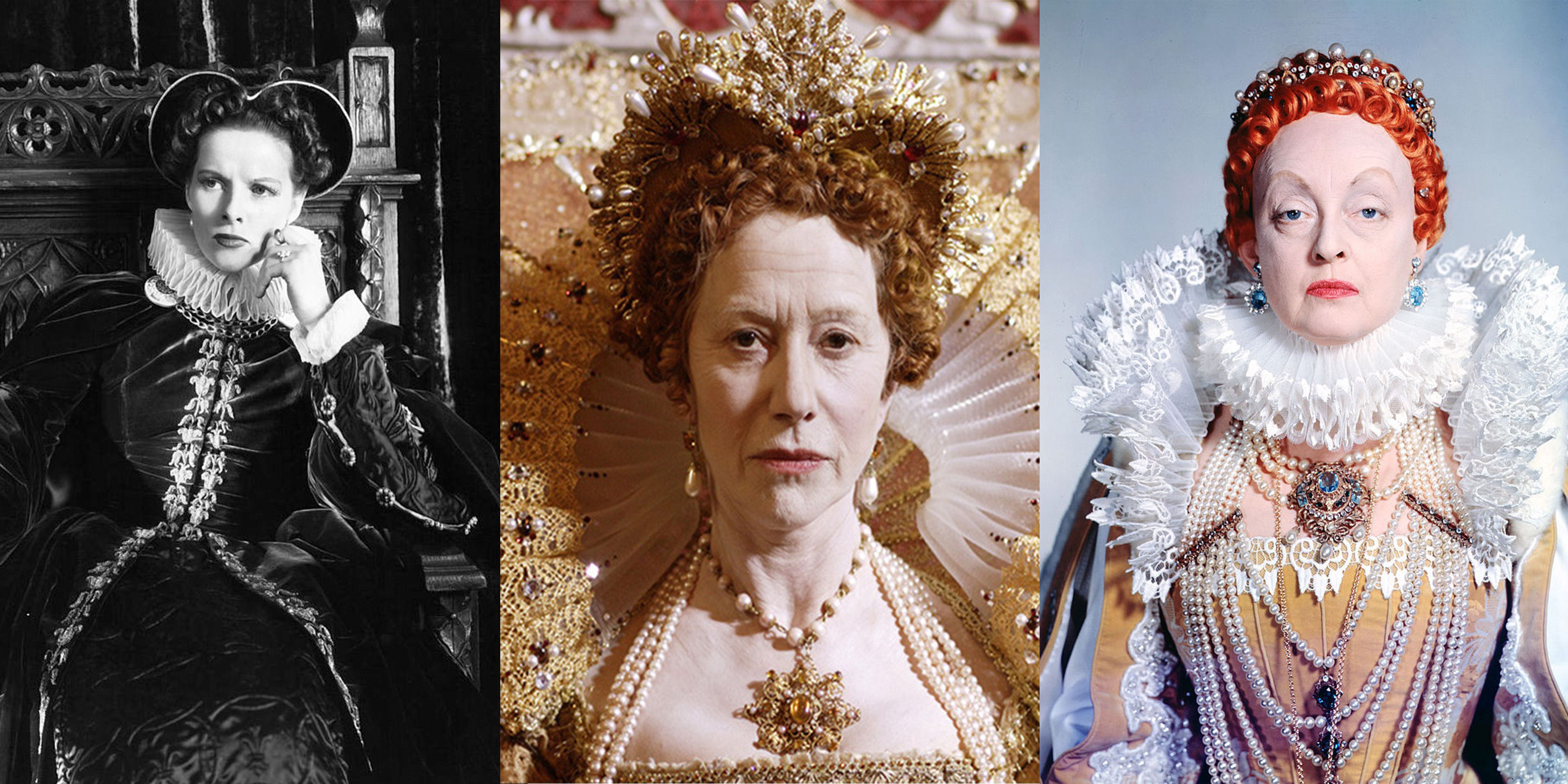
actresses as Elizabeth


We think we know her, but we don’t. I chose to focus on aspects of Elizabeth perhaps not as well known to readers of fiction. She was, for example, one of the foremost translators of her time, and was a prolific poet, writing every day. She often wrote hymns or sermons and then ordered that they be printed and distributed to every church in the kingdom. As you do.

So I started thinking about all the things these women had in common. In both their lives, and often around the same age, there were parallel stories to tell, and as they grew older those stories tangled together.

After years of war between them, somehow they reached agreement, perhaps even a degree of mutual respect. How? That’s the question the novel, Grace, explores. It is told in two voices, alternating between the points of view of these two remarkable leaders.

Which brings me to the critical creative decision novelists make – voice. How do we render characters’ speech, point of view, and narrative voice? And in this, lies one of the central questions about the nature of historical fiction.

You’ll often hear readers and writers talking about whether or not historical fiction, and the voices that convey it, are authentic. As if ‘authenticity’ is the holy grail of historical fiction, and distinguishes it from other forms of fiction and from nonfiction history writing. As if ‘authenticity’ can be used interchangeably with ‘accuracy’. As if authenticity is required to somehow compensate for the fact that what we’re reading is fiction, not history, or even that it offers a more truthful truth.

Sorry. There is no such thing as authenticity in historical fiction. There is historical accuracy, or not. But particularly when it comes to voice, the very idea is, as Henry James put it, ‘humbug.’[iii]

Authenticity, by definition, can’t be created.

‘Authenticity’ of voice, in particular, simply doesn’t and cannot exist in fiction set in the distant past. If I really wrote Grace O’Malley’s words as she’d have spoken them, you’d never understand it. What we aim for is something different altogether.

In 1820, introducing Ivanhoe, Walter Scott wrote: ‘It is necessary, for exciting interest of any kind, that the subject should be, … translated into the manners as well as the language of the age we live in.’

I suggest that what some writers now mean by authenticity, and what readers have been led to expect, is exactly what Scott outlined nearly two hundred years ago. It is not authenticity, but an accepted form of the historical novel. This is where history and fiction truly diverge.

The expectation of historical fiction is not really that it will be authentic, but instead that it will feel familiar to us from our reading of the genre – and often that familiarity actually comes from reading Scott or Robert Louis Stevenson and their descendants.

How many readers (or movie-goers) now believe that an ‘authentic’ Caribbean pirate voice is the one dreamed up centuries later and half a world away by the young Scotsman who wrote Treasure Island?

Image result for treasure island book cover

Authenticity in historical fiction is, in itself, a fiction, and at worst its own dialect set in the aspic jelly of the nineteenth century.

In the twentieth century Georgette Heyer redefined the Regency, while Rosemary Sutcliff created speech patterns that appeared to suit early Britons but were essentially modern, and Geoffrey Trease refined the model of a voice almost invisible to young readers like me, but with no glaring anachronisms. You will not hear any of his medieval knights say, ‘OK.’

Trease warned against the ‘costume novel’, in which all the tiny details of food, footwear and forsoothery are right but the psychology and vocabulary are all wrong. It’s the world view that matters, not ye olde worlde language – and here is one of our great challenges: creating characters whose emotional and intellectual frameworks seem to come from the past as a ‘foreign country’, but which at the same time can be understood by a modern reader – for example, in characters’ attitudes to religion or colonialism.

Historical fiction that is unaware of this process runs the risk of being mistaken about both past and present, and so less valuable as both history and fiction – perhaps even dangerous.

So – how do we work with that knowledge? What I did in Goddess was to knowingly perform a version of La Maupin, on the page, in a constructed voice that is overtly modern and consciously anti-authentic – while at the same time avoiding anachronism in the worldview, recognising that a seventeenth century woman could have no sense of what we might now call identity.

Or we can attempt the ventriloquism of A S Byatt in Possession (1990), Sarah Waters in The Night Watch (2006), or Peter Carey’s True History of the Kelly Gang (2000). Umberto Eco in The Name of the Rose (1983), references ancient and medieval texts and philosophies related by transparently modern voices – all in the guise of a crime thriller.

These authors’ metafictional approaches rest on a formidable body of historical research and technical story-telling ability.

They play with the irony that underpins historical fiction: that writers try to construct a world that will be accepted as ‘real’ by the reader, even if they know better than anyone else that it can’t possibly be so.

We know we’re reading, and we bring to that experience everything we’ve read before – but then we forget we’re reading. We know we’re reading about an imagined past, and we hold that in our minds at the same time as an awareness of our own modernity.

‘The paradox at the heart of fiction, the engine that drives it,’ writes Richard Lea, ‘is the tension between the knowledge that what you’re reading is all made up and the overwhelming feeling that it’s all true.’ [iv]

We acknowledge that historical fiction also has a role in telling history; as one of the ways in which people experience and understand history, and we often say that we write about the past to understand both past and present.

But perhaps what we really do when we write historical fiction is to imagine the past in the context of the present, and the voices with which we speak are our own.


[i] Donoghue, Emma, 2010, Room, HarperCollins, Toronto.

[ii] Borman, Tracey,  2017, The Private Lives of the Tudors: Uncovering the Secrets of Britain’s Greatest Dynasty, Hodder Staughton, London.

[iii] In 1901, James wrote: ‘You may multiply the little facts that can be got from pictures & documents, relics & prints, as much as you like ― the real thing is almost impossible to do, & in its essence the whole effect is as nought […] You have to think with your modern apparatus a man, a woman, ― or rather fifty ― whose own thinking was intensely-otherwise conditioned, you have to simplify back by an amazing tour de force ― & even then it’s all humbug.’ James, Henry 1974, Henry James: Letters vol. 4, Harvard University Press, Cambridge.

[iv] Lea, Richard, 2012, ‘The truth about memory and the novel’, Guardian book blog, 14 June 2012.

Coming up

Not long until Brimstone, the first book in my new Firewatcher Chronicles series, is in the bookshops.

1 September 2018, to be precise.

So you can get your hands on it soon.

In the meantime, here are a few events I have on my dance card.

Book cover And ThenThe new And Then… adventure story anthologies will be launched (there are two hugevolumes) on 5 August at the Rising Sun Hotel in South Melbourne. A whole lot of the authors will be there, including Kerry Greenwood, Sulari Gentill, Alison Goodman and me.

(This is the anthology – Volume 2 – which includes my first ever ‘Boots and the Bushranger’ story).


Also in August is Bendigo Writers Festival, a terrific festival – always a great line-up, thoughtful programming, and a wonderful host city.  It’s schools program, Text Marks the Spot, is equally fab. I’ll be there (10-12 August), talking about podcasting, interviewing some lovely authors, and launching Rachel Nightingale’s new novel, Columbine’s Tale.

On 28 August, I’ll be speaking alongside Linda Weste and Ali Alizadeh on History and Fiction, as part of the History Council of Victoria’s ‘Making Public Histories’ seminar series.

Phew. That’ll keep me out of mischief for a couple of weeks, anyway.

I’ll update you soon on events to celebrate the release of Brimstone.

Ciao.

PS Did I mention I’ve just been on holiday in Berlin and Prague? Oh my. So many story ideas. So much fascinating history.

Lately I’ve been…

A bit frantic.

Remind me to never again move house on book deadline and just before teaching starts.

But that’s over now. I have settled into a new home, where I’ve made the strategic decision to place my desk under a window in the living room, instead of tucked away in a tiny room at the back of the house. After all, I spend more time at the desk than many other places, so I may as well be  right here, looking out on the garden.

Also, it’s close to the kitchen. (Though that may not be a good thing. Snacking control is not a strength.)

In the meantime, I’ve been:

Writing 

I’ve drafted (very roughly) Phoenix, the second book in the Firewatcher Chronicles. It needs lots more redrafting over the next couple of months, but it’s such fun. There are Vikings and Saxons and London Blitz bombs and archaeologists and all sorts of drama.

I’ve also been writing a number of book chapters and conference papers and essays, mostly for academic conferences and publishers. I’ll let you know when they come out.

Editing

Brimstone, book one of the Firewatcher Chronicles, is at the printers! It comes out on 1 September. And for mysterious production reasons, it was all go for a while there. I got notes back from the editor, found a few errors myself, sent it all back, and then the next week, miraculously, typeset pages appeared for a last proof-read. They don’t muck about, those fine folk at Scholastic.

And just look at the beautiful cover for it.

Brimstone front cover

I’m thrilled with the artwork by Sebastian Ciaffaglione, and the series logo by Chad Mitchell.  Can’t wait for you to get your hands on this book.

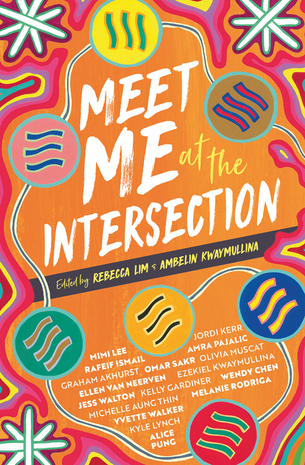
Also due out the very same day is a new YA anthology, Meet Me at the Intersection, edited by Rebecca Lim and Ambelin Kwaymullina. It’s published by Fremantle Press – my story is called ‘Trouble’, and it’s set in Melbourne in the 1950s. I’m honoured to be part of this collection of #ownvoices stories and believe it will be a very important moment in young adult fiction in this country.

Book cover: Meet me at the Intersection

So that’s been in editing and proofreading mode too, over the last few weeks.

Next up, I’m redrafting Grace and my goldrush bushranger stories. I look forward to being in their company again.

I’ve booked myself a stint at Varuna, the Writers’ House, in June, to lock myself away and redraft as much as I can get through.

Podcasting

Over on my podcast, Unladylike, Adele and I were delighted to interview three crime queens, and to release my discussion on academic writing recorded last year in Denmark. New episodes are on the way in the next week or so.

Reading

I admit, my reading has been minimal over this busy time, but I’ve read and loved, among other things:

  • The Endsister by Penni Russon
  • White Night by Ellie Marney
  • The Unexpected Education of Emily Dean by Mira Robertson
  • On Coming Home by Paula Morris
  • Manda Scott’s Boudica series
  • Nnedi Okorafor’s Binti series
  • And Amie Kaufman and Jay Kristoff’s grand finale to the Illuminae series, Obsidio.

Right now I’m reading Karen Joy Fowler’s Sister Noon and Growing Up Aboriginal in Australia, edited by Dr Anita Heiss.

Research

Research for the Firewatcher Chronicles continues – Romans, Celts, Vikings, Saxons, Second World War – there are just so many areas to cover, and it’s all a little bit too fascinating.

I’m also deep into my Creative Fellowship at the State Library of Victoria,  researching my great-grandmother and key figures in the Australian suffrage and peace movements of the early twentieth century.

I’ve realised that project, Sisterhood, is bigger and more complex than I imagined, so I expect to spend a lot more of my life on it in years to come. It will eventually be a kind of group memoir of an extraordinary generation of early feminists and pacifists, along with a memoir of my life in student and feminist politics in the 1980s. So it’s big and complicated and hard and all so interesting. To me, anyway.

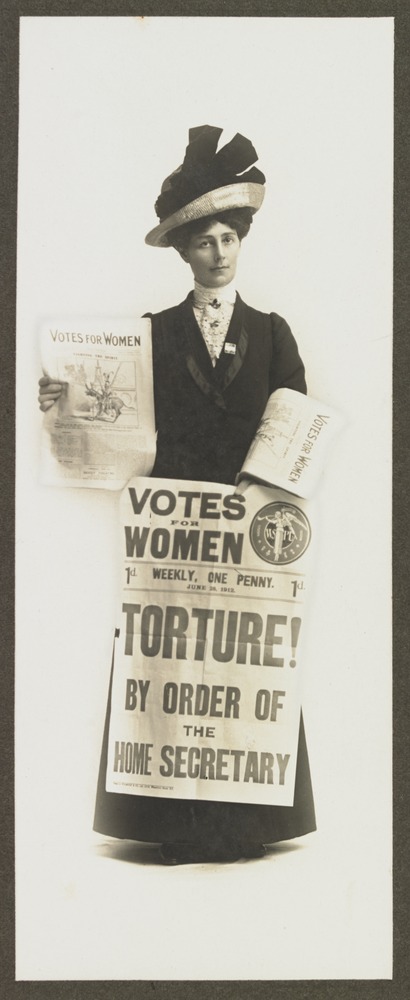
Suffragette and anti-conscription campaigner Vida Goldstein (Photo: State Library of Victoria)

So you see, I have had one or two things on the go.

And one day soon, you’ll be able to read them. Funny, isn’t it? We lock ourselves away for months or years to write these things, and then burst out of solitude, blinking against the light, to release them into the world.

And then we vanish again.

Writers, huh?


Lately I’ve been …

Researching

Things are getting serious. After years of researching the Blitz and the Great Fire of London, I have deadlines now for the three volumes of The Firewatcher Chronicles.

I was in Denmark and London over the last couple of weeks (initially for a conference), happily researching Vikings  and Anglo-Saxons (Book 2 in the trilogy) and then more Great Fire (Book 1) and Romans and Iceni (Book 3).

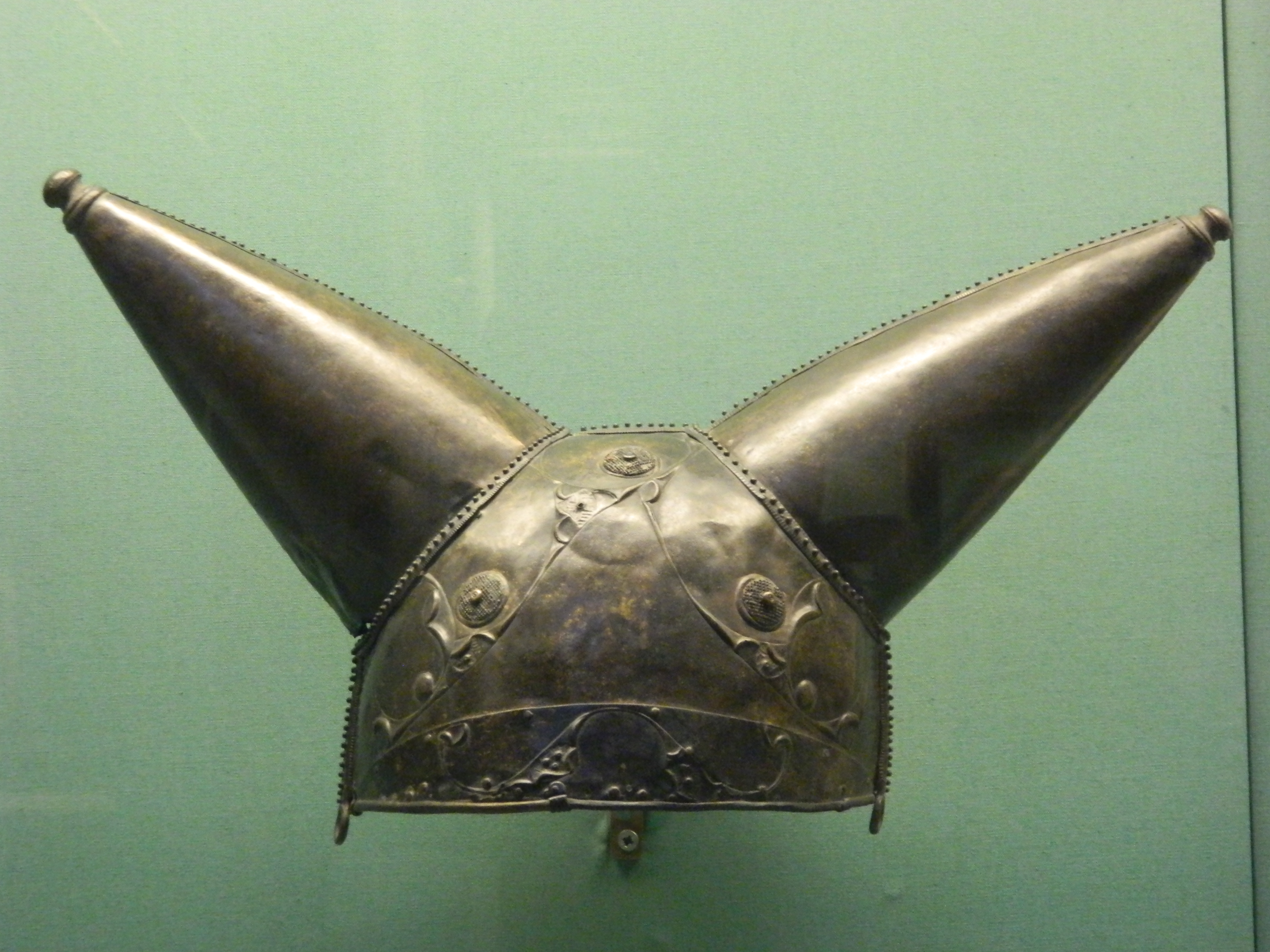
Anglo-Saxon helmet, Museum of London

After two weeks of sore feet, aching legs, bursting brain and wide eyes, I hope I now have filled enough knowledge gaps to keep the writing going.

But, as you know, I enjoy the research and it keeps my mind firing and filled with new ideas, as well as those telling details that we need to make the fiction come alive.

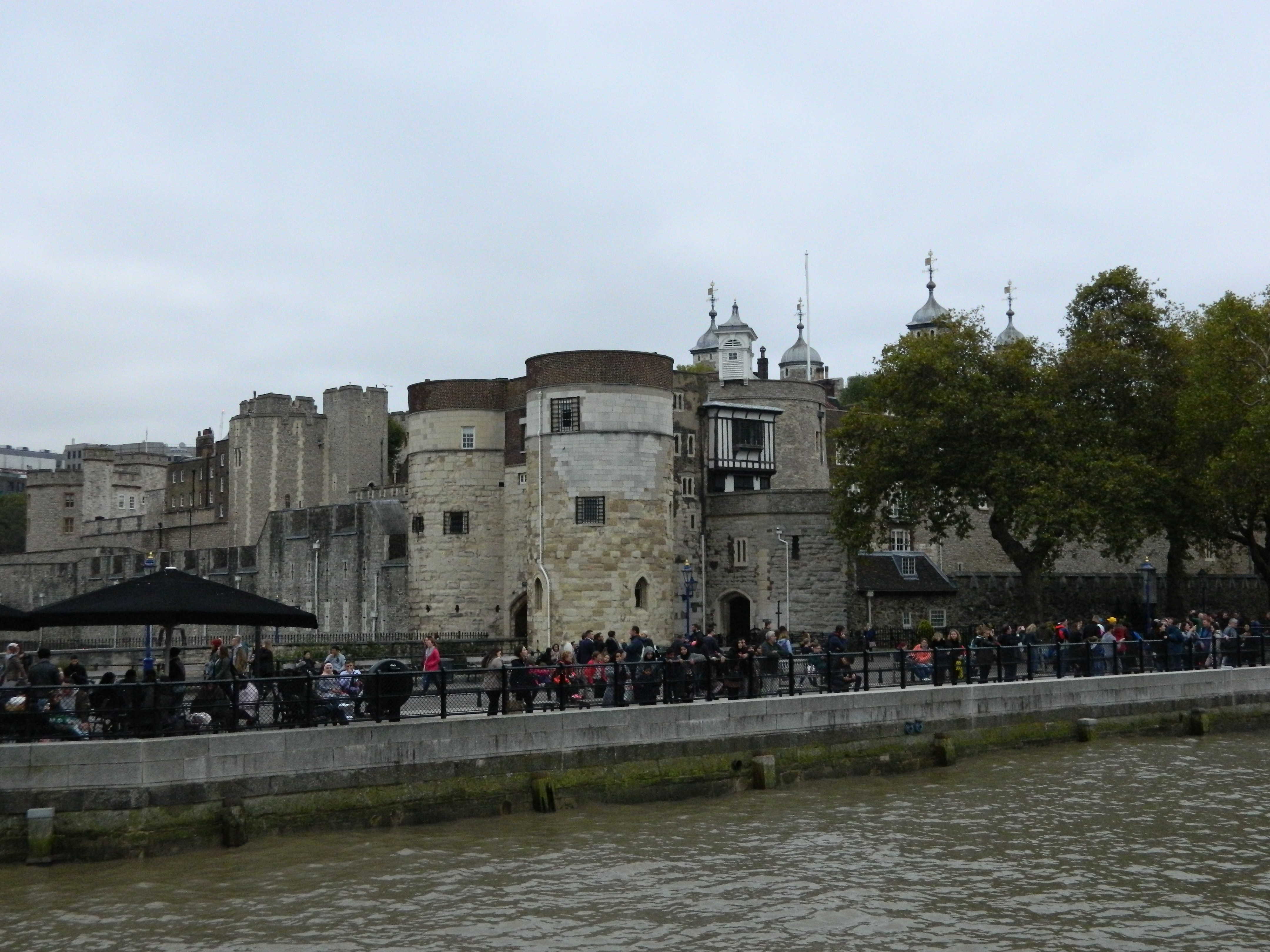
The dreaded Tower

I also managed to sort out a few remaining practical details for Grace, my work on the meeting between Grace O’Malley and Elizabeth 1. I spent several days in the British Library, and an inspiring day in the Women’s Library at the London School of Economics, which holds suffragette Vida Goldstein’s papers – for one of my other projects, Sisterhood. So many projects! But  research time in places such as London is rare and precious, and we have to make the most of it.

Mind you, I seem to have visited London every year for the past few years, but I’d never been to Denmark before and I loved every moment. Viking ships, great museums and libraries, beautiful cities, gorgeous countryside. Which brings me to…

Conferencing

The international symposium on Gender and Love was held this year at the most astonishing place – Sandbjerg Gods, an eighteenth century manor house once owned by Karen Blixen’s sister, Ellen Dahl, and donated by her to Aarhus University.

Manor house

Manor House, Sandbjerg Gods

It’s a glorious spot, nestled between fjord (complete with porpoises) and lake. Not only did I get to spend a few days listening to brainy people talk about fascinating things, I was also asked to read from Goddess on the first night, after dinner, in a parlour where the Dinesen sisters once read and talked.

Then last week, back in Melbourne, we held our ReMaking the Past symposium, something I’ve been working on for ages with my lovely colleagues at La Trobe.

Honoured

Also last week, I heard that 1917: Australia’s Great War is shortlisted for the Asher Award, for a book with an anti-war theme, written by a woman. The award is in honour of Helen Asher, author of Tilly’s Fortunes . It’s such a thrill, and I’m in esteemed company on the shortlist.  My thanks to the judges and to the Australian Society of Authors – and of course to Scholastic for all its support.

Writing

I’ve spent some time polishing the manuscript for the first volume in The Firewatcher Chronicles, and sent it off to Scholastic, who are already thinking about cover designs. No rest for the wicked.

I’ve finished the first draft of Grace, but it needs a fair bit more work, so I reckon it will be done by the end of the year.

Finished a couple of short stories – one for an anthology of own voices Oz YA.

And next I’m onto more in my series of bushranging amateur detective outlaws. And the second volume of  Firewatcher Chronicles.

And honestly, an academic conference paper can take months, sometimes, and other times just a week or so. I wish I knew which was which, before I started – in fact, before I volunteer to do them in the first place!

Reading

I must admit, I’ve been reading mostly research-related books lately, either for conference papers and academic articles (everything from *snore* The Well of Loneliness and My Love Must Wait to Five Go Off to Camp), books for The Firewatcher Chronicles from endless volumes on Boudica to Vera Brittain’s memoir of the Blitz, England’s Hour, or background for other projects on bushrangers and suffragettes and pirates.

Fiction that I’ve enjoyed lately includes:

  • Amie Kaufman and Jay Kristoff’s Illuminae Files series
  • Rachel Leary’s Bridget Crack
  • Robyn Cadwallader’s The Anchoress
  • Kate Forsyth’s Beauty in Thorns
  • Sulari Gentill’s Give the Devil His Due
  • Meg and Tom Keneally’s The Soldier’s Curse.

But I picked up the first book in Elizabeth Jane Howard’s Cazalet Chronicles , just to find a scene to quote in a paper, and accidentally got sucked straight back in. I’d forgotten. Or rather, the first time I read them, I was so drawn in by characters, place and plot that re-reading them now is like a different experience altogether. Such beautiful writing. Now I can’t stop. But what a gorgeous problem to have.

So between all of that, and finally getting to write a Viking book (surely destiny!), I feel both extremely busy and very lucky.

Viking boat reconstructions

Boats at the Roskilde Viking Museum, Denmark

Young People’s History Prize

Exciting news this week. My book 1917: Australia’s Great War was shortlisted for the Young People’s History Prize in the NSW Premier’s History Awards.

The Awards were held on Friday night in two stunning rooms in the State Library of NSW – one had hundreds of early editions of Don Quixote in glass-fronted bookcases. It was lovely to hear the Premier say that she’s a voracious reader, to hear the Minister for the Arts talk about his own writing, to welcome the new State Librarian of NSW, and to be part of the launch of History Week. My thanks to the State Library (where I also spent all day yesterday deep in research), Create NSW, the History Council and the judges for this recognition of 1917 and for inviting me to be part of the evening’s celebrations. I’ve been on literary awards shortlists but it’s a very different kind of feeling to have my book acknowledged  as a work of history-making.

The History Awards are judged by an extraordinary panel of senior historians, and I’m honoured to be shortlisted – and to be in the company of the authors and creators on the Young People’s History Prize list and all the shortlists. Congratulations to every single one. And of course now I want to read all the books.

Our shortlist was pretty short. The two other books were:

Desert Lake: The Story of Kati Thanda—Lake Eyre (Pamela Freeman & Liz Anelli, Walker Books)

Book cover Desert Lake

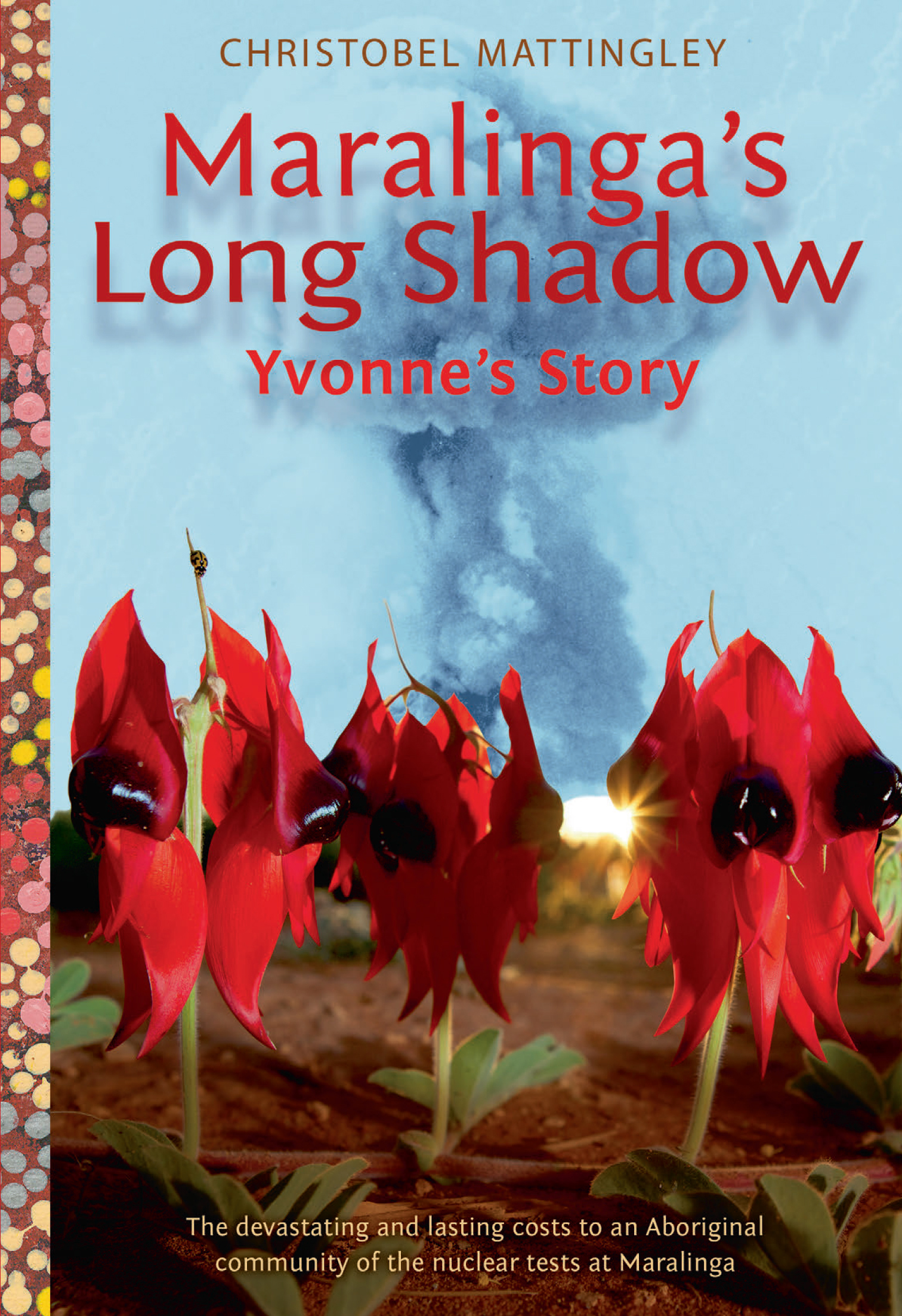
Maralinga’s Long Shadow: Yvonne’s Story (Christobel Mattingley, A&U)

Book cover Maralinga's Long Shadow

And the prize was won by Christobel Mattingley for Maralinga’s Long Shadow: Yvonne’s Story. In accepting the award, Christobel talked about the artist Yvonne Edwards, her family,  and the Anangu people, so many of whom were exposed to radiation by the nuclear bomb tests on Maralinga Tjarutja lands, and so many of whom have died of cancer since the bombs – including, sadly, Yvonne. Profits from the book go to her family. Congratulations to Christobel, who also worked with Yvonne and the communities to tell their stories  in Maralinga, the Anangu Story, so that their children and other children can know the truth of their experiences.

It’s wonderful that there is a Young People’s History Prize alongside awards for Australian, general (as in, everywhere else) and community or local history, as well as multimedia. That says a lot about the important work we do encouraging young people’s engagement with history.

1917 is partly about the divisive conscription campaign on the Home Front, and I remember choosing not to use the word ‘plebiscite’  when I wrote it, because young readers might not know what that old-fashioned word meant. I had no idea then that the country would undergo another plebiscite debate in 2017, and that young people would take to the streets to protest about it. But perhaps we always write and read about the past to reflect on the present.

Some of the fictional characters in the book are based on members of my family, especially my great-aunts who were children – and peace activists – during the war. I wish they were still with us so they could see how they – like young readers today – really do make history.

Eight year-old Madge (my great-aunt) led the United Women’s No Conscription Procession in 1916.


Header image: Inside the Mitchell Library by Littleyiye

Creative Commons by Attribution

‘Just pure murder’ – Passchendaele 1917

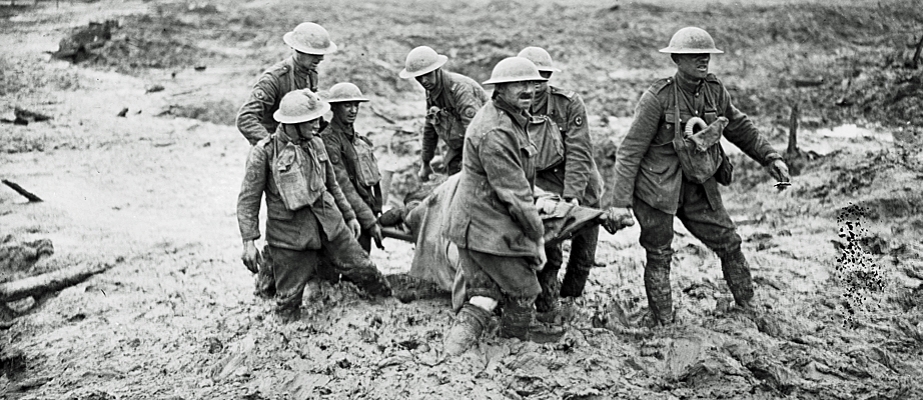
31 July is the anniversary of the start of one of the bloodiest and muddiest battles of the First World War: Passchendaele.

What we now call the battle of Passchendaele (or Third Battle of Ypres) stretched from late July into December, all through one of the soggiest seasons the troops could remember.

Crucial days for the Australian and New Zealand troops occurred later,  in a series of assaults through deep mud against seemingly impregnable fortifications. They include names that you will often see on war memorials in small Australian and New Zealand towns: Polygon Wood,  Menin Road, Broodseinde, and Poelcappelle. But it was the name Passchendaele that became a by-word for slaughter. 

‘There was a flat muddy bog in front of our trenches and the ground sloped uphill to some pill boxes [German fortifications] which completely dominated the position; as our shell fire had not reached theses concrete shelters or the barbed wire entanglements, what chance had our infantry to get out of that mud and climb that bare hill against machine gun fire? It was just pure murder.’

Alfred Stratton, gunner

cited by Glyn Harper in Massacre at Passchendaele

Remains of tank stuck in mud and shell holes. (Source: Collections Canada)

On 12 October alone, there were 13,000 Allied casualties, including 2,735 New Zealanders. It is remembered as one of the worst days in New Zealand military history.


‘A tragedy without equal in New Zealand history’

Glyn Harper, Massacre at Passchendaele


If you’ve read 1917, you’ll know that my fictional characters are asked to fly low over the German lines to identify artillery that might fire upon the Anzac troops.

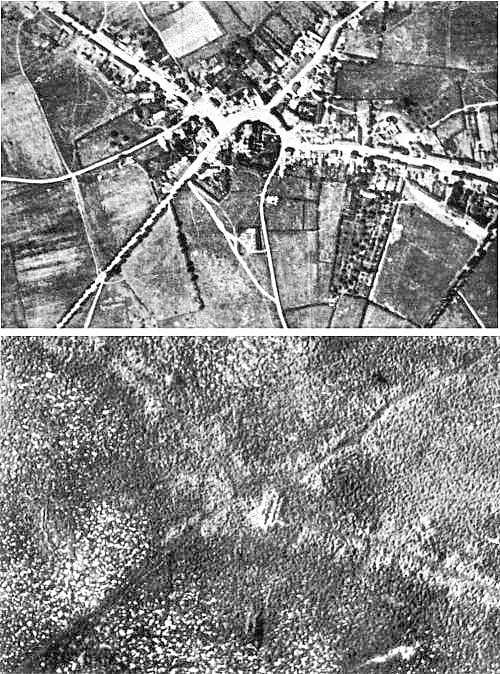
Here’s what Ace and Charlie would have seen: the poor little village of Passchendaele from the air, before and after the shelling.

Aerial view of trenches

Source: Wikimedia Commons

Each one of those hundreds of dots is a shell hole.

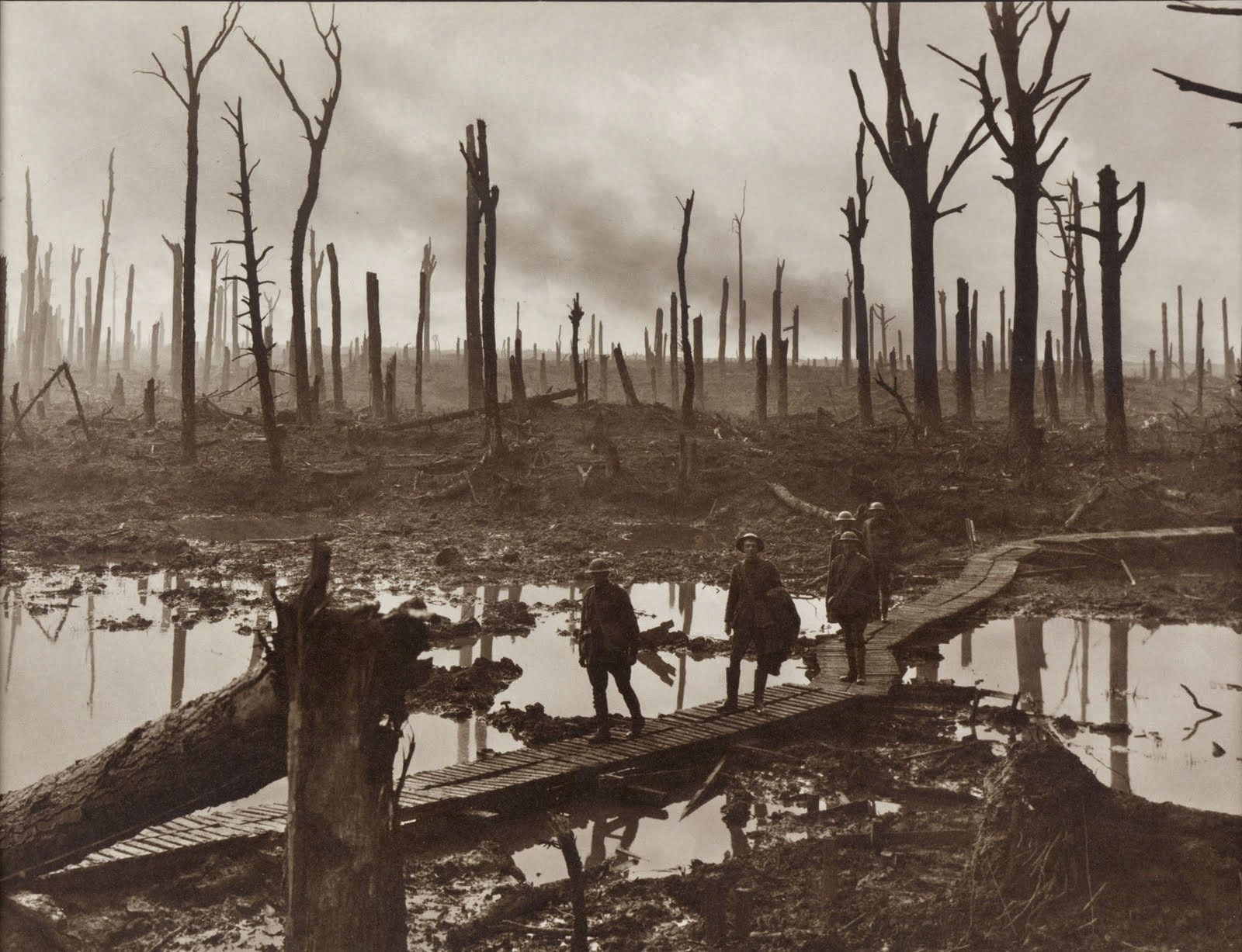
The shelling and the rain turned the entire battleground into a swamp  – worse than a swamp, because it was littered with bodies and barbed wire, destroyed equipment, and shrapnel. Some of the most famous photos of the war are from this time.

Frank Hurley’s iconic photo, Chateauwood (Source: Australian War Memorial)


‘Our feet were so swollen and painful that we had to cut our boots off, and not one of us could raise our voices above the merest whisper. Our uniform was concealed by a solid casing of mud to our armpits.Bloodshot eyes shone from haggard faces, so that we could hardly recognise ourselves.’

Stretcher bearer Linus TJ Ryan,

cited by Glyn Harper in Massacre at Passchendaele


Stretcher bearers in mud

Source: Imperial War Museum

‘It was mud, mud, everywhere: mud in the trenches, mud in front of the trenches, mud behind the trenches. Every shell-hole was a sea of filthy oozing mud.’

Bombadier JW Palmer,

Lost Voices of the First World War

1917 places near and far

Anzac Day, 2017.

I’m remembering the fallen.

Remembering the airmen in the skies over the Battle of Arras in April 1917, whose life expectancy was only 17.5 hours.

Yes. Hours.

The Red Baron and the German hunting packs dominated the air war on the Western Front. The new RE8 two-seaters were being brought into the Front Lines.

On the Eastern Front, Russia was falling apart, following the February Revolutions.

The war hung in the balance. Again.

I’m remembering being in Ypres, and standing under the Menin Gate, waiting to lay a wreath to honour my great-grandfather.

So today I’m remembering places – places I visited, touched by the war, places I tried to capture in 1917. And some places I borrowed as sites for my fictional family.

This is Bailleul in Flanders, the site of the airfield (I think) where 3 Squadron AFC was based. This is where Alex and Charlie end up in 1917.

There are so many airmen buried in the cemetery right next door. (There are so many cemeteries, large and small, in Flanders and across northern France. All are immaculately maintained.)

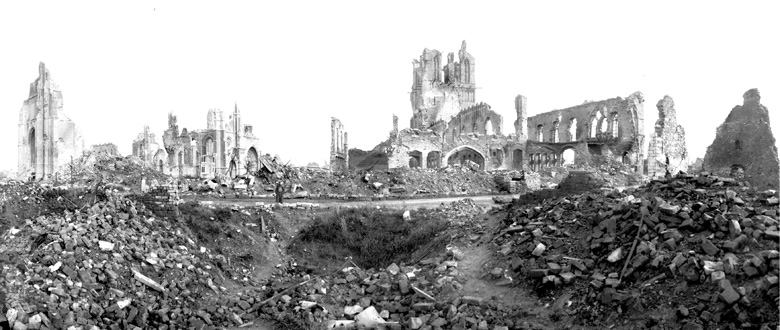
A few miles away as the RE8 flies, the town of Ypres was reduced to rubble by shelling during the war.

Source: Australian War Memorial

Those few walls you can see were all that remained of the medieval Cloth Hall.

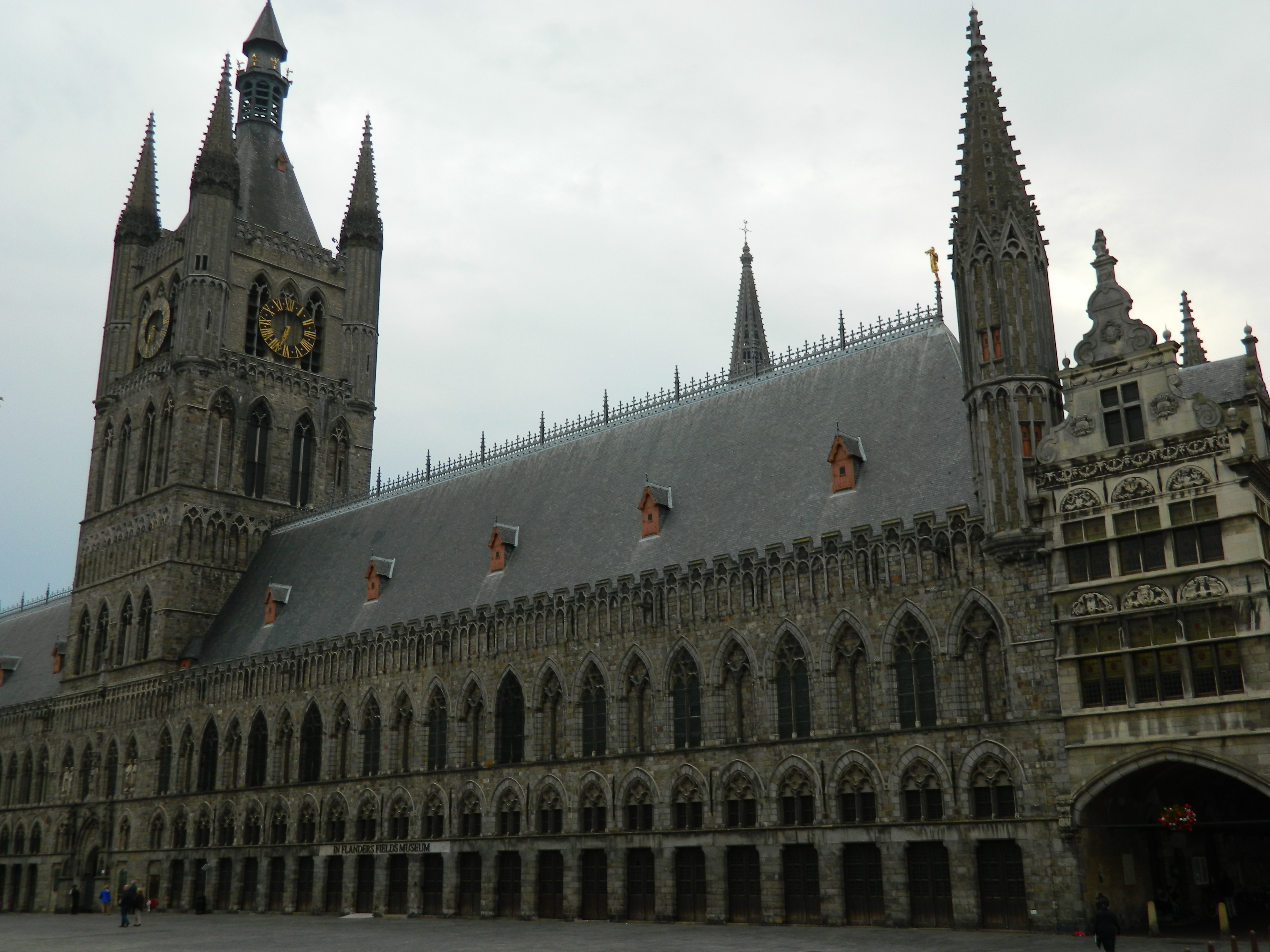
But after the war, it was rebuilt, and today it houses the brilliant In Flanders Fields museum.

But 1917 is not only set in Flanders, of course.

It’s also set near my home, in Melbourne, in the suburb where my great-grandfather lived before he left to serve in the Medical Corps in Flanders.

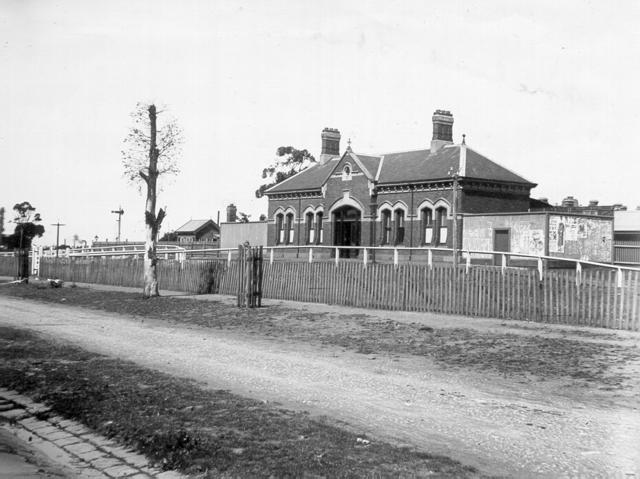
If you’ve read the book, you’ll know that Maggie and the family live next to the railway station, in a station manager’s house. Here’s one just like the house they might have lived in – near Moreland Station in Melbourne.

Railway house. Source: Pictures Victoria/Coburg Historical Society

And the station – which still stands – looked like this. So you can imagine little Bertie running wild around this very impressive-looking Victorian edifice, while his father tries to appear dignified.

Source: Pictures Vic/Moreland Libraries

It still looks a lot like it did then. Even the signal box in which I imagined Bertie playing is still there, although it’s not in use any more. But there’s a lovely park now on both sides of the lines. (The Government is about to remove the level crossing – I hope they don’t also remove the heritage station or signal box.)

One place in the book that’s very close to my heart is Station Pier in Port Melbourne. That’s where so many families waved off the men and women going to war, not knowing they’d never see them again. And then later in the year it was the scene of strife during the General Strike, and Dame Nellie Melba’s inglorious concert.

(My grandfather worked on the wharf, and he used to take us there to look at the ships, when I was little.)

Source: Victorian ANZAC Centenary

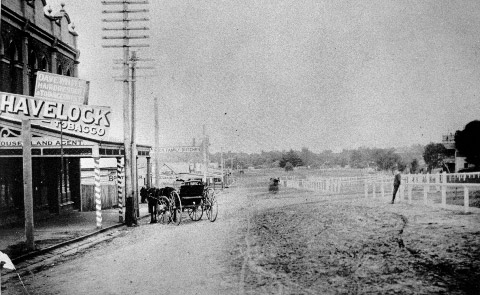
And what about Maggie’s life on the farm? Well, here’s Main Street in Mordialloc (around 1910), which is now a very busy spot indeed.

Source: Kingston Libraries/Kingston Collection

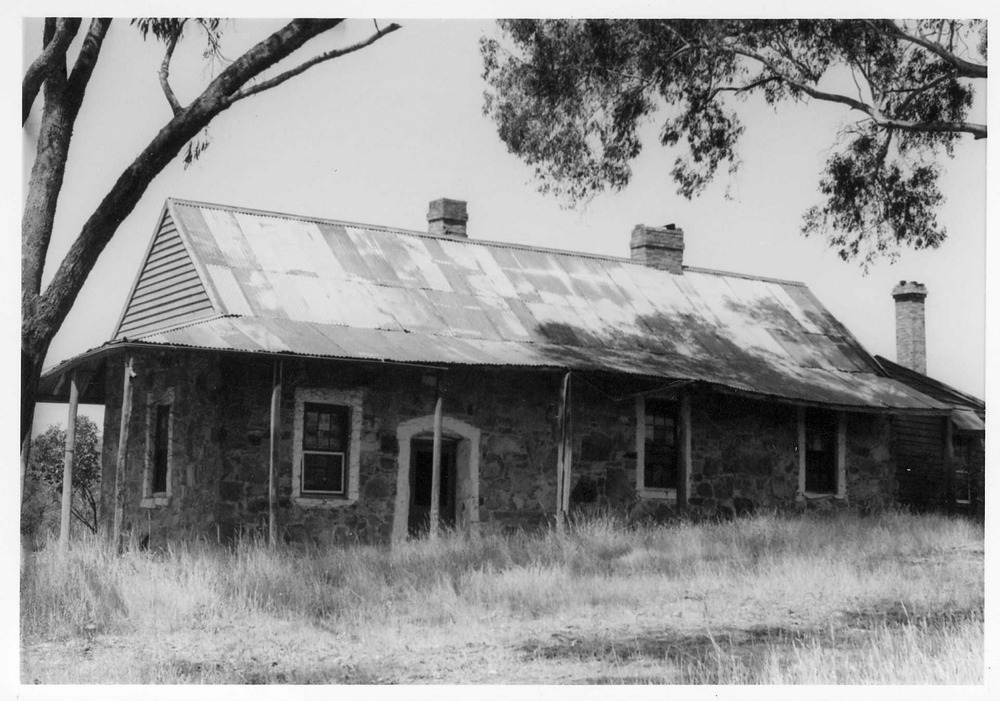
And this is the place I had in my mind for the orchards and farms around Box Hill where Maggie and Lizzie work: Schwerkolt’s Cottage, Mitcham,  just a few doors from where I grew up. In fact, it gets a mention in the book, and the room where Maggie and Mrs Bennett chat is exactly a room at Schwerkolt’s – and they were one of the German families affected by the war. (I spent a lot of time as a kid exploring the bush and old orchards around the cottage. It has since been restored and houses the local museum.)

Source: J.T. Collins Collection, La Trobe Picture Collection, State Library of Victoria.

And I realise as I write this how often I include places close to my heart in my books. Venice. Paris. London. Station Pier. (It’s like one of those tea towels – “New York. Paris. Mitcham.”)

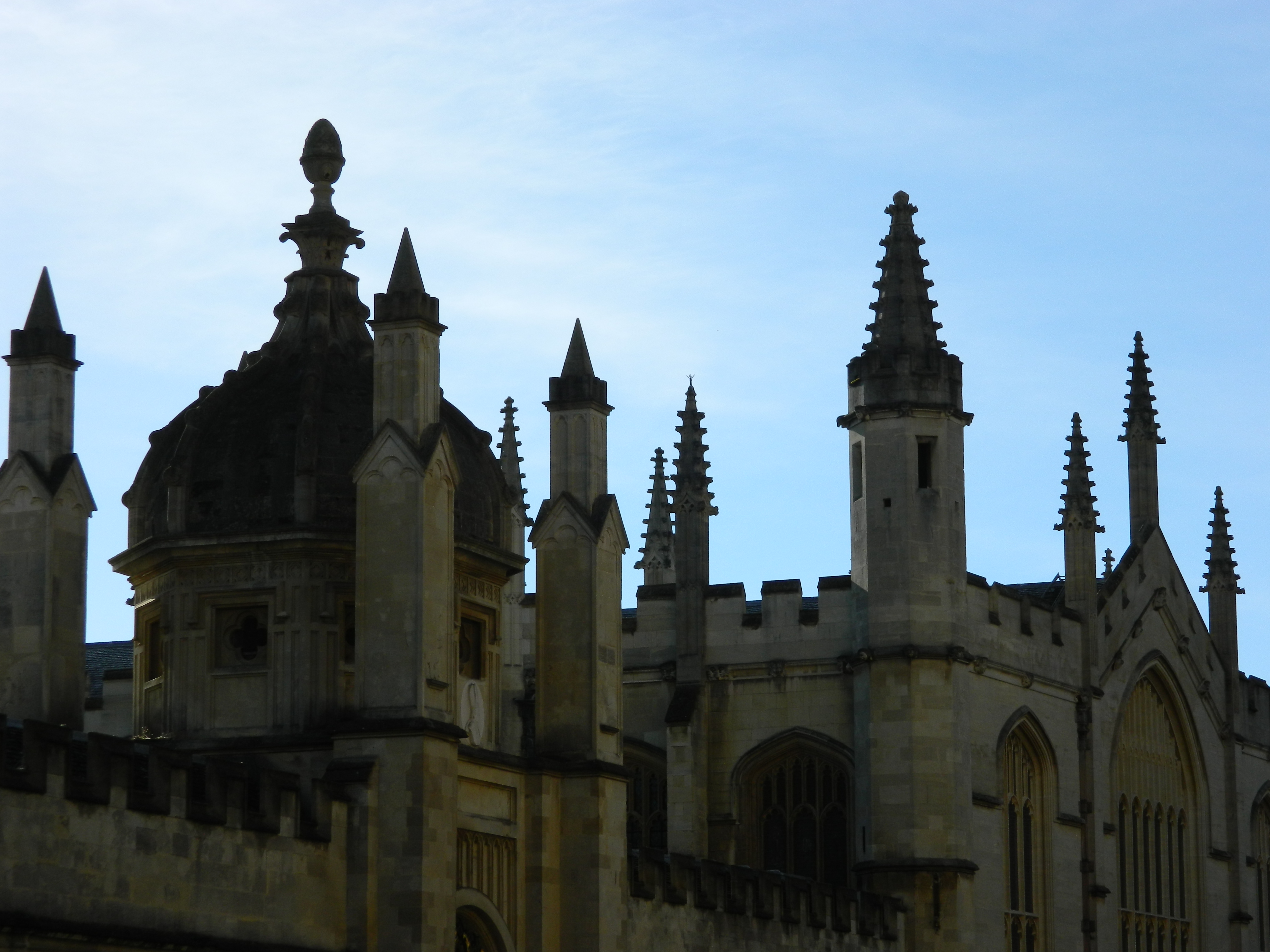
So here’s one more place that I love. Oxford. I can’t tell you how delighted I was to discover, last time I stayed there, that the airmen had trained there during the war. Hoorah! I thought. I can put it in the book. And so I did.

All those spires. Excellent navigation aids.

Real people, real stories

Readers have asked me about the real people who appear in 1917. Here are just a few of them – some faces from the Home Front.

Vida Goldstein (1869-1949). Vida’s life as an activist began in 1890 when she helped her mother collect signatures for the Woman Suffrage Petition, and over the next decade she became deeply involved in a range of political and benevolent groups, especially focused on the fight for women’s right to vote.

After some women were granted the vote in federal elections in 1902, she was one of four women who were the first in the British Empire to stand for election to a national parliament – as a candidate for the Senate in 1903. To agitate for the vote in the states, she formed the Women’s Political Association (WPA) and ran a newspaper, the Woman’s Sphere. In 1908 Victoria granted (some) women the vote, and after that victory, Vida made four more attempts to gain election to Federal Parliament: in 1910 and 1917 for the Senate and in 1913 and 1914 for the House of Representatives, always as an independent, and ran The Woman Voter newspaper.

When the Great War began,  she focused her energy on campaigning for peace and later against conscription, and working on a range of issues that affected women and children.  She formed the Women’s Peace Army in 1915,  a women’s unemployment bureau in 1915-16 and the Women’s Rural Industries, which ran the Mordialloc Women’s Farm. In 1919, with Cecilia John, she attended the Women’s Peace Conference in Zurich. After the war, Vida continued to argue for disarmament and peace, as well as birth control and other measures towards equality.

The federal electorate of Goldstein is named in her honour.

Source: Australian Dictionary of Biography and That Dangerous and Persuasive Woman, Jeanette Bomford, Melbourne University Press, 1993.

Suffragette and anti-conscription campaigner Vida Goldstein (Photo: State Library of Victoria)


Cecilia John (1877-1955) was a feminist, agriculturalist, music  and dance teacher and opera singer. As a young woman, she built and ran a poultry farm at Deepdene, to pay for her musical training, and later helped run the Women’s Farm with her friend Ina Higgins. She was an acclaimed performer on the Melbourne stage, but once war broke out she devoted her energy to the Women’s Peace Army, and later on to the Children’s Peace Army.

One of Vida Goldstein’s closest friends, she managed The Woman Voter and they travelled together around the country and overseas to promote peace and women’s activism. She sang the anti-war song, ‘I Didn’t Raise My Son to be a Soldier’ so often at public demonstrations and meetings that the song was banned, and she was also once charged under censorship laws for ordering banned anti-conscription leaflets. After the war and her visit to Geneva in 1919 with Vida, she became involved with the Save the Children Fund and the fight against poverty.

Source: Australian Dictionary of Biography

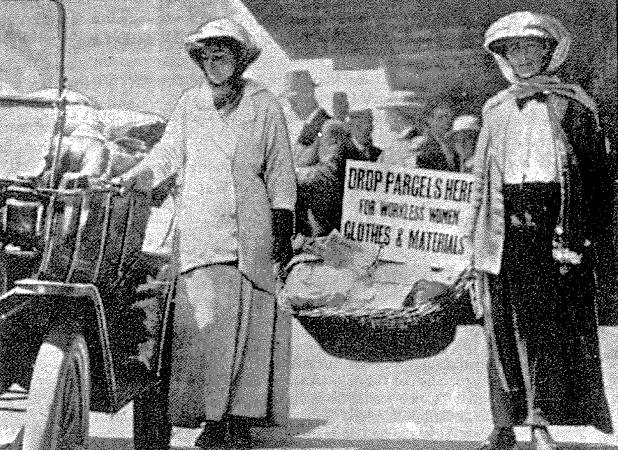
Miss John and Miss Goldstein collecting for the poor. Photo: That Dangerous and Persuasive Woman, Jeanette Bomford, Melbourne University Press, 1993.

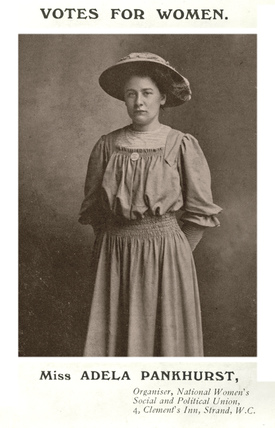
Adela Pankhurst (1885-1961) was the youngest of the famous Pankhurst family of suffragettes, all of whom campaigned for the vote in Britain before the war. Once war broke out, the family split – Mrs Pankhurst and her daughter Christabel wholeheartedly supported the war, while sisters Sylvia and Adela did not. Adela was packed off, alone, to Melbourne with only £20  to her name, and quickly joined Vida Goldstein and the WPA in their campaign against the war. She was a brilliant public speaker and became a committed socialist. In 1917 she spent some time in prison for speaking at banned rallies and refusing to stay silent about food shortages.

I wasn’t able to include all the complexity of Adela’s year in the novel, but by the end of 1917 she had married unionist Tom Walsh, spent several months in prison, and split with the WPA to join the socialists – although she continued to speak at WPA rallies against conscription.

In later years, Adela and Tom were founding members of the Australian Communist Party but later moved to the right, with Adela even being briefly interned in 1942 for her friendship towards Japan.

Source: Australian Dictionary of Biography

And last, but most certainly not least…

My gorgeous great aunts Connie and Madge, who indirectly inspired the character of Maggie.

Rica Kirby and Connie Gardiner (right) at work at the Women’s Farm in Mordialloc. Photo: That Dangerous and Persuasive Woman, Jeanette Bomford, Melbourne University Press, 1993.


Eight year-old Madge led the United Women’s No Conscription Procession in 1916. Bless her.

I’ll write more about my family’s connection to these stories one day soon.

Next episode: some of the real pilots and soldiers featured in 1917. Stay tuned.

Writing as resistance

International Women’s Day, 2017.

Words matter.

Language matters.

Stories matter.

History matters.

I’ve often said that all my books are acts of subversion disguised as historical fiction: pirate tales for kids that are really about slavery and rebellion, or adventures for young adults about freedom of the press, refugees, and religious intolerance. Always political. Always diverse. Always driven but never preachy. Or so I hope. Stories about women and girls.

But now, now, the writing and the purpose feels so much more urgent, the need more extreme.

It so happens that in the middle of months of protests and outrage, my little book about a similar time in local history has come out into the world – a book about a previous generation that found itself taking to the streets in huge numbers, compelled to take action by a world, by an idea, that could not be denied.

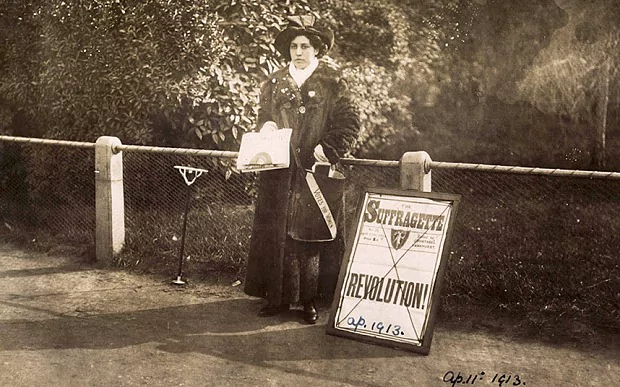
UK suffragette Princess Sophia Duleep Singh

Or many ideas. Here in Australia, a hundred years ago, it was the principle that nobody should be compelled to go to war against their will.  That nations should seek options other than military action. The 1916 and 1917 plebiscites on conscription were incredibly divisive and the scars of that debate lasted for generations. In 1917 there was also the Great Strike, food shortage protests, arrests and demonstrations and censorship of the press.

In Russia, of course, the situation was even worse. On International Women’s Day 1917, women protested in the streets of Petrograd about food rationing and the endless war. Factory workers went on strike, and eventually the armed forces mutinied, refusing to shoot protesters. The February Revolution* had begun  but in the meantime it changed the war, changed the country, and changed the world.**

Maybe 2017 doesn’t feel so tumultuous. But I can’t remember too many times like this. Every day more outrages from leaders in various countries. Every day more outrage.

More protests.

There are divisions among us, of course and as always. There is anger about unrecognised privilege, dissent about how best to make our arguments, or even which arguments to make – which battles to fight.

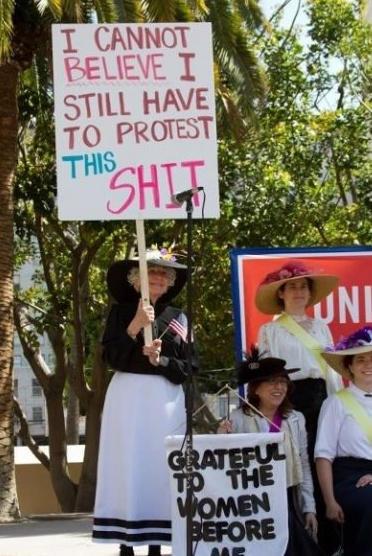
But still, there are millions of feet marching, in cities and sites around the world, in defence of fragile freedoms of all kinds.

Some of us have always had to fight. Some have returned to the fray. Some people find themselves out marching in the streets or arguing online or writing in despair for the first time.

This moment – these dying days, I hope, these death rattles of a panicked privileged few – seems to be one of those moments in time where great change could happen.

And that’s exactly what they’re afraid of.

BOO!


*February in the Julian calendar.

** For better or worse or both.