The voice

No. Not that Voice.

I’m reading Morris Gleitzman’s Once, told in the voice of a small Jewish boy, Felix, wandering wartime Poland in search of his parents. He’s unaware of  the scale and meaning of the Holocaust happening around him, and misreading all the signs – not just because he’s young but also because he is fundamentally good. Foreboding drips onto every page. It’s both gorgeous and dreadful to read.

Once

Felix’s voice is very direct, speaking straight to young readers (and people of any age) so that you immediately attach yourself to Felix and see the world through his eyes, even though you – knowing what you know – also can’t, at the same time.  Gleitzman has said that the series was triggered by the  story of the life (and death) of his hero, the Polish doctor and author Janusz Korczak, and extensive research into contemporary accounts of and by child victims and survivors of the Holocaust. Once must work quite differently for young readers who don’t have information about what is happening in Felix’s world, but those who do know are still somehow conveyed into the world view of that small Polish boy – even though for us, being without knowledge of the Holocaust is realistically impossible to comprehend now that we do have that knowledge, now that the world has been changed by it.

As a writing feat, that’s tricky to pull off. (Another sublime example is Jack in Emma Donoghue’s Room which, although not historical, requires the same balance of belief and disbelief at once. ) But it’s not just that which interests me. The ahistorical voice works particularly well for young readers. You’d think it’d be easy, but it isn’t. It’s not the same thing as writing in a modern voice, but is something else – based on a modern voice but with no (or few) jarring historical anachronisms. The modern voice – the author’s own transitory dialect – will date. The ahistorical voice will last a little longer.

The writing process requires deep research not just into historical events and details but also into contemporary speech patterns, vocabulary and world view so that they can be present without being visible. Hilary Mantell has explained how she does it: ‘I use modern English but shift it sideways a little, so that there are some unusual words, some Tudor rhythms, a suggestion of otherness… If the words of real people have come down to us, I try to work them in among my inventions so that you can’t see where they join.’  (1).

I reckon it was first mastered, especially for young readers, by people like Geoffrey Trease in those golden post-war decades, creating fiction that was different to what Trease called “costume drama”: that is, where there is a great deal of historical accuracy about details of food and dress and perhaps even words, but no contemporary empathy – no understanding of the essential world view of the characters. It’s one reason Wolf Hall is so fine, and some other Tudor novels filled with “prithee” and “pray you” not.

This is partly what I’m working on now, although I have a long way to go before my fiction lives up to my theory.

I’m on the side of V.A. Kolve who suggests: ‘We have little choice but to acknowledge our modernity, admit our interest in the past is always (and by no means illegitimately) born of present concern.’ (2)

And get on with it.

Can’t say anymore. Have to go find out what happens to young Felix.

(1) Mantel, Hillary, 'The Elusive Art of Making the Dead Speak', Wall Street Journal, April 27, 2012
(2) Kolve, VA (1998)'Ganymede/Son of Getron: Medieval monasticism and the drama of same-sex desire', Speculum, 73 (4), 1014-67.

Tudor plagues

What’s the collective noun for the Tudors? A chalice of Tudors? A gauntlet?

A plague?

There are, at last count, 27,491* historical novels based in the courts of the Tudor kings and queens. It’s not hard to see why. They were a fascinating lot. Sex maniac Henry. His six wives and their sisters. His children: irrational and frigid or possibly sex maniac Elizabeth, psychopathic Mary, frail little Edward and his cousin the bewildered Lady Jane Grey. There are captains with sparkling eyes like Burt Lancaster in The Crimson Pirate. Priests in hair shirts. Head chopping. Rabid Scots. An Armada. There is even Geoffrey Rush. That’s what they were like, right? Ask anybody.

It’s time to enforce a moratorium.

From now on, nobody is allowed to publish any new books on the Tudors without proving to a committee (composed entirely of me) that they:

  • Undertake not to completely distort the historical record and their readers’ sense of history without reasonable cause
  • Have something new to say on the topic.

We get the some thing over and over. That’s right.  Elizabeth never married. I don’t understand how that comes as a surprise to anybody. Mary, Queen of Scots was executed. So was Anne Boleyn. Henry had six wives. Amazing. Who knew?

But what you would never learn from many of the recent fictional portrayals is that these were among the best educated, most intelligent, influential people in Europe. That some of the most significant political and religious initiatives of all time took place under their reigns (alongside some disasters). That the Tudor queens dramatically altered the understanding of monarchy and leadership. That some of the alliances the Tudors forged and enemies they created resonate to this day.

Instead you can read about an Elizabeth who clings to her lover Dudley’s manly chest while he makes the decisions, like Fabio on a Mills & Boon cover – or was that Essex – or perhaps Walter Raleigh?; about a fey Jane Grey or poor wee sickly Edward; about Mary who lived only to burn people and stalk the hallways like Mrs Rochester; and about a Henry who jumps from bed to bed without ever pausing to ponder economics or military matters or foreign affairs.

Now don’t get me wrong. I’m very happy to see new interpretations that cast light on some of these people and those around them. I even think Jonathan Rhys Meyers never ageing as Henry is hilarious – although I can’t quite bring myself to keep watching The Tudors. I don’t mind the odd mash up (such as – a slightly different example – Sofia Coppola’s stylish take on Marie Antoinette, another historical object of mass obsession).

What I hate is the same drivel over and over, poorly written books that only sell because they are about the Tudors, or work that utterly distorts readers’ historical understanding for no good reason. So much of it is little more than fan fiction and bad fan fiction at that. They make me shout and scoff and snort, and that’s not what you want from a reading experience. I refuse to read another one unless a jury of my peers assures me it’s readable.

And as a result, we now have an entire generation of readers who think that one of the great dynasties of British history is just that: Dynasty without Joan Collins (and even she once played Bess Throckmorton).

Those readers now have a historical framework which includes the belief that Elizabeth had Mary of Guise either poisoned or killed by Walsingham’s own hand (she died of dropsy), or that she had Bishop Gardiner murdered for opposing her (he died of natural causes well before she took the throne). Minor examples, but symbolic distortions. And why?

Sometimes historical fiction needs to bend the laws of time or truth and the responsible novelist will make sure readers understand this in an appropriate note at the end. Film-makers do the same. Elizabeth and Mary, Queen of Scots never met, but who could forget Vanessa Redgrave as Mary, Queen of Scots sparring with Glenda Jackson’s Elizabeth? Katherine Hepburn as Mary also met Florence Eldridge as Elizabeth in 1936. Barbara Flynn as Mary and Helen Mirren’s inevitable Elizabeth locked horns just a few years ago.

It’s a gorgeous idea, if only for the casting – but always promoted as such. It’s a ‘what if?’ fiction. That’s different to swapping historical figures in and out of time or place or even marriages apparently at random.

But I fail to understand why, in your bog standard Tudor narrative, with real historical figures so wondrous, so entertaining, operating in a complex and sophisticated world, almost everybody feels they have to make anything up or add extra intrigue.

We also now have an entire Tudors industry, devoted to churning out trade paperbacks with sumptuous covers of women or girls in gowns but with no heads – which is, in a way, appropriate. (Hmm. Now I think about it, maybe all those headless historical fiction covers are subliminal nods to Anne Boleyn?)

Like Marie Antoinette and Napoleon, the Tudors are fascinating. They have what is known in LA as timeless appeal. You don’t have to do much with them, because the historical figures do a lot of the heavy narrative lifting themselves. And there are so many popular history books written about them, too, you don’t even have to do any really hard research. Easy.

That’s how so many of these books feel.

It’s not enough.

I’m doing my PhD at present, and to be awarded a PhD you have to make “a unique contribution to human knowledge and understanding”. That seems to me to be a very good guide for any book. Each novel, each short story, should be a unique contribution to human knowledge and understanding. It may not be major, earth-shattering, but it should at least be unique.

There have been revelations of new historical material and new perspectives on the Tudor years in the recent past. Most of this has appeared in the work of historians, archaeologists or other writers of non-fiction, but some has and will come from fiction; from novelists shining a torch into the dusty corners of the past. Mantel’s Wolf Hall is a brilliant example.

Find a legitimate way in. Focus on a character previously neglected. Shed light on a particular moment. Make a unique contribution. I know someone who is writing a novel about Dudley’s wife, Amy Robsart, and I feel sure it will offer unique insights, a different perspective and is impeccably researched. It will pass the committee appraisal with flying colours and satisfy both criteria.

To such authors I say, go forth and bring us as many fabulous new Tudor tales as you can imagine. More power to your arm.

Everyone else, step away from the keyboard.

*That’s a historical distortion – in other words, I made it up.

On romance and friendship and Mr bloody Darcy

One of the questions asked most often about Act of Faith concerns the likelihood of romance between the characters Willem and Isabella (the heroine of the piece).

I’m not going to tell you exactly what happens in the book, nor what happens in the next one. Instead, I’m thinking about expectations of romance in historical fiction for young women. It’s something I’ve pondered a great deal and have chosen to treat quite specifically.

But first a story.
When HarperCollins first accepted Act of Faith, we went out for The Lunch to have a chat about it. I should say right now that I was never asked to write it as a romance. Instead, I got this very sensible advice:
“It doesn’t matter what you do, people will read romance into it, so you may as well make Willem worthy of Isabella, just in case.”

I get that.
I have, personally, never quite recovered from Teddy marrying Amy March and Jo ending up with the boring old Professor, and it’s only been about forty years since I first read Little Women. I may get over it one day. Because – and I know exactly how this feels – you can read ANYTHING and imagine romance into it. Or whatever you want into it. That’s a good thing.
I hope that in my writing I leave room for readers to use their own imaginations, to wonder what they would do, how that would feel, how things might look or taste or be, without being told.

But back to the story. At that point, before the final redraft, I must admit that Willem was a pretty gormless young chap, and my sensible publishers didn’t want the lovely Isabella to be projected into any kind of romance with a drip like him. So Willem got rewritten to be a bit more likeable and – I hope – actually a bit more convincing as the zealous young Protestant stuck in a changing world he doesn’t really understand.

All good. Everyone liked Willem more, including me, and off we went.

Then it came to writing the blurb: “Isabella finds work with an elderly printer, Master de Aquila, and his enigmatic young assistant, Willem.”

Well. Yes, Willem is a little puzzling. He does have a secret. He is mysterious. But is he enigmatic? We wavered about that. We went back and forth, wondering if we should change it. But to be honest, there really aren’t too many other words for enigmatic. So enigmatic it is.

And the cover is gorgeous, glamorous, historical and there is pink on it.

Pan out a little to the broader market. People expect romance in historical fiction – perhaps in all fiction. Let’s unpack that a little.

  • Is romance a critical component of every book? Must it be? Should it be?
  • Do you always want to read about romance (or if not romance, some kind of simmering tension)?
  • Is historical fiction is the same as  historical romance?

There is some very fine historical romance, and although historical and romance are not the same genre, it’s easy to see how they become conflated with each other (thanks for that, Phillipa Gregory). The two also get confused in our minds with novels that we read as historical now, although at the time they were written as contemporary fiction. If there are long swishy frocks, it must be a kissing book. Right?

That expectation has changed, somehow, in my reading lifetime and with the advent of historical fiction and YA as genres – and indeed as publishing phenomena. Maybe I’m slow to catch up. One of my writing heroines is Rosemary Sutcliff (it shows, I know) whose books were always historical – sometimes there was romance and sometimes not, depending on the demands of the plot and characters. Some stories lend themselves to romance, some don’t. Some require it. But not all.

So then I was sick in bed and watching Pride and Prejudice on DVD (as I usually do when I’m sick) and realised that of course there is another word for enigmatic: Mr Darcy.

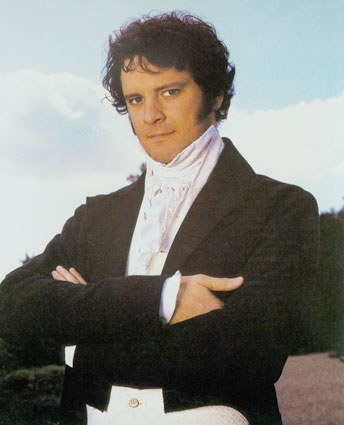
Doh! Enigmatic is code for ‘mysterious, handsome and romantic stranger’. For Willoughby. For Heathcliff. For Mr Rochester. For a young Colin Firth in anything but a hand-knitted Christmas pullover.

That’s not what Willem is. Bless his little clogs.

He is, no matter what might happen between them in the future, Isabella’s friend.  Her first ever real friend of her own age. What a miracle that is for her. She has been surrounded her whole life by older men who admired her intellect, or younger men who thought she was a freak.

Act of Faith is about friendship. It’s about freedom, too, and books and ideas. But most of all, just like every other book I’ve written, it’s about friendship and the courage you find when you and your friends are in danger.

That doesn’t mean there will never be any romance in Isabella’s life or in the sequel. God knows the poor thing could do with a cuddle.

Please don’t get me wrong. I could read about Mr Darcy and Mr Rochester over and over – and I do. I read as much Georgette Heyer as Rosemary Sutcliff when I was 12 or so.

But in Act of Faith I wanted to do something else. After all, there are millions of books in which a young woman meets an enigmatic young man. In many – but by no means all – of them, straight romance is the thing that ends up defining both characters and the book, and as a result, other plot and character developments are subsumed into the overarching romance narrative. It often also means that the male characters can end up being less defined than we might wish.

Young women protagonists deserve lovely romances of diverse and wondrous kinds, but it doesn’t have to be what makes them who they are.

Nor have I ever been convinced about the old Hermione/Ron model, in which the brilliant young woman adores the less spectacular but worthy hidden qualities of the sturdy young man.

Rubbish. She’d be bored to death within months.

Weeks.

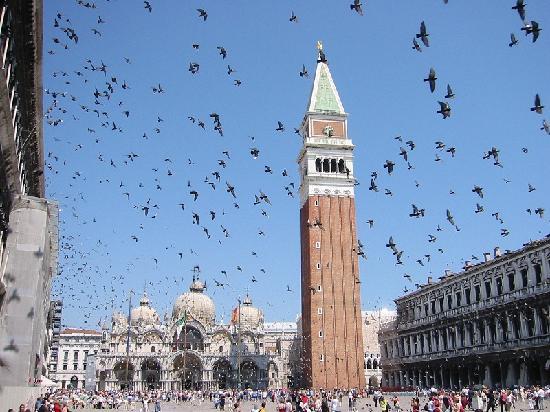
Or perhaps I should have had Isabella run off into the sunset with Signora Contarini? Now that would put the cat amongst the San Marco pigeons.

Image from TripAdvisor

Historical fantasy?

I’ve wasted years of my life.

Happily I’m in good company.

A US writer – let’s call her M* – whose book for younger readers is just out, has advised a group of young aspiring writers not to bother with such feeble-minded tasks as research when writing historical fiction:

M said she didn’t know enough and had to write about what she didn’t know. ”To write a book about the past [as she has done], there is a saying that you read only two books and then close your eyes,” she said. That was all the research required.

(Quoted in The Age.)
Just like that. Magic.
In fact, that’s what happens in M’s book. Just like I, Coriander, halfway through, everything turns into magic or fairies or elves. Fantasy, as we all know, doesn’t require any research or detailed planning either (just ask anyone who writes fantasy – and then take a few steps back to avoid the explosion).
It’s hard to decide which aspect of M’s advice is most worrying: that an author of historical fiction thinks the historical bit of it doesn’t matter; or that perhaps it just doesn’t matter when you’re an adult author writing their first kids’ book; or that an author has no duty of care to readers of any age or to the past; or that you would leave your editors to do your fact-checking … or that you would actually say that – out loud – to young people who are looking for guidance.
Now, I’m not sure whether it’s true. I suspect that M did much more than read two books, and I’m really hoping she’s been misunderstood.
But I’ve been brooding about this all morning, in part because I read M’s book in manuscript form several months ago and found in it several glaring mistakes which I assumed would have been removed in later versions. Not by the author, obviously, who apparently can’t be arsed looking anything up, but by some long-suffering editor.
This is what almost any other author of historical fiction would have told that crowd: it takes months, sometimes years, of research to accurately portray the past – even just to make as few mistakes as possible. Then you only put about five percent of it into the text. Many of us will tell you that the research is the fun part. It continues up until the point the ink rolls on the presses, and even after that there are breathless moments when you rush to the nearest computer or book to check something you suddenly imagine you got wrong.
That’s just as it should be. Because it matters. History matters. Truth matters, just as much as closing your eyes and imagining, and especially for young readers.
Because your publishers require you to know what you’re writing about.
Because your readers trust you, and they matter – most of all.
[*Later: names deleted to provide benefit of the doubt, because surely it isn’t what she really thinks. Surely.]

Voices

I’ve been hearing a lot of voices lately, but that was the plan. Part of my PhD project is about the quest (or lack thereof) for authenticity in voices in historical fiction, and now I can’t read anything without seeing through that lens. It’s a bit like when you’re going to get a new car or a new dog, and suddenly the world is filled with that model or that breed. Except this will last for years. And is, thankfully, rather more interesting than ten year-old station wagons.

So here are some initial thoughts on a few voices I’ve heard recently.

Bethia Mayfield is the narrator of Geraldine Brooks’ Caleb’s Crossing. Brooks can enable her readers to hear a voice from the past with sublime felicity: her March is a tricky and unsympathetic narrator whose weakness and selfishness are difficult to bear but a joy to read. Bethia, on the other hand, is the opposite. the character is engaging, but her voice – I am very sorry to say – is uneven. I heard Brooks speak about the book recently, and she mentioned that she makes great use of the Oxford Historical Thesaurus. It shows*. The reader is happily meandering around the island with Bethia when we all trip over a word, and then another, which seem to be perfectly accurate in a historical sense but somehow out of time – out of tune – with all of Bethia’s/Brooks’ other words.

It’s a very very tricky business, maintaining a voice that is palatable to the modern ear but somehow historically accurate – what Sarah Waters describes as “right enough – for us”. Brooks almost always gets it right. Just not this time. Not quite.

In Room, Emma Donoghue’s narrator is five year-old Jack, who lives in a small room with his Ma and that’s the only world he knows. Hard to imagine a more difficult task for a writer – a credible five year-old voice, but also one whose world is so confined he simply doesn’t realise, at the start of the book, that the things he sees on the television are real – and yet convey the entire action of a book, including some genuinely thrilling action – in that voice and world view.

But Donoghue manages it, beautifully. There may be the odd word that seems out of place, one or two concepts that Jack couldn’t possibly know but it doesn’t matter; it doesn’t throw you out of the story. Anyway, as Jack says, “I know all the words”.

Finally, a TV series: Downton Abbey.

I love it. I do. But please: there is no way on earth that upstairs and downstairs ever collided and colluded so often and so intimately. After the Great War – perhaps. As people’s lives were shattered by grief and missing, and as the men and women at the many Fronts discovered they could be friends or enemies across class and that death really didn’t distinguish; then the social – if not economic – barriers in British society began to crumble. Or in a crisis, such as a corpse in your bedroom, yes, one might feel a trusted maid is the only place to turn.

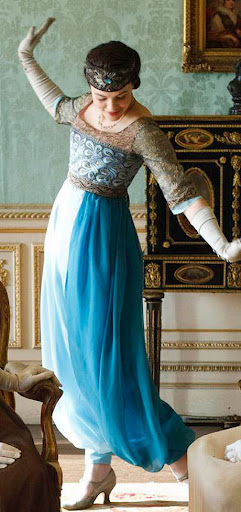
Sybil: can’t touch this

But it really does reek of narrative reshaping history for upstairs characters to confide in the servants, for maids to offer unsolicited personal advice, for there to be such informality and idle chatter in the house of an earl. An earl! Not a minor baronetcy, but one of the great titles in the kingdom. Perhaps I wouldn’t mind the inaccuracy it it managed to be consistent, but it isn’t. Some of the voices and relationships are consistent and some aren’t. I don’t mind the lovely daredevil Sybil being too egalitarian, but other characters on both sides waver in and out.

Yes, I am one of those people who shouts at the television or scoffs in the cinema at blatant rewriting of history. Don’t get me started on Shekhar Kapur’s versions of Elizabeth I, for example.

As if!

And if I huff “As if!” several times in one viewing, we are in trouble.

I’m afraid there have been many “As ifs” during the otherwise winning Downton Abbey, though it won’t stop me watching it.

* [Later: that sounds more brutal than I meant it to. It’s a terrific story.]

Small but perfectly formed

Someone asked me, the other day, to recommend some good historical fiction for young readers.

Of course, there are many recent books that are sensational (by Jackie French, for example, or Catherine Jinks or Linda Newbery – or many others).

But my mind goes back to the books I adored when I was nine or ten, many of which hold up rather well even all these MANY decades later – and in which the historical research and detail are impeccable:

  • Smith and Devil-in-the-Fog by Leon Garfield
  • Carrie’s War by Nina Bawden
  • Rosemary Sutcliff’s Romans in Britain books (or anything by her, really)
  • Most of Geoffrey Trease.

(Yes, I may have mentioned these before, but that’s because they’re good.)

And as for the paranormal/time travel/weird stuff, it seems to me that it’s still pretty hard to go past Penelope Lively, Ruth Park, L.M. Boston or Diana Wynne Jones. Or, for that matter, Beowulf.

I’m not suggesting the books of yesteryear will never be bettered, but if you write for younger readers, these are essential reading.

If you read books, or buy books for kids to read, don’t forget the gems lurking in the backlists.

Even if they are ancient history. And only 150 pages long.

Historical fiction can drive you crazy

And here’s one good reason why:
You write your fiction based on facts. You create monster spreadsheets, track everything, check source after source.
Then you colour in the blank spaces, add a little depth or perspective here and there. You are scrupulous about keeping track of known facts and fictional embellishments.
And then you find another – impeccable – source which contradicts any number of previous “facts”, which means either you have to:
1. Change everything
2. Act like you meant that sub-plot to be fictional all along
or most likely
3. Shout a bit. Or a lot.

And when I say “you” I mean “me”.

Gah!