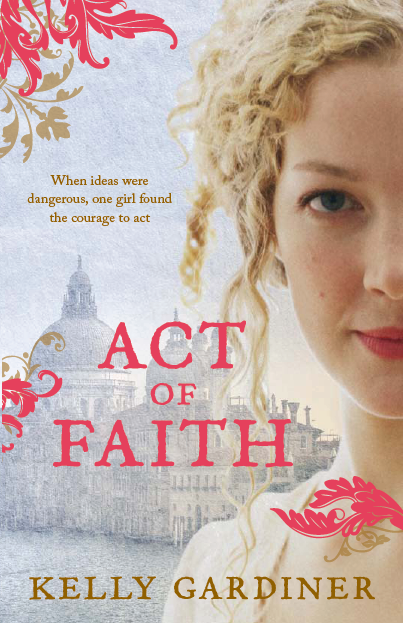
Here ’tis.
Gorgeous design by Jane Waterhouse.
Inching closer to release in July.
Here ’tis.
Gorgeous design by Jane Waterhouse.
Inching closer to release in July.
You spend an awful lot of time with people when you’re writing.
Not real people. They get in the way. Unreal people. Imagined people.
And not all of them are the cheerful, supportive, well-balanced type.
That’s not so hard when you’re writing a downright evil villain who, although they must have hidden depths and some kind of comprehensible motivation, is a blackguard and a scoundrel. They are quite fun to write, although you might not invite them over for a cup of tea.
That’s why we all secretly admit to loving characters like Deadwood‘s wicked Al Swearengen more than dour Seth Bullock, even though we know we should really be on the side of the sheriff and not the brothel-owning murderer and his fabulously Jacobean swearing.
But what about your favourite characters, the people you spend months exploring and expanding? What about their weak moments, their shameful days, the incidents that might crop up later on facebook or the tabloids or a seventeenth century police report? How do you write your hero or heroine into a corner from which they can never escape, into a pitiable state, into an embarrassing scene from which nobody emerges with honour?
And how can you not?

I try to create sympathy for my characters, then turn the monsters loose.
~ Stephen King
Reading
Text books and journal articles for the PhD, including:
Escapist reading is The Sealed Letter, by Emma Donoghue, about which I’m still making up my mind. I’m not sure why it’s in the present tense, and that’s a question I’m also asking myself about Tragédie.
Waiting
First it seemed like a moment until Act of Faith comes out. Now it seems like years. It’s actually somewhere in between – two months or so. So the anxious, exhilarated, dumb-struck, sleepless, proud, despairing thing is starting a bit ahead of schedule.
Don’t tell anyone, but I feel like this one might go OK.
Watching
Deadwood. It’s like Macbeth on crack.
Muttering
French vocab. It will not stick in my brain. I go to class and everything looks fine on paper, and then I get asked a question and there’s nothing there at all. A black hole where a word or phrase ought to be. It was there yesterday. Where do they go?
And then there’s …
King Tutankhamun exhibition opened at the Melbourne Museum last night. Wonderful, wonderful things. Best of them: his dagger, with goldwork so fine you know the Egyptians had to have some kind of magnifying lens. And a stunning realist mask of Nefertiti. And a tiny cosmetic case shaped like a duck. And – well, everything, really.
Happy hours of research planning the trip to Paris and Provence in October.
Autumn in Melbourne: reddening leaves and rhubarb and stirring great vats of crabapple jelly and green tomato relish and crisp mornings with balmy days. Bliss.

The process of writing has something infinite about it. Even though it is interrupted each night, it is one single notation.
~ Elias Canetti
I’ve been posting recently about tools for writers, but the best news is new today: there’s now a version of Scrivener for those of us in the overwhelming majority with Windows PCs (not Macs).
Yes, we sad little Windows people may be retro chic rather than authentically latte-geek, but we can now get our hands on one of the most popular and most powerful tools for writers, formerly purely the province of Mac users.
So what’s Scrivener?
It’s a combination word processor and organising tool. It allows you to bring together and reshape the many fragments that make up most of our working manuscripts, so that you can easily keep track of what’s where and who is in which scene. Depends how you work, of course. Some people start at the beginning and work straight through. Scrivener or other similar packages may help you out a little, but they are a godsend for people who write snatches here and there, and have to keep the structure altogether in their heads while scrolling back and forth through a long Word document. It includes an outlining function as well as index cards for characters or places, and integrates with EndNote, for we fools who are doing academic writing.
There’s been a free beta version out for a while, which I tested and which converted me pretty quickly to the Scrivener way. It has basic templates for short and long fiction, academic papers and scripts and, importantly, can synch with mobile apps like Index card, import documents you’ve already begun in Word (or whatever), and export to other programs such as Final Draft or Word.
The latest beta version is due out 25 March 2011 (that’s the date here already, so I guess tomorrow in the US). [NB This was amended – I misunderstood the timeline when I first posted]
When the production version goes on sale, it will cost about $40.
Bargain.

HarperCollins is finalising the internal design of Act of Faith and come July, even if I do say so myself, it’s going to look gorgeous.
It has to, really, because it’s a book about books; about printing and publishing and defending beautiful crafted books. Mind you, plenty of publishers wouldn’t put the effort into it for a paperback.
But the designer, Jane Waterhouse, publisher, Lisa Berryman, and I spent hours last Friday choosing 16th century Venetian and Dutch printers’ devices such as colophons and frontispieces from the wondrous Sticht collection of the State Library of Victoria (which is also where I work a few days a week).
These will adorn the front matter and chapter openers. I just can’t tell you how appropriate it is, on so many levels, because you haven’t read the book yet.
But you will. Won’t you?

The Blazing World.
Great title, for a start. Sounds like some new literary fiction, doesn’t it?
But in fact it’s by Margaret Cavendish, Duchess of Newcastle (born 1623, died 1673): infamous Restoration poet, philosopher, playwright, orator and all-round hellhound.

Bless her little cotton toga.
There seems no end to the number of websites and blogs about books, writing and publishing. I guess that’s not surprising. People who write and publish words and ideas are going to do it on every platform possible. But some of it, to be frank, is either crap advice or hysterical or of the Disneyland school of thought (if you want to be a famous author, just follow your dreams and it will happen – even if you can’t write to save yourself – so all you need to worry about is what to wear on Oprah).
So in the middle of this overwhelming waterfall of information, where do you start?
Here are some sources I’ve either found useful or checked out to make sure they make some sort of sense. They are all free, but I strongly suggest that writers at any stage of their career invest in joining a local writers’ centre or society of authors.
Writing advice and ideas:
Some helpful websites of writing tips and advice from experienced authors.
Writers’ Hub (Birkbeck, UK): news, reviews, interviews
Best-selling author Sara Douglass (Australia) shares her experience of the business of writing and the editing/publishing process
Writing World (US): lots of short articles for people starting out and hoping to get published
Write101 (Australia): it’s been around a long time, and chock full of advice
Literary liaisons is aimed at romance writers, but also offers a great list of resources for writers of historical fiction
Allen and Unwin’s writing centre (Australia)
Authors’ associations and writers’ centres:
Trusted and authoritative sources of information and support.
Australian Society of Authors
NZ Society of Authors
UK Society of Authors
European Writers’ Congress
US Authors Guild
Australian Writers Centres
International PEN
Getting published:
There are a billion sites and blogs on this topic, of varying quality, so here are just a few.
ASA Guide (Australia – PDF)
VWC advice (Australia)
Society of Authors advice (NZ)
Help! I need a publisher (UK)

The best time for planning a book is while you’re doing the dishes.
~ Agatha Christie
So it’s a good thing my dishwasher’s blown up, right?

