So far, so …

To be honest, this year started well enough but deteriorated rapidly.

I lost my beloved home in the Longwood bushfire in January. And all the things in it meant the world to me, many many books among them. I’ll write more about that one day, when I’m ready, but it hit pretty hard.

So I’m sorry for the silence on here but it’s been a bit of a time.

I didn’t feel much like writing for months, which was awkward, because I had promised several manuscripts would be finished. But I did it anyway, sort of. Over a year ago, I started reading The Artist’s Way by Julia Cameron, which I know many people find useful and even life-changing. I wouldn’t go that far, and only started it as a test before a Creativity retreat I run each year. But one of Cameron’s central recommendations is Morning Pages – three pages, written long-hand, every morning before you do anything else.

As I wake up early, it’s perfect for me and also keeps me out of mischief and not waking up anyone else. I make a cup of tea, sit down, and start scribbling. It’s not like a journal, though sometimes it is. Other times it’s more like a travel narrative. More often what I write are fiction fragments: half a scene, or scraps of action, or simply problem-solving – working through logic or plot or structure. Each weekend, I review what I’ve written and make sure any new ideas, scenes or fragments, or everyday things to do are recorded. I’m now up to week 62 and so far I’ve only missed one day – on a long-haul flight where I crossed the dateline in mid-air and the day vanished.

For months after the fire, I didn’t feel like writing and my mind couldn’t settle for long hours at the desk, but I did the minimum: my Morning Pages, and Shut Up and Write twice a week with my writing mates. I focused on revision, which I found I could manage, so I finally completed work on my YA bushrangers book, The Adventures of Captain Lightning.

Instead of writing, I threw myself into making – making bread, making chutney, making cheese, and sorting out the suburban garden I’d neglected for so long while recovering from injuries in both hands. Re-framing weeding out vast piles of Kikuyu grass as a creative pursuit makes it a lot less tedious (or so I tell myself). I did a bit of teaching and ran another fun writers’ retreat.

But in recent days, I’ve spent many hours typing up notes from Morning Pages written months ago, which I hadn’t done since the fire. These are notes I’d scribbled on planes, on Waiheke, in Melbourne as winter set in, and more recently in Greece. Thousands of new words for the next Miss Bingley novel, corrections and notes for Captain Lightning and now its possible sequel, and more short science fiction. So I was writing, all that time, three pages a day, in spite of myself and my reluctant brain.

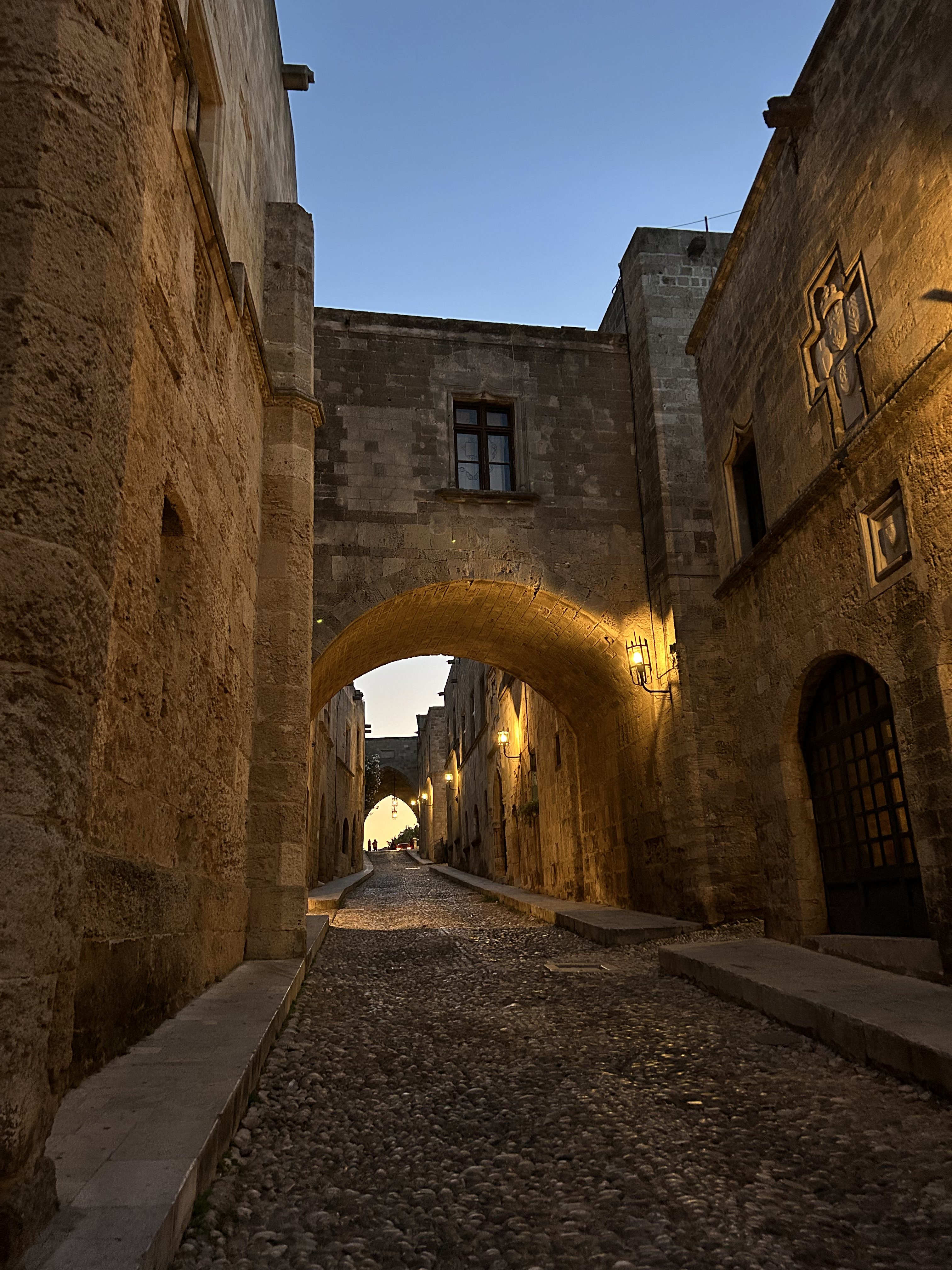
And now I’m writing to you from Rhodes old town, in Greece, in a little guest house lodged right under the old city walls, built by the Knights of St John centuries ago. I’ve spent blissful days in Athens, explored the ancient Agora and archaeological sites on Kos, and then ten days on the holy island of Patmos, enjoying someone else’s writing retreat.

The curse of this year is lifting, I hope.

At the very least, it’s sunny, the world is full of fried feta, and I’m surrounded by old stones and cobbled lanes.

There are boats, and castles, and tiny domed churches.

And there are early mornings full of words.

Coming up: events & appearances

Miss Caroline Bingley’s unceasing attempts at world domination continue. We can’t stop her. God knows we’ve tried, but she persists, and who are we, mere authors, to stand in her way?

Coming up soon:

Warm Winter Reads, Northcote Library: 16 July

I’m looking forward to giving an author talk as part of the Winter Reads series at Darebin Libraries, on Wednesday 16 July at 6pm. You’ll hear about how and what I write, and especially the influence of Miss Austen and our version of Caroline Bingley. It’s free, but do book here. Fairfield Bookshop will be on hand and I believe there may even be cake! I know it’s hard to leave the house on a Melbourne winter night, but it’ll be worth it.

Virtual JaneCon, online: 19 July

Virtual JaneCon is billed as a “radically inclusive Jane Austen event”, and it’s held online so people can attend anywhere in the world. My co-author Sharmini and I appear with our dear colleague Dr Kylie Mirmohamadi, talking about Miss Bingley and Mary Bennet, two characters Jane Austen doesn’t seem to like much, and all the other sessions look fascinating. It’s over the weekend July 19-20, with video sessions posted on YouTube. You can see all the details here.

Afternoon tea, Antipodes bookshop Sorrento: 30 July

Join me and Sharmini for a special afternoon tea celebration of Miss Austen’s 250th birthday in Sorrento, at the always-stylish Antipodes Bookshop. Murder, mystery, and afternoon tea (there will be no actual murder, you understand, just discussion of imaginary murders). Also bubbles. 2pm on Wednesday 30 July. Bookings essential and details here.

Bendigo Writers Festival, 16-17 August

Always a terrific writers’ festival, with a huge programme and always thoughtful guests. I’m involved in three events this year:

  • On the Lam 10:15 am, Saturday 16 August. I’m part of a panel with Tara Calaby and Lucy Sussex, chaired by Steph Downes, on spirited women of the past – in fact and fiction.
  • Carrying On 10:30 am, Sunday 17 August. I look forward to interviewing Melanie Cheng, Kylie Mirmohamadi and Jock Serong on the nature of grief and ghosts, legacies and loss and their beautiful novels.
  • Edinburgh: Midnight and Blue 11:45 am, Sunday 17 August. I’m interrogating crime writers Fiona Hardy and Jock Serong about Ian Rankin and his take on justice, redemption and the blurred lines between right and wrong in the book, Midnight and Blue.

Bendigo’s full program is here, and it’s a ripper.

Words in Winter, Hepburn Springs, 24 August

Talking crime with champion chair Jacqui Horwood and Zane Lovitt, author of The Body Next Door. We’ll be trying to answer the enormous questions, crime fiction: who writes it and why? 11.30am, Sunday 24 August, Hotel Bellinzona, Hepburn Springs. Tickets and details here, and check out the rest of the program because there are some great writers involved (Tony Birch, Nadia Mahjouri, Izzy Roberts-Orr and many more!). 

Hope to see you out there!

PS This time two years ago I was walking (well, at this point, plodding along slowly and painfully with boots full of blisters) the length of Hadrian’s Wall, so here’s a gratuitous photo of that most spectacular country, because it never ceases to amaze me. In fact, I’ve written a whole novel set there now (still rewriting).

Hadrian's Wall and milecastle

Lately I’ve been…

Getting excited!

Miss Caroline Bingley, Private Detective is about to descend upon us, and we are in a slight whirl of event bookings, launch fever, and pre-publication nerves.

It’s an exciting time, but listen up, emerging authors: nobody tells you how nerve-wracking it is to have your book released, so I’m warning you now. And it doesn’t diminish with age or repetition. Well, maybe a little. For your first book, you think your world is about to change, and it kinda does, but then it settles down again. Unless you’re Helen Garner or Sally Rooney.

Anyway, I’m off again, like an old steeplechaser out of the gate, but this time alongside my co-author, Sharmini Kumar, for whom this is a first novel so she gets to have all the thrills, and I get to enjoy it.

I’ll post our upcoming events as I have details, but here are a few:

The Melbourne launch is on 3 April at Readings State Library but it’s well and truly booked out, so you can relax about that.

The night after, we’re on a panel at Sisters in Crime, with the lovely Alison Goodman, whose latest Regency rip-roarer is The Ladies Road Guide to Utter Ruin. 8pm, 4 April, Rising Sun Hotel South Melbourne. Bookings here.

On 7 April, we’re in Sydney for a launch event at Better Read Than Dead in Newtown, in conversation with the darling Pamela Hart. 6.30 pm: details and bookings here.

On 16 April, we’ll be at Collins Booksellers in Moonee Ponds, in conversation about all things Austen and crime. Bookings here.

On 30 April, we’ll be in Geelong for the legendary Books in Bars session at the Waurn Ponds Hotel with Dymocks Geelong. Details and bookings here.

I’ll post more Miss B events here very soon.

In the meantime, I’ve just emerged from running my first writers’ retreat at the gorgeous Continental House in Hepburn Springs. I mean, I go on retreats all the time, as regular readers know, and find them incredibly productive. But this was different – 13 writers and me, lots of teaching and writing and eating excellent food, in a lovely 1920s guesthouse. It was a huge amount of fun (and work, but I don’t mind that), and I look forward to many more. Now I’m planning future retreats and some new courses and masterclasses for after Miss Bingley comes out. Writers, watch this space.

Last week, it was my great honour to launch Marion Taffe’s debut novel, By Her Hand – a historical novel set in Mercia in the early tenth century that I highly recommend.

On 3 May, I’m launching another debut novel by a local author, The Butterfly Women by Madeleine Cleary. It’s set in the heart of Little Lon, and that’s where the event’s being held. Details and bookings here.

No rest for the wicked.

(Which reminds me, I LOVED Wicked. I’d just seen the new Melbourne production, which I think was even better than the first, with two incredible leads, so wasn’t expecting the film version to blow my mind. But it did, or at least it’s really grown on me.)

Oh, and in case you hadn’t heard …

Coming up: Women in history and Creating characters

Look, there was a moment there when we thought 2021 might start feeling a bit more normal.

But no.

We’ve been back in lockdown here the past few weeks, although things are easing now. And we’re watching with horror as the pandemic flares up in places all over the world, including some countries that have been able to keep it under control. But it simply will not behave. Pandemics are a bit like that.

So while it did seem as if writing workshops and author events here might start up again, it’s all still a little precarious. Writers festivals are exploring hybrid models of presenting events – some online, some in person, some a bit of both – but others have decided to postpone or cancel. It’s tough on everyone involved – and most are run or supported by volunteers. Thank you to all the organisations and bookshops and event organisers who have done so much to support writers and readers over this time.

But now for the good news. Here’s what I have coming up soon:

WordFest 2021: The Hidden History of Women

I’m hosting a keynote panel in Monash Library Service’s WordFest, featuring authors Michelle Scott-Tucker, Mirranda Burton and Dr Victoria Grieve-Williams. The panel will look at different perspectives on the history of Australia, from early colonisation through to the present day.

Online via Zoom Zoom information

Tuesday 29 June 2021 at 7pm – 8pm. Free. Bookings using TryBooking.

Writing workshop: Crafting Compelling & Complex Characters

I’m delighted to be back teaching face-to-face (we hope) at Writers Victoria this year. My next workshop will be on creating characters (in any genre). Here’s the blurb:

No matter what genre we write or read, our focus is on the people on the page, and what they do and feel. So how do we create characters who feel like people in our heads – and in the minds of our readers? In this workshop, we’ll aim to give you some essential techniques and the tools to create characters your readers will remember.

It’s on 8 August 2021 – 10AM to 4 PM – at Writers Victoria in Melbourne. Details and bookings here.

History and fiction

Here’s the text of a speech I gave at a History Council of Victoria seminar on History and Fiction, 28 August 2018.

Other speakers were Linda Weste and Ali Alizadeh, and the panel was chaired by Kathleen Neal.

Here’s (roughly) what I said.

What is historical fiction? You may have an idea in your head – a shelf of maritime novels by Patrick O’Brien, or blockbusters glimpsed in airport bookshops – all armour and abs and authors names in gold lettering. In truth, it’s a broad church. The definition of the Historical Novel Society is simply that it is fiction set more than 50 years ago, or beyond the personal experience of the author. It includes incredibly popular genres such as historical crime and romance, sub-genres such as military or adventure tales, cosy mysteries and thrillers, literary or experimental fiction set in the past, entire industries of Regency and Tudor novels, or biographical novels, especially about neglected figures. It includes War and Peace and Wolf Hall and The Book Thief. And as you see this evening, we three alone span thousands of years in terms of era and setting.

We can make a few generalisations across genres and forms, across diverse readerships, and across international boundaries. Every novelist I know is obsessed with research and takes the accuracy of historical detail extremely seriously, just as every historian I know sees their writing as a creative process, and takes the task of story-telling extremely seriously. We have much to learn from each other, and much in common – more than you might think, given some of the fraught debates of the past.

How do we balance documented historical data with informed speculation? And how do we understand and convey the world view of people from the past?

These questions become even more critical when writing about people who really lived, as they do for a historian writing a biography of an individual.

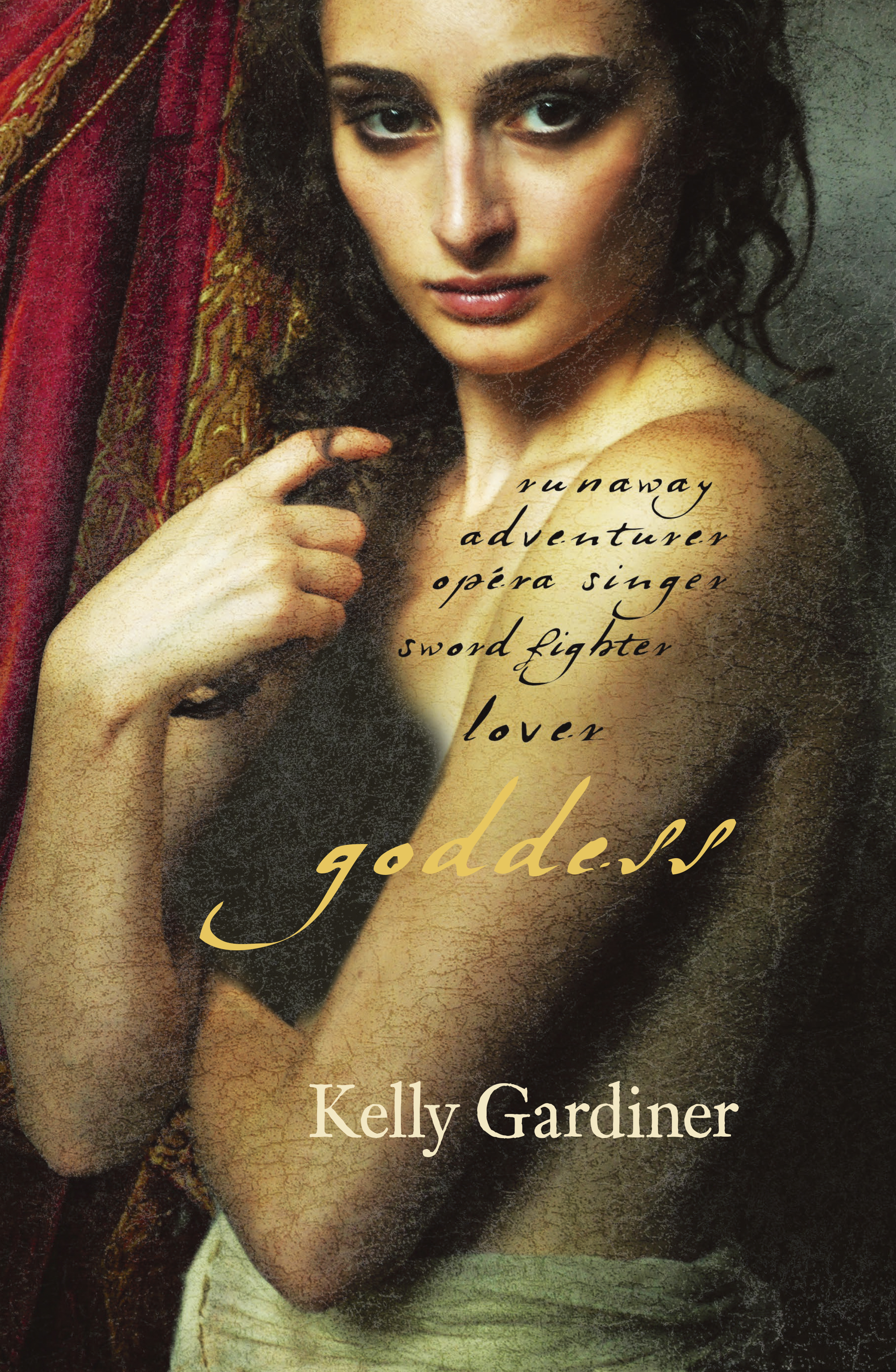
Here are a few questions and approaches involved in two of my projects based on the lives of real historical figures but imagined in fiction. The first, Goddess, published a few years ago now, was an interpretation of the life of Julie d’Aubigny, or Mademoiselle de Maupin, a seventeenth-century French swordswoman and opera singer.

Her story has been told before, on the page and on screen, usually as a series of extraordinary events. But her life is largely undocumented. I undertook years of original research into her life and career, for example, compiling the first comprehensive list of her opera performances, as any biographer would do. I wanted to create a credible narrative of her life, but I also had to decide how to treat those incredible episodes for which she is most famous. My decision as a novelist, which is probably not a decision a historian could make, was to include the wild stories if they served the narrative, unless I could prove them demonstrably wrong. I also knew that leaving them out would’ve meant the novel would disappoint many people.

Because famous or infamous people already loom larger than life in the mind of the reader. One of the most dramatic episodes in La Maupin’s early life was when she fell in love with another young woman whose family then threw her into a convent to get her away from Julie’s influence. Julie followed, and together they burned down the convent and eloped. It’s this kind of adventure that has seen her dubbed bad ass of the month online and made her into a Thelma and Louise-style feminist icon.

But I wanted to dig into that.

I crawled through the early accounts, trying to pin down details and find proof of the whole affair. But it’s the sort of thing that no convent is going to crow about, and the early biographers are coy. I found the most likely candidate for the convent in Avignon, but its current owner has no record of the incident.

Perhaps it was another convent, in another town.
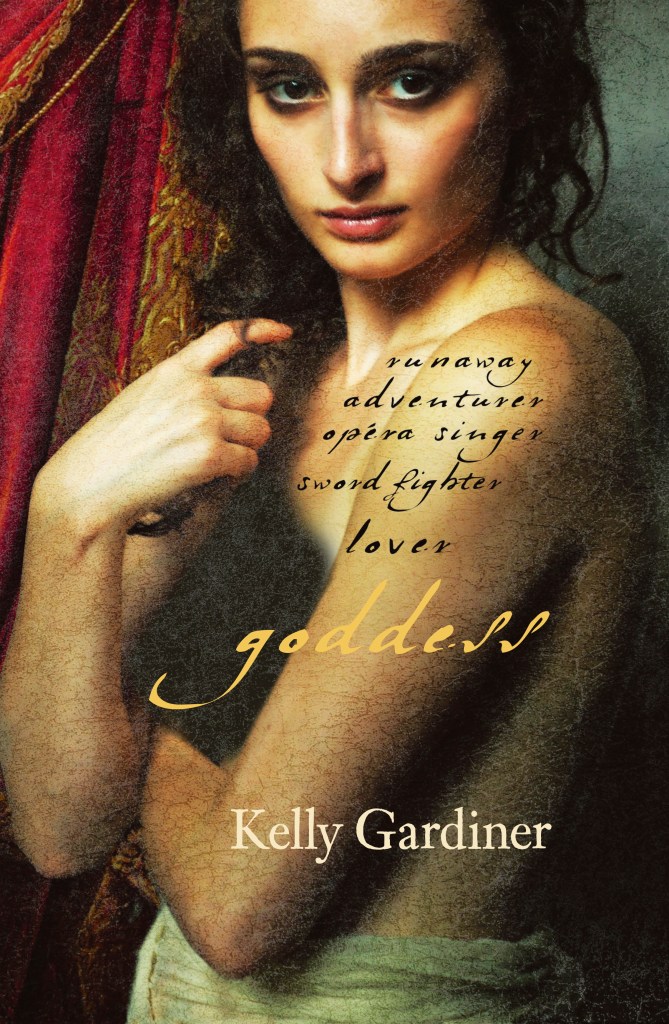
Image of front cover of GoddessPerhaps it never happened. But it’s not worth writing the story of the legend of La Maupin without that episode. She was fifteen and on the run, having committed what even she would have acknowledged as a sin, sentenced to burn at the stake. The two girls had no money, no friends, nowhere to go. The girl was found and sent to another convent, where she died. Julie became a star. Imagine how that was for her.

It must surely, if true, have made her into the adult woman she became, strutting through Paris in men’s clothes, fighting three duels on one night, at once brave enough to be openly bisexual and challenge noblemen to duels, and fragile enough to attempt suicide. So in my imagined life of La Maupin, it became one of the emotional events that defined her as a character.

A novelist looks for the stories that help explain the people, and keep the plot humming along, but has to decide whether the action is likely – truth may be stranger than fiction, but is it credible?

More recently, writing Grace, a novel about the lives of Queen Elizabeth I and the Irish pirate Grace O’Malley, I’ve faced similar questions, but from different angles. Again, two enigmatic people – why do I do it to myself? And although their stories are better documented, their inner lives remain elusive.

The tale I’m telling – and I’ve just finished redrafting it – is of the meeting of Grace and Elizabeth at Greenwich Palace in 1593. They were older when they met, both shrewd politicians and warriors in different ways. They were, in theory, lifelong enemies. Grace had led the rebellion against Elizabeth’s troops in the west of Ireland, for decades.

They were also, possibly, more alike than anyone either of them had ever met. They surely both experienced the shock of meeting a woman as assured, as cunning, as dangerous, as themselves.

Nobody knows what they said to each other. And in that absence, lies my fiction.

The Irish writer Emma Donoghue has said that ‘stories are a different kind of true.’[i] So how do we get to some truth of these two women’s stories? Can we? Whose truth is it? Theirs? Mine? Yours? The many historians who’ve written their own versions?

For me, and my readers, fiction has to be as historically accurate as possible. I’m not one of those authors who easily shifts the past around to make it fit the story I want to tell.

That means I try to get everything right – all the biographical and historical data – as well as all those moments that I can and must imagine.

I have the liberty to ask: how might Grace have felt, out on the open sea, or in a prison cell facing execution, or going to the palace to meet her enemy? There’s nothing in the archives to tell me that.

In many ways, Elizabeth is just as difficult to capture on the page. Her life was more regimented and more documented, and as she once said, ‘A thousand eyes see all I do.’ [ii]

But Elizabeth is just a little too iconic.

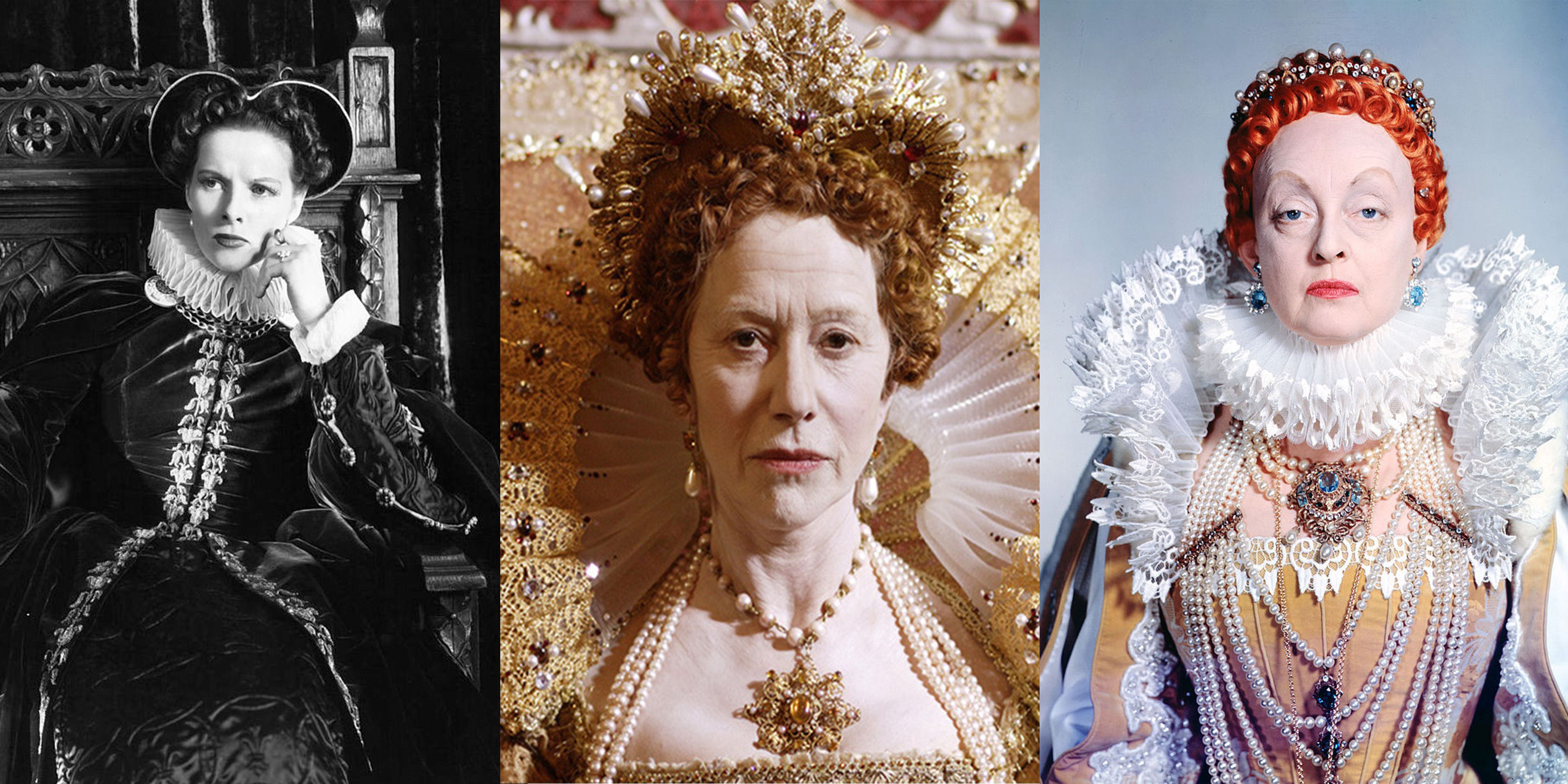
actresses as Elizabeth


We think we know her, but we don’t. I chose to focus on aspects of Elizabeth perhaps not as well known to readers of fiction. She was, for example, one of the foremost translators of her time, and was a prolific poet, writing every day. She often wrote hymns or sermons and then ordered that they be printed and distributed to every church in the kingdom. As you do.

So I started thinking about all the things these women had in common. In both their lives, and often around the same age, there were parallel stories to tell, and as they grew older those stories tangled together.

After years of war between them, somehow they reached agreement, perhaps even a degree of mutual respect. How? That’s the question the novel, Grace, explores. It is told in two voices, alternating between the points of view of these two remarkable leaders.

Which brings me to the critical creative decision novelists make – voice. How do we render characters’ speech, point of view, and narrative voice? And in this, lies one of the central questions about the nature of historical fiction.

You’ll often hear readers and writers talking about whether or not historical fiction, and the voices that convey it, are authentic. As if ‘authenticity’ is the holy grail of historical fiction, and distinguishes it from other forms of fiction and from nonfiction history writing. As if ‘authenticity’ can be used interchangeably with ‘accuracy’. As if authenticity is required to somehow compensate for the fact that what we’re reading is fiction, not history, or even that it offers a more truthful truth.

Sorry. There is no such thing as authenticity in historical fiction. There is historical accuracy, or not. But particularly when it comes to voice, the very idea is, as Henry James put it, ‘humbug.’[iii]

Authenticity, by definition, can’t be created.

‘Authenticity’ of voice, in particular, simply doesn’t and cannot exist in fiction set in the distant past. If I really wrote Grace O’Malley’s words as she’d have spoken them, you’d never understand it. What we aim for is something different altogether.

In 1820, introducing Ivanhoe, Walter Scott wrote: ‘It is necessary, for exciting interest of any kind, that the subject should be, … translated into the manners as well as the language of the age we live in.’

I suggest that what some writers now mean by authenticity, and what readers have been led to expect, is exactly what Scott outlined nearly two hundred years ago. It is not authenticity, but an accepted form of the historical novel. This is where history and fiction truly diverge.

The expectation of historical fiction is not really that it will be authentic, but instead that it will feel familiar to us from our reading of the genre – and often that familiarity actually comes from reading Scott or Robert Louis Stevenson and their descendants.

How many readers (or movie-goers) now believe that an ‘authentic’ Caribbean pirate voice is the one dreamed up centuries later and half a world away by the young Scotsman who wrote Treasure Island?

Image result for treasure island book cover

Authenticity in historical fiction is, in itself, a fiction, and at worst its own dialect set in the aspic jelly of the nineteenth century.

In the twentieth century Georgette Heyer redefined the Regency, while Rosemary Sutcliff created speech patterns that appeared to suit early Britons but were essentially modern, and Geoffrey Trease refined the model of a voice almost invisible to young readers like me, but with no glaring anachronisms. You will not hear any of his medieval knights say, ‘OK.’

Trease warned against the ‘costume novel’, in which all the tiny details of food, footwear and forsoothery are right but the psychology and vocabulary are all wrong. It’s the world view that matters, not ye olde worlde language – and here is one of our great challenges: creating characters whose emotional and intellectual frameworks seem to come from the past as a ‘foreign country’, but which at the same time can be understood by a modern reader – for example, in characters’ attitudes to religion or colonialism.

Historical fiction that is unaware of this process runs the risk of being mistaken about both past and present, and so less valuable as both history and fiction – perhaps even dangerous.

So – how do we work with that knowledge? What I did in Goddess was to knowingly perform a version of La Maupin, on the page, in a constructed voice that is overtly modern and consciously anti-authentic – while at the same time avoiding anachronism in the worldview, recognising that a seventeenth century woman could have no sense of what we might now call identity.

Or we can attempt the ventriloquism of A S Byatt in Possession (1990), Sarah Waters in The Night Watch (2006), or Peter Carey’s True History of the Kelly Gang (2000). Umberto Eco in The Name of the Rose (1983), references ancient and medieval texts and philosophies related by transparently modern voices – all in the guise of a crime thriller.

These authors’ metafictional approaches rest on a formidable body of historical research and technical story-telling ability.

They play with the irony that underpins historical fiction: that writers try to construct a world that will be accepted as ‘real’ by the reader, even if they know better than anyone else that it can’t possibly be so.

We know we’re reading, and we bring to that experience everything we’ve read before – but then we forget we’re reading. We know we’re reading about an imagined past, and we hold that in our minds at the same time as an awareness of our own modernity.

‘The paradox at the heart of fiction, the engine that drives it,’ writes Richard Lea, ‘is the tension between the knowledge that what you’re reading is all made up and the overwhelming feeling that it’s all true.’ [iv]

We acknowledge that historical fiction also has a role in telling history; as one of the ways in which people experience and understand history, and we often say that we write about the past to understand both past and present.

But perhaps what we really do when we write historical fiction is to imagine the past in the context of the present, and the voices with which we speak are our own.


[i] Donoghue, Emma, 2010, Room, HarperCollins, Toronto.

[ii] Borman, Tracey,  2017, The Private Lives of the Tudors: Uncovering the Secrets of Britain’s Greatest Dynasty, Hodder Staughton, London.

[iii] In 1901, James wrote: ‘You may multiply the little facts that can be got from pictures & documents, relics & prints, as much as you like ― the real thing is almost impossible to do, & in its essence the whole effect is as nought […] You have to think with your modern apparatus a man, a woman, ― or rather fifty ― whose own thinking was intensely-otherwise conditioned, you have to simplify back by an amazing tour de force ― & even then it’s all humbug.’ James, Henry 1974, Henry James: Letters vol. 4, Harvard University Press, Cambridge.

[iv] Lea, Richard, 2012, ‘The truth about memory and the novel’, Guardian book blog, 14 June 2012.

Coming up

What’s happening?

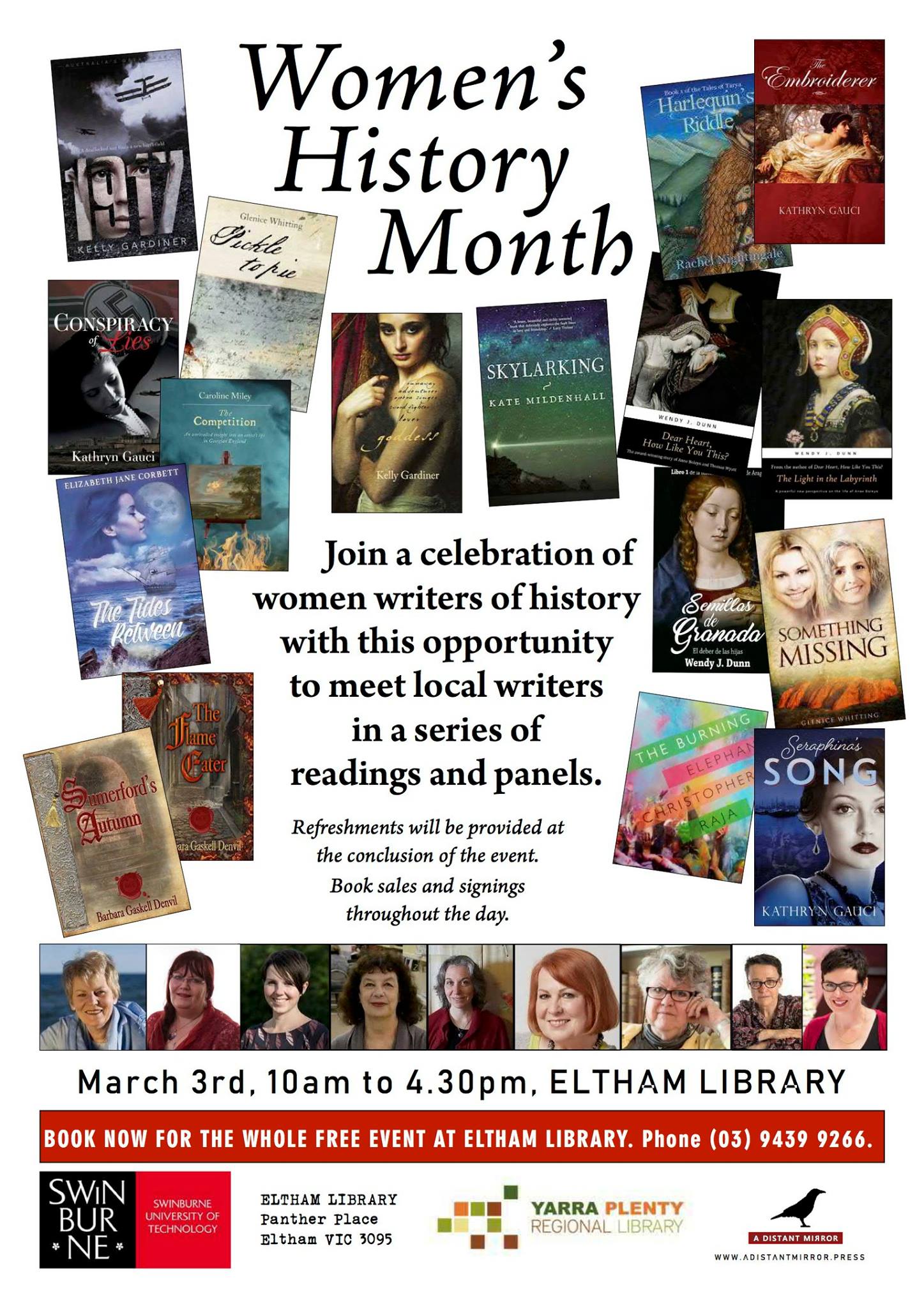
It’s Women’s History Month.

I’ll be having a chat about writing about women of the past at the Women’s History day at Eltham Library on March 3.


Then on 19 March, I’ll be reading a bit from the draft of Grace, on the lives of Irish pirate Grace O’Malley and Elizabeth 1, at the Wheeler Centre.

Details here.

Hope to see you out celebrating women’s history month. Or if you’d rather, stay inside and read some instead.

Great novels to read this month

In honour of International Women’s Day and Women’s History Month, here are just a few of my favourite novels by and about women, all illuminating the lives of women in the past and today.


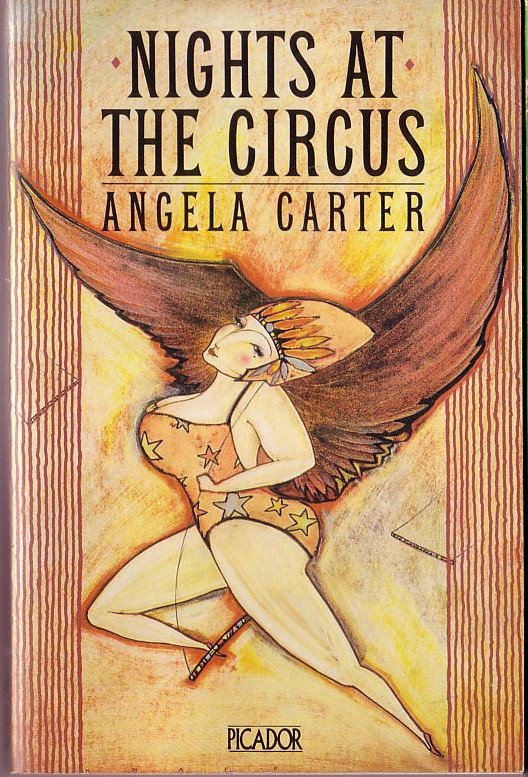
book cover angela carter

Nights at the Circus, Angela Carter
A thrilling trapeze act of character, voice and magic.


Beloved, Toni Morrison
Unflinching. Utterly captivating. A writing masterclass in one small but enormous book.


The Passion, Jeanette Winterson
One of the great postmodern historical novels, The Passion is a lesson in using voice to connect past and present, and in combining heartbreak with restraint.


Fingersmith, Sarah Waters
I’ve said this before, I know: this is virtuosic ventriloquism and storytelling, with a twist that will have you throwing the book across the room and then scrambling to pick it up again to find out what happens next.


The Colour Purple, Alice Walker
It never gets old. Never.


Alias Grace, Margaret Atwood
Chilling. Brilliant.


Possession, A. S. Byatt
Another neo-Victorian ventriloquist’s performance, capturing all the melodrama of a Dickens novel.


Orlando, Virginia Woolf
I wish there was another word for seminal. How about: the book that gave birth to us all? (Here’s Tilda Swinton’s take on it.)


film adaptation of orlando

Tilda Swinton as Orlando and Quentin Crisp as Elizabeth (and two excellent hounds) in Sally Potter’s adaptation of Orlando.


And some more recent titles:
Skin, Ilke Tampke
Beautifully written and reimagined world of early Britain during the confrontation with Rome.


Theodora, Stella Duffy
The appropriately riotous tale of the acrobat who became Empress of half the known world.


Code Name Verity, Elizabeth Wein
It’s brutal and stunning and unforgettable.


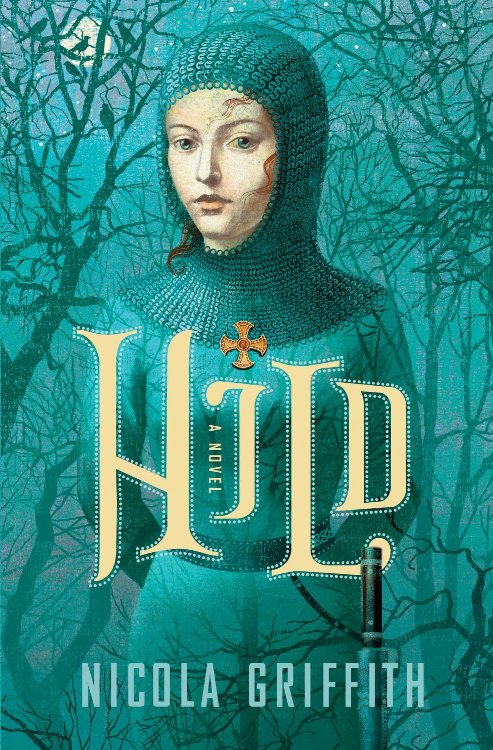
Hild, Nicola Griffith
Another miraculous reimagining of Britain – this time in the early decades of the Christian missionaries and saints.


book cover for Hild


I could go on and on but I won’t. Feel free to add your own suggestions.

Human stories

There’s been nary a day in the past decade that I haven’t had to set someone straight about the fact that I wrote my books for people, not women. My female colleagues report much of the same. We swap stories and shake our heads and laugh, but it isn’t funny. Because when an artist has to assert that her intended audience is all humans rather than those who happen to be of her particular gender or race, what she’s actually having to assert is the breadth and depth of her own humanity.

– Cheryl Strayed, on gender bias in fiction, in the New York Times.

On that whole ‘relatability’ thing

Painting - St Catherine reading

Somehow in recent years, the idea has taken hold that characters – especially protagonists – in novels have to be ‘relatable.’ I blame Stephanie Meyer. She created the character Bella in the Twilight trilogy as a blank canvas onto which her teenage readers could project themselves; an audience surrogate that appealed to an audience of around 120 million.

Thanks for that.
So an entire generation of young women, in particular, has grown up with the idea that girls in novels should be just like them, even when surrounded by brooding vampires.
Many of those readers go on to read books by authors who construct powerful or difficult or troubled or hilarious female characters, and come to realise that a blank canvas is pretty, well, blank. To be fair, some writers have also argued that Bella is actually a feminist role model:
Bella is more or less modelled on the traditional fairy tale hero [not heroine], as her eventual accession to a type of monarchy is characterized not by humiliation, but rather by her gaining qualities that enable selfgovernance.
–  Meghanne Flynn
But whether or not it’s reasonable to blame Twilight (and I was being just a little facetious), I still hear and see so many comments that this book is so relatable or that book is not, and therefore no good. I just can’t relate to anybody in it.
On the other hand, in historical fiction, you will hear and see lots of emphasis on ‘authenticity.’ This somewhat mystical quality transports the reader into an imagined past and provides them with an experience that’s just like being there. Or something.
If you think these two things are possible and desirable, there’s an obvious tension here. On one hand, an ‘authentic’ figure from the distant past is very unlikely to be someone to whom a modern reader will relate – unless of course the reader projects madly onto that character, in which case the veneer of authenticity is smashed.
But do not fear, gentle reader, because I’m here to help. Kind of.
Both ideas – especially when they are framed as rules – bring trouble and strife to the act of reading, and possibly writing.

Reading and relating

What, after all, is relatability? (Apart from not actually being a word.) Is it the idea that people in books will be just like you? How tedious. Who wants to read about themselves over and over?
Of course, sometimes we all want to escape into another world, another life, and it’s easier to do that in partnership with a companionable character – a brain transplant, if you like, that enables you to feel supported and comforted as you accompany your heroine or hero on her or his journey.
But that’s just one type of reading experience. There are many others, involving characters that bring us face-to-face with the unfamiliar, unfathomable, unpleasant, perhaps even the unbearable.
lolita book cover
And what about those amazing and memorable characters who are nothing like us, but who we end up adoring? Severus Snape. Albus Dumbledore. Indeed, if you think about it, the only truly relatable character in the Potterverse is Ron, the everyman. He’s in there to be the human foil of brilliant Hermione and powerful but angry Harry. Ron’s the guy who is nothing special but has his own strengths and many weaknesses, as do we all.
But it’s not the story of Ron, is it? Thank goodness. It’s the story of Harry and Hermione and Dumbledore and Snape. Pretty much.
In each of them, we can find something that we connect with, something human and warm (even in Snape) and flawed and meaningful. They’re also interesting and unknowable and complex, and we can’t be sure what any of those characters will do or say at any moment. They aren’t like us. They all (even Snape) contain elements of who we wish we were: wise or brave or brilliant or ethical or strong or pure or funny. They are braver or brainier or more powerful than we may ever be. Together, they people a world we want to inhabit – with them.
Hermione being brainy
That’s relating.
So relating to – connecting with – characters is a wonderful part of reading (and watching TV and movies), but they don’t have to be just like us. We all have our teenage favourites; someone who showed us who we might be. Mine was Jo March. Millions of people much younger than me got to grow up with Hermione Granger and Harry Potter, Buffy the Vampire Slayer and her friends, Josie Alibrandi, or the necromancer Clariel or Sib and Lou in Fiona Wood’s Wildlife or Hazel Grace (The Fault in Our Stars – although there are suggestions that besides Hazel, all John Green’s characters are so relatable they are much the same … as him.)
But that’s not the only possible reading experience, and if in a sense we read to understand the world and the people in it, we also read about things and people we can’t comprehend at first – about five year-old Jack and his Ma in Room or Maud Lilly in Fingersmith or the revolutionaries in A Place of Greater Safety or Takeo the samurai or for that matter Hedda Gabler or Madame Bovary or Prince Andrei.

Feel so real

Which brings us to the question of ‘authenticity.’ There’s no such thing. (Of which more at a later date.) But the idea of authenticity and the idea of relatability in historical fiction really can’t co-exist.
If an author did manage to create a character that approached the world view, voice and life of, say, a fifteenth century princess, she would be so unlike any conception of princess a modern reader brings to the reading that there is no chance the princess would be understood, let alone relatable.
When we write historical fiction, and when we read it, we necessarily bring to the process all of our post-20th century knowledge, our modern vocabulary and syntax, our fundamentally different world view and manners and customs and philosophy and skills and reading history.
It couldn’t be further from the truth, or from the idea of an authentic experience.
It is what it is – just an element of the genre.
Apart from anything else, if we really captured the speech of Anne Boleyn or Richard III or an archer at Agincourt or a pirate of the Caribbean, readers wouldn’t have a clue what they were saying, let alone be able to relate to them.
Instead, we create, try as we might, characters in our own shape and shadow.

Writers are naughty like that

Writers of all genres create characters for all sorts of reasons, not only for readers to relate to. Sometimes, we create characters who lie, or are vain, or pompous, or stupid, or rotten, or weak, or tricksy, or criminal. We create unsympathetic characters or unreliable narrators on purpose. We create anti-heroes as well as heroes. They may not be relatable, but there will (almost always) be something undeniably human about them, so that their very unreliability or unappealing nature shines a light on what it means to be human. It’s not about relating – it’s about exploring.
Seeing the world through the eyes of Hilary Mantel’s interpretation of Thomas Cromwell, or Dr March (rather than Jo) in Geraldine Brooks’ March is fascinating and compelling, but it’s not designed to make the reader feel all cozy. It can be a difficult process to put yourself in their shoes. But if you do, what do you see? You get an insight into the Tudor world – into Henry and Anne and Thomas More – unlike any you’ve ever seen. Or you feel the weakness of a character idealised as a hero by his family, and glimpse the random brutality of the American Civil War.
So what matters here is the author’s intent. If the author hasn’t tried to create a relatable character, then it’s just not relatable or I didn’t like the main character isn’t a meaningful response to the book in your hand. It doesn’t really engage with the text or the characters at all.
It says more about the reader than it says about the book.
The answer? Simply read more and read more widely – read all sorts of things, surprise yourself, and shift outside your expectation of what a protagonist can and should be.
It’s the expectation we bring to reading that matters.
Let’s be willing to be astonished.
More reading