The good old Harry Tate

A few people have asked me about the aircraft Alex and Charlie fly in 1917.

Here’s an RE8, nick-named the Harry Tate after a music hall star. This one is a plane from 3 Squadron, Australian Flying Corps –  the real unit to which my fictional characters belong.

3 Squadron RE8 on the Western Front

3 Squadron RE8 on the Western Front

The RE stands for Reconnaissance Experimental, and this was the eighth model in the line. It was pretty revolutionary, as the first British two-seater aircraft with the observer (or gunner – in 1917 that’s Charlie) in the rear cockpit, with a clear view of the sky. The observer defended the plane while the pilot (Alex) in front flew, navigated, took the aerial photographs, and if necessary used the Vickers machine-gun. The Vickers was synchronised to avoid hitting the propeller blades. (That might sound obvious, but the technology didn’t exist at the start of the war.) The RE8 had a 150horsepower engine and a maximum speed of 102 miles per hour. It could stay in the air for over four hours  – significantly longer than many other planes of the time.

You might think that taking a few snapshots would be easy. Here’s the kind of camera they used.
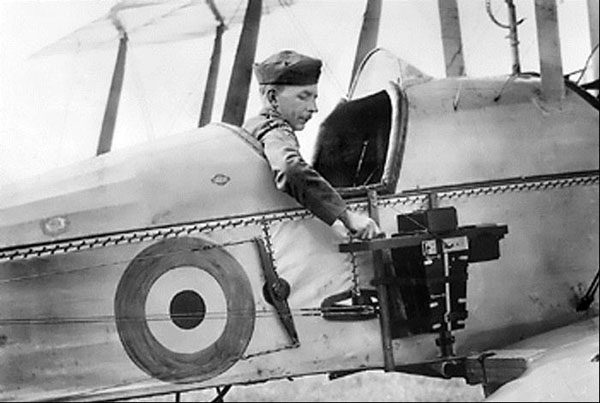
Aerial camera operated by the pilot.

Aerial camera operated by the pilot.

And here’s what the trenches looked like from the air. (I’ll write more about that soon.)
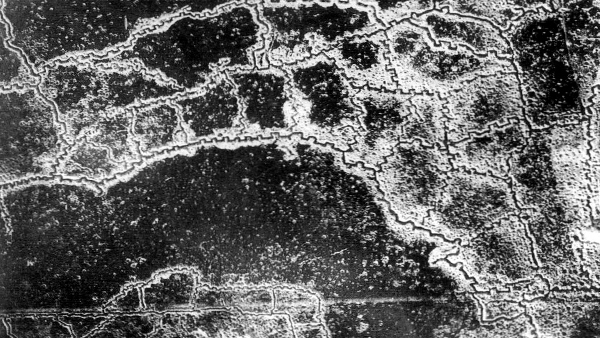
Deep, well-dug German front line trenches and support system

Deep, well-dug German front line trenches and support system

Each squadron had a ground crew of skilled mechanics, armourers (like Len in 1917), riggers and other craftsmen to keep the planes flying. They worked around the clock under pretty harsh conditions – while the airfields were set back from the trenches, they were still shelled and bombed and freezing in winter.

Mechanics from 3 Squadron AFC on the Western Front

Mechanics from 3 Squadron AFC on the Western Front

And of course, no plane was safe flying about over the Lines. Both sides had hunting packs of swift “scouts” or fighter planes, whose job it was to knock the other side’s aircraft out of the sky. Books written by pilots after the war (such as Winged Victory by V.M. Yeates or Sagittarius Rising by Cecil Lewis) try to capture the madness that was the aerial dogfight.

A pilot, in the second between his own engagements, might see a Hun diving vertically, an SE5 on his tail, on the tail of the SE5 another Hun, and above him again another British scout. These four, plunging headlong at two hundred miles an hour, guns crackling, tracers streaming, suddenly break up. The lowest Hun plunges flaming to his death, if death has not taken him already. His victor seems to stagger, suddenly pulls out in a great leap, as a trout leaps at the end of a line, and then, turning over on his belly, swoops and spins in a dizzy falling spiral with the earth to end it. The third German zooms veering, and the last of that meteoric quartet follows bursting … But such a glimpse, last perhaps ten seconds, is broken by the sharp rattle of another attack.

– Cecil Lewis, Sagittarius Rising ( Folio Society edition, London, 1998, p122)
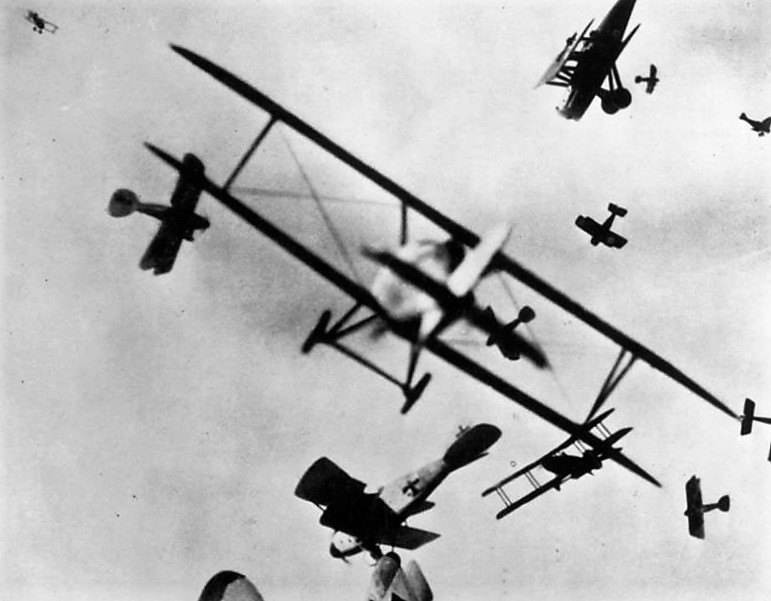
dogfight

Casualty rates, in training and in combat, were high.

This is Lieutenant Leslie Sell, from Albert Park, Melbourne, beside an RE8. A 25 year old photographer prior to enlisting on 23 October 1916 as Private Sell,  but quickly became an Air Mechanic 2nd Class. He left  Melbourne with 4 Squadron on 17 January 1917 aboard RMS Omrah. After arriving in England, he undertook pilot training and on 20 December 1917 he was commissioned as a Flying Officer (Second Lieutenant). In early 1918 he joined 3 Squadron AFC in France.

Lt Sell was shot down on 25 March 1918 and died later that day of his wounds. He is buried in the Hazebrouck Communal Cemetery, France. (Source: ADF Gallery and Australian War Memorial)

Lt Leslie Snell. Killed March 1918.

Lt Leslie Sell. Killed March 1918.


Feature image: RE8 at Duxford Air Show, by John5199 (Creative Commons)
Cry me a river

It seems I’ve been making people cry.

Well, not so much me as my book.

And yes, that is the plan.

I’ve posted before about the decisions I made in writing 1917, especially about portraying violence and loss.

But while writing it, I was also thinking about the tears I shed over books when I was the same age as my readers – over Helen in Jane Eyre, over everyone in The Isle of the Blue Dolphin … and don’t get me started on Little Women.  I might be scarred for life about the sad demise of Beth March, but it’s the sort of scarring that is easier to bear in fiction than in real life. It’s loss that feels real, but isn’t.

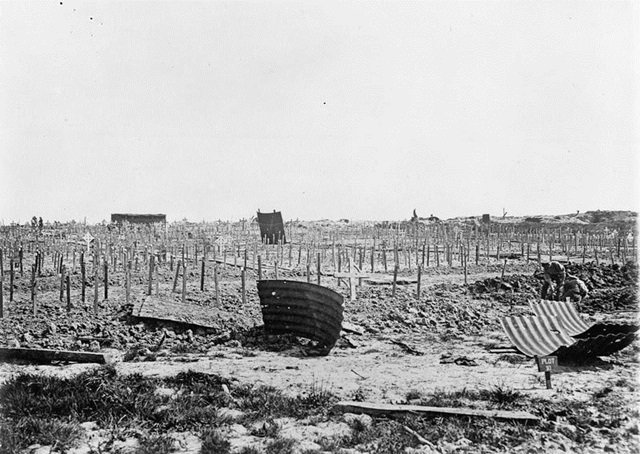
When you write about the First World War, you can’t shy away from sorrow. The world was grieving – and I do mean the world, as there were civilian and military casualties from so many countries. By 1917, communities on the Home Front reeled from the news every day of more loss, more destruction. They mourned family members and friends, and in some cases entire villages or workplaces, especially after the slaughter of 1916 on the Somme.

British cemetery at Hooge, just after the war. Image: Imperial War Museum

British cemetery at Hooge, just after the war. Image: Imperial War Museum

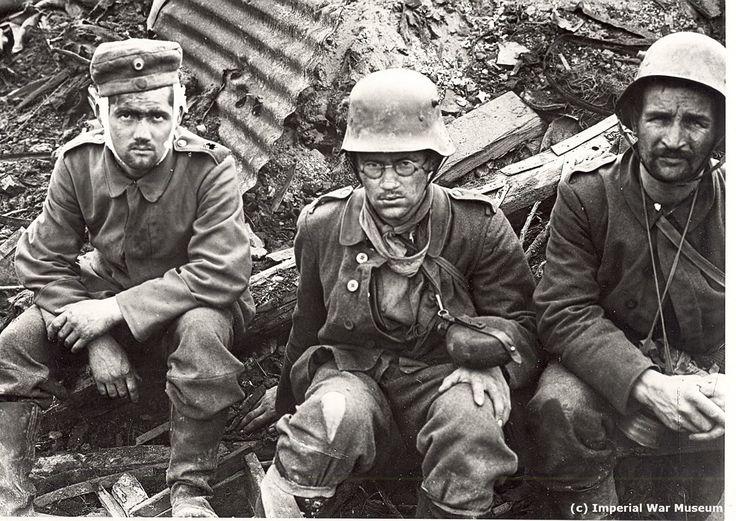
And for those in the fighting, the terror and grief never ended. Shell-shock was finally beginning to be understood and treated, but the diaries, letters, poems and memoirs tell us that almost everyone was profoundly affected by the loss of friends, the constant bombardment, a sense of foreboding, and the physical effects of sleep deprivation, inadequate food and water, lice and rats, mud and snow, disease, living out in the elements every day and night – a nightmare that never seemed to end.

Shell-shocked German soldiers. Image: Imperial War Museum

Shell-shocked German soldiers. Image: Imperial War Museum

It’s war. I couldn’t write about it honestly, couldn’t do justice to the voices in those diaries, letters and memoirs, without trying to reflect that reality. Without breaking a few hearts.

I just remembered this old interview I did with Writers Victoria, published while I was researching 1917:

When was the last time you cried after reading a book? Which book and why did it make you cry?

I’ve been reading a few World War One diaries lately. They are all heart-breaking but sometimes they just stop. Yesterday I saw one in the State Library and got to an entry that reads, “I seem to have come through all right so far”. Then that’s it. There’s no more.


So it makes me cry too.


British women laying wreaths near Abbeville after the war.

British women laying wreaths near Abbeville after the war.

Coming up

March is a busy month.

But what fun.

I get to chat with my old mate Kate Mildenhall about writing 1917, and especially about the research and writing about war and politics for young readers. That’s a special event for teachers and librarians at Readings Books in Hawthorn on 7 March 2017. Details and bookings here.

But that’s not all.

It’s Women’s History Month, and there’s stacks going on, including a whole program of events based around Eltham.  First up is a full day of discussion about writing history and historical fiction, starting with a panel (Oh look! Kate again)  on why women write history on 5 March.

780c9281-48a8-464a-859d-af1f2e0a7fb5-6469-000005f78a9b7621_tmp

There are events every weekend, and then I’m back again in Eltham for a debate on 25 March on the powerful and different ways that nonfiction and fiction tell the stories of the past, and why women are so good at telling these kinds of stories. The panel includes:

  • Professor Josie Arnold
  • Barbara Gaskell Denvil
  • Glenice Whitting
  • Me.

Details of all the events for Women’s History Month at the gorgeous Eltham Library are here.

But that’s not all.

I’m hosting a discussion on researching and writing biography on 21 March at State Library Victoria (I’m lucky enough to work there). I’ll be talking with Minna Muhlen-Schulte  and Sandra McComb about their work in history and biography, and particularly their new articles in the La Trobe Journal.

And then the very next day, Unladylike podcast records live for the first time, as part of the Castlemaine State Festival. Unladylike co-host Adele and I will be interviewing Lynne Kelly and Robyn Annear about writing nonfiction – how they manage to convey incredible detail and knowledge for their readers.  That’s on 22 March in beautiful Castlemaine.

Phew! Well, we wouldn’t want to sit still for too long, would we?

Writing the war

Among the many decisions we make when writing for young readers are creative and ethical decisions about violence and grief.

I’ve always been very conscious of how to treat scenes like swordfights or battles in fiction for young readers. It’s not that I shy away from the reality of violence – quite the opposite. I feel like I have a responsibility to think about how to present it honestly, and not just as a big, mindless adventure (not that there’s anything wrong with that, it’s just a different type of book).

So say a kid had their first swordfight. Say they were just a little bit older than the reader – twelve or thirteen, maybe, facing off against a grown man. It’s all very exciting, and I make sure it’s an action scene with plenty of – ahem – punch. But then I wonder, if that was you, and you’d just actually stabbed someone, wounded someone, drawn blood for the first time in your life, how would you feel? Say you’d been chased by a baddie all over the Mediterranean, and finally came up against him in a duel on the clifftops and he ended up dead. How would you feel? Even if you were a pirate?

I made certain decisions about how to present fighting and battles in the Swashbuckler series, then how to present torture and loss in Act of Faith and The Sultan’s Eyes. (That makes them all sound terribly grim. I promise they’re not.)

But writing about war, in particular writing about the First World War, in 1917 presented a different set of challenges. How do you explain shell-shock to a reader aged ten? How do you present the war in the air without glorifying the aces and ignoring their casualties? Which of your characters will survive? (It’s the Western Front. They can’t all make it through unscathed.) How do you convey the intense grief of those whose best mates or loved ones were killed or wounded or missing?

How do you do all that without it becoming unbearable for the reader?

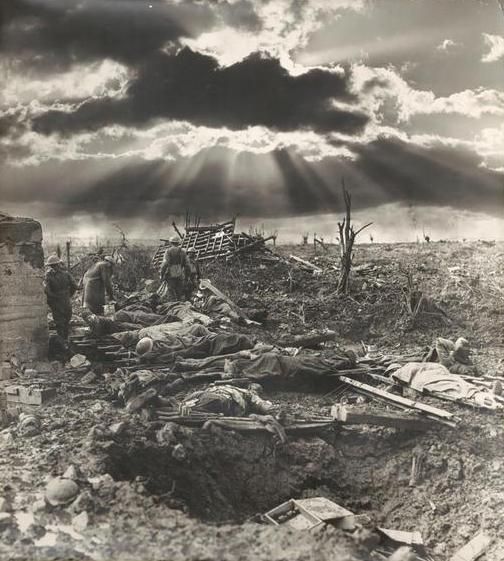
Battleground with wounded

Frank Hurley’s famous photo of the morning after the first battle of Passchendaele, 1917 (Source: ABC/NLA)

The life expectancy of a pilot on the Western Front in 1917 was just a couple of weeks. They lived in a state of heightened tension and with impending doom, as did the men in the trenches. They could never explain it to the people at home. Their letters home are often totally different to their diary entries, or the oral histories recorded years later. On the other hand, the newspapers were filled with stories about dashing flying aces and their kills, as if each kill was just a number, not a human being.

How do you write a war?

Well, I hope I’ve managed to balance the needs of the reader with the pleading voices of the past.

We’ll see.

Any day now…

My new book comes out in a few weeks.

1917 is part of the Australia’s Great War series  by Scholastic.

When I was asked to be part of the series by publisher Clare Hallifax, I knew immediately what I wanted to write: a story about a pilot whose family is opposed to the war – or at least, opposed to conscription.

RE8 plane

An RE8, as flown by 3 Squadron, Australian Flying Corps (Source: AWM)

1917 was seen by so many people as one of the worst years of the war. The losses on the Western Front were horrendous, ANZAC troops were involved in shockingly brutal encounters like Bullecourt and Passchendaele, and on the home front there were strikes and food shortages and arguments about the second plebiscite on conscription. Women’s roles were changing, new technology made warfare unlike anything ever witnessed before, and the war itself seemed to show no signs of ending.

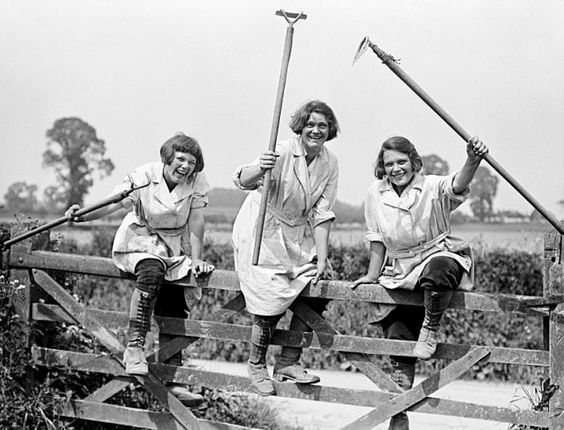
Yung women on a farm gate

Young women helping out on a farm (Source: Telegraph UK)

My own family was involved in those conscription debates,  so I grew up with stories about the huge rallies through the streets of Melbourne, and my fire-eating great-grandmother. But my grandfather (who was only little during the war) was obsessed with planes, and joined the Flying Corps as a mechanic as soon as he could, well after the war. I never understood how one family could reconcile those two things. But they did. I guess.

Anyway, 1917 is kind of but not really about them, and more about the many people like them who were worried sick about sons or daughters at the Front, but also affected by everything that was going on at home and struggling to make ends meet.

The main characters are invented, but plenty of real people make appearances, including activists Vida Goldstein and Adela Pankhurst. It’s set on the Western Front – in Flanders, here in my own suburb of Coburg, as well as Point Cook air base, Mordialloc Women’s Farm, the orchards of Box Hill, and pilot training bases in the UK.

You can read more about the book here. It’s written for readers 9 and over.

I do hope you like it.

On the road

I’m writing this from Dublin, where I’ve been hunting around for traces of the medieval city and spent hours in the glorious reading room of the National Library.

Today I head west, to County Mayo, back on the trail of the Irish pirate queen, Granuaile – Grace O’Malley, for my current project: Grace, on her famous meeting with Elizabeth I.

But first, I have other work to do, reading the proof pages of my next book, 1917. It’s for young readers and it’ll be out in February.

Here’s a brief outline of the book. And just look at this dramatic cover!

Book cover 1917

The ‘R’ word

She’s not the first to say it, but she says it well: an interesting take on romance fiction as a feminist genre, from Trisha Brown:

Romance is one of the most feminist sectors you can find in all of art and entertainment. That statement defies all of the stereotypes, but it’s true.

You can read the whole article here.


Great novels to read this month

In honour of International Women’s Day and Women’s History Month, here are just a few of my favourite novels by and about women, all illuminating the lives of women in the past and today.


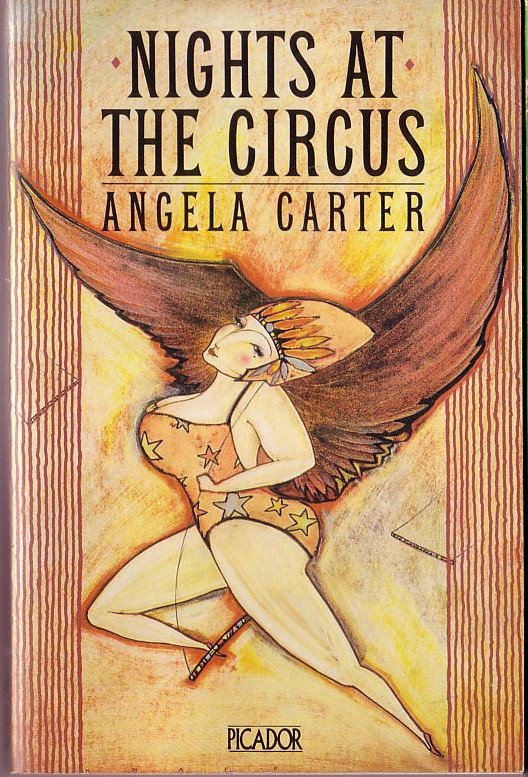
book cover angela carter

Nights at the Circus, Angela Carter
A thrilling trapeze act of character, voice and magic.


Beloved, Toni Morrison
Unflinching. Utterly captivating. A writing masterclass in one small but enormous book.


The Passion, Jeanette Winterson
One of the great postmodern historical novels, The Passion is a lesson in using voice to connect past and present, and in combining heartbreak with restraint.


Fingersmith, Sarah Waters
I’ve said this before, I know: this is virtuosic ventriloquism and storytelling, with a twist that will have you throwing the book across the room and then scrambling to pick it up again to find out what happens next.


The Colour Purple, Alice Walker
It never gets old. Never.


Alias Grace, Margaret Atwood
Chilling. Brilliant.


Possession, A. S. Byatt
Another neo-Victorian ventriloquist’s performance, capturing all the melodrama of a Dickens novel.


Orlando, Virginia Woolf
I wish there was another word for seminal. How about: the book that gave birth to us all? (Here’s Tilda Swinton’s take on it.)


film adaptation of orlando

Tilda Swinton as Orlando and Quentin Crisp as Elizabeth (and two excellent hounds) in Sally Potter’s adaptation of Orlando.


And some more recent titles:
Skin, Ilke Tampke
Beautifully written and reimagined world of early Britain during the confrontation with Rome.


Theodora, Stella Duffy
The appropriately riotous tale of the acrobat who became Empress of half the known world.


Code Name Verity, Elizabeth Wein
It’s brutal and stunning and unforgettable.


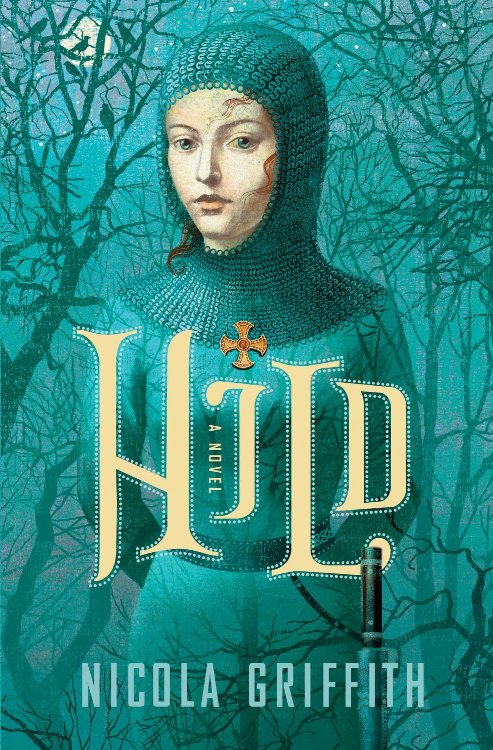
Hild, Nicola Griffith
Another miraculous reimagining of Britain – this time in the early decades of the Christian missionaries and saints.


book cover for Hild


I could go on and on but I won’t. Feel free to add your own suggestions.

Busy bee

It’s spring here in Melbourne. Sunday. I ought to be gardening or, given that I’m a Melburnian, out to brunch, but instead I’m crazy busy.

All good though.

Yesterday I went to a briefing about the Dinosaur Dreaming project at Melbourne Museum. I’ve volunteered to go on a dig along the “Dinosaur coast” in February. Next weekend, they teach us to break rocks. You have to take your own chisel and magnifying lens thingummy. I can’t tell you how thrilling that is.

Then I spent the afternoon on a panel at the Professional Historians Association’s social media masterclass, full of excited historians embracing Twitter and Facebook, Pinterest and Periscope.

The ebook I co-edited earlier this year has just come out: academic papers from the fourth global Gender and Love conference in Oxford. It’s called Past and Present: Perspectives on gender and love. 

Earlier in the week I gave a paper to colleagues in my department at La Trobe University – my initial thoughts on something which just keeps getting bigger and more complex, about the idea of the “strong female character” in young adult fiction, where it comes from and what impact it has.  See? There’s another book project right there. As if I haven’t got enough to do. But it’s so fascinating. Early days. I don’t even really know what questions I’m investigating yet.

And I’m loving the idea that Goddess is now out in the US and Julie is becoming famous all over again, in places she couldn’t even imagine.

She deserves it.

I’ve had a few questions from readers coming through, so I’ve just published some FAQs about the book and Julie. If you think of any more, drop me a comment below.