What have the Romans ever done for us?

Right now, I’m in the north of England and heading for Hadrian’s Wall.

I’ve always wanted to see it, and to walk its length. This time, I hope to walk along at least one stretch and look at some of the excavation sites. I’m researching Roman and Viking history here in the north for some future children’s books, and also writing about several key pilgrimage sites for Sublime.

So I’m making my way toward the Wall from Oxford . I stopped in York , one of the most important Roman cities, base for both  Septimus Severus and Caracalla – Constantine the Great was declared Emperor here in 306, a long way from Constantinople. York was founded by the famous Ninth Legion in AD 71 – readers of Rosemary Sutcliff will be pleased to hear that York  Cathedral houses a rusted Eagle of the Ninth.

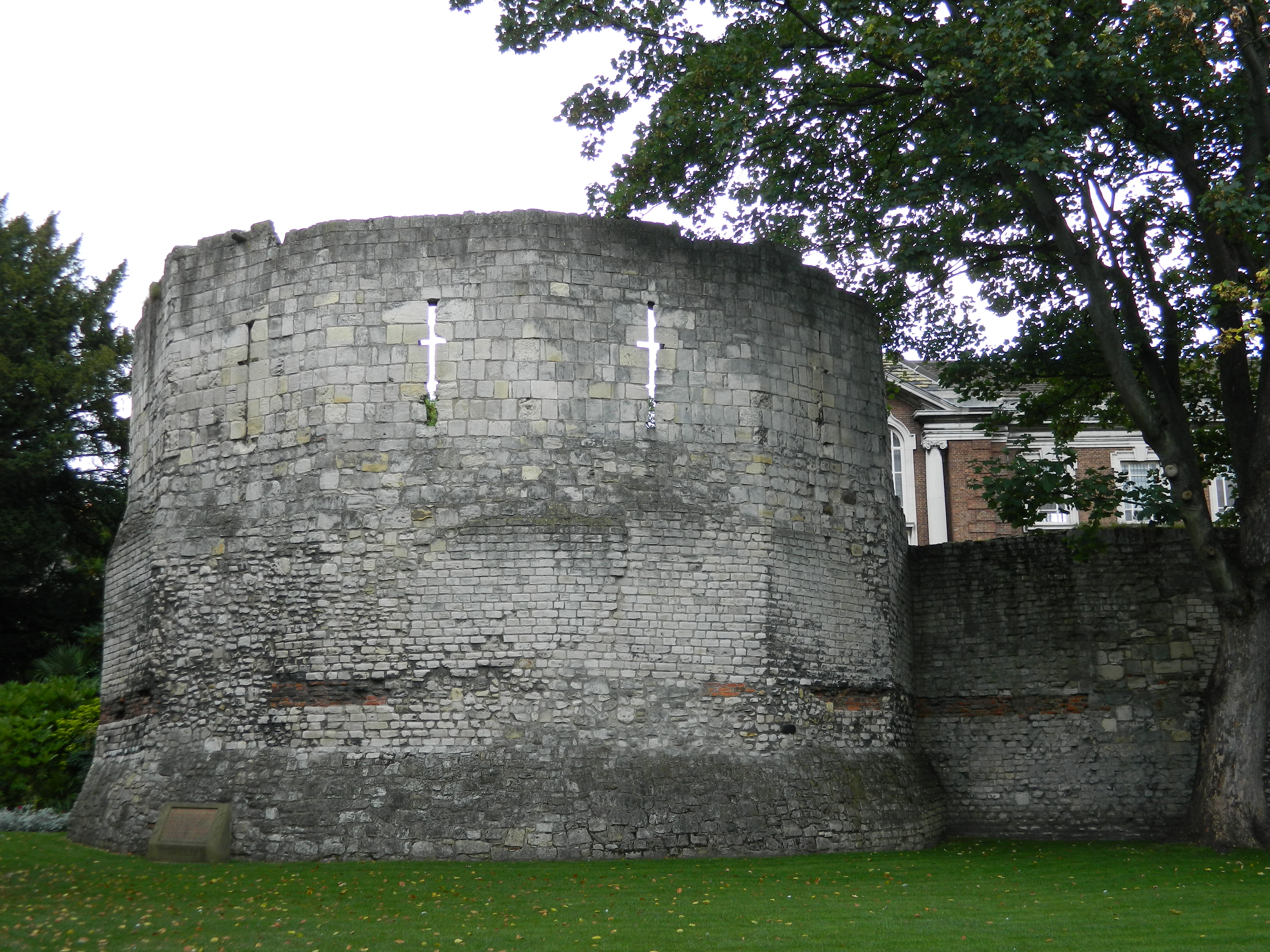
Multangular tower

The Multangular tower – the western corner of the legionary fortress 200 AD

Today I’m in Durham, founded by the Normans and one of the great sacred sites of Britain. Pilgrims have come here for centuries to visit the shrine of St Cuthbert. I’ll do that tomorrow. But today I made my own pilgrimage, to the other end of the gob-smackingly beautiful Durham Cathedral, to the grave of the Venerable Bede, “Father of English History.”

I think he might have played a supernatural scribe trick on me, because I left my notebook in the quire stall after Evensong.

Medieval painting of Bede

Very funny, Bede.


In residence

I’m heading off to Bundanon this week for a two-week writing residency. Can’t wait. It’s the former home of Arthur and Yvonne Boyd on the Shoalhaven River, bequeathed to the nation and now held in trust, and sounds divine. Perhaps you’ve seen some of his paintings of the area, especially the river and the rock formations.

I’m honoured to have been selected. And thrilled to be getting some solid writing time at last.

Anyway, I’ll be driving up via a spot of research in Canberra at the War Memorial and National Library, then get stuck into drafting 1917, a historical novel for kids.

Expect photos of kangaroos.

Field notes

As many of you know, I like to log my research as I go: photos, thoughts, findings, questions, amazing historical discoveries, crazy moments when I think I’ve discovered something but haven’t – all the delights of the historical novelist’s process.

This is especially true when I’m on the road, which I am about to be.

So I’ve started a new blog on which I’ll post findings about several projects all at once, because I have so many stories going around in my head at present that I can’t possibly have a blog for each.

It’s called Field Notes and it’s over on tumblr.

I’ll still post general thoughts about writing and reading here as always, and cross-link when appropriate.

Confused? Oh, you just wait.

I’m about to fly to England, then Ireland, then back to England, then Flanders, then Paris, then home. And while I’m there I will be researching material and sites for:

  • 1917 (a book for young readers set in … you guessed it)
  • War Songs (a novel for adults, which I’m redrafting, also set in World War 1)
  • Fire Watcher  (a series of historical fantasy novels for young readers, set in London)
  • Sublime (a travel narrative)
  • Various other features and shorter pieces.

So stand by for photos and posts on everything from Irish pirate queens to war graves. And you never know, there might be a bit of future Isabella Hawkins work to do, and possibly a visit to Bletchley Park. It will be hectic.

By the way I have source books for most of my projects over on Pinterest if you’d like to snoop around and see where my imagination is heading.

Oh, how I love this bit! Except for the four hundred hour flight (well, that’s how it feels, right?).

But don’t forget – before I’m allowed to leave the country, I’m appearing at the Melbourne Writers Festival on Friday 29 August at 10am. Details here.


Autumn on the Somme

Overgrown trenches

Last month I visited the Somme battlefields to do some research for a work in progress, War Songs. It’s a manuscript I began some years ago, and need to rewrite. One day.

War Songs is the story of an ambulance driver and a nurse in a Casualty Clearing Station on the Somme from 1916 to 1918, the years of the great battles on that stretch of the Western Front, and since I was in France I took the train north to Amiens to get a better feel for the country and the memories it holds.

Amiens Cathedral is one of the wonders of the Gothic world, as vast and glorious as Notre Dame in Paris, but without the crowds.

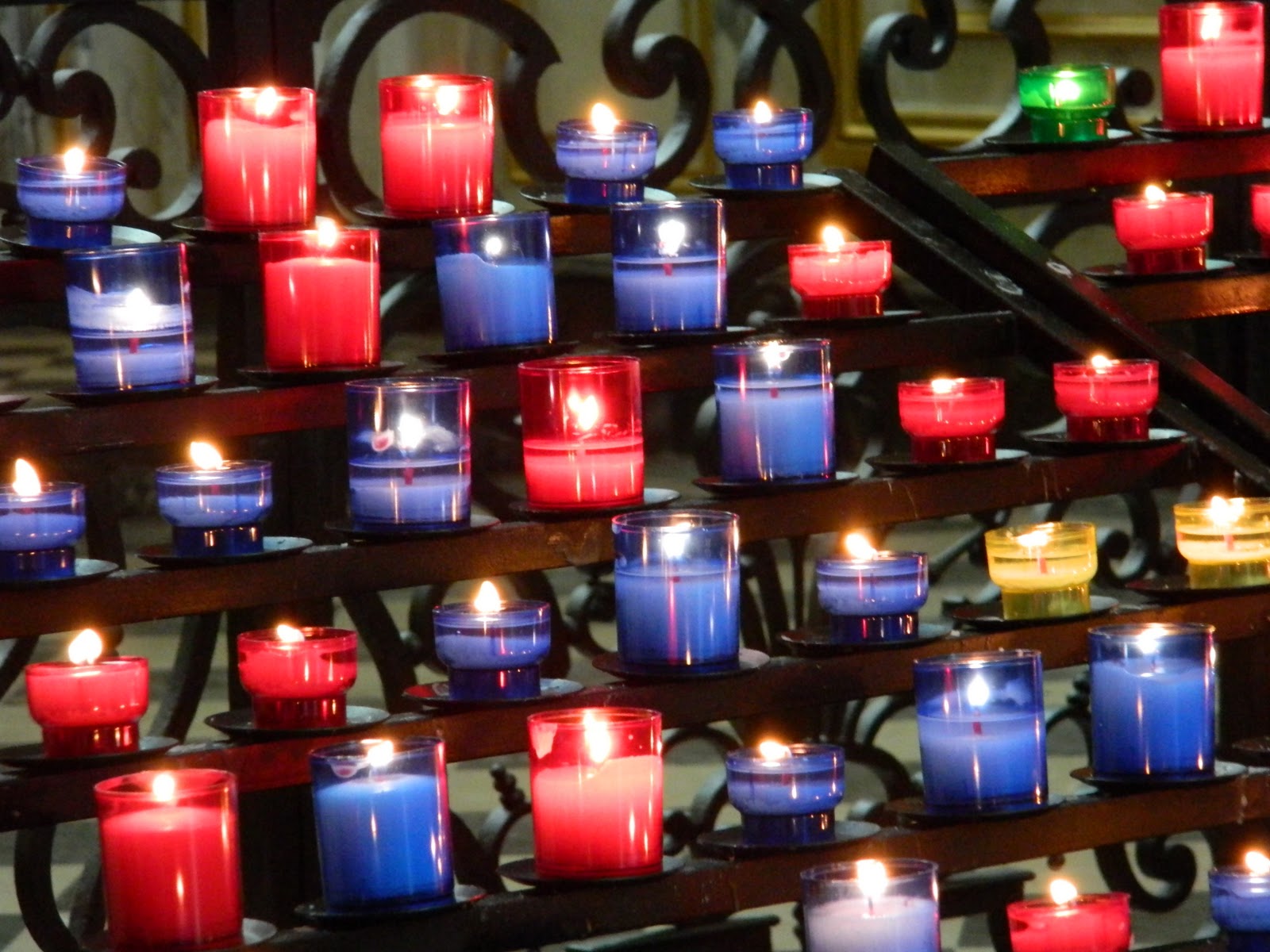
It was an appropriate place to start my journey, to stop and reflect and light a candle, with memorials to many of the forces that defended the town, including the Anzac force which stopped the German advance at Villers-Bretonneux in April 1918.

During the war, the cathedral was piled high with sandbags to protect the precious stained glass windows, the carved choir, and the ethereal stonework. The town and the cathedral were bombed, and again during World War 2, but saved from the utter destruction suffered by many of the smaller towns in Picardy and Flanders which, to this day, have never really recovered.

One such town is Albert, a few kilometres east of Amiens. I have set most of War Songs in an encampment outside Albert, a town through which so many soldiers and ambulances passed on their way to the front line. It was also famous for its cathedral – or basilica – the spire of which is topped with a golden statue of the Virgin holding the infant Jesus aloft. The spire was hit by a shell in 1916, and the statue spent most of the rest of the war dangling precariously. The soldiers believed that if she ever fell, the Germans would win the war. The Australians, of course, had many nicknames for the Holy Mother, including Fanny Durack – one of our Olympic swimmers.

The statue did fall eventually, blasted off its pedestal, although that didn’t seem to affect the outcome of the war. Albert itself was slowly beaten into dust by shells and bombs, and taken by the German Army in its Big Push of 1918. The basilica and the statue were rebuilt in the 1920s, and it remains – as it was then – a landmark visible across the battlefields, so you can always see where you are, and how near you are to Albert.

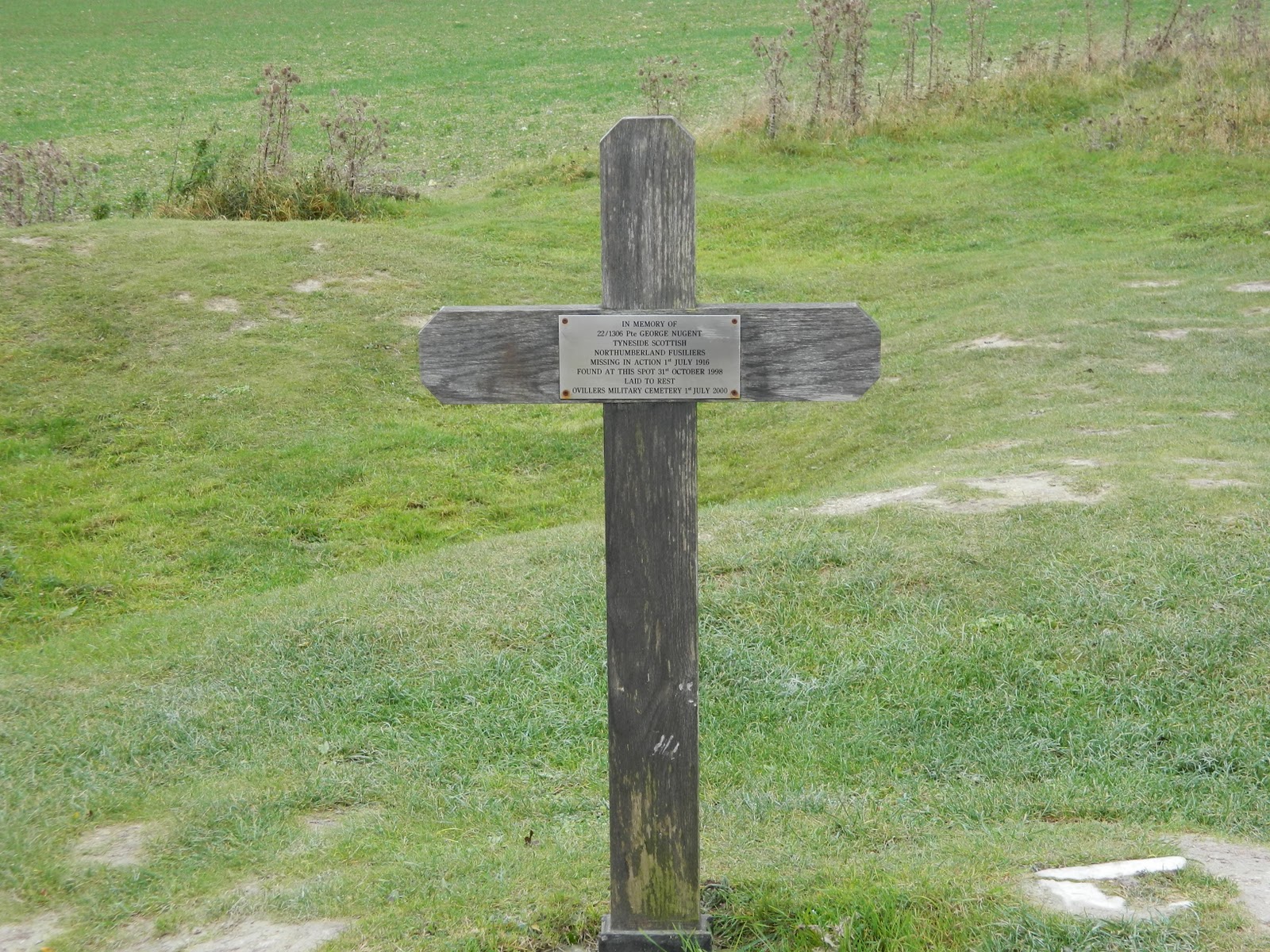
I hiked to the outskirts of Albert, to two small cemeteries. One was Bapaume Post, once on the frontline. Here, as in so many other sites, I was the only visitor, walking silently between the rows of graves, pausing every so often to ponder the eighteen year-old Tyneside Irishmen, the 45 year-old stretcher bearer, the four friends buried with their headstones close together, the rows and rows of human beings who share the same final day. 1 July, 1916. 23 July, 1916.  24 April, 1918. 4 July, 1918.

From here you can look back towards town, or out across what was once a contaminated mess of barbed wire, smashed vehicles, pulverised dirt, cast-off boxes and bottles and tins, and too many small wooden crosses or nondescript mounds of earth.
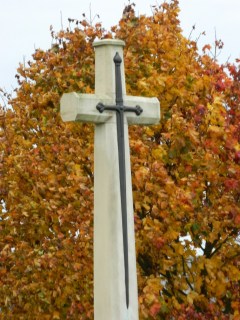
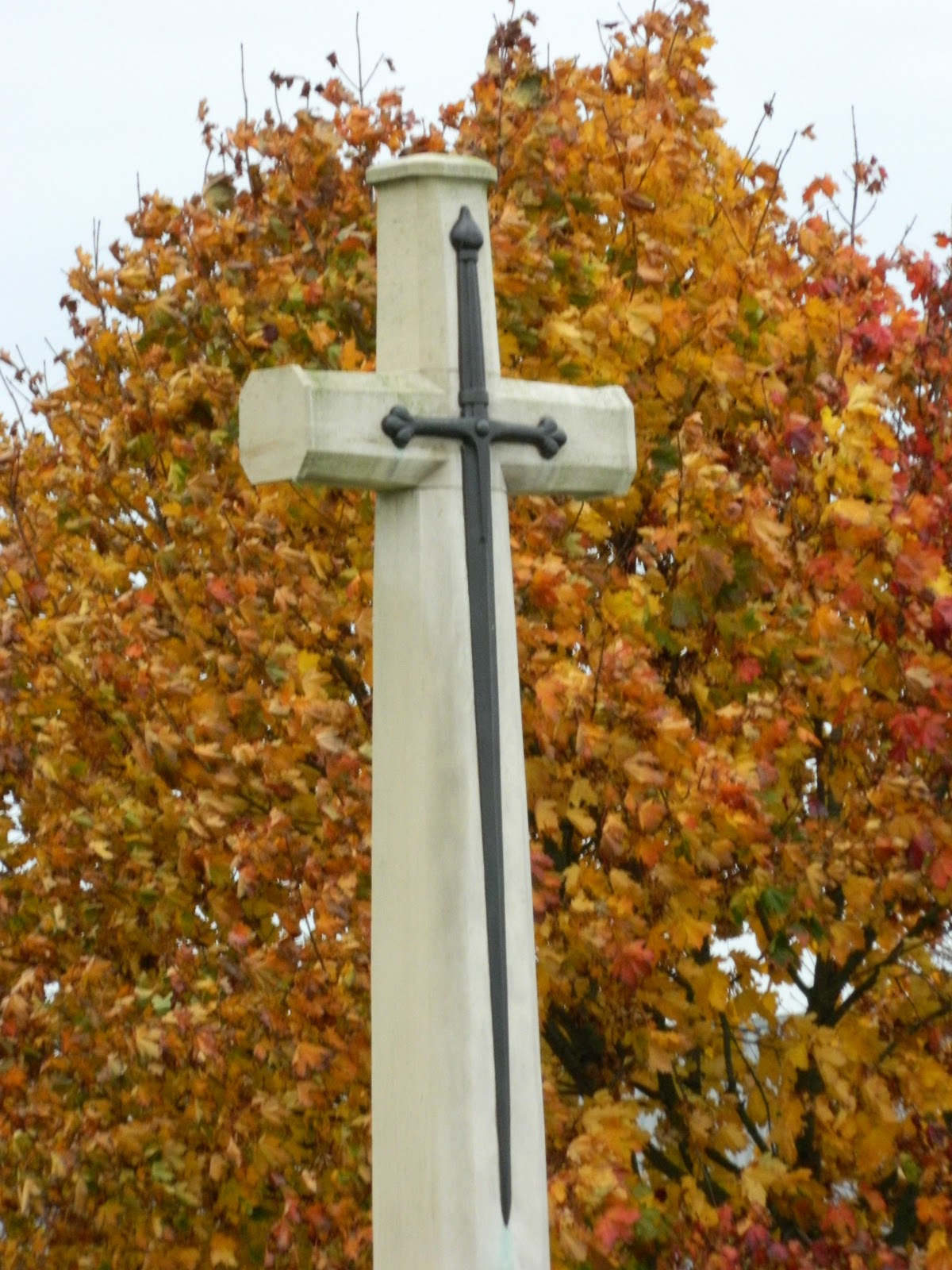
Cross of sacrifice

Like Gallipoli, the countryside is dotted with cemeteries, each with row upon row of simple white headstones, and edged with close-trimmed lawn and flowers, and the last few poppies of the season. Your eyes can trace the positions of the front lines and key battles by the placement of the cemeteries and memorials that mark the skyline – the high ground. Always the high ground.

Cemetery behind Thiepval memorial

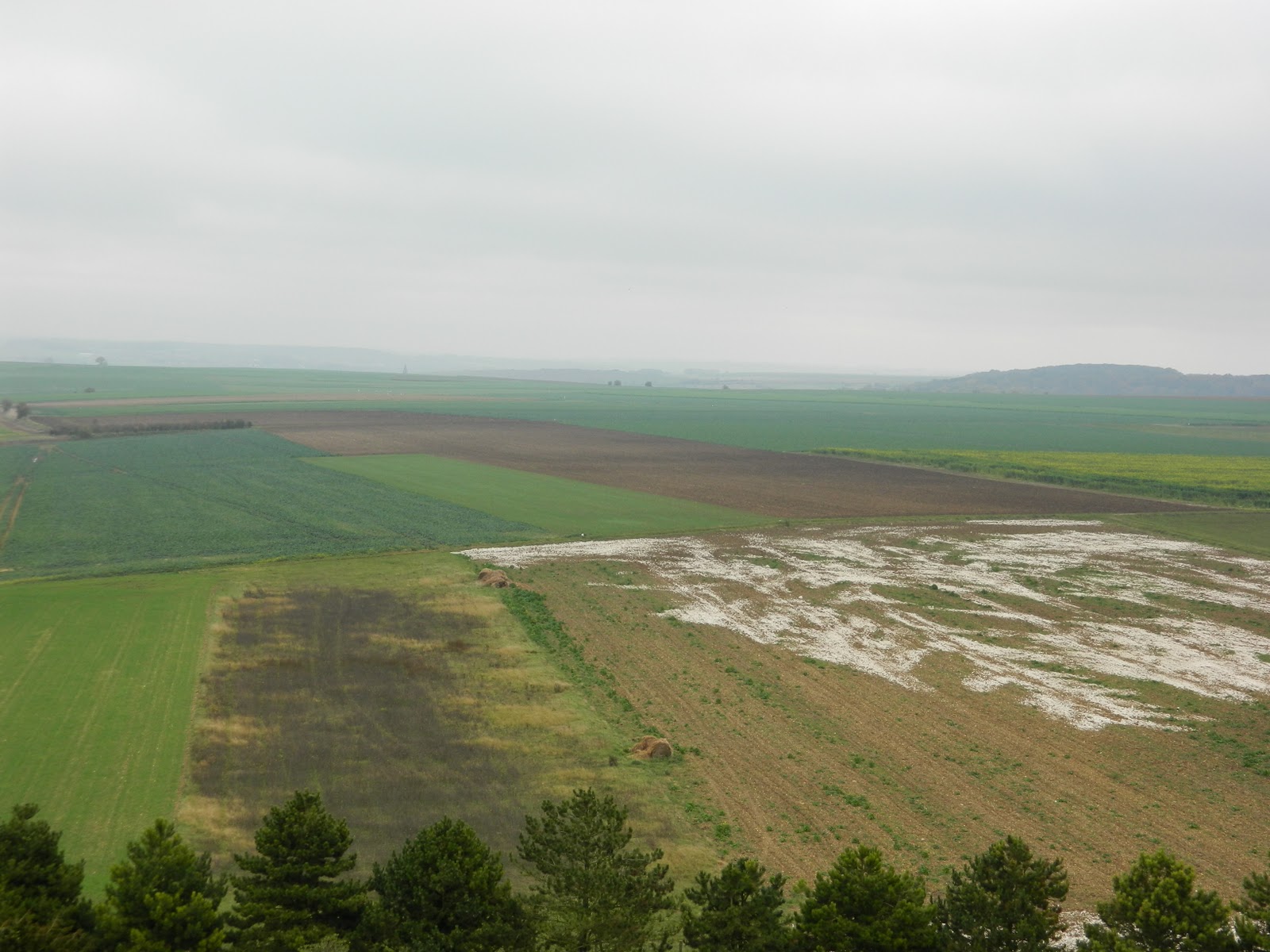
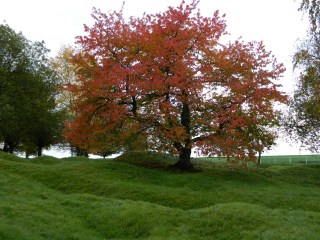
You can also see, especially in autumn or winter, the marks of war scattered in the fields: the shattered white clay coming through the topsoil in circles (shell craters) or lines (trenches) or surreal blotches (all hell broke loose here). The earth still bears scars, nearly a hundred years on. Each year, even now, the farmers find more shell casings, belt buckles, water bottles, and – yes – bones. The locals call it “the memory of the earth”, or “Somme harvest”.
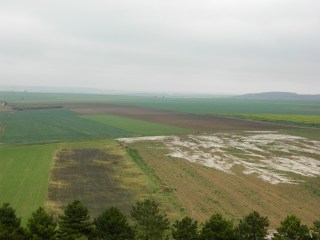
View from Australian memorial, Villers-Bretonneux

One day, I was very fortunate to have the services of Olivier Dirson from Chemins d’Histoire, a softly-spoken French battlefield guide. Olivier took me to Heilly, the site of a casualty clearing station by the railway line, its presence marked only by a small cemetery. It was just as I had imagined the setting of War Songs, but immeasurably sadder in real life. We travelled to Villers-Bretonneux, where the Australians checked the German advance, and where the school, famously, was rebuilt with funds raised by Victorian schoolchildren; to the mine crater at La Boiselle; to the old trenches at Beaumont-Hamel; to Pozières and the site of the windmill, which, according to Bean, “marks a ridge more densely sown with Australian sacrifice than any other spot on earth”.

From Pozières you can gaze across the few hundred metres to Mouquet Farm and a few hundred metres further to Theipval – to Lutyens’ magnificent Memorial to the Missing.

All these place-names, learned in school and on many Anzac Days, read in countless books.

It’s easy to do, easy to write: I stand on the remains of the Windmill and look towards Mouquet Farm. But in that field, the AIF suffered more than 23,000 casualties between 23 July and 5 September 1916 – just over six weeks.

Thiepval

Like Lone Pine, the distances between the sites of these horrific battles is sometimes just a short stroll. Just like the Nek, in places the opposing trenches were only a grenade lob apart. And yet … and yet men were expected to climb out of those trenches and run across that thin stretch of shell-pocked ground towards the machine guns, the wire, the other men. And yet they tried. Over and over.

The numbers, the facts, are literally incomprehensible. 30,000 British casualties, just to take Mouquet Farm, a small red-roofed building on a hill. The number of names listed on the Thiepval Memorial: 73,367. And that’s only the names of the British Empire and South African people who served here in these few miles of the Front and whose graves are unknown. Most of them died in the first few months of the Battle of the Somme.

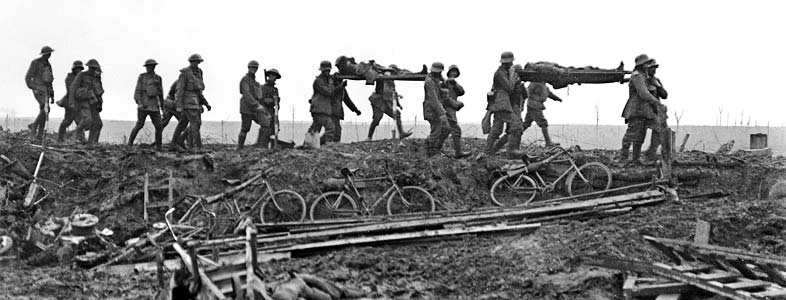
Medical staff were among them: there were many RAMC headstones in the cemeteries I visited. 300 nurses – women – died in the war. Stretcher bearers and orderlies were amongst the casualties far too often (including my great-grandfather who returned from Flanders, gassed, and ill for the rest of his life).

The brain dodges around these numbers, tries to think about them logically, then flinches away: there is no way to properly understand them. 74,000 missing. That’s the entire population of Darwin. Or New Plymouth.

74,000 people.

Numbers too big to comprehend. But they hold enormous meaning: individually and collectively.

Then. Now. Always.

It was supposed to be the war to end all wars.

It wasn’t.
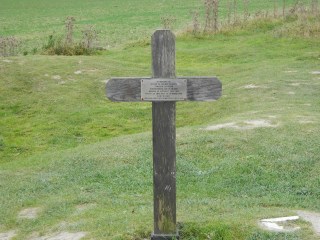
La Boiselle, above Lochnagar crater


Remembrance Day, 2011
Selected archival photos: Australians on the Western Front, Musée Somme 1916 (Albert)
Vive la France

I have gathered memories, images and notes of so many favourite things during my time in Paris, most of them to do with my research project, Tragédie; others accidental or incidental. Here are a few of the other things I noticed along the way.

Maquis motorbike
A fold-up motorbike, still in the steel container in which it was parachuted into Occupied France.

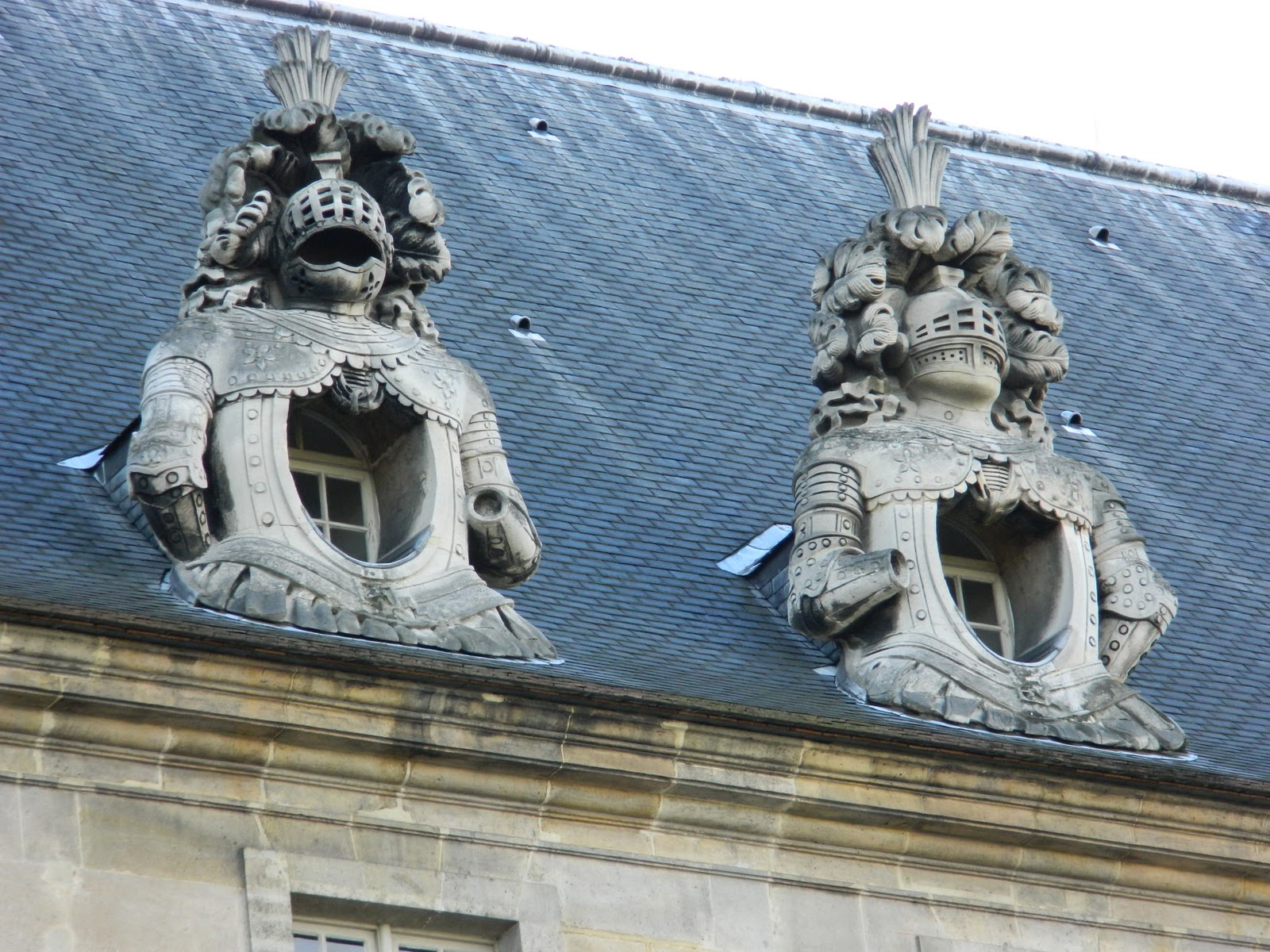
Also at the Musée d’Armée, best window frames ever.

I had been worried about Napoleon: he seems seriously out of fashion here nowadays, which seems a little unfair, given the education and legal systems and all that. But also I’d seen photos of his tomb, and it seemed very small. I know he was only little, but a weensy casket seems a bit sad.

I needn’t have worried. It’s as big as a bus.

But here is the thing that really stopped me in my tracks:

Paris is as beautiful and wild as ever. Men no longer urinate in the streets (though they still keep that time-honoured tradition in Marseille, we noticed). There are a million more tourists than last time I visited: you can’t even get into Notre Dame without waiting in a 200 metre queue. But it still feels like a spiritual home to me.

Always will.

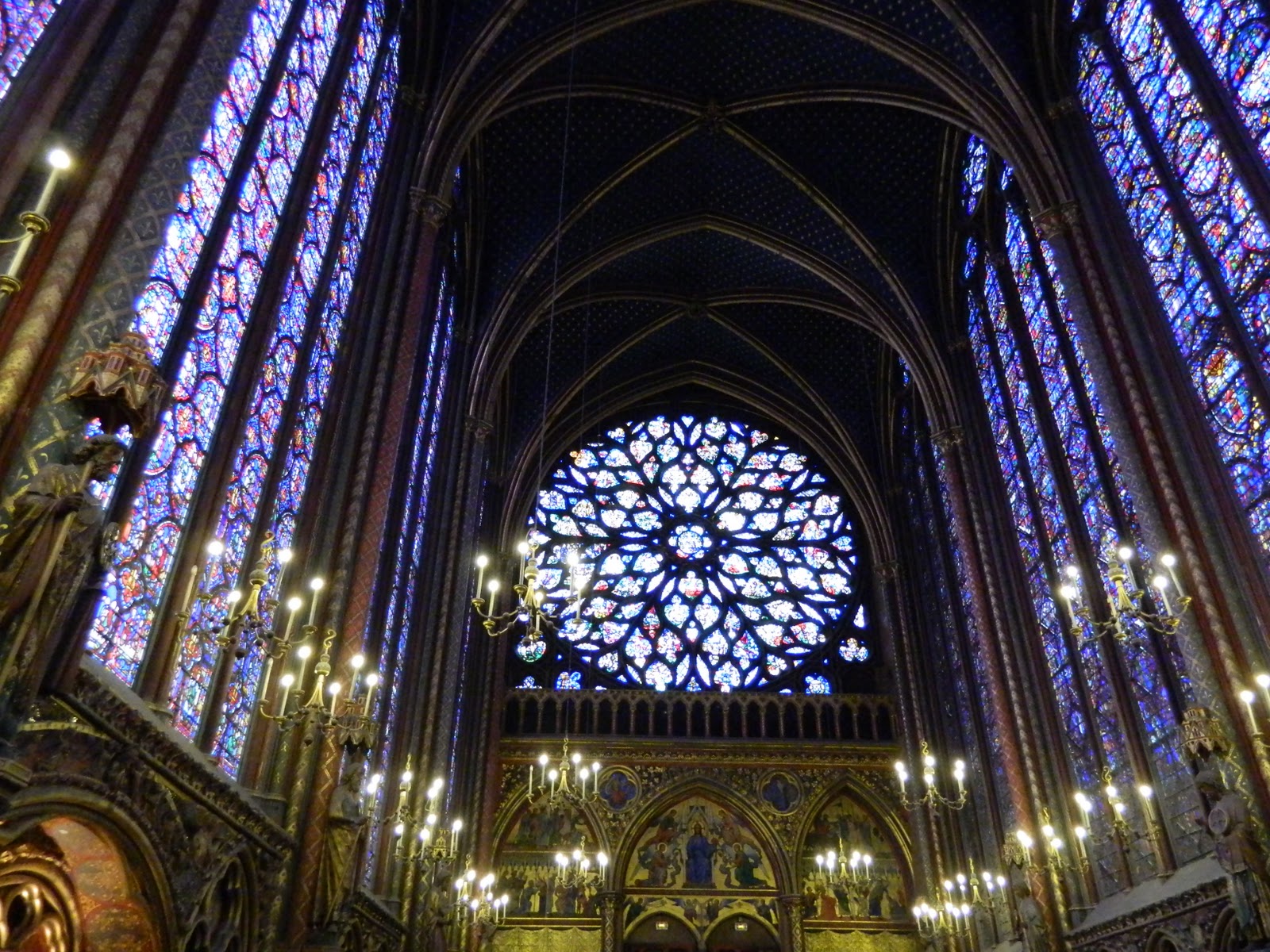
For the first time, I walked further down the island and visited Sainte-Chapelle, an ancient jewel-box in stained glass. I gasped. Really.

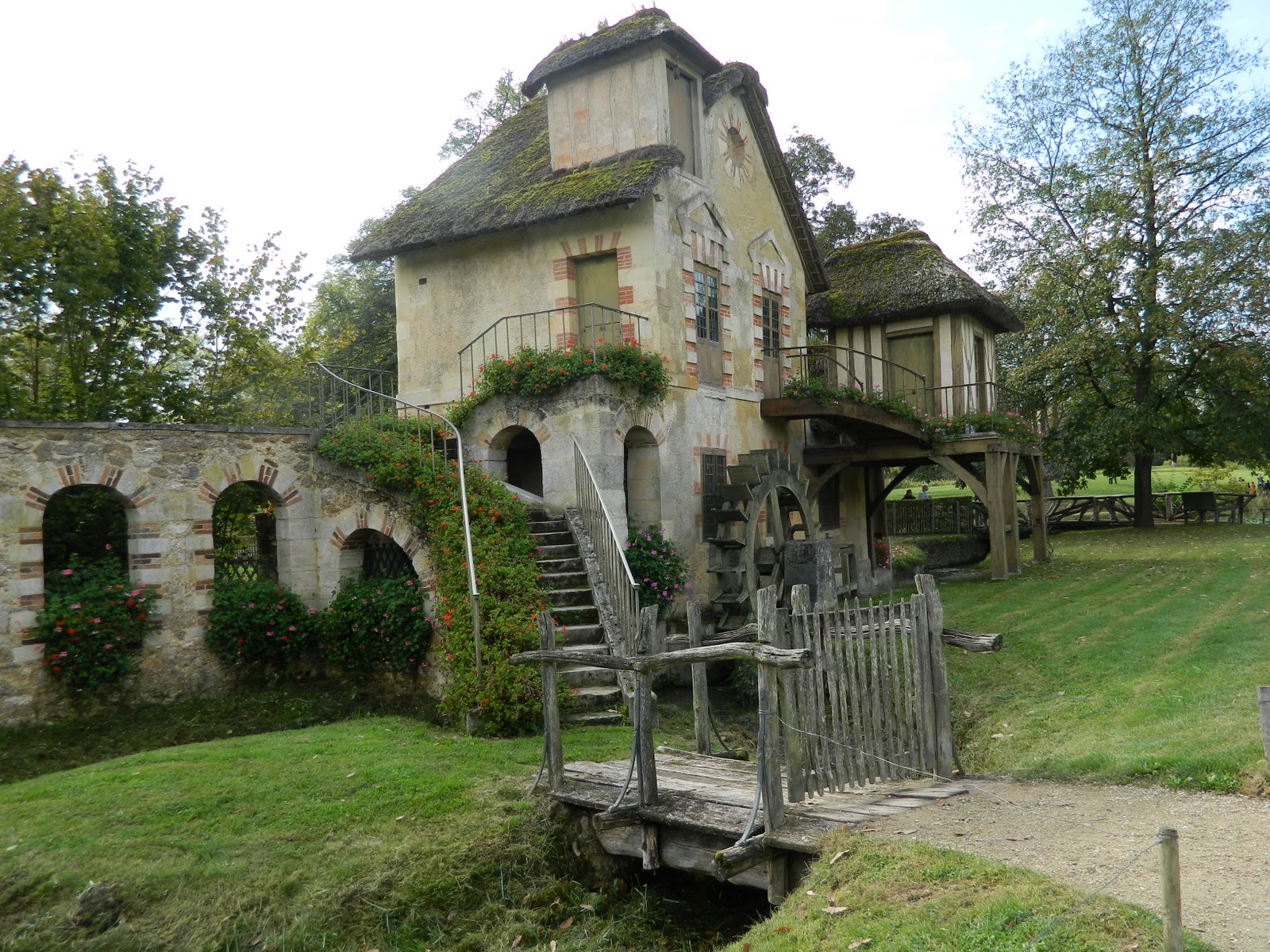
And also for the first time, I visted Versailles. Twice. It was all just as opulent and dazzling as you imagine, but the most poignant, in a way, was Marie-Antionette’s little hamlet that she had built so she could play at being a milkmaid or simply get away from the rest of the Court. And there, having a lovely time, was a pukeko. Who knew? I always thought they were Antipodean.

There are so many museums in Paris, and I only visited those related to my research, but they included some gems, such as the Musée Carnavalet, the museum of the history of Paris:

The Musée Cluny, museum of the Middle Ages:

And in the National Archives I saw documents such as Marie-Antoinette’s last letter, the proceedings of the Parlement as they discussed the matter of Jeanne d’Arc, and the Edict of Nantes. Right there in front of me. The actual Edict of freaking Nantes. Revoked or otherwise. Consider me flabbergasted.

The Archives has a strangely moving exhibition called Fiches. It is focused on the different types of files the state or authorities hold on people, and in particular since the advent of the photograph: ID cards, mugshots, registers of varying kinds. I was just walking through on my way elsewhere in the building and got caught by the sight of ID cards for Salvador Dali, Gertrude Stein (who famously stayed in France throughout both wars in spite of being American and Jewish), Man Ray, Josephine Baker, Samuel Beckett and Jean Cocteau, whose file has ANARCHISTE stamped in red across it. Then I was sucked right in, by agonising images of young Jewish people in 1938 smiling at the camera – just before JUIF is stamped on their file, of forged papers used by the Resistance and Allied airmen, of photos of nuns and criminals and apprentices and men going off to the trenches and Verdun.

Speaking of which, I’m headed north to the Somme now, to do some research for a different project, War Songs, which is a manuscript that’s been sitting in the drawer for years and which I will have to get to – one day.

On opera

This week I’ve been on planet opera.
It’s a pretty wild place, let me tell you.

The idea was simple – gather together in one room a whole bunch of aspiring librettists, and throw at them the combined wisdom, imagination, experience, suffering, creativity, skill and humour of some of the finest minds (and voices) in the business. For a week.

Well.

I applied because my brain exploded at the idea of creating an opera as well as a novel based on the life of Mademoiselle de Maupin. And because with all my current research into Baroque and Sappho leading to Tosca and gender performance archetypes and how they play out in opera, literature and life, something big is slowly taking shape in my mind, fragments are connecting or sparking or swirling. Hopefully it’s the rest of my PhD. Dunno yet.

And because, clearly, I haven’t got enough going on.
Twit.

Anyway.
Just a few of the things I learned, some of which apply to any written work, some of which we all know but it doesn’t hurt to have them beaten into our skulls one more time:

  • There doesn’t need to be a narrative (arguably, there should not be a formal narrative)
  • Sounds of words may matter as much as meaning
  • Leave room for the audience – and the music – to do the work
  • Distill. Write essence only. Then distill again.

So I won’t tell you what happened. Just what it means for me today, knowing this will change over time.

Been thinking lately about fragments, about glimpses of lives and fragments of memory, and how to capture that in prose – specifically, in Tragédie – how to convey confusion, and memories being sometimes out of reach, sometimes conflicting. That’s not a lack of narrative, just a different way of writing it and reading it, but rethinking the meaning of narrative helped that project enormously. Or will, when I have time to reflect.

I also realised, though, that the idea of squeezing La Maupin’s life as a biographical narrative, into an opera was absurd. She may have died at 33 but she had more adventures than The Three Musketeers put together, and my version of her is also a recitative on guilt, sin, redemption and celebrity. So I’m left wondering what to do with that idea. And that’s good.

The concept I was left with was a meditation on opera, on gender, on performance of opera and gender in life and on stage, and on celebrity. A riff on Baroque, on costume and how it defines us. On sex and sin. With a little Lully and Purcell thrown in. And swordfighting. Or the sounds of swordfighting.

Sure. Still a bit of distilling to do.

Some soundbites from various presenters over the week:

  • People aren’t interested in stories. They want experiences.
  • Shakespeare’s ghosts are silent for a reason.
  • Opera is slow – it’s a meditation.
  • It’s also a blunt instrument.
  • It’s never going to be what you [the writer] imagined.
  • Write simple stories.
  • Contemporary opera done well can be very powerful in conveying the big ideas.
  • Music takes the ideas to the heart and bypasses the head.
  • Let the audience members make up their own minds.
  • If the composer isn’t weeping while she writes, nobody else will feel it either.
  • Intuition is quicker than the brain at figuring things out.
  • Each scene has its own self-contained logic and idea that contribute to the overall.
  • A breath can convey as much as a word.

Also, as with most forms of writing, it’s almost impossible to get work produced. But that’s never stopped me before.

I could go on, but I won’t.

Respect to Chambermade Opera and the VWC, the fine people at CAL who funded the workshop, the twelve bewildered composers who came to listen to our pitches, and our cast of gurus: Deborah Cheetham, Moya Henderson, Judith Rodriguez, Alison Croggan, Ida Dueland Hansen, Stephen Armstong, Margaret Cameron, David Young, Caroline Lee, and Deborah Kayser who sang our homework. (See! Read that list and weep with envy.)

Will now attempt to float back to earth.

[curtain]

Historical fantasy?

I’ve wasted years of my life.

Happily I’m in good company.

A US writer – let’s call her M* – whose book for younger readers is just out, has advised a group of young aspiring writers not to bother with such feeble-minded tasks as research when writing historical fiction:

M said she didn’t know enough and had to write about what she didn’t know. ”To write a book about the past [as she has done], there is a saying that you read only two books and then close your eyes,” she said. That was all the research required.

(Quoted in The Age.)
Just like that. Magic.
In fact, that’s what happens in M’s book. Just like I, Coriander, halfway through, everything turns into magic or fairies or elves. Fantasy, as we all know, doesn’t require any research or detailed planning either (just ask anyone who writes fantasy – and then take a few steps back to avoid the explosion).
It’s hard to decide which aspect of M’s advice is most worrying: that an author of historical fiction thinks the historical bit of it doesn’t matter; or that perhaps it just doesn’t matter when you’re an adult author writing their first kids’ book; or that an author has no duty of care to readers of any age or to the past; or that you would leave your editors to do your fact-checking … or that you would actually say that – out loud – to young people who are looking for guidance.
Now, I’m not sure whether it’s true. I suspect that M did much more than read two books, and I’m really hoping she’s been misunderstood.
But I’ve been brooding about this all morning, in part because I read M’s book in manuscript form several months ago and found in it several glaring mistakes which I assumed would have been removed in later versions. Not by the author, obviously, who apparently can’t be arsed looking anything up, but by some long-suffering editor.
This is what almost any other author of historical fiction would have told that crowd: it takes months, sometimes years, of research to accurately portray the past – even just to make as few mistakes as possible. Then you only put about five percent of it into the text. Many of us will tell you that the research is the fun part. It continues up until the point the ink rolls on the presses, and even after that there are breathless moments when you rush to the nearest computer or book to check something you suddenly imagine you got wrong.
That’s just as it should be. Because it matters. History matters. Truth matters, just as much as closing your eyes and imagining, and especially for young readers.
Because your publishers require you to know what you’re writing about.
Because your readers trust you, and they matter – most of all.
[*Later: names deleted to provide benefit of the doubt, because surely it isn’t what she really thinks. Surely.]