Poet and author Alice Walker reads the earth-shattering (and sadly still relevant) 1851 speech of abolitionist Sojourner Truth.
Appearances and residencies
I’m proud to appear in the Word is Out program this year, part of Melbourne’s Midsumma festival.
I’ll be reading a snippet from Tragédie in Works in progress: other times on 19 January. Makes me a tad nervous – nobody but my uni colleagues have heard or read it before.
Then on 22 January I’m part of a panel (in excellent company) called Truth, dare and promises: issues in youth literature. Here’s the blurb:
Could Young Adult fiction be better described as ‘trauma’ fiction? Has it become too dark, or has it always been that way? If pressure on some writers, by agents and publishers, to ‘de-gay’ their characters is just about increasing sales potential, is this homophobic? Have supernatural themes gone too far? What ‘facts of life’ should young people be exposed to?
Sounds pretty good, eh? Wish I could just go along and listen but instead I’ll be trying to either get a word in edgeways or sound like I know what I’m talking about.
Residencies
Right now I’m blogging as the author in residence on inside a dog, the teen reading website of the State Library of Victoria. (That’s where I work part-time, too – but the residency is part of my author life, not my day job. I know. It’s complicated.
So over there you can find me rambling on about writing and reading and other stuff for the rest of January. Go take a look. Even if you’re not a teen reader. You know you want to.
Now some residency announcements.
I feel both honoured and very lucky to have been awarded residency fellowships for 2012 by Varuna Writers’ House and the May Gibbs Children’s Literature Trust.
Both are precious and named in honour of some of the country’s best loved writers. Varuna is Australia’s national residential writers’ house in the former home of writers Dr Eric Dark and Eleanor Dark, author of The Timeless Land. Varuna is in the Blue Mountains, and I’ll be there in April working on Tragédie.
The May Gibbs Children’s Literature Trust supports writers and illustrators of books for children and young people by providing residencies in apartments in Adelaide, Brisbane and Canberra. Its purpose is:
… to ensure that the high quality of work attained by May Gibbs in her time is achieved by contemporary Austrailan children’s authors and illustrators; that they are able to retain the Australian voice and to develop the literary heritage of the future.
What better?
Thanks to the Trust, I’ll be spending a month in Brisbane working furiously on The Sultan’s Eyes over April/May.
So it’s a big year. And we’re only three weeks into it.

Not rocket science
If it has horses and swords in it, it’s a fantasy, unless it also has a rocketship in it, in which case it becomes science fiction. The only thing that’ll turn a story with a rocketship in it back into fantasy is the Holy Grail.
– Debra Doyle
A hem
Hemingway’s Nobel Prize acceptance speech: “A writer should always try for something that has never been done, or that others have tried and failed”.
Lately I’ve been…
Blogging
In residence on inside a dog.
All January.
Watching
Albert Nobbs – Restrained Glenn Close playing opposite a hearty Janet McTeer. Always wonderful to see Pauline Collins, too. This time upstairs. Subtly and quietly tragic. The whole story. As indeed it must have been. And that’s all I can say without spoilers. Though perhaps the screenplay is just wee bit Banville.

The Iron Lady – I’m sorry, but I can’t feel a shred of empathy with Margaret Thatcher, I don’t care what the script says. Nor am I comfortable with the bulk of the film’s lionising of her, and the claim that her economic policies led to recovery. All bollocks. We get to the truth of the matter in a brilliant Cabinet scene in which she has clearly gone too far, but that’s treated as if it’s a one-off – a harbinger – whereas in fact she was a thug in Cabinet and out. But Meryl Streep is magnificent and it’s worth seeing for the performance. And Giles is in it. As Geoffrey Howe, no less.

It’ll be Streep versus Close at the Oscars. Close might win it, since if you wear men’s clothes you’re almost certain of a statuette. Unless you’re actually queer, of course. Sad but true.
Mission Impossible 4: Ghost Protocol – Actually not bad for a blowing-things-up movie. Though why, in this day and age, the otherwise kickass woman agent (Paula Patton) has to get dressed up in a slinky evening gown to seduce a bad guy is inexplicable. And then there’s Tom Cruise, who always does that stupid sprinting thing and yet never catches anyone. Not to mention the hair. But, you know, someone does blow up the Kremlin. And that’s always fun. Holiday movies.
I Love You Phillip Morris – Jim Carrey. Why? Nothing more to say except Ewan McGregor is just beautiful. Always.
Damages – (on DVD) Glenn Close again, absolutely petrifying. But now she’s freaked me out and I’m too scared to watch the rest. That means it is very effective TV. Also I’m a wimp.
Reading
I was on holidays, so I’ve been on a binge, and not reading anything at all related to French opera or 16th century printing. Instead, I’ve been reading:
The Chanters of Tremaris, Kate Constable’s YA fantasy trilogy set in a beautifully imagined world laced together by the magic of song.
The Old Kingdom, another YA fantasy trilogy, this time by Garth Nix. It’s also perfectly imagined, but much darker: worlds of old magic held in place by necromancy and … ooh, makes me shiver just thinking about it.
Mortal Instruments. Yes, one more YA fantasy series, this one by Cassandra Clare and set mostly in New York. I like the world, and the logic of it, and she’s a dab hand with the snappy dialogue, but the characterisation is very thin. Still, what would I know? She sells millions and they’re making a movie and girls everywhere want to marry Jace and apparently that’s what matters.
War and Peace and Sonya by Judith Armstrong. This was on my wishlist for Christmas and then it arrived and I was happy. Tolstoy, through the eyes of his wife Sonya. A wonderful premise. Then I read it. I struggled, dear reader, I’m sorry to say, because I really wanted to like it. But the voice doesn’t work for me, it’s strained and clunky, the pace is inconsistent, all telling and then mostly awkwardly. Bits of it read like a university book review. And it’s oddly lacking in passion.
Why be happy when you can be normal? This is Jeanette Winterson’s memoir of the Oranges are not the only fruit years and their aftermath. Oranges, she has argued in recent years, was fiction or something between fiction and memoir. This is the real story and it is, as she says, even more bleak. It’s Winterson in essay mode, sometimes fragmentary but not showing off, not trying to do anything but tell some truths and understand. (I don’t mind it when she shows off, by the way – she’s allowed.) It works, as an extended riff on life and religion and class – and honestly with a mother like Mrs Winterson she need only present her to us in all her glory, and you can’t tear your gaze away. The only shocking new revelation: Winterson voted for Thatcher once. That’s big.
The Last Jew, by Noah Gordon. Actually, this was vaguely research, as it’s set in Spain in the early years of the Inquisition, but it didn’t hurt my holiday brain too much. Well-written historical fiction and interesting for me because it’s along the lines of a quest, but one in which there’s no great crescendo of action or denouement. It is, like Isabella’s quest in The Sultan’s Eyes, about searching for home.
Which I’d really better get on to…

Radical lives
Fascinating mini-doc about Emma Goldman, her influence, and her ‘resurrection’ during Occupy Wall Street; it’s also about the use of history and performance to influence, inform or – presumably – incite people now.
Emma Goldman and The East Village’s Radical Past Final Cut from Chris Matthews on Vimeo.
You can read a bit more about it in the New York Times.

Reviewing reviews
Hark! What’s that?
It’s the sound of someone blowing her own trumpet.
Since everyone else ON EARTH is reflecting on highlights of 2011, I’m gonna jump right on that bandwagon.
It seems like a very short year. Feels like I lost track of a few months somehow, starting a new day job, building up to and then focusing on the release of Act of Faith, and then spending October in France obsessively hunting down historical details for the Tragedie project.
If 2011 has flown past in a blur, luckily I have several artifacts to remind me: blog posts and social media updates, manuscripts and photos, a very handsome book out in the world and apparently going gangbusters, plus a whole range of people’s reactions to it.

Here are a few recent reviews, important to me because they are from industry journals; from librarians or teachers or YA/children’s book specialists who are passionate about writing for young people:
‘In the world of contemporary young adult fiction, Act of Faith runs against stereotype… A fine book for the classroom, especially at a time when religious tolerance, and tolerance of religion, is at a depressing low… a work of scholarship as well as a work of fiction. A novel that begs for a sequel.’
– Viewpoint
‘This is a very exciting and thought-provoking book which may very well open up knowledge for today’s adolescent readers about what the world was like when such religious intolerance pursued everyone…’
– Reading Time (Children’s Book Council of Australia)
‘A good read for lovers of books and historical adventure stories.’
– Magpies journal
And I was deeply chuffed to be listed by Holly Harper amongst Readings’ best YA books for the year, in some dazzling company.
Thanks to Readings, and to booksellers everywhere – large and small.
And of course to everyone who has had faith enough to read my book.
May yours be a happy new year.

Australian Women Writers Challenge 2012
This is a challenge born of something approaching despair.
Last year, VIDA in the US released its survey of publishing data which showed exactly what anyone with half a brain already knew: dire levels of representation of women at all levels; the number of books by women that got reviewed, the number of female reviewers and book page editors, and women in senior positions in the industry.
Throughout 2011, more and more incidents came to prominence (as if inequality was a new thing!) including the lack of women writers on a number of key literary prize judging panels and shortlists.
My personal favourite moment was when Jennifer Egan won the Pulitzer, and the LA Times reported instead that Jonathan Franzen had lost the Pulitzer, and ran his photo on the front page – not the winner’s. Laugh? I nearly…
Of course, this is not unique to writing and publishing. Like nursing, librarianship and education, it’s a field in which the majority (which happens to be female) are dominated by a minority, with males traditionally taking positions in management in publishing, libraries, writing courses, festivals and writers’ centres (although the normally rowdy community is often strangely silent on those last two categories, I notice).
That’s not to diminish the many amazing women in positions of power in the writing world. It’s just a thing.

But unlike those fields, something unique and profound is also afoot, because the issue is also about how literary worth is assessed: which issues, what settings, language, topics and characters make up the sort of books that win prizes. It’s about our culture.
I won’t bang on about it: others have already done so very eloquently, and anyway it seems like the kind of no-brainer thing most of us have been saying since 1975. Or since we could speak.
But what to do?
Short of coming over all Emma Goldman (and don’t tempt me), here’s one wee thing we can all do, no matter what our gender: make 2012 the year you read a few good books written by Australian women.
The challenge has been issued. It runs as follows:
Goal: Read and review books written by Australian women writers – hard copies, ebooks and audiobooks, new, borrowed or stumbled upon.
Genre challenges:
- Purist: one genre only
- Dabbler: more than one genre
- Devoted eclectic: as many genres as you can find
Challenge levels:
- Stella (read 3 and review at least 2 books)
- Miles (read 6 and review at least 3
- Franklin-fantastic (read 10 and review at least 4 books)
You can read more about it here.
My response?
I’m going to undertake the devoted eclectic challenge (of course, because that’s how we roll here, at the best of times), and at least the Miles level.
I’m not sure of all the books I’ll read yet, because there are some beauties coming out, but the first few are:
-
Sensational Melbourne: Reading, Sensation Fiction and Lady Audley’s Secret in the Victorian Metropolis, by Susan Martin and Kylie Mirmohamadi
-
Playing with Water: A Story of a Garden, by Kate Llewellyn
-
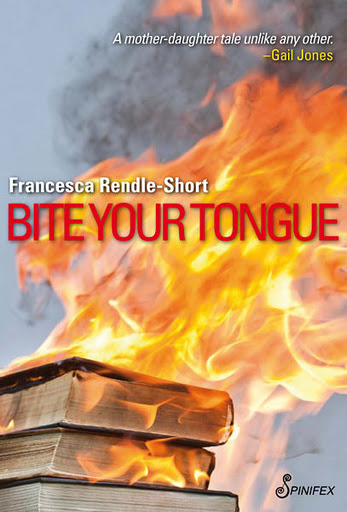
Bite Your Tongue, by Francesca Rendle-Short
And no doubt I’ll read some YA titles, including the forthcoming:
- Queen of the Night, by Leanne Hall
- The Howling Boy, by Cath Crowley
- Pulchritude (or whatever it ends up being called) by Fiona Wood.
Happily ever after
On a recent school visit, the teachers asked me to talk a bit about book reviews. Good timing, because I’ve been thinking a lot lately about the way the reviewing world has changed with so many peer-to-peer recommendation sites and a gazillion book blogs.
I love book blogs: this started out as one, in a way, many years ago. There are reviewers on blogs who are so perceptive about books, they astonish me; some who write beautifully; others who may do so one day, or who write perfectly good thoughtful pieces; others who write as fans – especially in genre – and unashamedly so.
Good on ’em all, I say.
Sites such as Good Reads, Library Thing and inside a dog* make it possible for all of us to share our thoughts on books we’ve read as, increasingly, do online library catalogues and book stores.
There are dangers, sure, and the occasional scandal, but the more the merrier.
Communities of book lovers, talking about books. What could possibly go wrong?
Well, nothing much, really.
But there is one thing I’ve noticed over and over again in discussions about books on Good Reads and facebook and various blogs: people really hate it when the book doesn’t turn out how they expect. It makes them furious.
They equate this with failure – the plot doesn’t unfold the way they imagined therefore the book sucks. And they will often take it out on the author, either through reviews, or more directly in a chat or forum, in a tone that can make your hair curl right up and slide off your head.
I’ve never been in that position myself but I hate to think what it does to an author.
Let’s take a famous example: the death of the beloved Dumbledore at the end of Harry Potter and the Half-Blood Prince.

The world was shocked. The death of “a major character” had been foreshadowed by JK Rowling prior to the book’s release and it was even in all the media, but Dumbledore’s death led to an outcry. Readers believed he wasn’t really dead, and would reappear like Gandalf (of course he does, but he’s still dead). As was usual in the Potterverse, complex theories were developed to explain it, dead or alive, and the discussion continues to this day.
But Rowling as the author was always quite clear, and why wouldn’t she be? Apart from the fact that it’s her book world and she can do whatever she likes, there were myriad plot twists wrapped around the death and, most critical, Harry’s character development and quest (and Hermione’s too) required it.
That’s not how many fans saw it: they saw it as a betrayal, as a failure of the logic they had established for themselves, as a mistake.
They have invested so much in the story – what a wonderful thing! But what else is going on there? We all love to have a theory about what will happen next. Part of the fun of online discussion of books, film and TV is that very element.
I reckon part of it, too, is the expectation that there will be happy endings. That there will be romance, and everyone will live happily ever after.
Sometimes that does happen. In life, and in art. But other things happen too – people disconnect from one another accidentally, or never connect; they argue about stupid things; they annoy you; they get scared when they should be brave; they falter and bicker and fall out of love and die.
I remember well the shriek that went around the cinema when I was a kid watching Doctor Zhivago at the Anglesea Luxury Cinema and Lara DIDN’T TURN AROUND AND OMAR SHARIF WAS RUNNING AND THEN HE CLUTCHED HIS CHEST AND OH MY GOD AND SHE NEVER KNEW!
I nearly spat my Marella Jube into the hair of the person in front.

So if you feel betrayed by an author or a film-maker when that happens in your favourite book or series, don’t take it out on them or the work they’ve created.
What it means is that they have created a world so engaging that we, as readers, are lost in it. We are annoyed because the author wants us to be annoyed, upset because that person we loved is gone and we just don’t know what will happen next.
And that’s a good thing. Right?
*Disclosure: I work with inside a dog as part of my day job, but these comments are my own.
We will fight them in the bookshops
 |
||||||||||||||
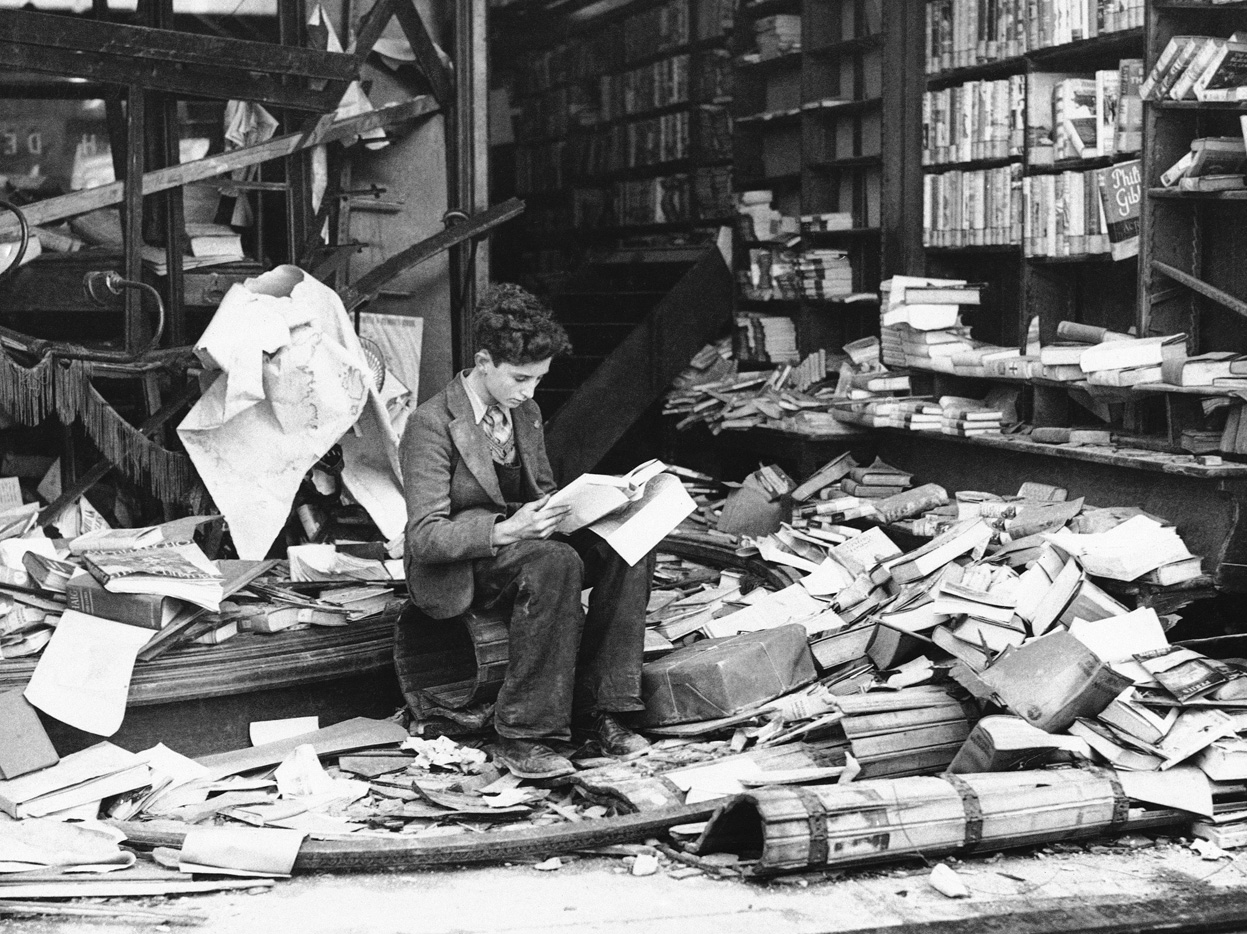
| Boy reading ‘A History of London’ – bombed bookshop during the Blitz (via The Atlantic) |

 Kelly Gardiner